
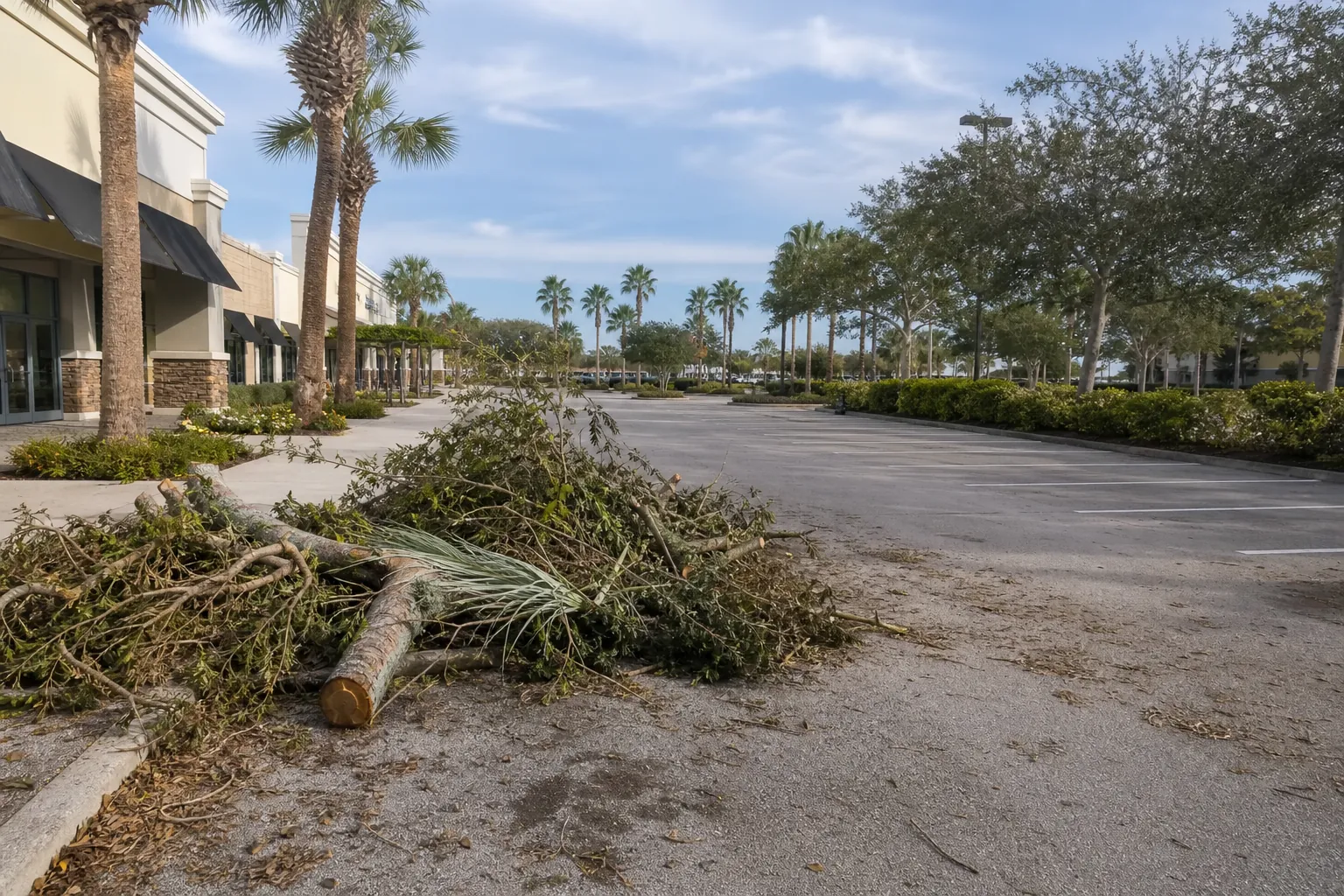
After a storm, commercial properties need a practical place to stage debris while preserving access for customers, employees, tenants, and service vehicles. The best location is not simply the nearest empty corner. It should be accessible for pickup, separated from everyday traffic, and clear of features that could complicate loading. Before moving material, walk the property and choose the staging area deliberately. The steps below can help Daytona Beach businesses make that decision with fewer disruptions.
Protect Customer Access Before Creating the Pile
Start by identifying every route people use to enter, leave, and move around the property. Keep storm debris away from main entrances, accessible paths, sidewalks, stairs, curb ramps, and customer waiting areas. A pile that appears out of the way when a business is closed may become an obstacle as soon as normal activity resumes.
Consider how the site functions throughout the day. Customers may approach from more than one parking area, while employees, vendors, and tenants may use separate doors. Preserve those routes instead of concentrating only on the front entrance. If the property has a drive-through lane, loading zone, or shared access point, include it in the review.
Choose a staging location that leaves clear sightlines for drivers and pedestrians. Avoid placing debris where it could hide approaching vehicles or force people into a traffic lane. The goal is a defined pile that remains separate from the spaces people need to use.
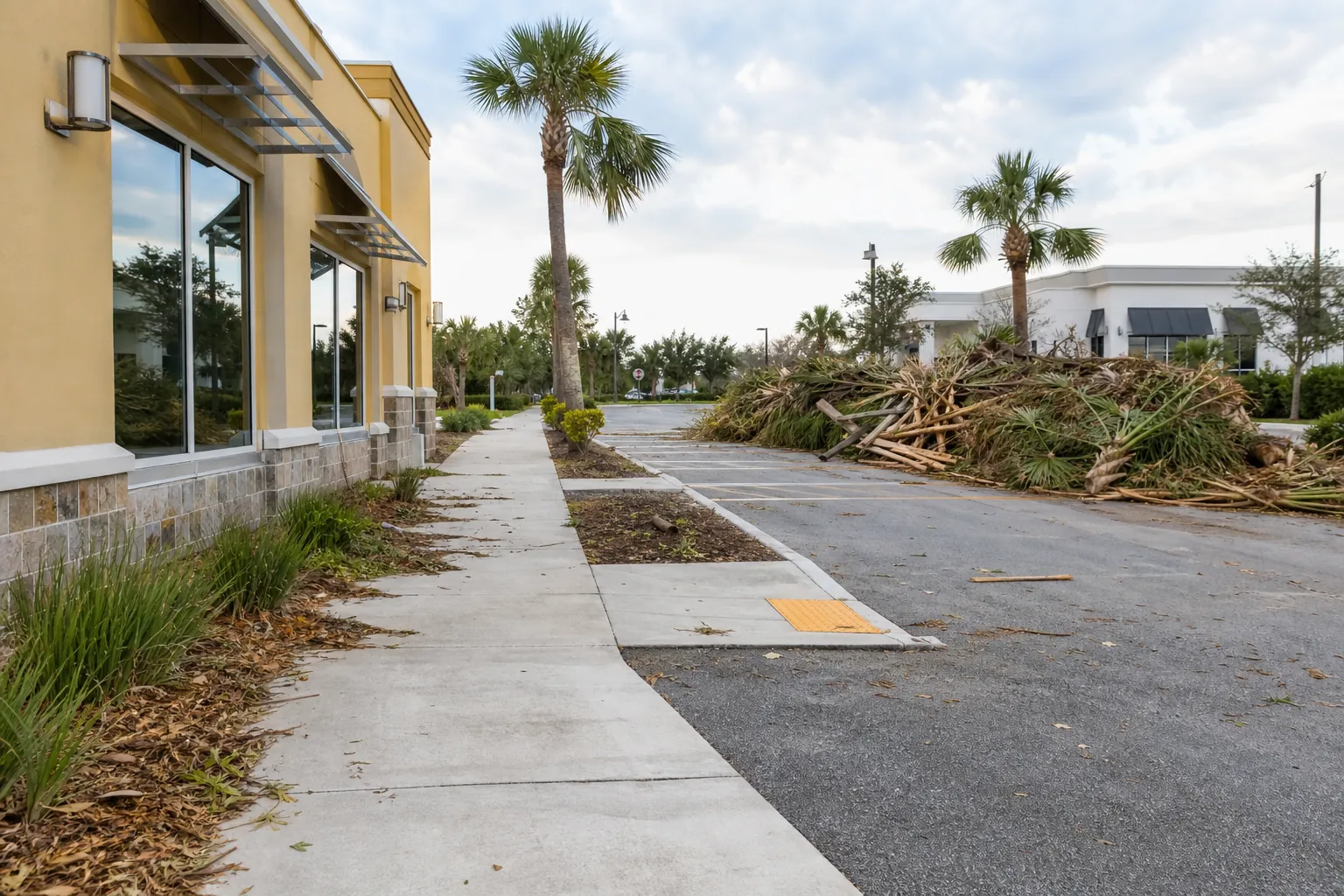
Preserve Parking, Deliveries, and Emergency Routes
Commercial storm debris can spread quickly when branches and loose material are placed across multiple parking spaces. When possible, select a compact staging area that limits the number of affected spaces and does not interfere with traffic circulation. Avoid corners where parked vehicles already make turning difficult.
Map the movements that must continue after the storm. Delivery vehicles may need room to turn, employees may need access to rear entrances, and waste collection vehicles may still need to reach their normal service area. Do not stage debris against gates, loading docks, dumpsters, utility access points, or fire protection equipment.
- Keep entrances, exits, sidewalks, and accessible routes open.
- Maintain room for vehicles to enter, turn, and leave.
- Protect loading areas and scheduled delivery paths.
- Keep debris away from utility equipment and service access.
- Avoid blocking signs, intersections, and driver sightlines.
A quick site sketch can help decision-makers compare locations before crews begin moving material.
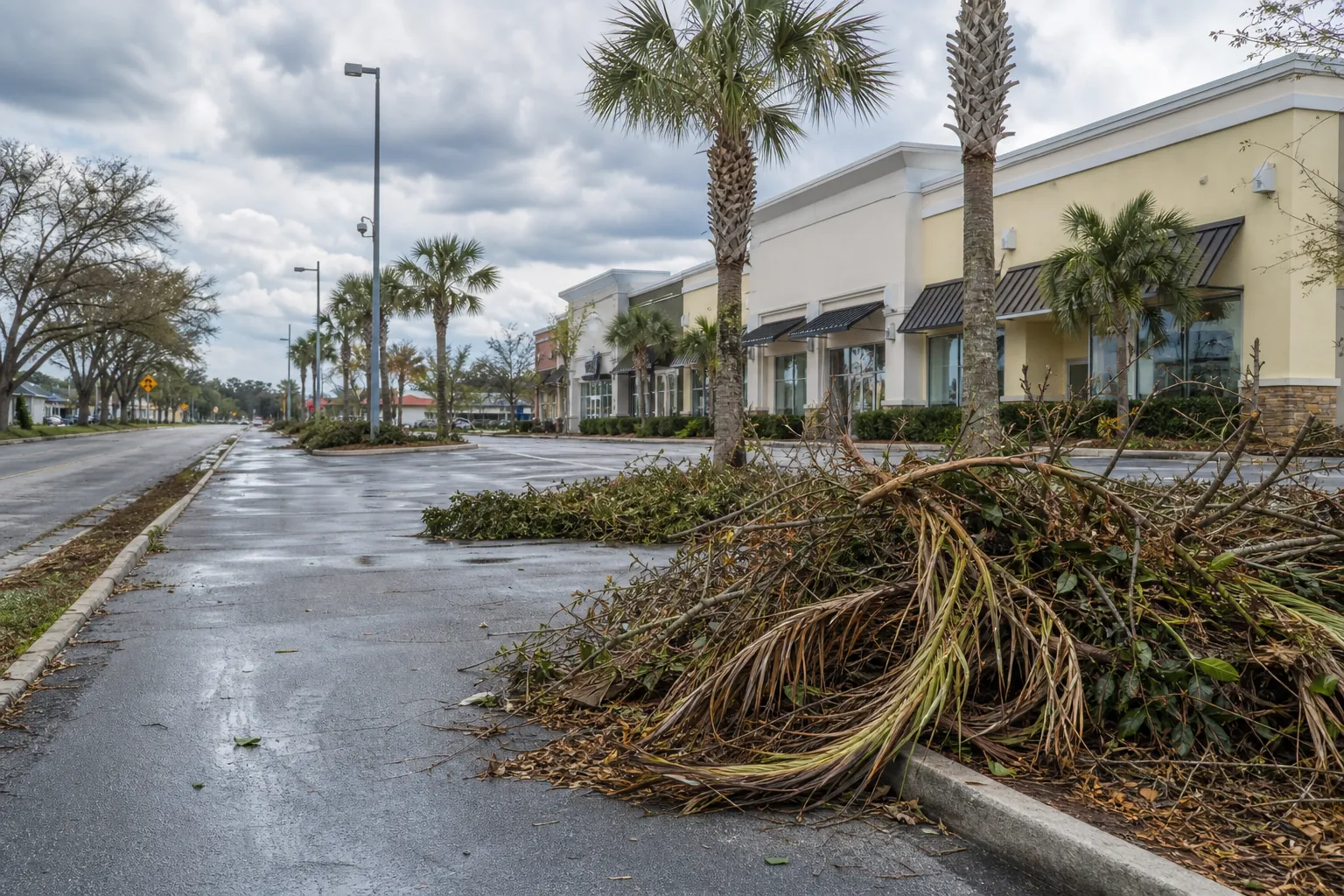
Choose a Location a Pickup Vehicle Can Reach
A suitable staging area must work for both the property and the pickup process. Look for an open approach that does not require a vehicle to squeeze between parked cars, landscaping, signs, or building overhangs. Consider whether the route remains usable if customers are present or if the ground is wet.
Vertical clearance matters as much as ground-level access. Do not place the pile beneath overhead lines, tree canopies, awnings, or other obstructions. Keep it away from walls, fences, parked vehicles, and structures that could limit access to the material. A tightly enclosed pile may be harder to approach than one staged in a clear, defined area.
Surface conditions also deserve attention. Soft ground, steep slopes, narrow lanes, and tight turns can complicate access. When comparing two possible locations, favor the one with a direct route and more open working space. If the choice is uncertain, discuss the proposed spot before consolidating the entire pile.
Build One Organized and Clearly Defined Pile
Once the location is selected, control how debris is added. Establish visible boundaries so employees, tenants, and contractors do not create separate piles around the property. Consolidation can reduce scattered obstructions and make it easier to keep operational areas clear.
Place material within the selected footprint instead of allowing branches or loose pieces to extend into travel lanes. Do not lean debris against buildings, signs, fences, vehicles, or equipment. Keep the edges visible, especially near areas where drivers may reverse or turn. If weather or ongoing cleanup changes the pile, inspect it again before the property opens.
Assign one person to oversee staging when several crews are working. That person can direct material to the chosen area, prevent blocked access, and stop the pile from expanding into parking or pedestrian routes. Clear internal communication is especially important on shared commercial sites, where one tenant's cleanup decisions can affect neighboring businesses and common access points.
Confirm the Plan Before Scheduling Pickup
Before arranging pickup, review the staging area from the perspective of the arriving vehicle. Confirm that the approach is open, the pile is visible, and movable obstacles are cleared. Note gates, restricted entrances, shared driveways, parking controls, or site activity that could affect access. Accurate information helps everyone understand the property layout before arrival.
Take current photos of the pile and its approach. Photos can show proximity to buildings, overhead obstructions, lane width, and the amount of working space available. They also help decision-makers explain the location without relying on vague directions. If the pile changes significantly, update the information.
Cost can depend on practical details surrounding the material and access. For related planning considerations, read grapple truck pickup cost factors in Daytona Beach. Before finalizing the site, verify that the selected area complies with any property management, lease, association, or local requirements that apply to the property.
Discuss Your Commercial Debris Staging Plan
If you are deciding where to stage commercial storm debris in Daytona Beach, call Daytona Grapple Trucks at (386) 481-7913. Describe the property, proposed pile location, access route, and nearby obstacles so you can discuss the next step calmly and clearly.
Call (386) 481-7913 to talk through next steps.