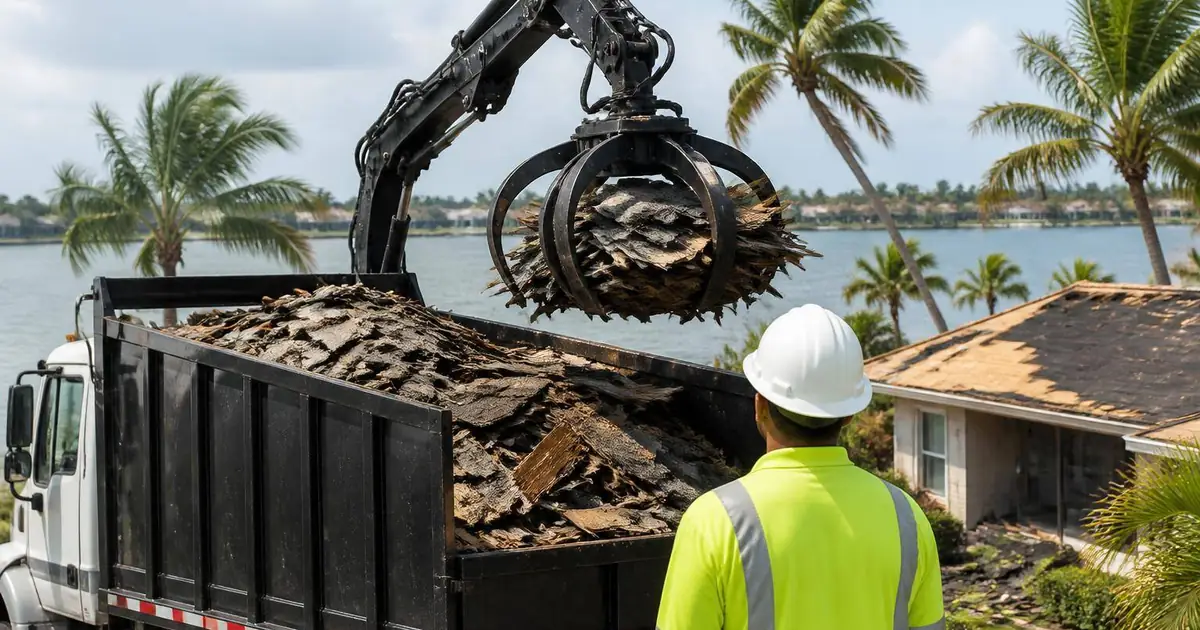
The right roofing debris grapple truck option depends on the debris, the site, and how material will be staged. For a Holly Hill project, compare the removal plan, access details, and pickup scope before making arrangements. Confirm what a provider can handle instead of assuming every truck or load works the same way.
How Do Roofing Debris Truck Options Compare?
Start by comparing how each plan handles debris type, staging, and access. A roofing debris planning guide gives broader context, while pickup planning in Ormond Beach covers preparation questions. For Holly Hill, ask the provider to confirm the specific truck and material fit.
A grapple truck is one possible part of a debris hauling plan. The site's configuration describes Daytona Grapple Trucks as a grapple truck debris hauling business. It does not list specific services or state which roofing materials the business accepts.
That makes a direct comparison useful. Ask what the provider needs to know before it can assess your job. Then compare the proposed scope with your debris, site layout, and timing needs.
The table gives planning categories, not promises about any provider's equipment or service. It helps you identify questions to ask before you choose a removal approach.
| Planning choice | What to compare | Question to ask |
|---|---|---|
| Grapple truck hauling | Material, pile setup, and truck access | Can the provider assess this debris and site? |
| Other hauling arrangement | Who handles loading and removal | Which tasks fall within the agreed scope? |
| Staged pickup | Pile location and readiness | How should material be staged for review? |
| Sorted material | Accepted material groups and local rules | Which items need separate handling? |
What Should You Confirm Before Choosing a Truck?
Confirm the load, site, and requested work before selecting a truck. The roofing debris planning guide can help frame your questions, and debris pickup steps in Ormond Beach offer a related planning angle. Ask for clear scope details before you set a pickup plan.
Describe the debris in plain terms. Tell the provider what work created it and what materials may be mixed in. If you are unsure about an item, say so and ask how to identify it.
Next, explain where the debris sits and how a truck might reach it. Do not assume a clear driveway means the site is suitable. The provider needs to review the access details and decide what information is still missing.
Ask which tasks the proposed service includes. Loading, sorting, moving piles, and hauling can be separate tasks. Do not treat one task as included unless the provider confirms it.
For a Holly Hill project, also confirm the address and service availability directly. The site's city references do not establish that a staffed office exists in each city or that every job can be accepted.
- Describe the roofing materials and note any items you cannot identify.
- Share where the debris sits and how the site can be reached.
- Ask which loading, sorting, and hauling tasks the provider includes.
- Confirm service availability for the project address before making plans.
Which Roofing Debris Details Affect the Plan?
Material type and condition can change the questions a provider needs to answer. Use the roofing debris planning guide and roofing debris questions for New Smyrna Beach to prepare. Do not assume mixed roofing debris has one handling rule.
Roofing work can leave different kinds of material. The exact mix depends on the job, so avoid describing every load as the same. A clear list helps the provider decide what details need more review.
Separate known material groups when you can do so without taking on work you are not prepared to do. Keep uncertain items visible in your description rather than calling them ordinary roofing debris.
Local waste rules can depend on material, location, and date. Volusia County provides waste and recycling guidance, but readers should check current rules for their own material and location.
Federal disaster debris guidance also discusses planning and sorting in a disaster context. That general guidance does not tell you which local pickup service is available or which materials a particular provider accepts.
- List the materials you know are part of the roofing debris load.
- Flag mixed or uncertain items instead of guessing about their contents.
- Check current local waste guidance for material-specific handling rules.
- Ask the provider to confirm which materials fit its accepted scope.
How Should You Compare Pickup Scope and Timing?
Compare the agreed work and the details that shape its timing. The roofing debris planning guide and cost and insurance questions in Bunnell can help you prepare. Ask the provider to state what must be ready and what could change the plan.
Do not rely on a broad estimate of when a job might happen. Ask what information the provider needs to discuss timing, and confirm any date or arrival window directly. No schedule or availability is established by the site's general business description.
Make the pickup scope clear before you compare options. Ask who will move the debris, who will load it, and what the provider will haul. If the work plan changes, ask how that affects the agreed scope.
A roof project may change as work proceeds. Tell the provider if the expected debris amount or material mix changes. Ask whether the current plan still fits before relying on the original details.
Keep a written record of the scope and the information you supplied. It can help both sides spot a mismatch before work begins. It is not a substitute for the provider's confirmation or local waste rules.
- Describe the expected debris and note what remains uncertain.
- Ask which tasks and materials the proposed scope includes.
- Confirm the date, readiness needs, and any arrival details directly.
- Tell the provider about changes before relying on the earlier plan.
What Site Access Questions Matter for a Holly Hill Job?
Share practical access facts before anyone decides whether a truck can work at the site. The roofing debris planning guide and pickup planning in Ormond Beach provide useful prompts. Only the provider can confirm how the specific site affects its plan.
Describe the route to the debris and the space around it. Mention gates, tight turns, low branches, parked vehicles, or other features that may matter. Do not assume a detail is too small to share.
Explain where the material is staged and whether that location may change. If you do not know the site limits, say so. Ask the provider what information it needs to assess access.
Avoid moving a pile or changing the site based on a guess about truck needs. Get clear instructions from the provider first. For building, property, or safety questions, consult the qualified person or authority responsible for that decision.
A Holly Hill address does not by itself confirm that a provider can serve the job. Ask about the address, site conditions, and requested work together. That gives the provider a clearer basis for discussing fit.
How Can You Prepare a Clear Pickup Request?
A concise request should state the location, debris, site access, and work you want considered. Review the roofing debris planning guide and roofing debris questions for New Smyrna Beach before contacting a provider. Ask what else it needs to assess the request.
Start with the project address and a short description of the roofing work. Name the material types you know and flag anything uncertain. Avoid guessing about amounts when you cannot estimate them with confidence.
Add a simple description of where debris sits and how the site can be reached. Photos may help explain the layout if the provider asks for them. Do not send sensitive details that are not needed for the discussion.
State what you need the provider to consider. You might be comparing a grapple truck plan with another hauling arrangement, or asking whether a proposed scope fits. The provider must confirm its services and accepted materials.
Keep the exchange focused on questions that affect the choice. Ask about service area, scope, material fit, access, readiness, and timing. Record the answers so you can compare options without relying on assumptions.
What Should You Do If the Debris Plan Changes?
Pause and confirm the plan when debris, access, or scope changes. The roofing debris planning guide and cost and insurance questions in Bunnell give related planning context. Ask the provider what changed details mean before continuing with the earlier arrangement.
Changes can include a different material mix, a larger pile, a new staging spot, or a blocked route. Report the change before the expected pickup if possible. Do not assume the earlier discussion still covers new conditions.
Ask whether the updated facts affect material acceptance, site access, scope, or timing. Request a plain explanation of any new limits or steps. If a question concerns property rules or safe work, check with the appropriate qualified person.
If local disposal rules matter, review current guidance from the relevant authority. Volusia County notes that waste and recycling rules can vary by material, location, and date. Federal debris guidance is general and does not replace local requirements.
Keep your notes current, including what changed and what the provider confirmed. A clear record makes it easier to avoid mismatched expectations. The final decision should rely on current facts, not on an earlier description that no longer fits.
Questions about next steps? Call Daytona Grapple Trucks at (386) 481-7913 or review debris.
Frequently Asked Questions
Does the site's business description confirm every roofing material is accepted?
No. The site's configuration describes grapple truck debris hauling, but it does not list accepted roofing materials or specific services. Share the material details with the provider and ask what it can handle. Check current local waste guidance for rules that apply to your location and material.
Should roofing debris be sorted before pickup?
That depends on the material, local rules, and the provider's scope. Do not assume sorting is required or included. Describe the debris and ask what separation, if any, is needed. Volusia County's guidance notes that rules can vary by material, location, and date.
Can I assume a grapple truck can reach the debris pile?
No. Site access depends on details that need review, such as the route, staging location, and nearby obstacles. Describe those conditions to the provider and ask for confirmation. Do not change the site based on a guess about truck access.
Does a Holly Hill project qualify for service automatically?
The brief does not establish specific service-area coverage or confirm availability for an individual address. Ask the provider about the project location and requested work directly. A city name in a planning title does not establish a staffed office or service for every address.
What if the debris changes after I ask for a pickup plan?
Tell the provider about the change and ask whether the proposed scope still fits. New materials, a different pile location, or altered access may affect the discussion. Confirm any revised work or timing directly before relying on the earlier plan.
Sources
- Solid Waste and Recycling, Volusia County
- Planning for Natural Disaster Debris, U.S. EPA
- Debris Removal Guidelines Help You and Your Community, FEMA
Call (386) 481-7913 to talk through next steps.