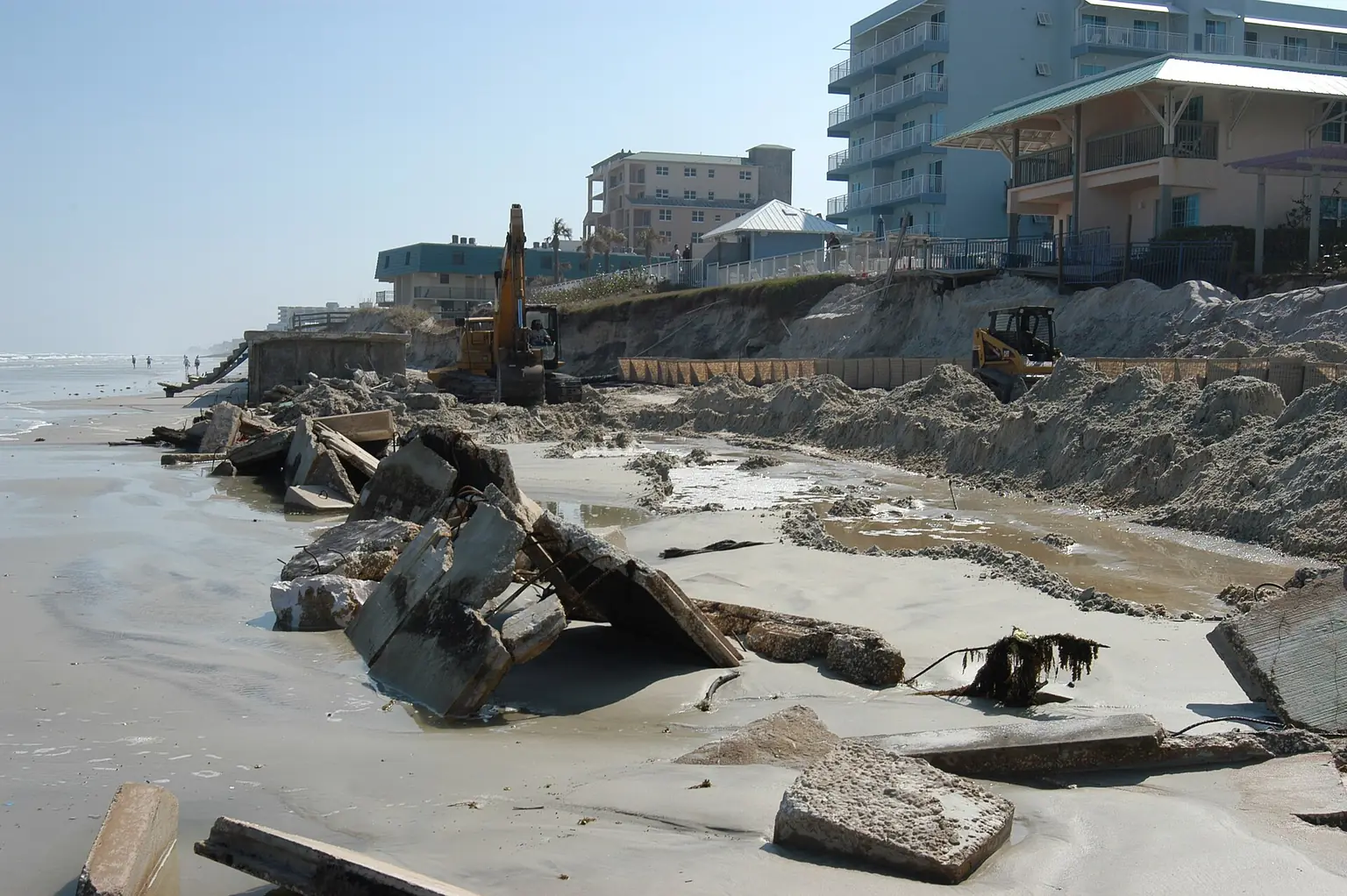
Photo: FEMA - 11868 - Photograph by Mark Wolfe taken on 10-27-2004 in Florida by Mark Wolfe, Public domain, via Wikimedia Commons
Introduction: Why debris rules matter in Florida
Florida’s construction boom means more concrete and masonry debris than ever before. Whether you’re a contractor renovating a commercial site or a homeowner tackling a DIY patio, understanding the state’s rules for disposing of these materials is crucial. Improper handling can lead to fines, environmental damage, and project delays. Daytona Grapple Trucks, a leader in debris hauling across Florida, breaks down the essential rules and best practices for concrete and masonry debris disposal.
What qualifies as concrete and masonry debris?
Concrete and masonry debris includes waste from demolition, construction, and remodeling projects. Common examples are:
- Broken concrete slabs
- Bricks and pavers
- Cinder blocks
- Mortar and grout remnants
- Stone and tile fragments
Florida law classifies these materials as construction and demolition (C&D) debris. This category is regulated differently than household garbage or hazardous waste, so it’s important to keep them separate during cleanup.
Florida’s legal requirements for debris disposal
The Florida Department of Environmental Protection (FDEP) sets strict guidelines for handling C&D debris. Here are the key rules you need to know:
- Segregation: Concrete and masonry debris must be separated from other waste streams, such as wood, metal, or hazardous materials.
- Permitted facilities: Debris must be taken to a state-permitted C&D debris recycling or disposal facility. Illegal dumping is subject to heavy fines.
- Documentation: Contractors must keep records of debris disposal, including facility receipts, for at least three years.
- Recycling: Florida encourages recycling of concrete and masonry debris. Many facilities crush concrete for road base or fill material.
Always check with your local county or municipality for additional rules. Some areas, especially in coastal or environmentally sensitive zones, have stricter regulations.
Best practices for safe and legal debris hauling
Proper debris management starts at the job site. Daytona Grapple Trucks recommends these best practices:
- Plan ahead: Estimate debris volume before starting your project to arrange for the right hauling equipment.
- Use separate containers: Place concrete and masonry in designated bins to prevent contamination with other waste types.
- Hire licensed haulers: Only use companies like Daytona Grapple Trucks that are licensed, insured, and familiar with Florida’s regulations.
- Schedule timely pickups: Don’t let debris pile up. Regular pickups keep your site safe and compliant.
Following these steps not only keeps you within the law but also protects Florida’s environment by encouraging recycling and reducing landfill use.
Penalties for improper debris disposal
Ignoring Florida’s disposal rules can be costly. Illegal dumping of concrete and masonry debris is considered a serious offense. Penalties may include:
- Fines up to $5,000 per violation
- Mandatory cleanup costs
- Possible criminal charges for repeat offenders
In addition to legal consequences, improper disposal can harm local waterways, wildlife, and neighborhoods. Responsible debris management is a must for every project.
How Daytona Grapple Trucks can help
Daytona Grapple Trucks specializes in hauling concrete and masonry debris for contractors and homeowners throughout Florida. Our team understands the state’s complex regulations and ensures your debris is handled legally and efficiently. We offer:
- Flexible scheduling for pickups and drop-offs
- Modern grapple trucks capable of handling large and heavy loads
- Transport to permitted recycling and disposal facilities
- Clear documentation for your records
- Friendly, knowledgeable service
Whether you’re clearing a construction site or removing an old driveway, we make debris hauling simple and stress-free.
Frequently asked questions about debris rules
Q: Can I mix concrete debris with other construction waste?
A: No. Florida law requires concrete and masonry debris to be separated from other waste types to facilitate recycling and proper disposal.
Q: Where does my debris go after pickup?
A: Daytona Grapple Trucks delivers debris to state-permitted recycling or disposal facilities. Whenever possible, concrete and masonry are recycled for new construction uses.
Q: Do I need a permit to haul my own debris?
A: In most cases, you do not need a permit for small quantities. However, large commercial projects may require permits or documentation. Always check with your local authorities.
Contact Daytona Grapple Trucks for expert debris hauling
Don’t risk fines or project delays by guessing about Florida’s concrete and masonry debris rules. Trust Daytona Grapple Trucks to handle your debris legally and responsibly. Our team is ready to answer your questions and schedule a pickup at your convenience. Call (386) 481-7913 today for expert advice and dependable service across Florida.
Call (386) 481-7913 to talk through next steps.