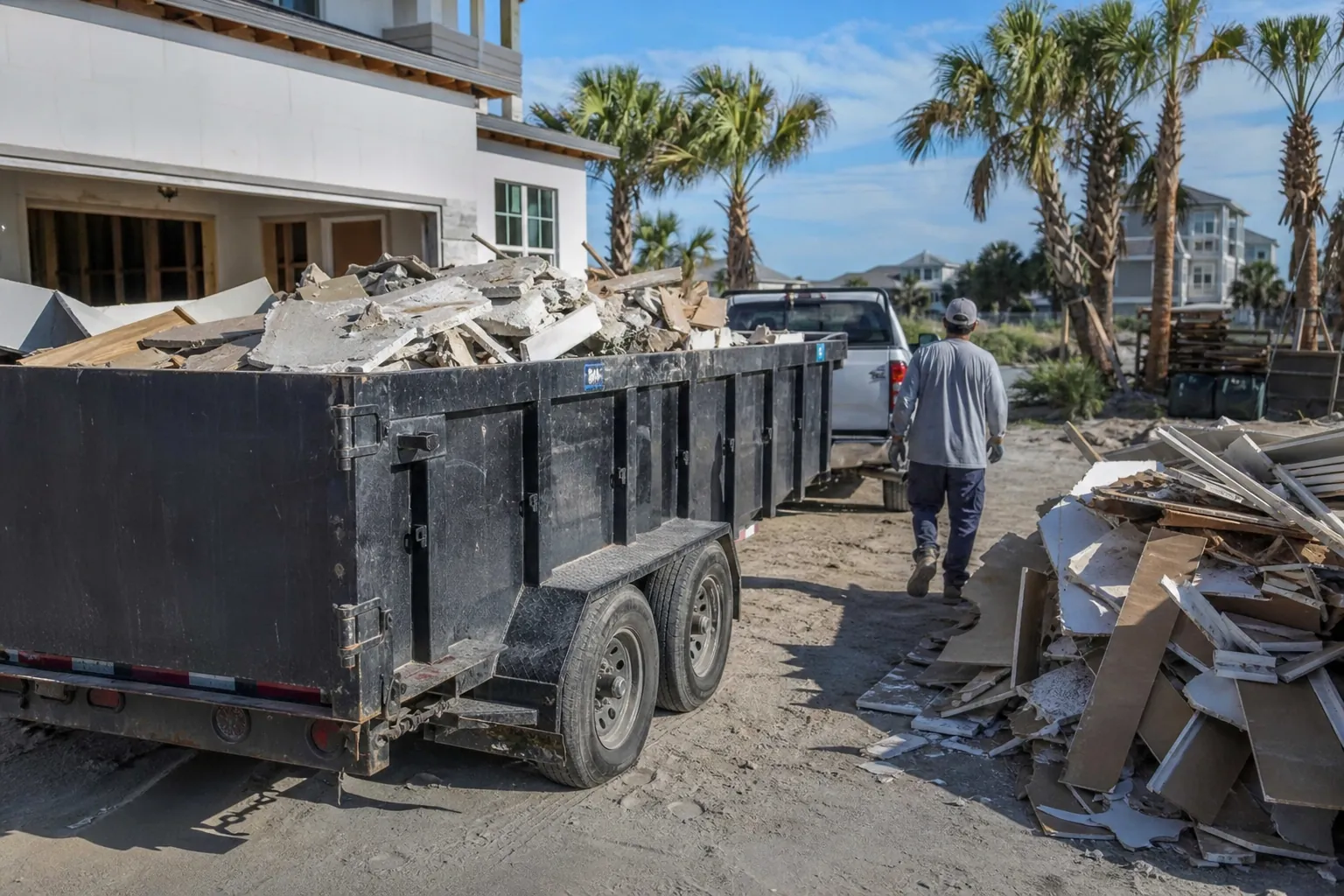
Construction debris can take over a property faster than expected. A small renovation may produce broken cabinets, scrap lumber, drywall, and packaging before the first room is finished. A larger project can leave material scattered across the work area, slowing deliveries and making it harder to move safely.
For property owners and contractors in South Daytona, construction debris haul away is easiest to plan before the pile becomes an obstacle. The important questions are practical: What materials are present? Where can they be staged? Can a truck reach them? And does anything require a separate disposal route?
Daytona Grapple Trucks is a local contact for discussing grapple truck debris hauling. This guide explains how to prepare a construction cleanup, what to share when requesting service, and how to avoid common loading problems.
What Makes Construction Debris Different From Ordinary Junk?
Construction waste is often bulky, uneven, and mixed. A pile may contain light insulation beside heavy boards, with sharp fasteners hidden underneath. That combination makes it different from a few household items placed near a driveway.
The source of the debris matters, too. Waste from a cabinet replacement usually needs a different plan than waste from removing a concrete walkway. Both involve construction materials, but their weight, handling requirements, and disposal options can differ substantially.
Start with a plain-language inventory rather than assuming everything can travel together. Describe the dominant materials and mention anything unusual, particularly liquids, appliances, suspected hazardous materials, or large amounts of masonry.
- Wood framing scraps and dismantled cabinets should be identified separately from concrete, brick, and other dense materials.
- Drywall, flooring, and roofing debris should be described by material type and approximate amount.
- Paint, solvents, batteries, and other potentially hazardous items should remain separate until their proper disposal route is confirmed.
- Unknown material from an older structure should not be treated as ordinary debris without appropriate assessment.
This first sorting step helps establish whether grapple loading is suitable and whether part of the cleanup needs another service. It also reduces the chance of an unexpected issue when the truck arrives.
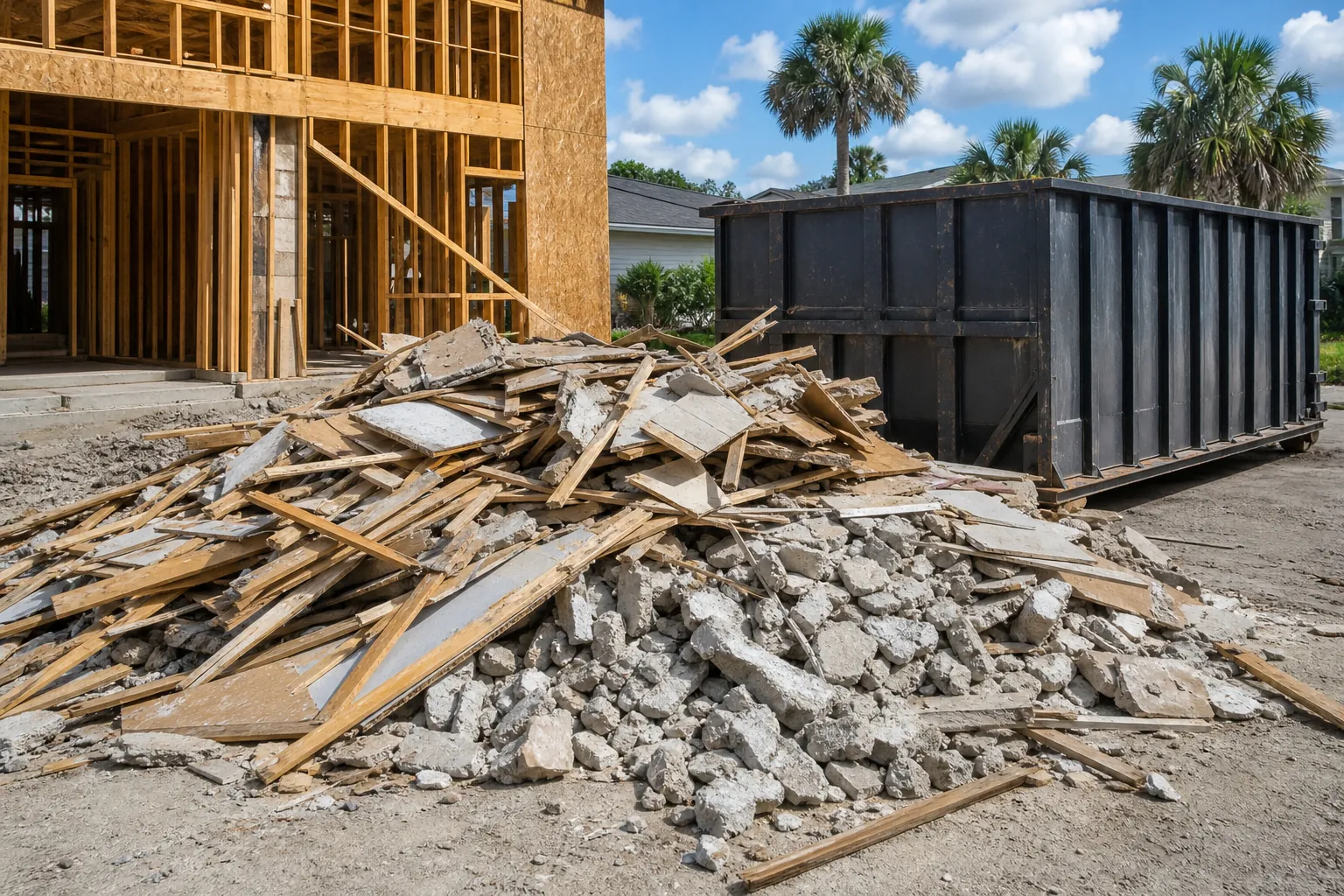
When Grapple Truck Hauling Can Fit A Project
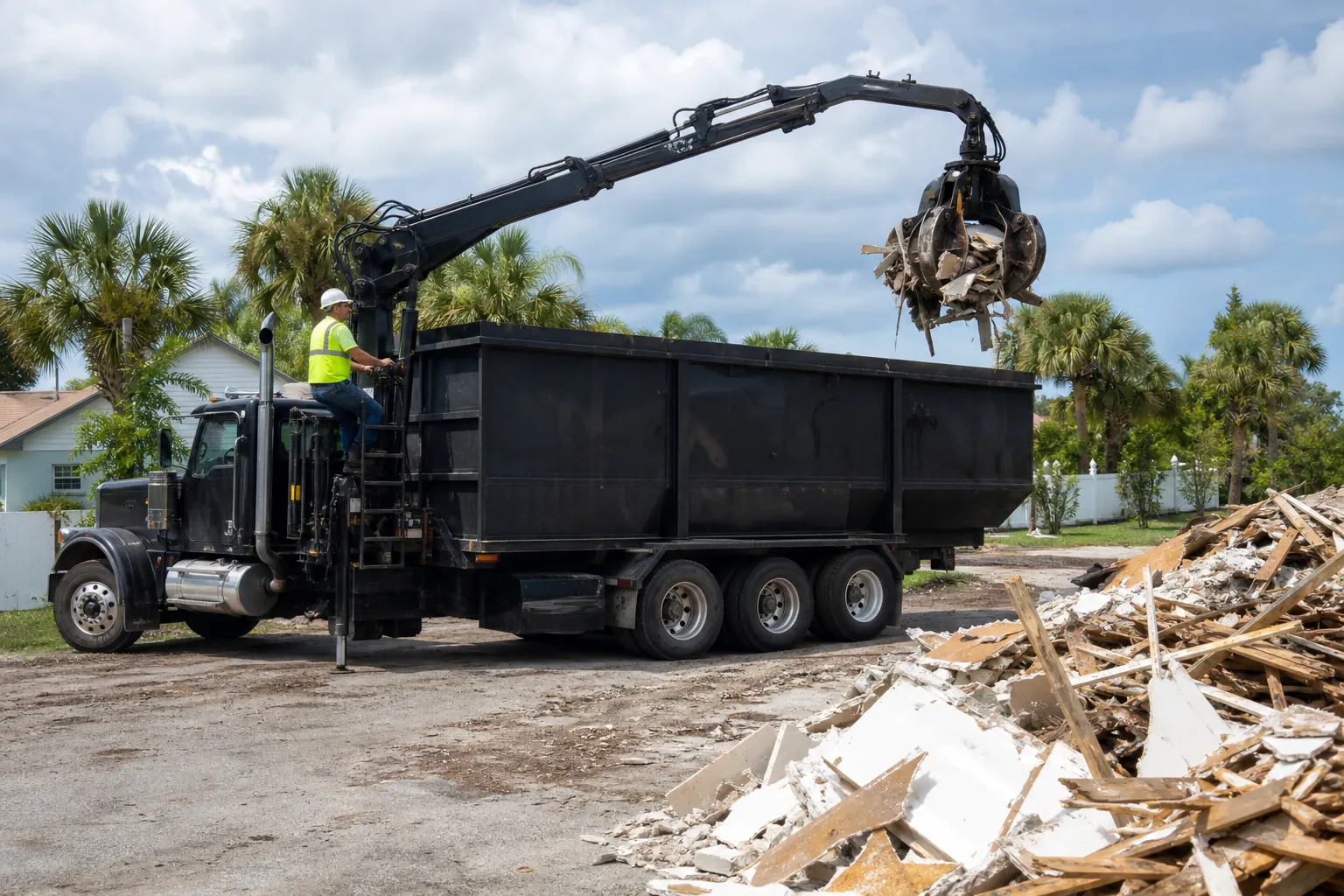
A grapple truck uses a mechanical arm and claw to pick up accessible piles of material. Rather than requiring every piece to be carried into a container by hand, the equipment can collect suitable debris from an agreed loading location.
That approach can be useful when a project produces a substantial pile of bulky material. Renovation tear-outs, certain demolition cleanups, and staged construction scraps may be candidates, depending on the material and site conditions.
Grapple loading is not a substitute for evaluating the property. The truck needs a workable position, the arm needs clearance, and the pile must be within the equipment's usable reach. A pile behind a fence or under utility lines may require a different arrangement.
It is also important to distinguish hauling from demolition or interior removal. Do not assume that a debris pickup includes taking apart structures, moving waste out of rooms, or cleaning every small fragment from the ground. Confirm the scope before scheduling.
For a South Daytona project, send Daytona Grapple Trucks photographs of both the debris and the surrounding access area. Those images can help clarify whether the proposed loading location is practical before anyone moves the pile twice.
Build A Material Inventory Before Requesting A Quote
A useful estimate begins with information that can be checked. Saying that you have a large pile is less helpful than explaining that it contains dismantled wood cabinets, drywall pieces, and several doors from a kitchen renovation.
Measure the pile's approximate length, width, and height when possible. These dimensions help describe volume, but they do not establish weight. Dense materials may reach a vehicle's allowable weight limit before its available space is filled.
Take photographs from more than one angle. Include a wider view that shows the driveway or loading area, not just a close-up of the debris. Mention material hidden beneath the visible top layer.
- Provide the South Daytona property address and explain whether the project is residential, commercial, or managed by a contractor.
- List the main materials and identify any concrete, soil, tile, brick, or roofing material in the pile.
- Share approximate pile dimensions and clear photographs that show both volume and access.
- Explain whether all debris is already outside or whether additional staging work is still needed.
- State your preferred pickup window and disclose any gate, parking, or property-management restrictions.
Ask what the estimate includes and what could change it. Loading difficulty, additional material, multiple trips, or a disposal requirement may affect the final scope. A clear discussion is more useful than an estimate based on incomplete information.
Choose A Loading Location That Protects Access
The best staging location is not necessarily the spot closest to the renovation. It is the location that allows approved loading while keeping people, vehicles, and property features out of the way.
Before moving debris, ask where the truck should position itself and how close the pile needs to be. Do not guess at equipment reach. A short conversation can prevent unnecessary handling and reduce the risk of placing debris somewhere inaccessible.
Overhead clearance deserves particular attention. Utility lines, tree branches, roof edges, and other obstructions can interfere with an elevated loading arm. Never stage material beneath power lines on the assumption that the operator can work around them.
Ground conditions also matter in Florida. Rain can soften unpaved areas, and a heavy truck may not be suitable for every lawn, shoulder, or driveway surface. Tell the hauling provider about soft ground, recent saturation, or pavement concerns.
- Keep the proposed truck approach free of parked vehicles, trailers, pallets, and stored supplies.
- Preserve access to building entrances and avoid blocking emergency routes or neighboring driveways.
- Identify irrigation heads, drainage features, septic components, and other vulnerable property features near the loading area.
- Confirm permission before using a shared driveway, parking area, or space controlled by a property manager.
Do not place construction debris in a street, on a sidewalk, or in a public right-of-way without checking applicable requirements. Private hauling does not automatically authorize public-space staging. Verify any needed approvals with the relevant local authority.
Separate Materials That Need Special Handling
Not everything generated during construction belongs in a general debris pile. Some items need specialized handling because of their contents, condition, or disposal restrictions. Others may be acceptable only under specific arrangements.
Keep paints, solvents, fuels, pesticides, and unidentified liquids apart from ordinary construction material. Leave them in appropriate labeled containers when safe to do so, and ask about an authorized disposal option rather than hiding them inside the pile.
Older building materials can present additional concerns. If asbestos or another regulated substance is suspected, stop disturbing that material and seek qualified guidance. A debris hauler should not be expected to determine whether an unknown substance is safe by looking at it.
Concrete, brick, tile, and soil are not automatically hazardous, but they are heavy. Separating them can make the loading and disposal plan clearer. Confirm acceptance and quantity limits before combining them with lighter renovation debris.
- Do not mix suspected asbestos-containing material into an ordinary construction debris pile.
- Set aside batteries, electronics, refrigerant-containing equipment, and chemical containers for separate review.
- Disclose treated wood and unusual coatings so the disposal requirements can be discussed.
- Ask about glass, sharp metal, and long pieces that may need particular staging or handling.
These precautions are not just about keeping a pile tidy. They help avoid unsafe handling, rejected loads, and delays caused by material that cannot follow the planned disposal route.
Schedule Cleanup Around The Work, Not Just The Calendar
Construction debris haul away is most useful when it supports the next phase of the project. A pickup scheduled too early may leave another large pile behind. A pickup scheduled too late may block deliveries or consume space needed for finishing work.
For a single-room renovation, one collection after the main tear-out may be enough. For a larger project, staged removals may make more sense. Discuss likely debris production with the contractor before choosing a pickup date.
In South Daytona, outdoor staging also means planning for Florida weather. Rain can soak loose material, make small scraps harder to collect, and change ground conditions. Do not assume a wet site will remain accessible to heavy equipment.
Secure lightweight material so it does not blow into nearby properties or drainage areas. Any covers or restraints should be arranged safely and discussed with the hauling provider if they affect loading.
- Schedule removal after the planned debris is staged but before the area is needed for another trade or delivery.
- Tell the hauling provider if more material may be added before pickup so the scope can be reviewed.
- Keep workers and other equipment clear of the loading zone during the agreed service window.
- Have an authorized contact available to answer questions about access, material, or property boundaries.
If weather or construction timing changes, communicate early. Confirm whether the pickup can proceed safely and whether the updated pile still matches the original description.
Understand What Influences The Cost Of Hauling
There is no reliable universal price for construction debris removal because loads and properties vary. Two piles that appear similar may have very different weights or access requirements.
The amount of debris is one factor, but material type is equally important. A bulky pile of wood may not create the same hauling requirements as a smaller pile of concrete. Disposal charges and facility acceptance can also differ by material.
Access affects the work involved. A well-staged pile in an approved, reachable location may be simpler to load than material spread across several areas. Extra handling should be discussed rather than assumed to be included.
When comparing estimates, compare scope as well as price. Ask whether the quote covers the described material, loading, transportation, and disposal. Clarify how additional trips or changes in the pile would be handled.
Also ask about the expected cleanup standard. Mechanical pickup of bulky debris may leave small fragments, nails, or dust that require a separate final pass. Knowing who handles that work helps avoid misunderstandings at the end of service.
Grapple Pickup Vs. A Dumpster: Match The Method To The Site
A dumpster and a grapple truck solve related problems in different ways. A dumpster provides a container that workers can fill over time. Grapple hauling focuses on collecting an accessible pile at an arranged point in the project.
A container may suit a job with steady daily waste generation and a suitable place to keep it. Grapple pickup may suit a project where debris is already staged and the priority is removing that accumulated material.
Neither method removes the need to check material restrictions, placement rules, or weight considerations. A dumpster can be overloaded, and a grapple pile can be inaccessible. The right choice depends on the project rather than the name of the service.
Consider how much handling your crew can manage, how long the site needs to store waste, and what space is available. Ask Daytona Grapple Trucks whether your proposed pile fits grapple loading before committing to a staging plan.
Finish The Cleanup With A Careful Site Check
Once the main debris is removed, inspect the loading area before returning it to normal use. Large pieces are only part of a construction cleanup. Fasteners, splinters, shards, and small offcuts can remain where the pile sat.
Use appropriate protective equipment and tools for the remaining material. Keep children, pets, and unnecessary foot traffic away until the area has been checked. A magnetic sweeper may help collect ferrous fasteners, but it will not remove glass or every type of metal.
Check nearby drainage paths for loose debris without pushing material into them. If soil or landscaping was disturbed, assess what restoration is needed. Document any concern promptly and discuss it with the responsible party.
For contractor-managed projects, record what was removed and whether another pickup will be needed. Keep any hauling or disposal documentation provided, especially when the property owner or project specifications require it.
Plan Your South Daytona Debris Pickup
A smoother cleanup starts with a clear inventory, a safe loading location, and realistic expectations about what the service includes. Those details help turn an inconvenient debris pile into a manageable part of the construction schedule.
If you are planning construction debris haul away in South Daytona, call Daytona Grapple Trucks at (386) 481-7913. Describe the materials, approximate pile size, and available access, then ask about acceptance, scheduling, and the loading plan.
Confirming those points before moving or mixing debris can save extra work. It also gives you a practical next step toward a cleaner, more usable jobsite.
Call (386) 481-7913 to talk through next steps.