
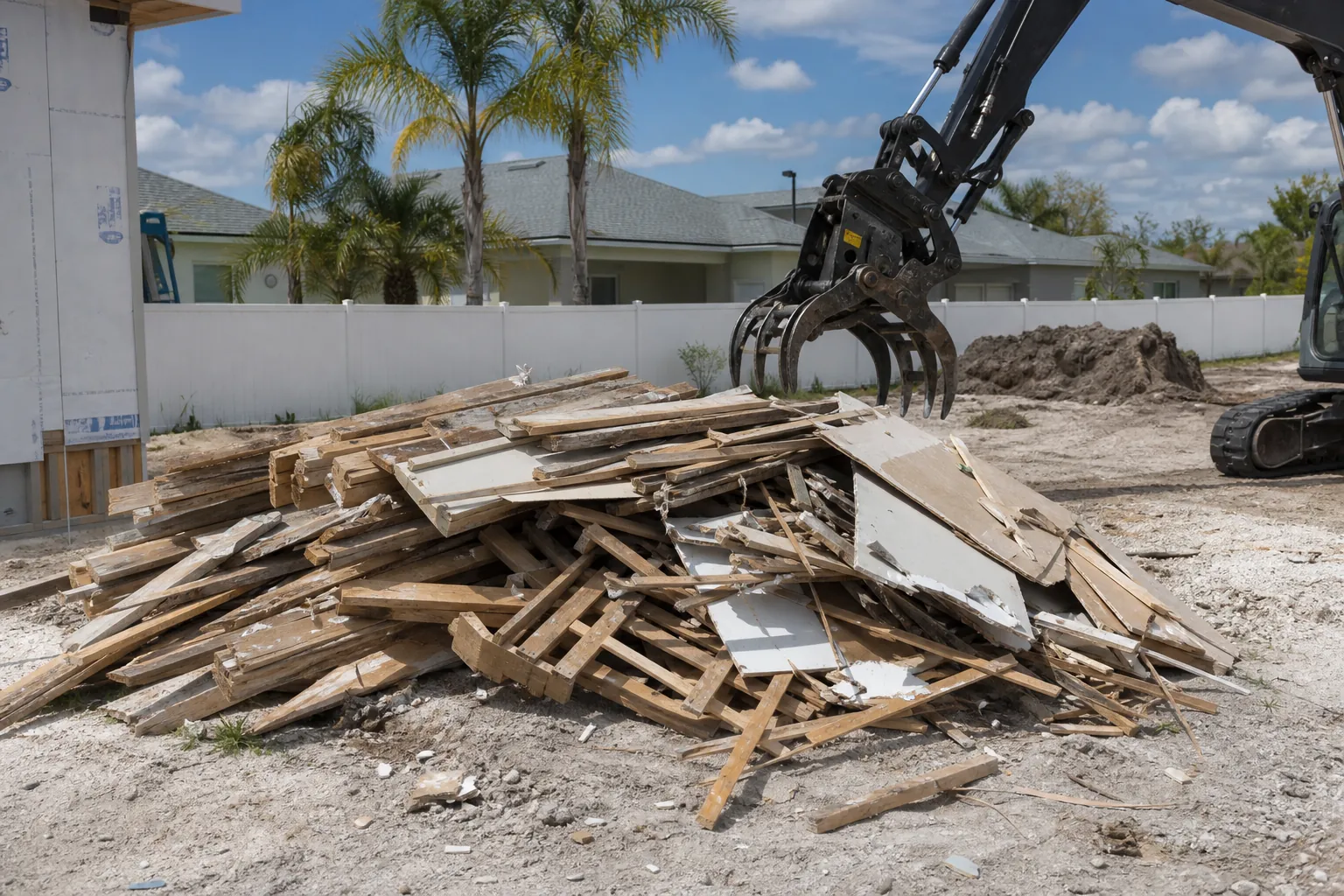
On a small Daytona jobsite, the best construction debris staging area is usually the spot that balances truck access, available space, overhead clearance, ground conditions, and separation from daily work. Choosing that location early can reduce repeated material handling and help keep the site organized before grapple pickup. Use the following steps to evaluate the property, prepare the pile, and discuss site-specific questions with Daytona Grapple Trucks.
Start With the Grapple Truck’s Access Route
Before placing debris, trace the full route a grapple truck would need to use from the street to the proposed staging area. A space may look convenient for workers but still be difficult for a large vehicle to approach or leave. Consider the width of gates, driveways, turns, and temporary access lanes. Look for parked vehicles, stored materials, fencing, trailers, equipment, or landscaping that could narrow the route.
The staging point should allow the driver to approach without navigating an unnecessarily complicated path. Avoid assuming the truck can cross every open-looking area. Soft soil, recently disturbed ground, drainage areas, and surfaces not intended for heavy vehicles may be unsuitable. If the pile will be near a driveway or street entrance, confirm that it will not block ordinary site traffic while waiting for pickup.
When access is uncertain, take clear photos from the street toward the pile and from the pile toward the exit. Then call (386) 481-7913 to discuss the location before adding more debris.
Choose a Clear Area Around and Above the Pile
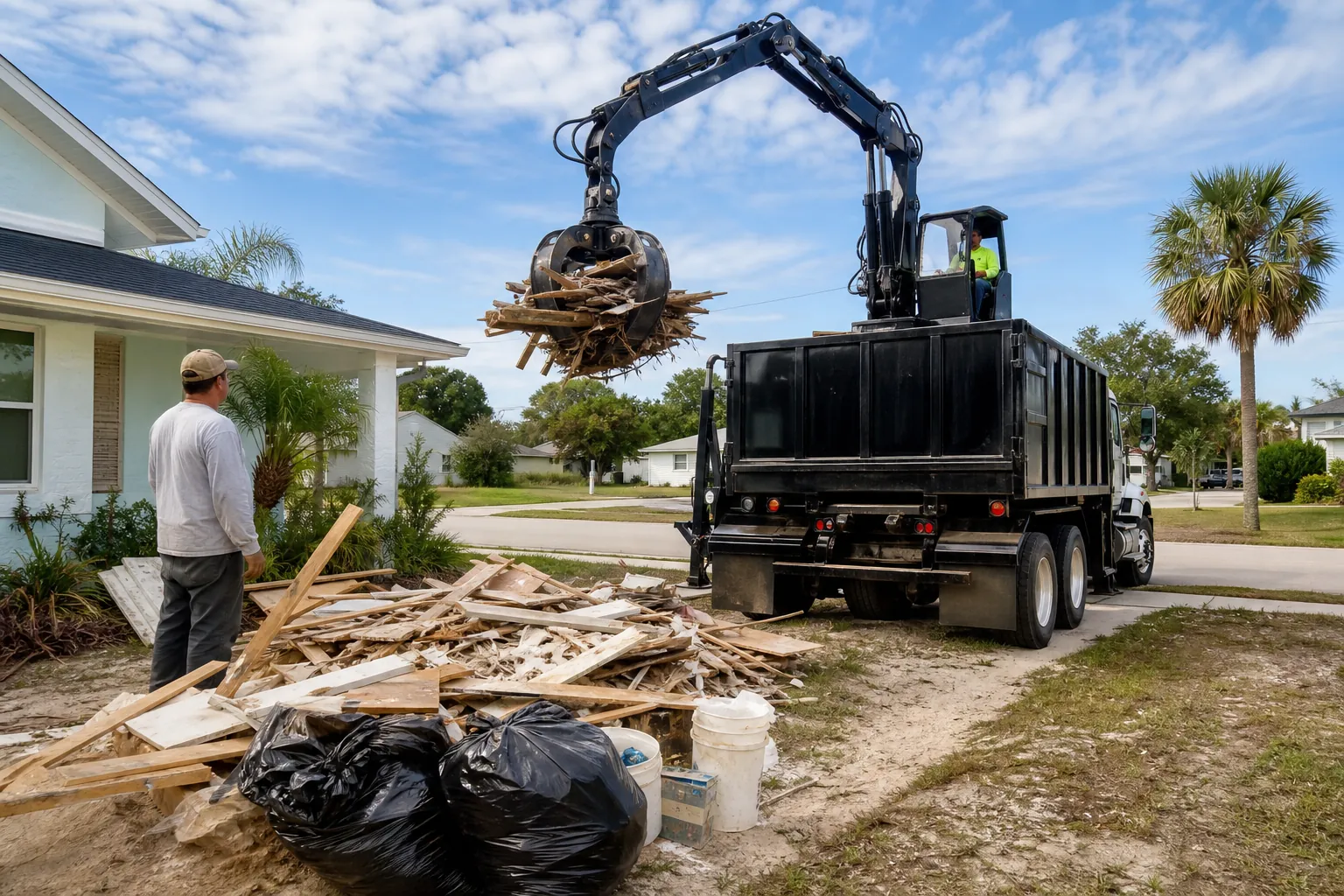
A grapple pickup requires more than enough room for the debris itself. The truck also needs a workable position near the pile, and the grapple must have clear space above and around the material. Check for overhead utility lines, tree limbs, building projections, temporary cables, signs, and other obstructions. Do not stage debris under or immediately beside anything that could interfere with lifting.
Side clearance matters too. A narrow strip between a building and a fence may hold a pile, yet leave little practical room for pickup. The same concern applies to piles tucked behind equipment, containers, or stacked materials. Select a location that remains visible and reachable rather than one that becomes enclosed as construction progresses.
Review the staging area from several angles, not just from where crews will deposit debris. Imagine the truck positioned nearby and consider whether surrounding objects would limit access. If the only available space has close overhead or side obstructions, discuss the site before committing to that location.
Keep Debris Separate From Active Jobsite Functions
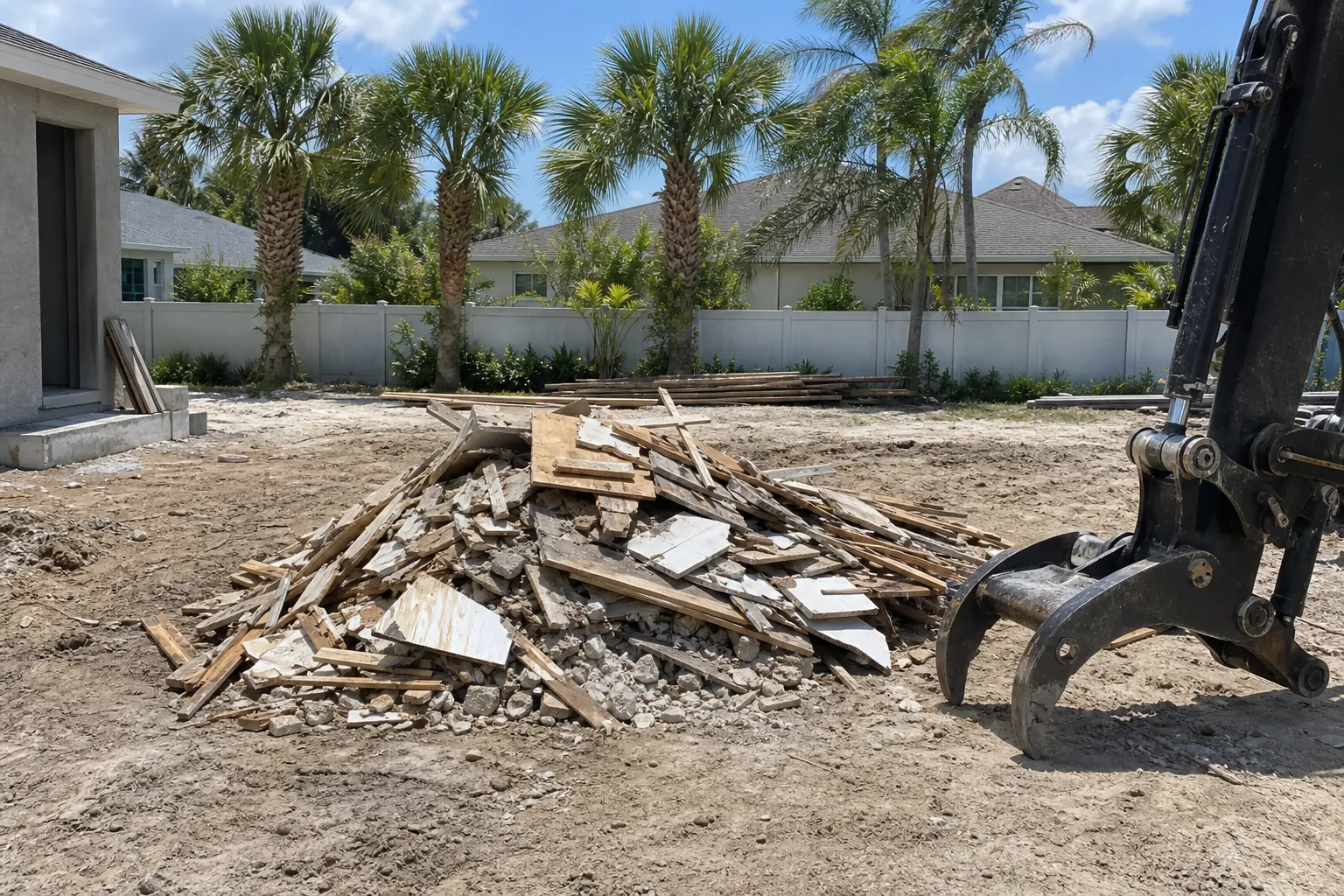
A small site often asks one area to serve several purposes, but the debris pile should not compete with essential work zones. Keep it away from primary entrances, worker walkways, material delivery points, equipment paths, and spaces needed for loading or parking. The goal is to prevent the pile from forcing people or vehicles into awkward detours.
Plan the location with the full project sequence in mind. A convenient empty corner today may be needed tomorrow for a delivery, inspection, trade access, or material storage. Moving the entire pile later adds work and can scatter debris across the site. Marking a defined staging boundary can help crews place material consistently without allowing the pile to spread.
- Identify the truck approach and exit before work starts.
- Reserve clear space around and above the debris.
- Keep entrances, walkways, and active equipment routes open.
- Avoid drainage paths, unstable ground, and sensitive surfaces.
- Tell every crew where debris should and should not be placed.
Recheck the area as the project changes.
Build a Contained and Accessible Debris Pile
Even a well-chosen staging area can become difficult to use if debris is scattered, hidden, or allowed to spread. Place material within a clearly defined footprint and keep the approach side unobstructed. Avoid creating a long, thin trail of debris along a fence or structure when a more compact pile can be maintained in an accessible location.
Do not let loose pieces migrate into the street, sidewalk, neighboring property, drainage area, or working path. Lightweight material may need attention so that ordinary site activity or weather does not distribute it. Crews should also avoid burying objects that require separate handling beneath the general pile. If there is uncertainty about what is present, identify it before scheduling.
Establish one person responsible for checking the staging area. That person can watch the pile’s footprint, preserve access, and stop workers from filling the reserved truck approach. Before pickup, photograph the entire pile and its surroundings. Accurate information helps create a more useful conversation about access, placement, and the factors affecting the job.
Confirm the Plan Before Scheduling Pickup
Before arranging pickup, review the pile as it actually exists rather than relying on the original plan. Construction sites change quickly. A new delivery, temporary fence, parked vehicle, or additional material can turn a previously open approach into a restricted one. Walk from the public access point to the debris and note every gate, turn, surface, and obstruction.
Be ready to describe the debris, its approximate footprint, the ground surface, nearby structures, overhead conditions, and the proposed truck position. Photos can make these details easier to understand. If cost is part of your decision, read the factors that can affect grapple truck pickup cost in Daytona Beach before calling. It can help you organize the information needed for a focused discussion.
Do not wait until the pile blocks the site or outgrows its planned area. Early review gives you time to adjust the staging location while crews can still do so efficiently.
Discuss Your Daytona Jobsite
If you are deciding where to stage construction debris on a small Daytona jobsite, call Daytona Grapple Trucks at (386) 481-7913. Describe the access route, pile location, surrounding clearance, and ground conditions so the conversation can focus on your site.
Call (386) 481-7913 to talk through next steps.