
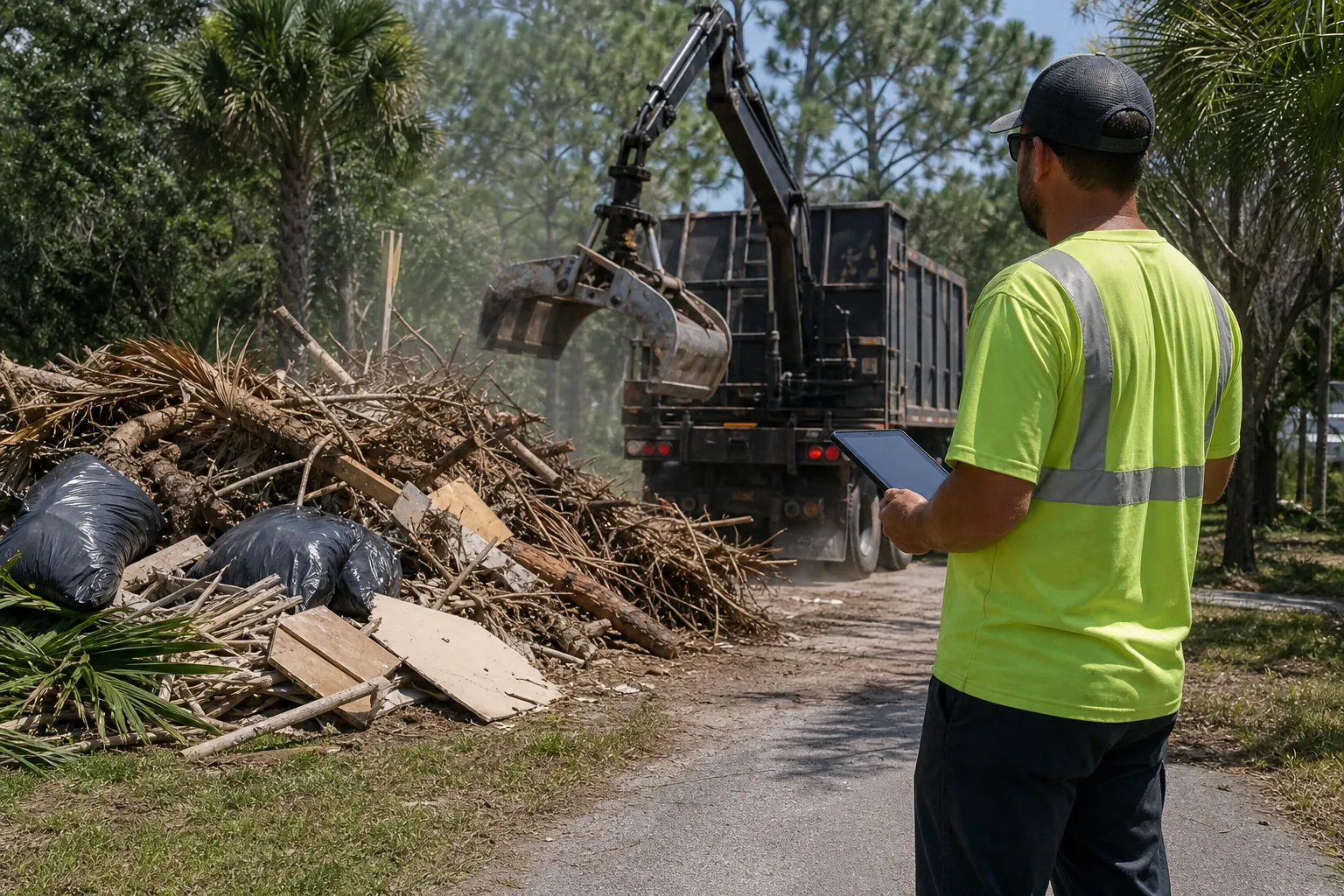
Before calling about a contractor debris pile in Volusia County, gather clear information about the pile and the route leading to it. Accurate details help make the initial conversation more useful and reduce uncertainty about the site. Focus on what can be observed, measured, photographed, and communicated without guessing.
Start With the Exact Location of the Debris Pile
Provide the street address and explain where the pile sits on the property. A location such as “behind the building” may not be specific enough when a site has multiple entrances, structures, or work zones. Instead, identify the entrance closest to the pile and describe the route from that entrance.
State whether the debris is beside a driveway, within a fenced area, near a structure, or elsewhere on the site. Mention whether the pile can be seen from the road or requires someone on site to point it out. If the property includes marked units, lots, buildings, or gates, include those identifiers.
Contractors should also explain whether the pile may be moved before pickup is discussed. Current photos are most useful when they show the same location and arrangement that will be present later. If several piles exist, number or label them in the description so each one can be discussed clearly.
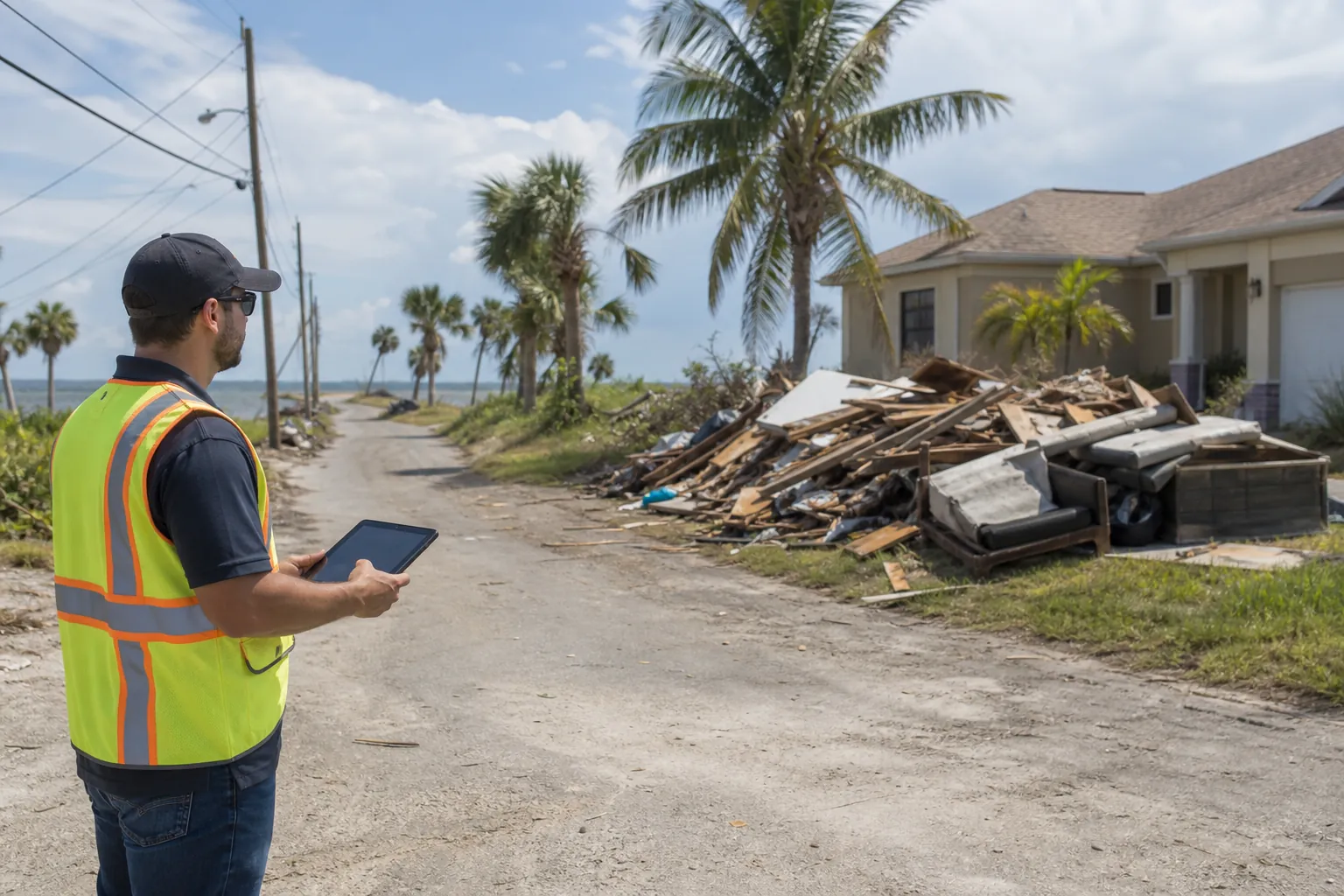
Describe the Approach From the Road to the Pile
The access route matters as much as the pile location. Walk or review the full approach, beginning at the public road or property entrance. Note turns, narrow points, gate openings, parked vehicles, temporary fencing, stored materials, equipment, and active work areas. Avoid describing access as simply “easy” or “open,” because those terms are subjective.
Concrete observations are more useful. Explain whether the route is paved, gravel, compacted ground, or another surface. Identify soft areas, standing water, deep ruts, sharp changes in grade, or uneven transitions that are visible at the time of review. If the route passes through a shared driveway or occupied work zone, mention that as well.
Measure restricted openings when practical rather than estimating them from memory. A photo taken from the entrance toward the pile can provide context, while additional photos can document turns and pinch points. Do not assume that road access automatically means direct access to the debris.
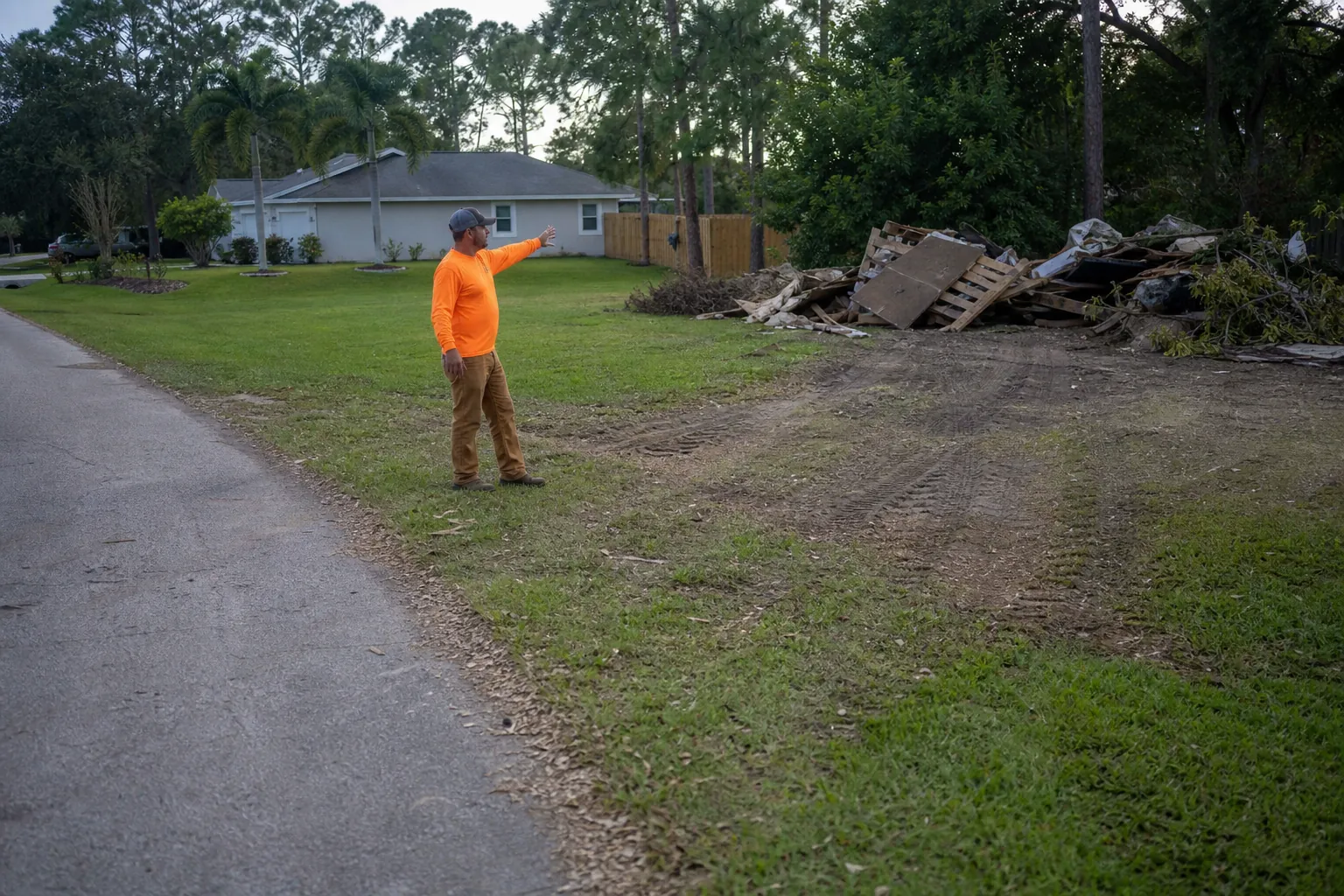
Identify Overhead, Side, and Ground-Level Obstacles
Look beyond the driving surface when documenting access. Overhead and side obstacles may affect how the site can be approached. Note visible tree limbs, utility lines, roof overhangs, signs, canopies, scaffolding, and other features along the route or near the pile. Do not estimate clearance unless it has been measured. Photos from multiple angles can communicate the conditions without relying on uncertain numbers.
At ground level, identify curbs, ditches, drains, utility covers, septic areas, landscape borders, irrigation components, and newly completed surfaces. Also mention nearby walls, fences, vehicles, containers, equipment, or stacked materials. The goal is not to decide whether an obstacle is acceptable. The goal is to disclose it before arrangements are made.
Use a simple site-access checklist:
- Exact address, entrance, and pile location
- Gate or opening measurements, when available
- Surface type and visible ground conditions
- Turns, slopes, curbs, ditches, and narrow sections
- Overhead lines, branches, roofs, and signs
- Nearby structures, vehicles, fencing, and equipment
- Current photos showing the route and pile
Explain Site Controls, Timing, and Contact Procedures
Access can depend on more than physical space. Tell Daytona Grapple Trucks about gates, locks, entry procedures, or other site controls relevant to reaching the pile. If someone must provide entry, identify that person and give a reliable contact number. State whether a site representative needs to be present and how that person can be reached.
Describe conditions that may change the route, including scheduled deliveries, active construction areas, temporary barriers, parked equipment, or materials that may block the approach. If another contractor controls part of the site, clarify who can authorize access. Contractors should not assume that an unlocked entrance or open route will remain available.
It is also helpful to explain whether the pile location is fixed or whether ongoing work could alter its size, contents, or surroundings. Send updated photographs if conditions change after the initial discussion. Clear communication helps everyone work from the same current information instead of an earlier site description that may no longer be accurate.
Provide Clear Details About the Debris Itself
Access information should be paired with a straightforward description of the pile. Explain what the visible debris consists of without using broad labels when more specific wording is possible. If different materials are mixed together, say so. If there are several separate piles, describe each pile and its location rather than combining them into one rough estimate.
Provide approximate dimensions when they can be measured safely: length, width, and height are more useful than terms such as “small” or “large.” Include wide photos that show the complete pile and closer photos that make the visible materials easier to identify. Place a familiar object in the frame for scale only when doing so is safe.
Cost discussions may depend on multiple details, not access alone. For related planning considerations, read grapple truck pickup cost factors in Daytona Beach. Keep your notes, measurements, and current photos together so they are ready when you call.
Discuss Your Volusia County Debris Pile
Before calling, confirm the address, pile location, route conditions, visible obstacles, site contact, measurements, and photos. Then call Daytona Grapple Trucks at (386) 481-7913 for a calm, focused discussion about the debris pile and site access.
Call (386) 481-7913 to talk through next steps.