
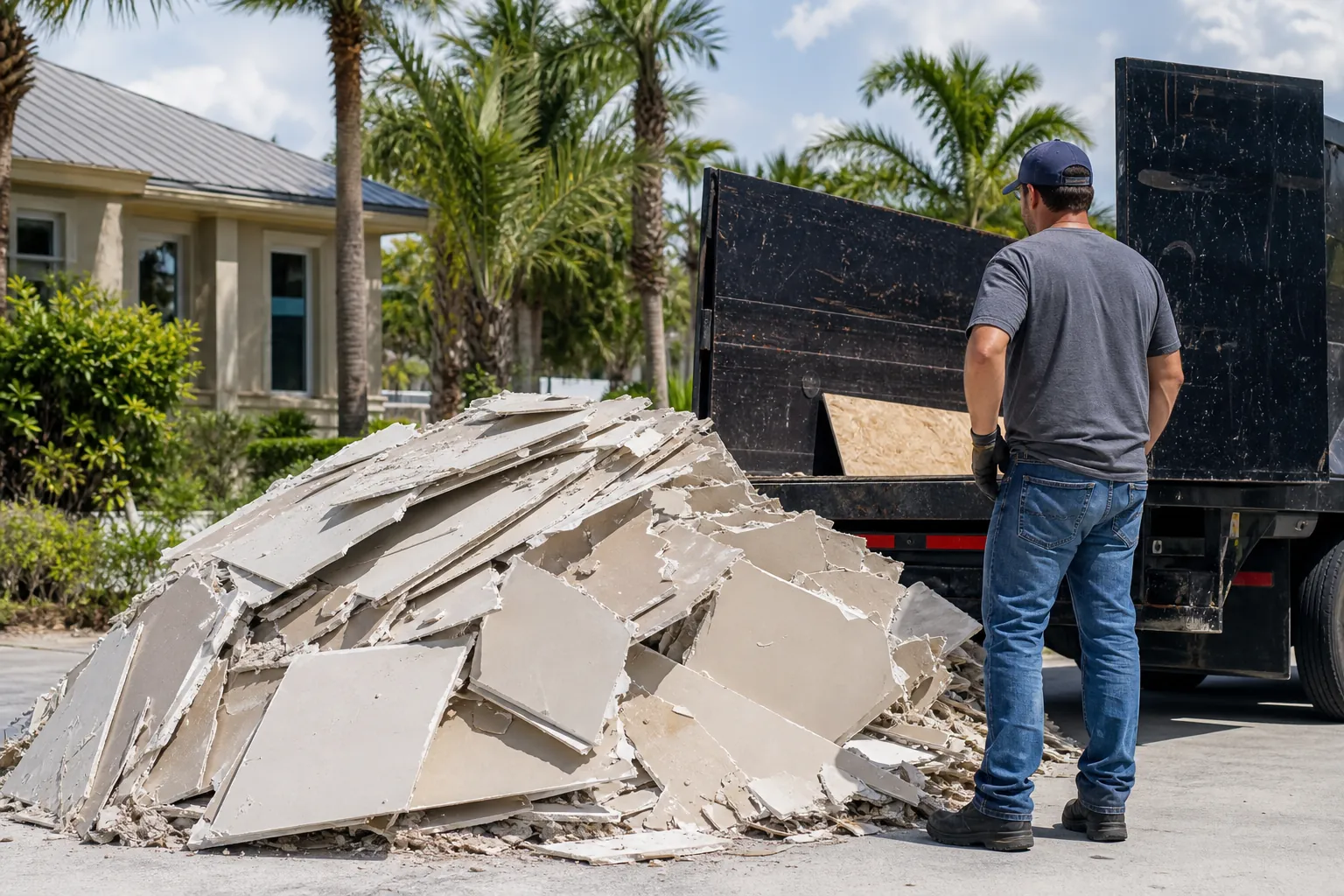
Drywall removal can leave a bulky pile that needs careful planning before anyone loads or transports it. In Florida, property owners should first identify the material, confirm which rules apply locally, and ask the hauling provider what information is needed before scheduling. Requirements may differ by municipality, county, disposal facility, property type, and project. The practical steps below can help you make an informed decision without assuming every drywall pile is handled the same way.
Start by Identifying What Is Actually in the Pile
Before arranging hauling, determine whether the debris is clean drywall or a mixed construction pile. Drywall may be combined with wood, metal, insulation, roofing material, flooring, packaging, or household trash during demolition. That distinction matters because a disposal facility or local authority may classify and accept mixed loads differently from separated material.
Walk around the pile and note visible materials. If demolition is still underway, ask workers to keep drywall separate when practical. Do not place liquids, sealed containers, batteries, chemicals, or unidentified materials into the pile. If the property is older or the material appears unusual, damaged, contaminated, or associated with a regulated substance, pause and seek guidance from the appropriate local authority or a qualified specialist before moving it.
Take clear photos from several angles. Include a wide view showing access and close views showing the contents. Accurate descriptions and photos help a provider evaluate the pickup rather than relying on a vague estimate.

Confirm Local Rules and Facility Acceptance
Florida property owners should not assume that one statewide instruction answers every drywall disposal question. Collection, transport, and disposal requirements can depend on local ordinances and the policies of the facility receiving the material. Contact the city or county office responsible for solid waste, code compliance, or construction debris if you are uncertain. Ask which facilities accept drywall or mixed construction and demolition debris from your area.
When contacting a disposal facility, describe the material honestly. Ask whether drywall must be separated, whether mixed loads are accepted, and whether there are restrictions related to wet, burned, mold-affected, painted, or otherwise altered material. Also ask whether the facility requires documentation or has preparation rules. Policies can change, so confirm current requirements directly instead of relying on an old project, a neighbor’s experience, or an online comment.
If a renovation involves permits, an association, a commercial property, or a managed community, check whether those parties impose additional debris-handling or staging requirements.
Prepare the Debris and Access Area Safely
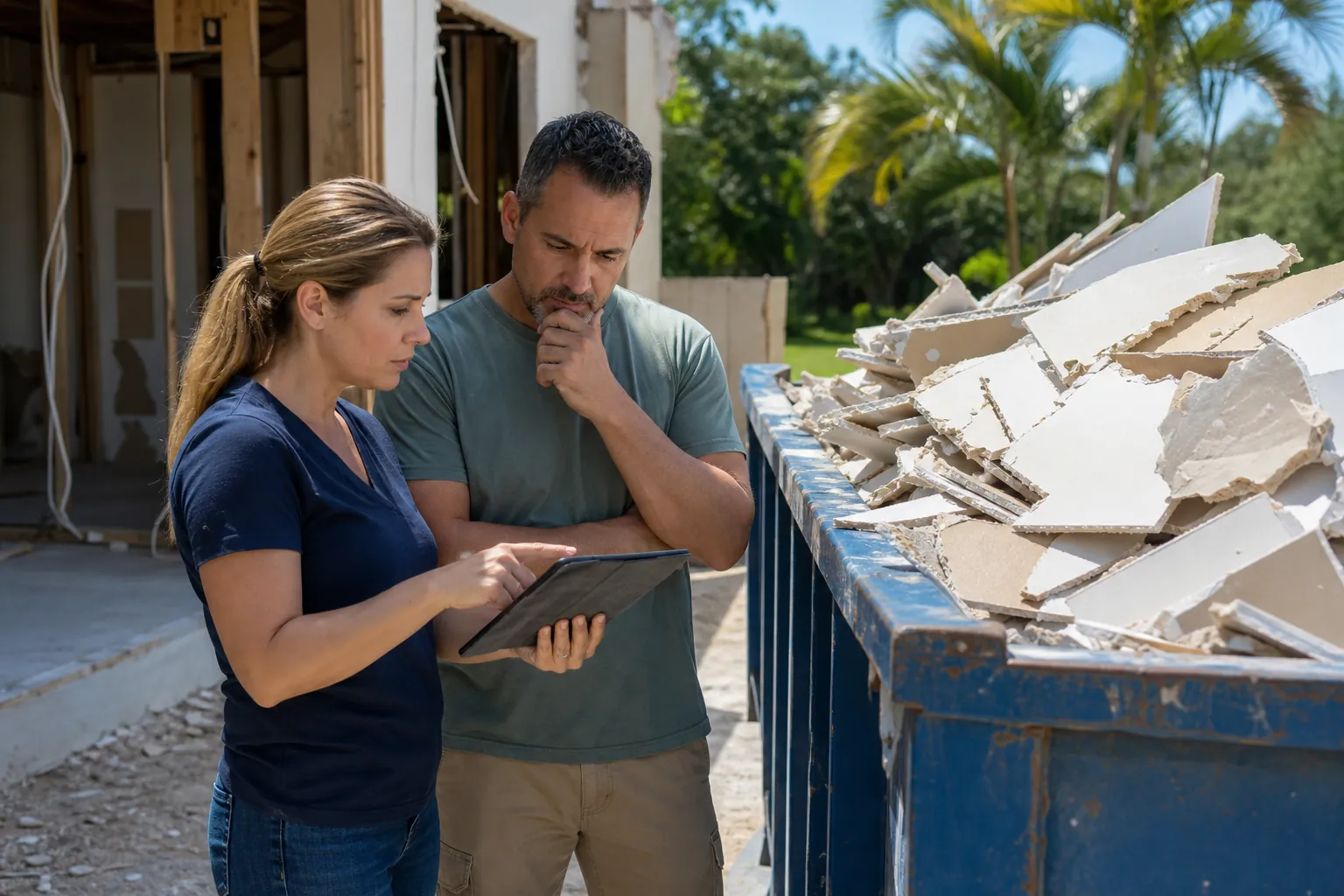
A well-prepared pickup area can reduce confusion and help the provider assess whether the debris is reachable. Choose a staging location only after considering ownership boundaries, utility features, vehicles, buildings, landscaping, drainage areas, and overhead obstructions. Do not place debris on a street, sidewalk, easement, neighboring property, or shared area without confirming that placement is allowed.
Before discussing pickup, review these practical details:
- Separate drywall from unrelated waste when practical and required.
- Keep the pile visible and describe any hidden materials.
- Identify gates, narrow approaches, soft ground, slopes, and overhead lines.
- Move vehicles and personal property away from the access route.
- Confirm whether property, association, or municipal approval is needed.
- Keep children and pets away from the debris and work area.
- Do not disturb suspicious or potentially regulated material.
Weather also matters. Rain can change site conditions and add weight to exposed debris. Tell the provider if the pile is wet, covered, indoors, behind a gate, or positioned near a structure.
Give the Hauling Provider Complete Project Details
A useful conversation with a hauling provider should cover the debris, quantity, placement, access, and timing. State whether the material came from a small repair, interior renovation, storm-related damage, or larger demolition. Describe the pile’s approximate dimensions and identify anything mixed with it. Photos with a recognizable reference object can make the scale easier to understand.
Explain where the pile sits in relation to the driveway or other access point. Mention gate widths, low branches, utility lines, septic areas, pavers, soft soil, tight turns, parked vehicles, or other constraints. If you do not know whether the location is workable, ask what photos or measurements would help.
Pricing can reflect several project-specific considerations. For a broader planning overview, read about grapple truck pickup cost factors. Before agreeing to a pickup, ask what information the quote covers and whether changes in volume, contents, access, or disposal classification could affect the final amount.
Document the Plan Before Pickup Day
Once you have discussed the project, write down the agreed details. Keep the photos you provided, the material description, the proposed staging location, and any instructions about separating or excluding items. If a local office or disposal facility gave guidance, record the office or facility name, the date, and the information received. Documentation helps you compare options and reduces the chance that the pickup arrives to a materially different situation.
Recheck the pile shortly before the scheduled work. Renovation sites change quickly, and other workers or residents may add items after the original discussion. Notify the provider if the volume, material mix, moisture condition, or access has changed. Do not conceal questionable contents under drywall.
Property owners should also clarify who is responsible for obtaining any placement approval or project-specific authorization. A hauling conversation does not replace advice from local officials or qualified professionals when regulated materials, permits, contamination, or unusual site conditions are involved.
Discuss Your Drywall Debris Pickup
If you are evaluating a drywall debris pickup in Florida, prepare photos, pile dimensions, a material list, and access details before calling. For a calm, direct conversation about the project, contact Daytona Grapple Trucks at (386) 481-7913.
Call (386) 481-7913 to talk through next steps.