
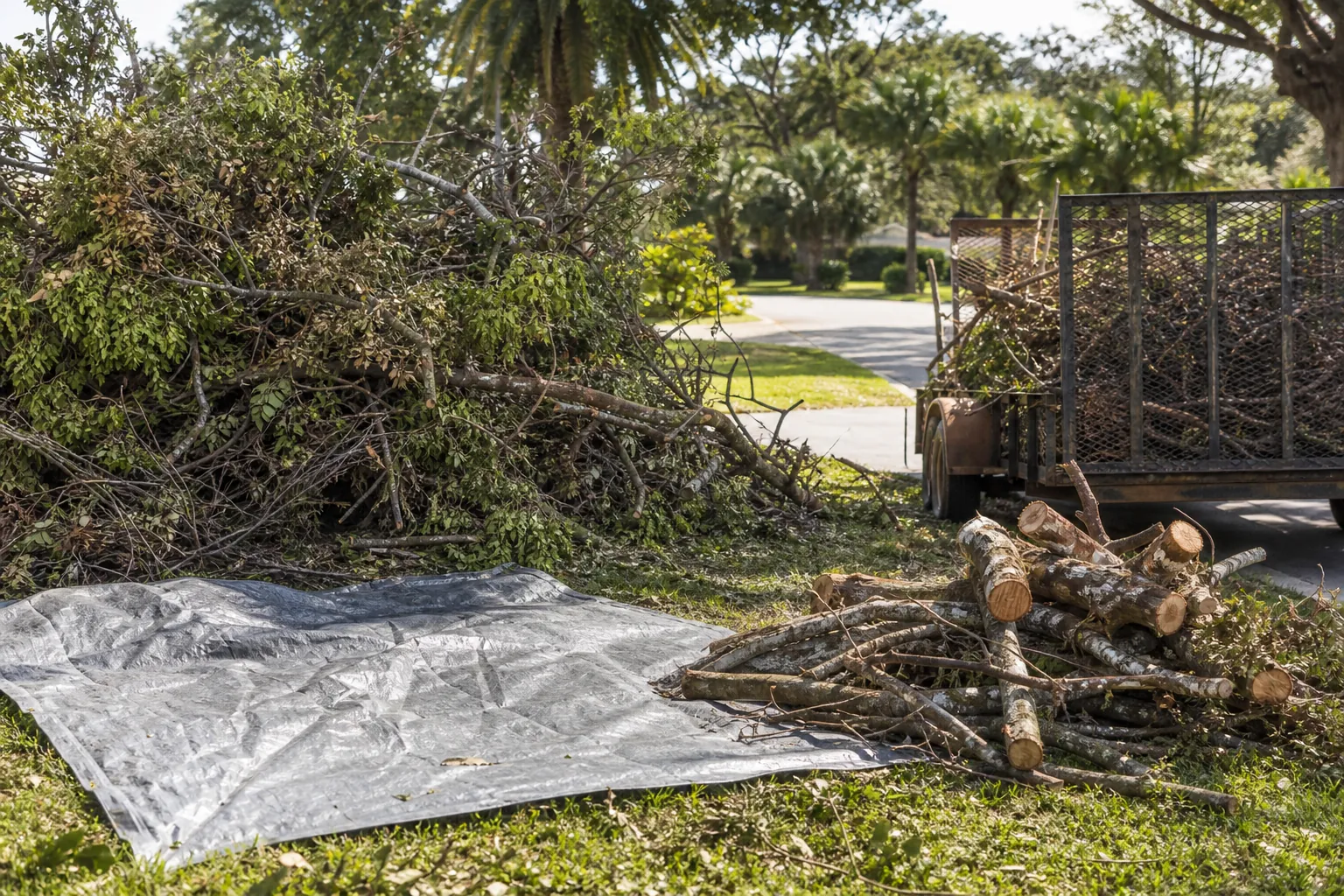
Preparing fallen branches for hauling starts with one decision: determine whether the debris can be handled without entering an unsafe area. Storm damage, suspended limbs, power lines, traffic, unstable trees, and hidden sharp objects can turn routine cleanup into a serious hazard. Port Orange property owners should secure the area first, organize only what can be reached safely, and keep the eventual pickup path clear. The following steps can help you evaluate the debris and prepare it without creating additional problems.
Assess the Area Before Moving Any Branches
Walk around the affected area from a safe distance before touching the debris. Look above the pile as well as around it. A branch on the ground may be connected to another limb that is bent, split, or suspended overhead. Do not work beneath hanging branches or near a tree that appears unstable. Keep children, visitors, and pets away while you assess the site.
Pay particular attention to utility lines. Treat every downed or low line as energized, and do not move branches that touch or rest near it. Avoid using tools, ladders, or vehicles in that area. Contact the appropriate utility or emergency authority when electrical infrastructure may be involved.
Also inspect the ground for holes, standing water, exposed roots, slick surfaces, insects, and damaged fencing. If branches block a road, driveway, or sidewalk, consider traffic before approaching. Do not place yourself between debris and moving vehicles. When the surroundings are uncertain, leave the branches undisturbed until the hazard has been addressed.
Separate Ordinary Debris From Unsafe Material
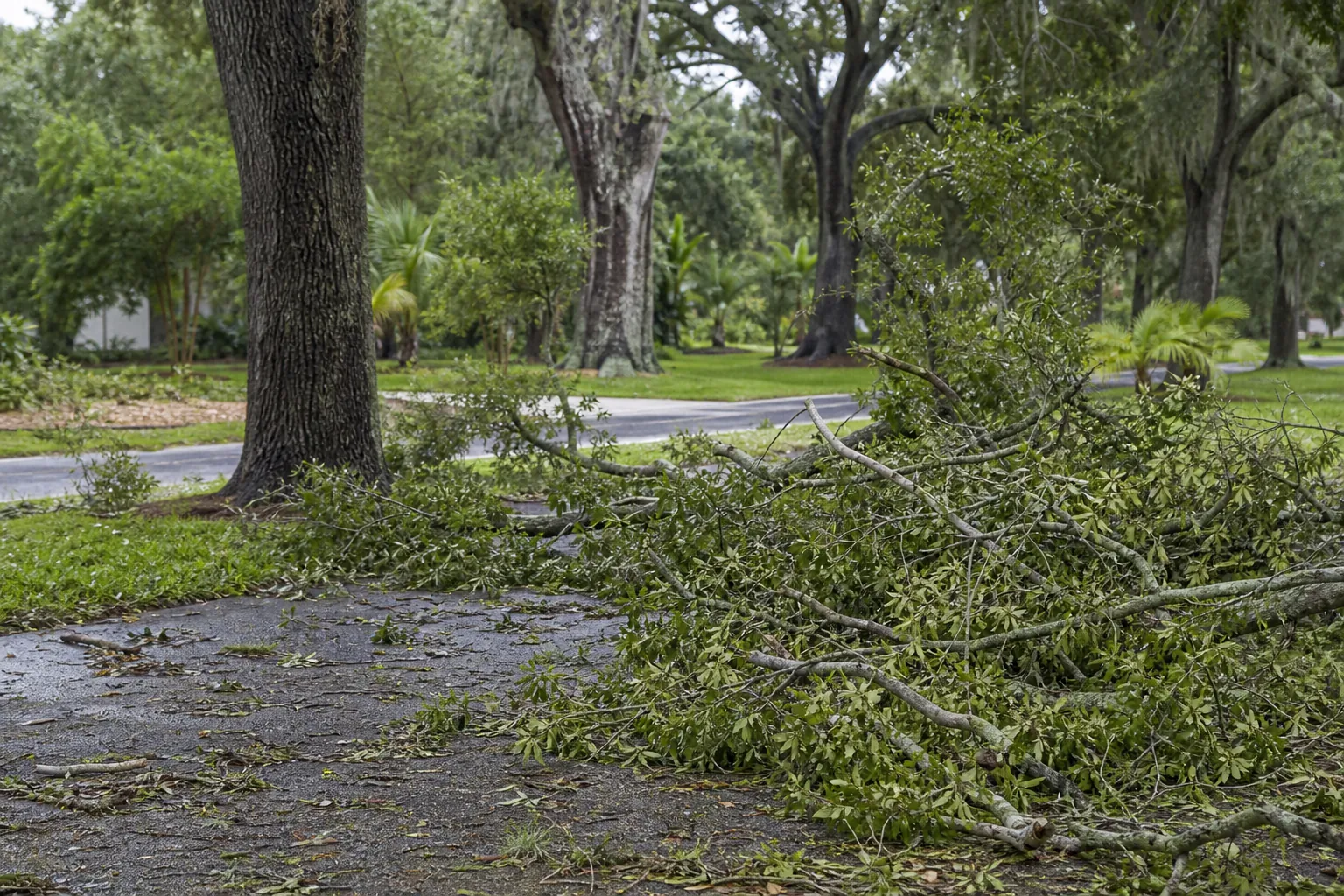
Once the area is safe to enter, identify what is actually in the pile. Fallen branches can conceal nails, wire, glass, damaged outdoor items, or pieces of fencing. These materials can injure anyone handling the debris and may complicate hauling preparations. Use sturdy work gloves and closed-toe footwear, but remember that protective clothing does not make unstable debris safe.
Sort only items that can be moved without unusual force, cutting under tension, climbing, or standing beneath damaged limbs. A bent branch can release suddenly when cut or shifted. Large trunks, root balls, and interlocked limbs can also roll or settle unexpectedly.
- Stop if branches are touching utility lines.
- Keep away from leaning trunks and suspended limbs.
- Remove visible household items, wire, and sharp objects only when safely accessible.
- Do not burn debris or place it where it blocks drainage.
- Keep people and pets outside the work zone.
If you cannot tell whether an item is safe to move, leave it in place and explain the condition when discussing hauling.
Choose a Clear and Accessible Pile Location
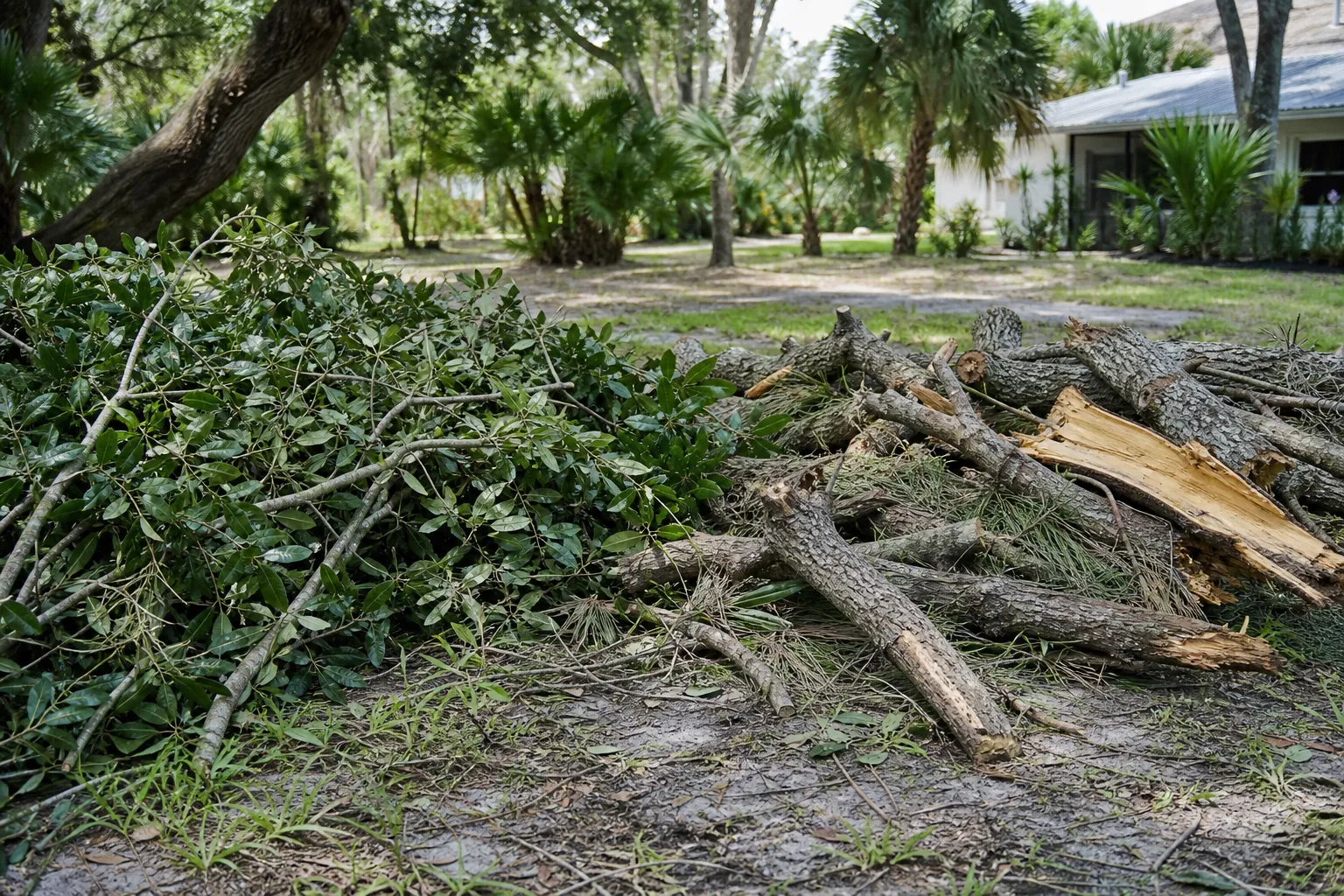
Pile placement affects both safety and access. Select a firm, open part of the property that can be reached without crossing soft ground, landscaping, septic components, drainage features, or low overhead obstacles. The location should not obstruct a street, sidewalk, mailbox, driveway entrance, fire hydrant, or neighboring property.
Keep the pile away from utility equipment and overhead lines. Avoid stacking debris against buildings, vehicles, fences, gates, or trees. A freestanding pile is easier to inspect and is less likely to damage nearby property if it shifts. Do not build the pile so high that branches can roll toward a walkway or parked vehicle.
Before choosing the location, look at the complete access route from the street to the debris. Note narrow gates, tight turns, low branches, decorative features, and parked cars. Move vehicles and lightweight personal items when doing so is safe. If suitable access is unclear, call before relocating a large amount of material. A brief conversation can prevent unnecessary handling and help you describe the site accurately.
Build an Organized Pile Without Overhandling
Organization can make the debris easier to evaluate, but there is no benefit in repeatedly moving heavy branches. Carry or drag only manageable pieces, and keep your path free of tripping hazards. Work with another adult when practical so that no one is isolated if a branch shifts or an injury occurs. Lift with control, avoid twisting, and stop when an item is too heavy or awkward.
Place branches in the same general direction when possible. Keep loose twigs and leafy material together rather than scattering them along the access route. Do not tie, bag, or bundle large branches unless you have first confirmed that this preparation is appropriate. Mixing construction material, household trash, metal, soil, or concrete into branch debris may create handling issues, so keep unrelated material separate.
Take photographs after the pile is organized. Capture the overall size, nearby obstacles, street access, gates, and overhead conditions. These images can support a clearer conversation about the property. For broader planning considerations, review the guide to grapple truck pickup cost factors in Daytona Beach.
Confirm Details Before Scheduling the Hauling
Before making a decision, prepare a concise description of the debris and access conditions. Note how the branches fell, whether any remain attached to a tree, where the pile is located, and whether gates, wires, vehicles, or soft ground are nearby. Estimate dimensions only if you can do so safely. Photographs often communicate the situation more clearly than a verbal estimate alone.
Ask what preparation is needed for the specific pile instead of assuming every property should be arranged the same way. Explain whether the material includes only branches or contains other items. Mention any active hazards immediately. If conditions change, such as additional limbs falling or rain softening the access route, provide an update before hauling.
Decision-making should prioritize safety over speed. Do not climb a damaged tree, cut loaded limbs, enter a utility hazard area, or move oversized material simply to make the pile look orderly. The safest preparation may be leaving hazardous pieces untouched while clearing people and movable property from the surrounding area. Accurate information and unobstructed access are more useful than risky last-minute cleanup.
Discuss Your Fallen Branch Debris
For a calm conversation about fallen branch debris hauling in Port Orange, call Daytona Grapple Trucks at (386) 481-7913. Describe the pile, access route, and any visible hazards before moving difficult material.
Call (386) 481-7913 to talk through next steps.