
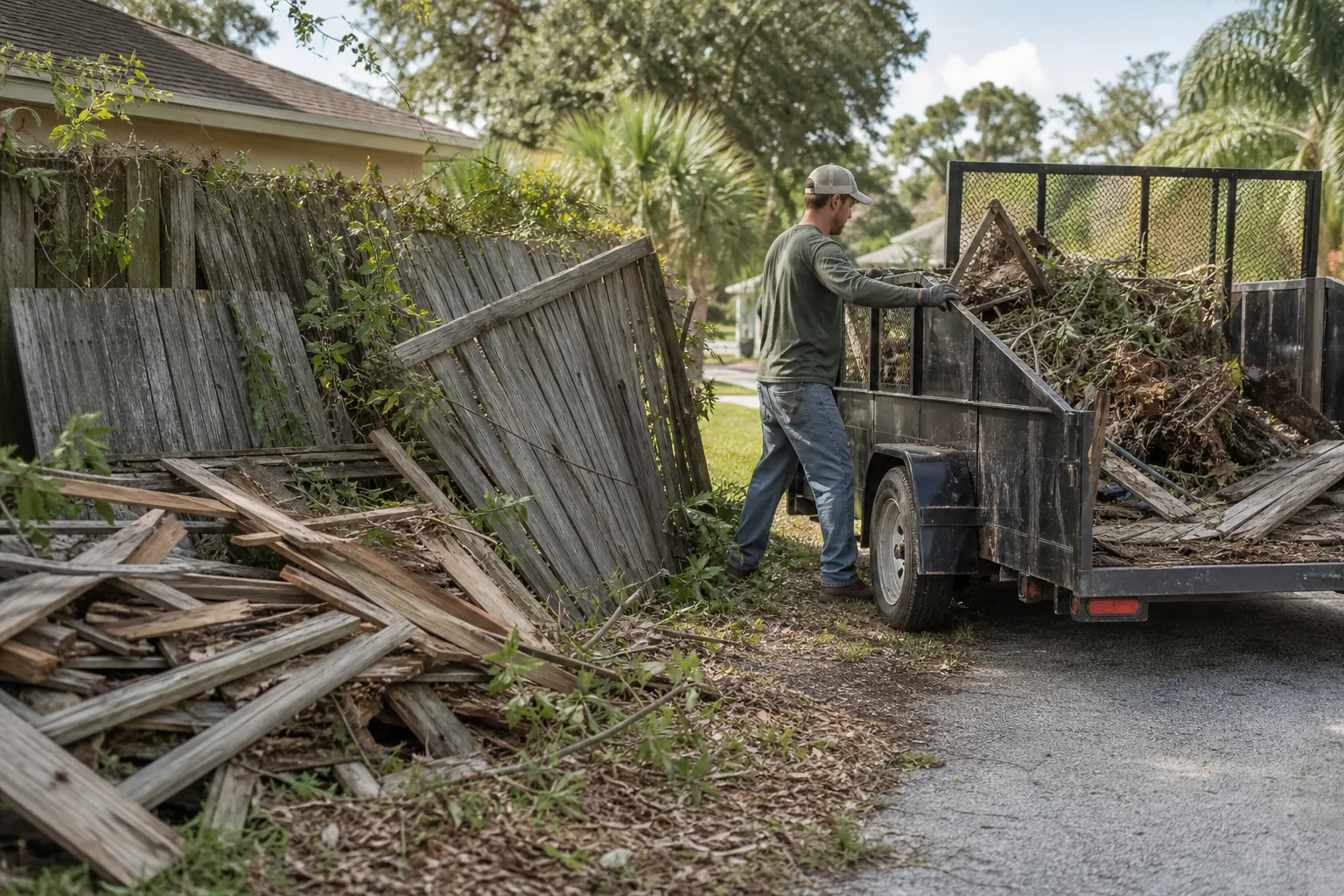
A fence replacement can leave behind more material than the new fence installation suggests. Broken panels, long rails, heavy posts, and loose boards take up driveway space quickly. Add branches or leftover lumber to that pile, and ordinary cleanup becomes a separate project.
For property owners searching for fence and wood debris haul volusia services, the most useful starting point is not simply the size of the pile. It is understanding what the pile contains, where a truck can safely load it, and which materials need separate handling. Those details help avoid unnecessary moving, unclear estimates, and pickup delays.
Daytona Grapple Trucks is a local contact for discussing fence and wood debris hauling in DeLand, FL. This guide explains how to prepare a practical pickup area, what information to share when requesting service, and how to keep a fence cleanup from becoming a second demolition job.
Why Fence Debris Is Different From Ordinary Yard Waste
Old fencing rarely forms a neat, uniform load. A single project may produce broad panels, narrow pickets, posts with attached concrete, and pieces of metal hardware. These materials differ in weight, shape, and disposal requirements, even when they came from the same fence.
Wood fence panels are especially awkward to handle manually. They can catch on one another, conceal protruding fasteners, and break apart when lifted. Posts may look manageable until someone discovers a large concrete footing attached to the buried end.
A grapple truck uses a mechanical loading arm to lift accessible material into the truck body. That can reduce the amount of individual handling required for a bulky pile. However, mechanical loading still depends on safe access, suitable placement, and confirmation that the operator can accept the materials present.
Keep the difference between hauling and removal clear. Picking up an already dismantled fence is not the same as taking down standing sections, excavating posts, or cutting lumber. Ask which tasks are included before planning your project around a pickup appointment.
Identify The Materials Before Requesting A Pickup
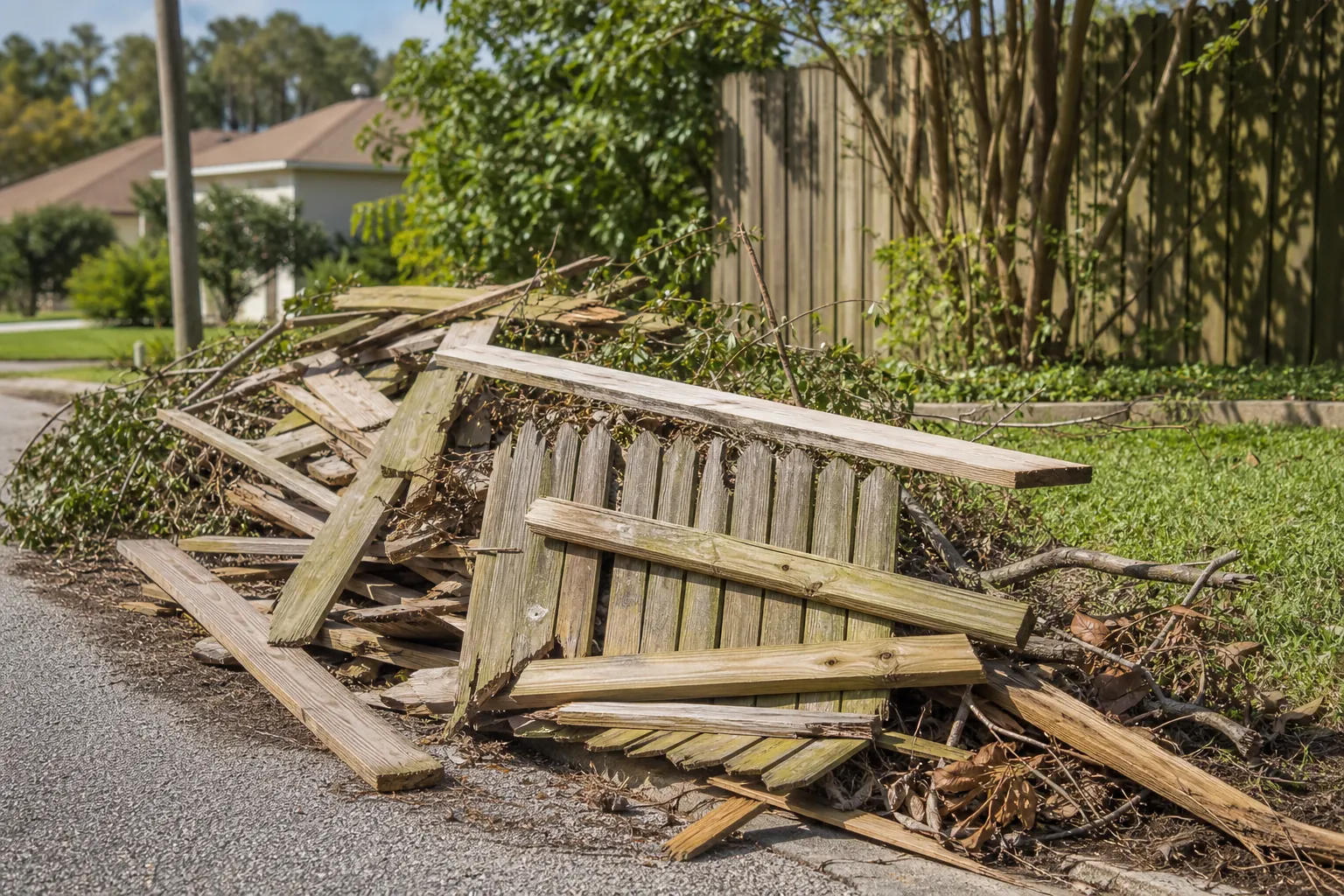
A useful estimate begins with an honest description of the load. Saying that you have old wood is less helpful than explaining that you have stacked fence panels, loose pickets, six posts, and several concrete footings. A few clear photos can fill in details that are difficult to describe by phone.
Do not assume every material found beside a fence belongs in the same haul. Metal mesh, plastic fencing, landscaping waste, and demolition debris may require different handling or disposal. Acceptance should be confirmed before those materials are combined.
- Describe wooden panels, rails, pickets, and posts separately so the hauling provider can understand the load.
- Point out concrete attached to posts because it can significantly increase the weight.
- Identify metal gates, wire fencing, brackets, and loose hardware rather than hiding them beneath wood.
- Mention painted, stained, or pressure-treated lumber because its disposal options may differ from those for clean vegetation.
- Disclose any bags, household trash, roofing pieces, liquids, or other unrelated materials mixed into the pile.
If you are unsure what a board was treated with, say so. You do not need to identify its chemical composition yourself. The goal is to give the hauling provider enough information to determine whether the material can be accepted and where it should go.
Choose A Loading Location Before Moving The Wood
The best place for a debris pile is not always the closest place to the fence. A convenient backyard corner may be inaccessible to a loading arm. Moving everything there first can create extra work when the pile later needs to be relocated.
Before staging debris, discuss the proposed loading location with the provider. Share photos showing the driveway, nearby trees, overhead lines, and the distance between the pile and a possible truck position. There is no universal reach distance that applies to every truck or property.
A suitable loading area needs adequate clearance and a stable place for the vehicle to operate. Narrow gates, low branches, steep grades, parked cars, and weak surfaces can affect access. A truck should not be expected to cross a lawn, septic area, or questionable driveway without prior review.
- Keep the proposed pile away from overhead utility lines and other elevated obstructions.
- Leave room around mailboxes, utility equipment, drainage structures, and parked vehicles.
- Avoid placing wood on top of irrigation heads, covers, buried-system access points, or landscaping you want protected.
- Do not block sidewalks, road visibility, drainage paths, or access needed by neighbors and emergency vehicles.
- Confirm any curbside or right-of-way placement requirements before moving material outside your property.
In DeLand, a property owner's available space may range from a broad driveway to a compact frontage. The right staging plan depends on that specific site, not on an assumption that all street-side piles are acceptable.
Prepare The Pile Without Creating More Work
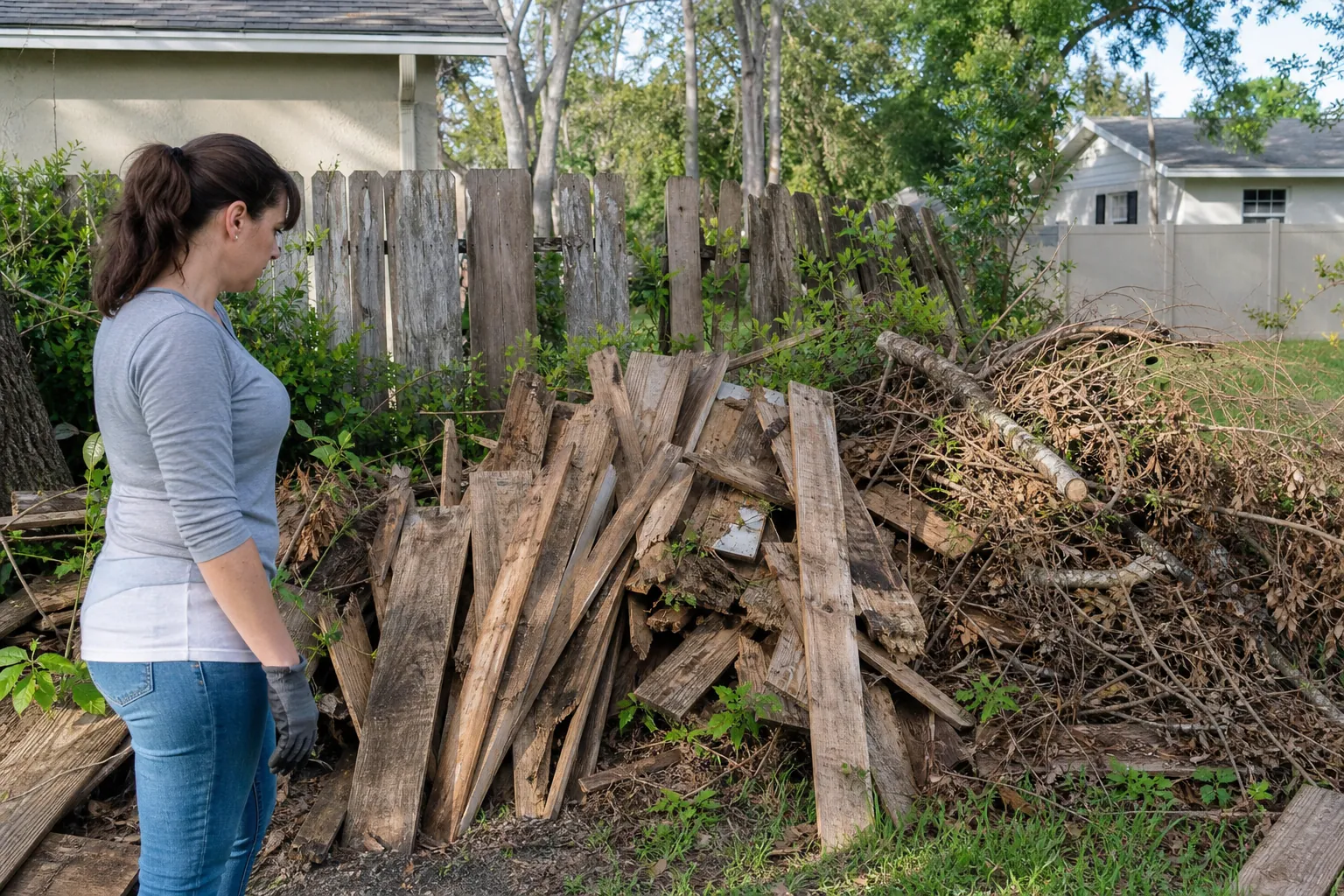
Once a loading location is confirmed, group accepted debris in a compact, visible pile. Keep long pieces together rather than scattering them across the yard. Consistent placement makes the load easier to assess and helps prevent smaller pieces from being overlooked.
A compact pile does not mean forcing materials into a tightly wedged stack. Panels jammed between a tree and a fence may be difficult to lift. Leave the access and clearance the operator requests, and avoid leaning debris against structures that could be damaged during loading.
Do not spend hours cutting every board into short lengths unless the provider says that is necessary. Grapple loading is intended for bulky material, although individual size limits still depend on the equipment and job. Ask about acceptable panel and rail dimensions first.
Likewise, do not attempt to remove concrete footings solely because you assume they cannot be hauled. Explain what is attached and ask whether separation is required. Breaking concrete introduces flying fragments, heavy lifting, and dust that may be avoidable.
- Keep accepted fence wood together and separate materials that have not yet been approved.
- Collect loose scraps in the staging area without mixing in household rubbish.
- Leave enough space for the provider to see the pile's edges and loading approach.
- Tell the provider if additional debris will be added after the estimate photos are taken.
Once staged, discourage children and pets from entering the area. An old fence pile can contain unstable panels, sharp wire, nails, and concealed holes between pieces.
Handle Nails, Splinters, And Heavy Posts Carefully
Fence cleanup creates hazards even before the truck arrives. Weathered boards can split unexpectedly, and rusted fasteners may protrude from surfaces that look smooth at a distance. Use suitable gloves, sturdy footwear, and eye protection when handling debris.
Avoid carrying large panels alone if their weight or condition is uncertain. A panel that breaks midway through a lift can expose sharp ends and shift its weight suddenly. Stop and arrange appropriate help or equipment rather than pushing through an unstable load.
Removing every nail is not necessarily a prerequisite for hauling, but loose nails and screws should not be left scattered across a driveway or yard. Ask the provider about fastener requirements. Where practical, collect visible hardware without reaching blindly into the pile.
Keep power tools and demolition work separate from the loading operation. If boards need cutting, complete that work before pickup according to the agreed plan. Do not stand beneath a raised load, approach the grapple, or try to guide moving debris by hand.
For standing fences near electrical equipment or other utilities, use qualified help for dismantling when needed. Hauling arrangements do not replace the precautions required for demolition, excavation, or work around service lines.
What A Useful Hauling Estimate Should Cover
Fence and wood hauling costs depend on more than a rough count of panels. Volume, weight, material type, loading difficulty, disposal requirements, and the amount of labor involved can all affect the quote. Concrete and mixed construction material can change the job substantially.
Ask whether pricing is based on a truckload, a portion of a load, an estimated volume, or another method. Also ask how the final charge is determined if the actual pile differs from the original description. Clear answers are more valuable than an unexplained low starting price.
Photos should show the full pile from more than one angle. Include something with a familiar size for scale, and provide approximate length, width, and height if you can measure safely. Do not climb onto the debris to get dimensions.
- Confirm which materials the estimate includes and which materials would require separate arrangements.
- Ask whether the quoted work covers loading only or also includes any agreed manual collection.
- Clarify how concrete footings, unusually heavy pieces, or mixed debris affect the estimate.
- Discuss access limitations that could change the loading plan or require additional labor.
- Ask what level of final cleanup is included after the main pile is removed.
A mechanically loaded pickup should not automatically be understood as a detailed nail sweep, raking service, or restoration of the staging area. If those finishing tasks matter, discuss them explicitly rather than assuming they come with the haul.
Coordinate Hauling With Your Fence Replacement
Timing matters when a contractor is removing the old fence and installing a new one. If debris sits across the work area, installers may need to move it repeatedly. If the hauling truck arrives too early, the old fence may not be fully dismantled.
Start by asking the installer when demolition debris will be ready. Then discuss a pickup window with the hauling provider. Allow for realistic changes caused by weather, hidden concrete, difficult posts, or adjustments to the installation schedule.
Decide who is responsible for staging the old material. Some installation agreements include removal and disposal; others include demolition but leave debris on site. Review your agreement before arranging a separate haul so you do not pay twice or leave a gap between contractors.
Protect the new fence by keeping the loading area separate from newly installed sections whenever feasible. Ask the installer and hauling provider to agree on a practical route and pile location before materials are moved.
If your project also involves trimming vegetation, mention that early. Do not assume branches and treated fence lumber can be combined just because both look like wood. The provider should approve the proposed mix and explain any separation needed.
Account For Florida Weather And Property Conditions
Florida rain can change a loading area quickly. Soil that looked firm during demolition may become soft after a downpour. Wet boards can also be slippery, and puddles may hide nails or uneven ground around the pile.
Check access conditions before the scheduled pickup and tell the provider if anything has changed. A waterlogged yard, standing water near the staging area, or a blocked driveway may require a different approach. Avoid insisting on access that risks damaging the property or getting equipment stuck.
Keep loose debris secured appropriately while waiting, particularly if windy weather is expected. Small scraps should not be left where they can blow into the street or neighboring property. Ask how to contain them without making the pile difficult to load.
Do not burn old fence wood as a shortcut. Treated or coated lumber can create harmful emissions, and outdoor burning is subject to applicable rules and conditions. Do not assume it qualifies for yard-waste burning simply because it is made of wood.
Likewise, avoid treating construction wood as ordinary landscape debris without checking disposal requirements. A responsible hauling plan accounts for the actual material, not just its appearance.
Questions To Ask Before Pickup Day
A short conversation can resolve most of the uncertainty around a fence cleanup. Have your photos ready, describe the property access, and explain whether the debris is already dismantled. If some work remains, give a realistic completion date.
- Can you accept the specific fence materials shown in these photos?
- Where should I place the pile so your equipment can reach it safely?
- Do the attached concrete footings need any preparation or separate handling?
- Should branches, metal, or other debris stay in separate piles?
- What access needs to remain clear during the pickup window?
- What happens if the load is larger or heavier than originally described?
- What small debris or hardware cleanup will remain my responsibility afterward?
Also ask whether someone needs to be present. Even when attendance is not required, the provider may need a reachable contact for access questions or unexpected materials. Leave gates and parking arrangements as agreed, not based on assumptions.
Plan A Cleaner Finish For Your DeLand Property
After the main pile is removed, inspect the staging area before reopening it for normal use. Look for broken pickets, sharp splinters, nails, wire, and pieces of concrete. Keep children and pets away until the area has been checked.
Use suitable tools to collect remaining scraps, and consider a magnetic pickup tool for accessible ferrous fasteners. A magnet will not collect every type of hardware, so a visual inspection is still important. Check nearby tires and walking paths if debris was staged beside a driveway.
A successful haul starts with accurate material information and ends with clear expectations about cleanup. You do not need to make an old fence pile look perfect. You need a safe, accessible location and an agreed plan for what will be removed.
To discuss fence and wood debris hauling in DeLand, call Daytona Grapple Trucks at (386) 481-7913. Share what is in the pile, whether posts have concrete attached, and where the truck could load. Those details provide a practical starting point for discussing acceptance, access, pricing, and scheduling.
Call (386) 481-7913 to talk through next steps.