
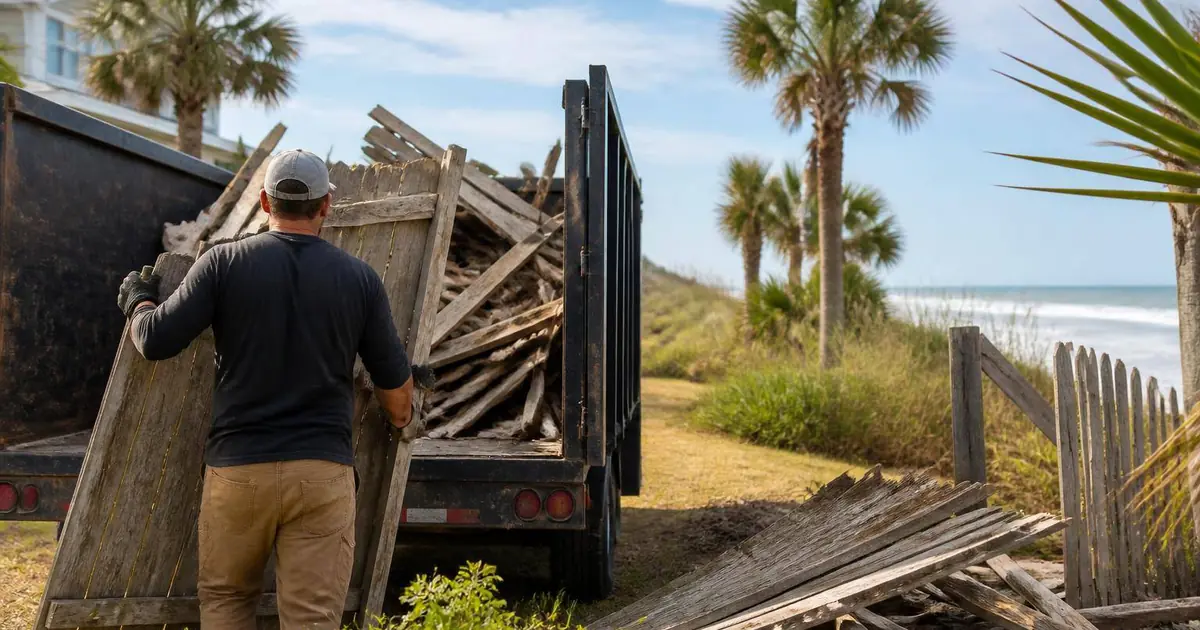
Fence demolition debris hauling is easier to plan when you know what materials the work will create, where they can be placed, and what disposal rules apply. In Ponce Inlet, first check local waste guidance, then discuss access, material separation, and timing with any hauler you may use.
How do you plan fence debris hauling?
Start by listing the fence materials and the steps that will create debris. Then check disposal guidance and plan where the material can wait before pickup. A clear plan helps you ask useful questions and avoid mixing materials that may need different handling.
Walk the fence line before work begins. Note the fence type, its length, and any gates or posts that may come out. The list does not need exact weights or measurements. It should help you describe the job and spot details that could affect access or sorting. Take notes while the fence is still in place, since parts may be harder to identify after removal. Include anything that could affect how people reach or work beside the fence.
Ask who will remove the fence and who will arrange debris hauling. Those tasks may be handled separately. Do not assume that a demolition crew, hauler, or waste site will take every material. Confirm what each party will handle before setting a work date. Ask how the crew will tell you if the material differs from your list. Clear roles can help prevent a pile from being left without a confirmed next step.
For a broader overview, read the fence debris hauling planning guide. Use it to compare planning steps, then confirm the rules and service details that apply to your own address.
- Walk the fence line and note the materials, gates, and posts that may be removed.
- Ask who will separate, stage, load, and transport the debris from the work area.
- Check local waste guidance before deciding where each material should go.
What materials should you identify before removal?
Identify the main fence parts before demolition, including panels, posts, rails, and hardware. Materials may include wood, metal, or concrete, but the actual mix depends on the fence. A simple list helps you ask about sorting and disposal without assuming that all debris follows one rule.
Look for more than the visible panels. Posts may use a different material from the fence itself, and gates can add hinges, latches, or other hardware. Point out anything that seems unusual so the people planning the work can decide what needs closer review. If you can, note which parts are attached and which are separate. This gives others a clearer picture of what removal may leave behind.
Keep mixed debris in mind. A pile can contain wood, metal, concrete, soil, and small fasteners. Do not guess that a waste site accepts the full mix. Ask about its current requirements, since county guidance says collection rules can vary by material, place, and date. Keep material descriptions factual, and avoid calling a pile clean or sorted until you have checked what it contains.
If you are unsure how a material should be sorted, describe it rather than assigning it a disposal category. A clear description can help the appropriate waste site or hauler tell you what to verify. Avoid placing unknown material with a load until its handling is clear.
How can you check disposal rules in Ponce Inlet?
Check current waste guidance for the address and the materials involved. Ponce Inlet is in Volusia County, but collection and disposal rules can still depend on material and location. Confirm the details with the appropriate local authority or receiving site before demolition debris is set out or transported.
Start with Volusia County's solid waste information, then check whether the rule you find applies to your address and material. The county source notes that waste rules can vary by material, location, and date. Treat old notes or advice from a different address as a reason to verify, not as final guidance. If the information does not name your material, ask the authority or receiving site how to check it. Keep a note of the date and the answer you receive.
Ask clear questions about each material. Find out if it must be separated, where it may be taken, and whether any limits or instructions apply. The right source may be a local authority or a receiving site. If the answer is unclear, ask who can confirm it. Check again if the work creates a different mix than you first described.
You can compare these local checks with fence hauling plans in Edgewater. That article covers a related planning topic, but it does not replace current guidance for your Ponce Inlet address.
Where should demolition debris wait before hauling?
Choose a staging spot only after checking access, property limits, and any applicable rules. Keep the planned work area and the path to it in mind. The right location depends on the site, the debris, and the people who need to reach the pile or load it.
Walk the path from the fence to the proposed staging area. Note narrow turns, gates, uneven ground, parked vehicles, and other items that could block movement. Share those details when arranging the work. Do not assume a truck or crew can reach a spot just because it looks open from the street. Think about how people will move debris along the route, too. Tell the people doing the work about any changes to access before they start.
Keep the pile within an area you are allowed to use. Check before placing debris near a road, sidewalk, drainage area, or a neighbor's property. The rules for those spaces can differ, so ask the relevant local authority when you are uncertain.
Make the staging plan clear to everyone involved. State which materials will be placed there and who will move them. If the work plan changes, update the people handling the debris before they arrive. This can prevent confusion about what belongs in the pile and where it should go. A simple written note can keep the same instructions in view for the removal crew and hauler.
- Choose a staging area only after confirming that you may use it for the debris.
- Keep the path to the pile clear for the people and equipment involved.
- Tell the hauler about gates, turns, surface limits, or other access concerns before scheduling.
What should you ask before arranging a haul?
Ask what materials the hauler can take, what preparation is needed, and what site details affect loading. Confirm who handles sorting and where the debris will go. These questions help define the work, while leaving disposal decisions to the proper authority or receiving site.
Explain the fence materials and the amount of debris as clearly as you can. Mention posts, concrete, gates, and mixed materials. Ask if the hauler needs separate piles or other preparation. Do not treat a general answer as confirmation that every item is accepted. Ask how the business defines an acceptable load, and confirm what happens if the pile changes before hauling.
Discuss the work area and access before making plans. Share the address, available staging space, and any limits on the route to the debris. Ask who will load the material and what must be ready first. Confirm these details directly with the business you contact. You can also ask how the business wants you to report a change in the material list or work date.
For another set of questions, see fence hauling cost and insurance questions. Its topic may help you prepare a discussion, but it does not establish rates, coverage, or terms for your job. Ask the business and any relevant insurer or authority for current details.
How should you plan the work sequence?
Set the order of work before debris begins to build up. Decide when the fence will be removed, when materials will be sorted, and when hauling is expected. Confirm each step with the people doing that work, since availability and job timing must be checked directly.
Avoid choosing a pickup date based only on an estimate of how long demolition will take. Work can change when the fence has hidden parts or access issues. Ask the people handling removal and hauling how they want the timing coordinated, then confirm the plan again as the date approaches. Build in time to ask about unexpected material instead of treating the first estimate as fixed. The people involved can tell you what timing they can discuss.
A simple sequence can help everyone stay aligned. First, check disposal guidance. Next, agree on what will be removed and sorted. Then confirm where debris can wait and how access will work. Finally, confirm the expected hauling plan with the people involved. For a related checklist, see fence hauling planning checklist. Use it as a prompt for questions, not as a replacement for current instructions.
Keep enough room in the plan to handle a change. If the materials differ from what you expected, pause and ask how to sort or dispose of them. Do not add unapproved items to a load. Confirm the next step with the appropriate hauler or waste authority. Share any new direction with everyone handling the debris, so the same plan guides the next step.
- Check disposal guidance before you choose a date for fence removal.
- Confirm the material list and staging plan with the people doing the work.
- Recheck timing and access with the hauler before the planned work begins.
What if the debris includes mixed or unexpected material?
Pause the plan when the debris differs from what you expected. Describe the new material and ask the hauler or relevant waste authority how to handle it. Do not assume that a mixed pile can be transported or accepted under the same rules as the original fence materials.
Unexpected material can change what needs to be sorted or checked. This may include buried concrete, extra soil, or parts from an older fence. Keep the new material separate when practical while you seek guidance. Do not make a disposal choice based only on appearance. Take a clear note of what you found and where it came from, without guessing at its makeup.
Volusia County's waste guidance is a useful starting point, and the county notes that rules vary. For broader disaster debris planning, the EPA and FEMA sources offer general guidance. Those sources do not confirm local pickup or acceptance for a fence project, so check with the proper local contact.
Write down what changed and who gave you direction. This can help the removal crew, hauler, and receiving site work from the same information. If no one can confirm the next step, wait for a suitable answer rather than treating an assumption as approval. Keep the debris out of a planned load until you know what the relevant contact advises.
Questions about next steps? Call Daytona Grapple Trucks at (386) 481-7913 or review debris.
Frequently Asked Questions
Should fence debris be sorted before hauling?
Ask the hauler and the relevant waste authority before sorting or loading. The right approach depends on the material and current local rules. Separating clearly different materials may help you describe the load, but it does not prove that a site accepts them. Confirm where each type should go.
Can a hauler tell me where every material may be disposed of?
A hauler can explain its own accepted materials and process, but local waste rules and receiving-site decisions may need separate confirmation. Ask who can confirm each point. Do not treat general hauling information as proof that a specific site will accept your debris.
When should I contact a hauler about fence debris?
Contact potential haulers while you are still planning the work. Share the material list, address, access details, and intended timing. Ask what they need to confirm the job. Availability and service for a particular address are not established here, so check those details directly.
What details should I have ready when I ask about hauling?
Prepare the address, a description of the fence materials, and notes about posts, gates, and mixed debris. Describe where the pile could wait and any limits on access. You do not need to guess the load's weight. Ask what added details the business needs.
Do general debris guides confirm local pickup for fence materials?
No. General guides can help with planning and sorting questions, but they do not establish local pickup availability or acceptance of a specific load. Check current rules with the relevant local authority or receiving site, and confirm any hauling service directly with the business.
Sources
- Solid Waste and Recycling, Volusia County
- Planning for Natural Disaster Debris, U.S. EPA
- Debris Removal Guidelines Help You and Your Community, FEMA
Call (386) 481-7913 to talk through next steps.