
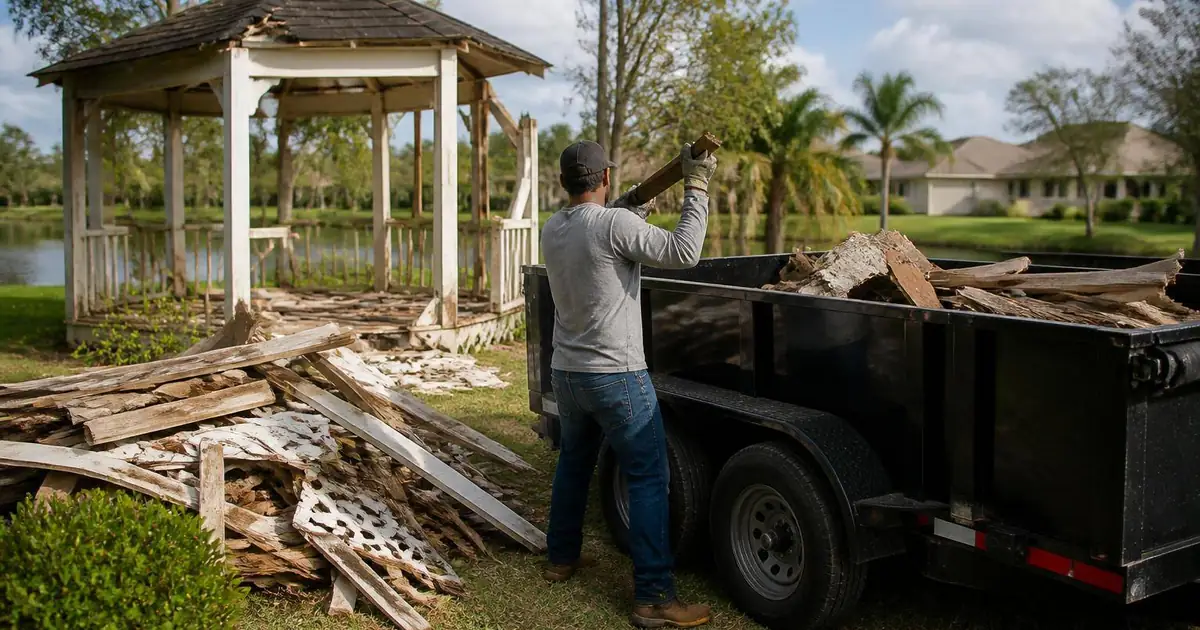
Plan gazebo demolition debris pickup by checking what the structure contains, deciding how debris will be sorted, and confirming access and disposal steps before work starts. In Deltona, rules can depend on material and location. Use this plan to prepare questions for a hauling provider and avoid assuming a pickup option is available.
How Should You Plan Gazebo Demolition Debris Pickup?
Start with a clear picture of the gazebo and the material it may leave behind. List the structure's parts, note where they sit, and ask how each type should be handled. These steps can help you compare pickup plans without assuming a provider accepts every material.
Before taking anything apart, look over the roof, frame, floor, and attachments. A gazebo may include wood, metal, roofing, fasteners, or other items. The actual mix depends on the structure, so record what you can see instead of guessing.
Write down whether the gazebo is attached to a deck, set on a slab, or built on another base. Note nearby fences, trees, gates, and parked vehicles. Those details help a provider ask useful questions about access and loading.
Keep the plan focused on the debris, not on demolition instructions. If the structure has electrical parts, gas lines, or other systems, ask a qualified trade or local authority what to do before work begins. Do not treat a hauling plan as approval to remove them.
For broader cleanup context, read the yard cleanup planning guide and compare the patio demolition debris planning guide.
- Make a list of the visible gazebo materials before you request a pickup plan.
- Measure the gate and path so you can describe the access route clearly.
- Note any attached base, nearby structures, or overhead obstacles around the work area.
- Ask which materials need separate handling before you place debris for removal.
What Materials Should You Sort Before Pickup?
Sort materials only after you know what the gazebo contains and what local rules allow. Wood, metal, roofing, and mixed debris may call for different handling. Ask the waste authority or hauling provider how to group each item, then keep uncertain materials apart until you get clear direction.
Sorting can make a pickup plan easier to explain. It also helps you avoid presenting a mixed pile as one simple load when its parts may have different handling rules. Do not assume a material is accepted because it came from a yard project.
Volusia County's Solid Waste and Recycling guidance is a useful place to check local waste information. Its guidance notes that collection rules vary by material, location, and date. Confirm the current rule for your address and each material instead of relying on an old note or a neighbor's experience.
The U.S. EPA's disaster debris planning resource also discusses planning for debris after natural events. It is general guidance, not a confirmation that a local pickup option accepts gazebo parts. Use it for planning questions, then check local requirements.
A simple sorting plan can separate likely material groups without telling you to discard anything. Keep treated, painted, sharp, or unknown items aside until a qualified source explains the right next step. If a part has a label, take a photo or write down what it says.
How Can You Describe the Debris Pile Clearly?
Describe the pile with facts a provider can use: material types, rough size, location, and access limits. Photos can support that description, but they should not replace direct questions about acceptance and handling. A clear account helps you learn what information is still missing before you arrange any pickup.
You do not need an exact weight to start a conversation. Give a rough length, width, and height for the pile, and say if parts are stacked or loose. If you cannot estimate a size, take a photo from a safe spot and say that the estimate is uncertain.
Point out long beams, wide panels, glass, or other parts that may need separate handling. Do not hide sharp edges under other debris. Tell the provider what you can see, and ask how to present any item that seems unsafe to move.
Describe the route from the pile to the street or loading area. Include gate width, turns, soft ground, steps, and anything that could block vehicle access. This is a site description, not a promise that a particular truck can reach the pile.
The yard cleanup planning guide offers broader cleanup context, while the patio demolition debris planning guide covers another kind of structure debris. Use those topics as prompts for questions, not as proof that the same pickup terms apply.
- Take photos from more than one angle when the pile has several material groups.
- Describe the pile's size as a rough estimate if you cannot measure each piece.
- Mention narrow gates, soft ground, steps, and other limits along the access route.
- Ask how to report sharp or unknown items before anyone moves them.
What Should You Confirm About Access and Timing?
Confirm the access route, placement rules, and timing before debris is moved into a pile. Ask who needs to be present, what space must stay clear, and how schedule changes are handled. These details depend on the provider and local conditions, so get answers for your specific address.
A pickup plan can change if the pile sits behind a locked gate or beyond a narrow path. Ask whether the provider needs access to the work area or can reach only a curbside pile. Do not move debris to a public area unless local rules allow that placement.
Timing also depends on what work remains. If demolition has not started, ask how much notice the provider needs and how long a pickup window may be. If the debris is already ready, tell them whether it is loose, bundled, or still mixed with other yard waste.
The Volusia County waste guidance can help you check current local information, but it does not establish a pickup appointment or confirm a private provider's schedule. Ask the provider directly about dates, access needs, changes, and any steps you must complete first.
Use this short sequence when you make the call or send a request. Keep answers in writing when possible, especially if multiple people are coordinating the work.
- Describe the address and the route from the street to the debris pile.
- Ask what placement rules apply before you move material to the curb.
- Confirm the expected timing and any notice needed before the pickup.
- Write down who will provide access and how schedule changes will be shared.
How Do You Choose a Debris Pickup Plan?
Compare pickup plans by scope, accepted materials, access needs, and preparation steps. Ask each provider the same questions so the answers are easier to review. No single option fits every gazebo site, and the details should be confirmed before demolition creates a pile that cannot be moved easily.
The word pickup can mean different things. One plan may cover only material already set in an agreed spot. Another may include different handling steps, but you should not assume that from a label or a brief description. Ask what is included and what remains your responsibility.
If you are considering a grapple-truck debris-hauling provider, ask whether the material and access at your address fit that provider's service. The available site facts do not establish specific services, rates, schedules, or accepted items for a particular job. Confirm each point directly before relying on it.
The FEMA debris removal guide gives general advice on sorting and removing debris. It does not show that a local company offers a service or has approval for a job. Local instructions and the provider's confirmed terms still matter.
A written comparison can help when two or more plans sound similar. Record the exact scope and any exclusions rather than ranking options by a short description. If an answer is unclear, ask the provider to explain it in plain terms before you choose.
| Topic | What to confirm |
|---|---|
| Materials | Which gazebo parts are accepted? |
| Scope | What work is included or excluded? |
| Access | Where must the debris be placed? |
| Timing | What schedule and notice apply? |
What Should You Do Before Demolition Starts?
Before demolition starts, settle the debris plan and identify questions that need expert input. Confirm sorting, placement, access, and timing with the relevant provider or local authority. Keep the work area clear of unrelated items, and pause when a material or attachment needs a qualified review.
Make a short record of what was agreed. Include the material groups, pile location, access route, and any items the provider said to keep separate. Save messages and photos so the people doing the work can follow the same plan.
Do not use pickup planning as a substitute for permits, building-code review, utility checks, or safe demolition methods. Those matters depend on the site and local requirements. Contact the appropriate qualified authority or trade before changing an attached system or removing a structure that may need review.
Keep children, pets, and visitors away from an active work area. This is a basic planning step, not a complete safety plan. Ask the person responsible for demolition to set safe boundaries and handle tools, lifting, and hazardous materials.
If the project changes, update the pickup plan before the pile grows. New materials, a changed access route, or extra demolition can affect what needs to be handled. Tell the provider what changed and ask whether the prior arrangement still applies.
For related planning prompts, see the yard cleanup planning guide and the patio demolition debris planning guide. Their topics can help you think through questions, but the details for a gazebo still need confirmation.
Questions about next steps? Call Daytona Grapple Trucks at (386) 481-7913 or review debris.
Frequently Asked Questions
Can I leave gazebo debris at the curb in Deltona?
Do not assume curb placement is allowed. Rules can vary by material, location, and date, and a private provider may have its own placement needs. Check current Volusia County guidance for your address and ask the provider where the pile must go. Keep debris on your property until you confirm that curb placement is permitted.
Should I take the gazebo apart before asking about pickup?
You can ask about pickup before demolition begins. In fact, an early conversation can help you learn which materials need separate handling and where a pile may be placed. Do not dismantle parts that need expert review or involve utilities, permits, or other site rules. Confirm those issues with the proper qualified source first.
What if I cannot tell what a gazebo part is made of?
Keep that part separate from materials you can identify, then describe it or share a clear photo with the provider or local waste authority. Do not label an unknown item based on appearance alone. If it may involve a hazardous substance or special handling, ask a qualified authority how to proceed before moving it.
Does a debris guide confirm that a company will take my gazebo materials?
No. A government or county guide can explain general debris planning or local waste information, but it does not prove that a private company accepts a material or serves a specific address. Ask the provider to confirm service area, accepted items, scope, access needs, and timing for your own project.
What information should I have ready when I request a pickup plan?
Have the address, a rough debris size, visible material types, photos, and a description of the access route ready. Note if the gazebo is attached to a base or sits near obstacles. Ask about sorting, placement, timing, and excluded items. This helps you get a specific answer without assuming the provider has seen the site.
Sources
- Solid Waste and Recycling, Volusia County
- Planning for Natural Disaster Debris, U.S. EPA
- Debris Removal Guidelines Help You and Your Community, FEMA
Call (386) 481-7913 to talk through next steps.