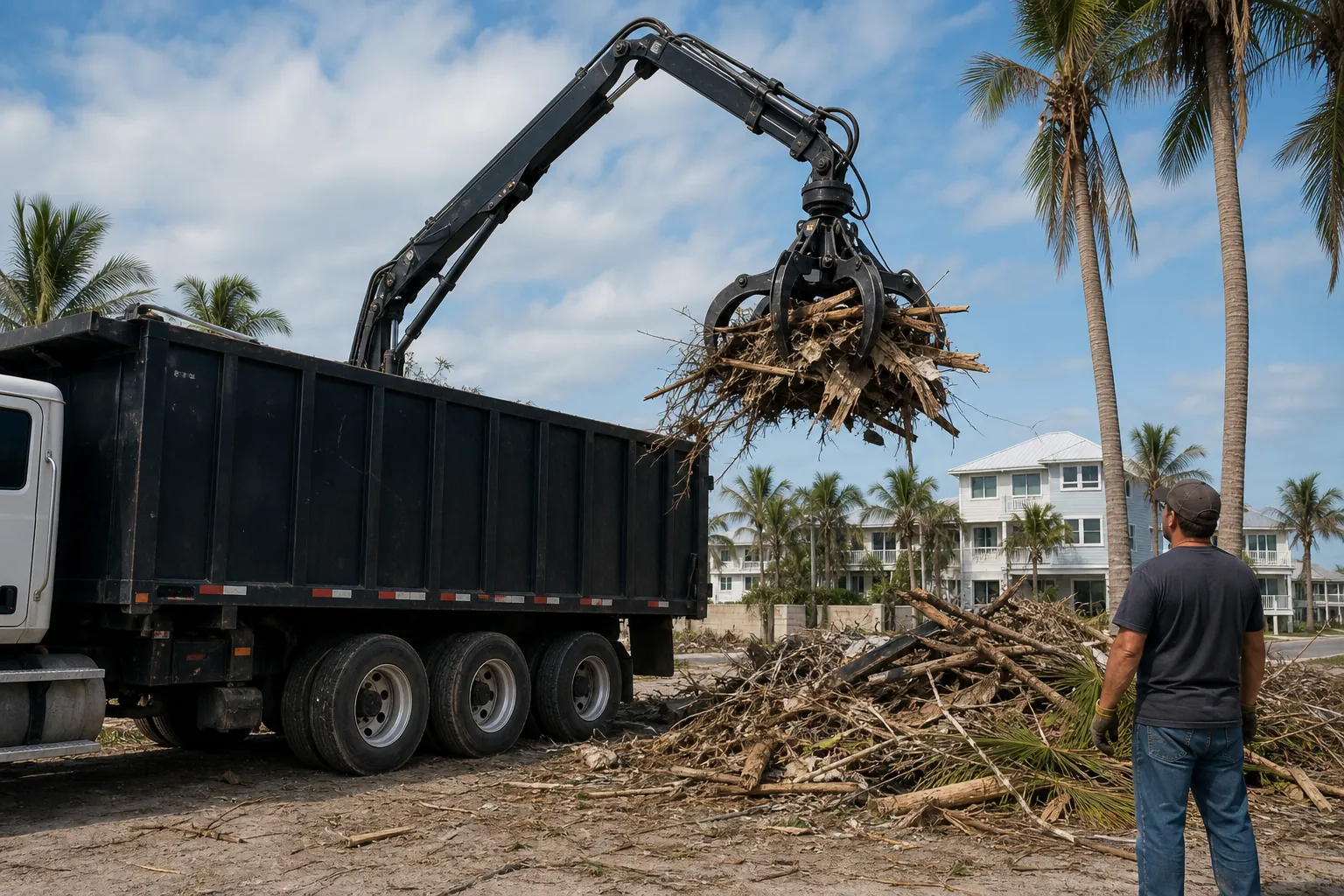
A large debris pile can turn an otherwise manageable property cleanup into a difficult hauling project. Heavy branches, bulky vegetation, and accumulated cleanup materials may require more lifting, loading, and trips than a pickup truck can reasonably handle. Grapple truck debris removal offers a different approach: mechanical loading of suitable debris into a hauling truck.
For property owners in Daytona Beach, FL, the important questions are practical. What materials can be collected? Where should the pile go? Can the truck reach it safely? What information is needed for an accurate estimate? Understanding those details before scheduling helps prevent avoidable delays and keeps the cleanup organized.
This guide explains how to prepare for a pickup, what to discuss with Daytona Grapple Trucks, and how to compare hauling options without assuming that every pile or property requires the same service.
How Grapple Truck Debris Removal Works
A grapple truck uses a hydraulic loader fitted with a grabbing attachment to lift debris into its hauling body. Instead of workers carrying every branch or piece individually, the operator can collect suitable material in larger portions. This makes the equipment worth considering when a cleanup produces substantial, bulky debris.
The truck still needs an appropriate working position. The operator must be able to approach the loading area, reach the material, and move the attachment without interfering with overhead lines, trees, structures, or passing traffic. Mechanical loading does not eliminate the need for careful site preparation.
Loose, consolidated piles are generally easier to assess than scattered material spread across a property. However, the best arrangement depends on the debris, the equipment, and the available access. Ask for placement guidance before moving a large pile, particularly if relocation would require rented equipment or substantial labor.
Grapple hauling is not automatically the right choice for every cleanup. A few bags of yard waste may fit an available routine collection option. A larger accumulation of branches or bulky material may justify a dedicated hauling visit. The decision should reflect volume, access, accepted materials, and your cleanup schedule.
Projects That May Benefit From Grapple Hauling
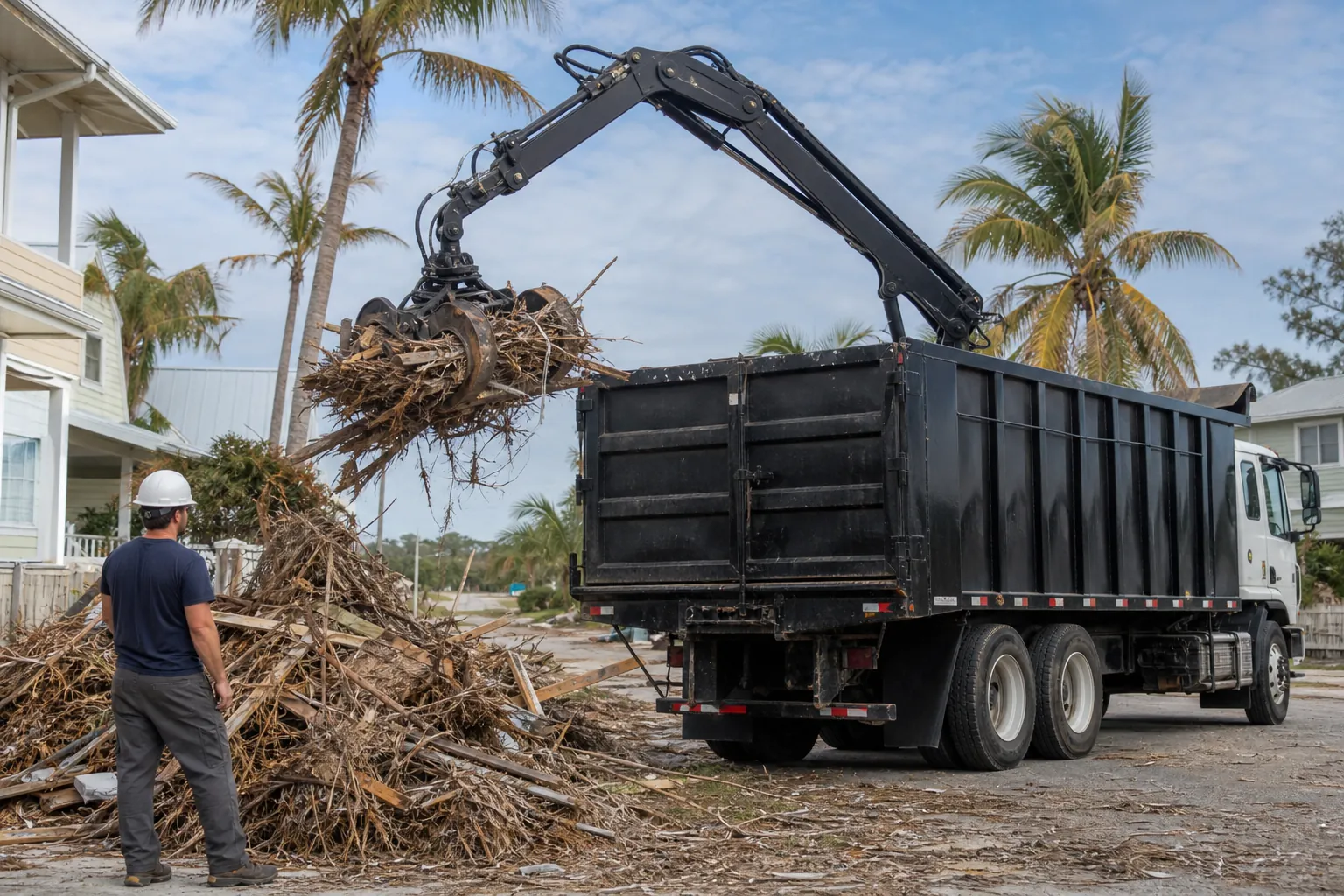
Tree and landscape work can generate more material than expected. A trimmed canopy, removed shrub bed, or cleared section of an overgrown yard can produce an awkward pile even when the individual pieces are relatively light. Branches take up space and can be difficult to stack securely in a small vehicle.
Storm cleanup is another situation where property owners may need hauling help. Fallen limbs and displaced vegetation can obstruct normal property use. Before arranging pickup, separate ordinary debris from anything involving damaged utilities, unstable trees, or other hazards that require specialist attention.
Property turnover and larger outdoor cleanup projects can also leave bulky accumulations. The suitability of grapple pickup depends on the actual contents, not simply the project label. Describe everything in the pile rather than calling it general debris.
- Tree trimming projects may benefit from a pickup when branches and limbs form a substantial, accessible pile.
- Landscape clearing may create bulky vegetation that is inconvenient to load by hand.
- Storm-related yard cleanup may require dedicated hauling after immediate safety concerns have been addressed.
- Outdoor property cleanouts may be suitable when the materials are approved and the loading area is accessible.
Construction waste, heavy mineral materials, furniture, and mixed cleanout debris should always be discussed separately. Do not assume that a truck capable of lifting bulky vegetation accepts every other type of waste.
Confirm Materials Before Combining Your Pile
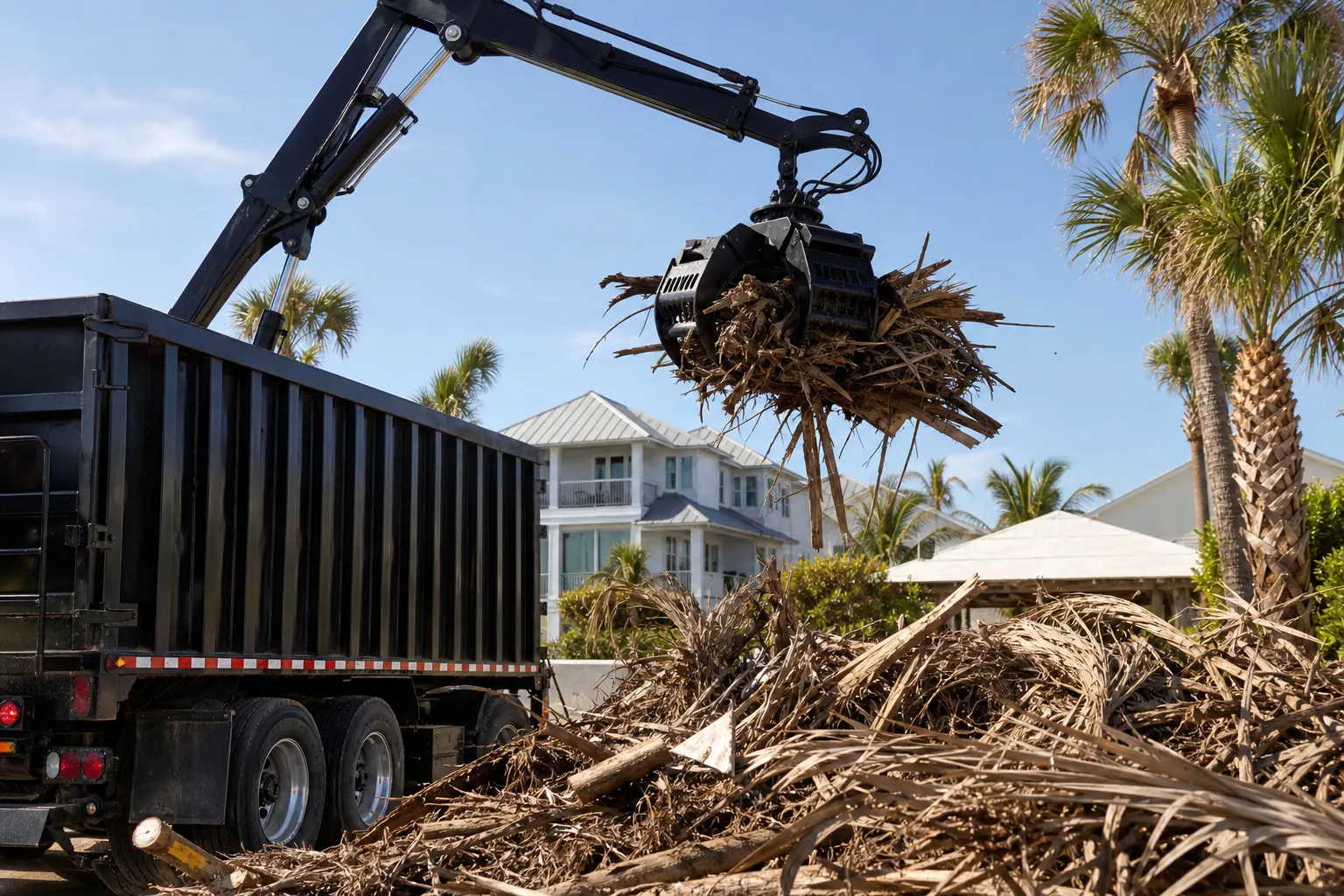
Material identification is one of the most important steps in planning grapple truck debris removal. A pile of branches is different from a pile containing branches, broken fencing, concrete, household waste, and chemical containers. Mixed materials can affect handling, disposal, and pricing.
When you contact Daytona Grapple Trucks, provide a clear description of the debris and ask which items are accepted for your specific pickup. Photos can help reveal material that is difficult to describe over the phone. Take images from multiple angles if the pile contains more than one type of debris.
Keep potentially hazardous items out of an ordinary hauling pile. Paint, fuels, pesticides, batteries, and unidentified liquids may require separate handling through an appropriate disposal channel. Sharp objects and concealed containers should also be disclosed rather than hidden beneath vegetation.
Dense materials deserve particular attention. Soil, brick, concrete, and similar debris can reach significant weight at a relatively modest volume. A visually small pile may therefore require a different hauling plan from a much larger pile of branches.
- Separate vegetation from unrelated materials until the accepted load contents have been confirmed.
- Identify any logs, stumps, or unusually large pieces so their size and handling needs can be evaluated.
- Tell the hauler about metal, fencing, wire, or other materials that could be tangled within the pile.
- Keep chemicals and unknown containers out of the pickup area and ask about appropriate disposal options.
Clear disclosure helps the hauler evaluate the job realistically. It also reduces the likelihood of an unexpected sorting requirement or material being left behind because it was not included in the original discussion.
Choose A Safe And Accessible Loading Location
A convenient location for the homeowner is not always a workable location for a large truck. Driveway width, turning room, surface condition, overhead clearance, and the relationship between the truck and the pile all matter. Confirm the intended loading location before finalizing your cleanup layout.
In Daytona Beach, some properties have limited frontage, mature trees, parked vehicles, or narrow approaches. Those conditions do not necessarily rule out service, but they should be described in advance. A photo showing the street, driveway, and proposed pile location can be more useful than a close-up of the debris alone.
Do not place debris under utility lines or against equipment such as transformers and utility cabinets. Leave fire hydrants, sidewalks, drainage features, and access points unobstructed. Never assume that placing material in a public right-of-way is permitted merely because it is awaiting pickup.
If the loading plan may involve a public street or shared area, clarify any applicable local or property requirements before placing debris there. Homeowners associations, commercial properties, and multifamily sites may have additional rules about staging and vehicle access.
- Show the hauler any gates, tight turns, low branches, or narrow driveway sections before scheduling.
- Keep the proposed loading zone clear of vehicles, trailers, and movable equipment.
- Ask whether the truck needs to remain on a paved surface rather than crossing a lawn or soft ground.
- Leave adequate separation from fences, buildings, mailboxes, and landscaping, following the hauler's placement instructions.
Ground conditions can change after rain. A surface that looked firm during planning may become unsuitable for heavy equipment. Let the hauler know about standing water, soft shoulders, or recent saturation so access can be reassessed when necessary.
Prepare The Debris Without Creating Extra Work
Preparation should make loading easier, not expose you to unnecessary lifting or equipment risks. Start by gathering manageable material into the agreed staging area. If large pieces are too heavy to move safely, describe their current location and ask whether the service can accommodate them.
Avoid spreading a pile across multiple locations unless the hauling plan accounts for them. Separate piles can require additional positioning and may complicate the estimate. At the same time, do not combine incompatible materials simply to create one large pile.
Do not cut large limbs or logs solely on the assumption that shorter pieces are required. Equipment and disposal requirements vary. Ask whether size reduction is necessary before investing time or hiring someone to perform that work.
Keep personal belongings and anything you want to retain well away from the debris. Landscape timbers, usable lumber, planters, and equipment can look like part of a cleanup pile when positioned beside it. Clear boundaries reduce confusion.
- Gather approved material in the location agreed upon with the hauler.
- Remove unrelated belongings from around the pile so the intended load is easy to identify.
- Photograph the final pile after preparation, especially if its size or contents changed.
- Keep children, pets, and bystanders away from the loading area during service.
If a landscaping or tree contractor is generating the debris, coordinate staging before work begins. Ask the contractor to place material according to the hauling instructions rather than creating a pile that must later be relocated. That simple conversation can prevent paying for the same handling twice.
What Affects The Cost Of Debris Removal?
Debris removal pricing depends on more than the apparent size of a pile. Material type, estimated volume, weight, access, loading requirements, and disposal needs can all influence the job. A useful estimate begins with an accurate description rather than a guess based on a single photograph.
For an initial inquiry, provide approximate pile length, width, and height. These measurements do not establish the exact loaded volume because irregular debris contains empty space and may settle during loading. They still offer a helpful starting point when paired with clear photos.
Explain whether the pile is ready for loading or whether material remains scattered. Also mention any obstacles that could affect truck positioning. An estimate based on a staged, accessible pile may not reflect a job that requires additional collection or repositioning.
Ask what the quoted price includes. Clarify loading, hauling, disposal, any minimum charge, and the circumstances that could change the total. If the amount of debris grows after the estimate, notify the hauler before the scheduled visit.
- Ask whether pricing is based on the overall job, the load, or another stated measurement.
- Confirm how additional material or a second trip would be handled.
- Find out whether any material types require separate pricing or cannot be included.
- Clarify what level of cleanup is included after the bulk debris has been loaded.
The lowest initial number is not always the most useful comparison. Two quotes may describe different scopes. Compare the same materials, loading conditions, disposal responsibilities, and finish expectations so you understand what each price actually covers.
Grapple Pickup Compared With Other Cleanup Options
A dumpster can be useful when debris will accumulate over several days and you have an appropriate place for the container. It generally requires you or your contractor to load the material. Grapple pickup may be more suitable when an approved bulky pile is already staged and mechanical loading is the priority.
Hand-loaded hauling can work well for smaller quantities or items that need to be carried from locations a truck attachment cannot reach. The tradeoff is that loading bulky branches or heavy outdoor debris by hand may take more labor. Describe the location as well as the material when comparing options.
Routine municipal collection may also be available for qualifying materials. Check current local guidance for preparation rules, quantity limits, placement requirements, and collection timing. Do not assume that a private hauling pile meets public collection requirements or that storm-related collection follows the normal schedule.
Self-hauling may be practical for a small cleanup if you have a suitable vehicle and an approved destination. Consider loading time, secure transport, unloading, disposal charges, and the number of trips. A pile that looks manageable on the ground can become a lengthy project when divided among smaller loads.
The best option is the one that matches your actual project. Choose based on accepted materials, access, timing, and total effort rather than equipment size alone.
Scheduling Around Weather And Property Use
Florida weather can influence both debris generation and pickup conditions. Heavy rain may soften access areas, while severe weather can create urgent cleanup needs across many properties. Discuss scheduling directly rather than assuming immediate availability after a storm.
If debris blocks essential access, explain that situation when calling. However, damaged power lines, unstable trees, and structural hazards should be addressed by the appropriate utility, emergency service, or qualified professional before routine debris hauling begins.
For commercial or shared properties, consider when vehicles and pedestrians normally use the loading area. Coordinate access with the property manager and identify someone who can answer questions during the visit. Avoid scheduling other contractors to work in the same loading zone at the same time.
Before the appointment, confirm whether someone must be present and whether gates need to be unlocked. Tell the hauler if access conditions have changed since the estimate. Clear communication is especially important when weather, parked vehicles, or ongoing landscape work affects the original plan.
Plan Your Daytona Beach Debris Pickup
A successful pickup starts with three things: a clear material description, a workable loading location, and an agreed scope. Once those details are settled, you can prepare the pile with less guesswork and understand what to expect from the visit.
Before contacting Daytona Grapple Trucks, gather a few photos, approximate dimensions, and a brief description of the property access. Include your Daytona Beach location and identify anything unusual, such as dense materials, oversized pieces, or a shared driveway.
To discuss grapple truck debris removal in Daytona Beach, FL, call Daytona Grapple Trucks at (386) 481-7913. Ask about material acceptance, placement instructions, scheduling, and an estimate for your specific pile. A short planning conversation can help turn a bulky cleanup into a clearly defined hauling job.
Call (386) 481-7913 to talk through next steps.