
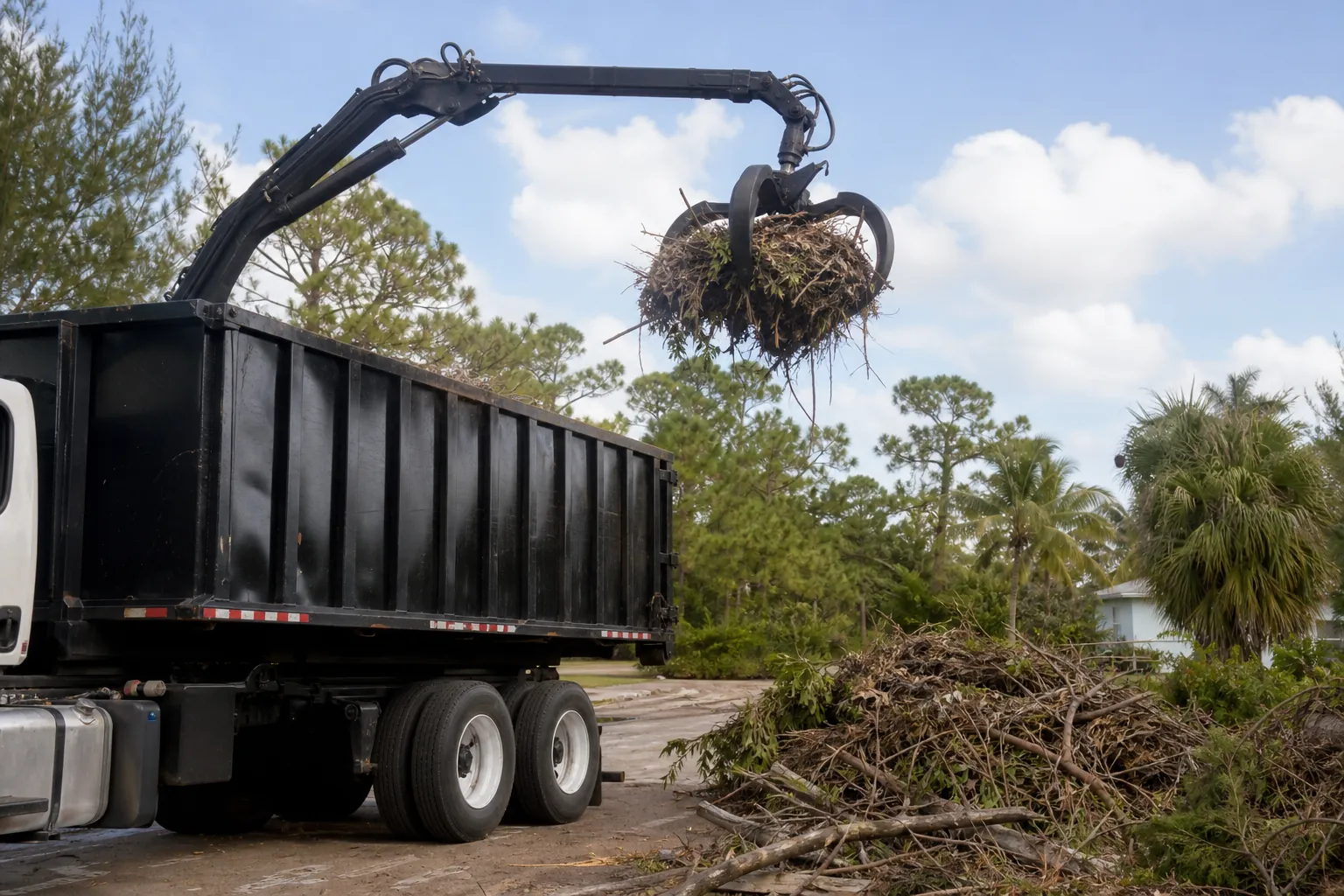
Grapple trucks make cleanup faster by lifting bulky debris directly into a large hauling container. However, the container's visible space is only one part of the capacity equation. Every truck must also remain within legal and operational weight limits.
Understanding grapple truck debris weight limits can help Florida property owners plan safer pickups, avoid overloaded loads, and estimate whether a cleanup may require more than one trip. The amount a truck can haul depends on the vehicle, the material, moisture levels, and how the debris settles in the container.
Why grapple truck weight limits matter
A grapple truck combines a hydraulic loading arm with a debris body mounted on a commercial truck chassis. Its gross vehicle weight includes the truck, fuel, driver, equipment, container, and collected material. The available payload is what remains after the truck's empty operating weight is subtracted from its allowable gross weight.
Legal limits also apply to individual axles and axle groups. A load may fit inside the body yet place too much weight over one axle. Operators must distribute debris carefully and stop loading before the vehicle exceeds any applicable rating or roadway restriction.
Staying within capacity supports predictable braking, steering, and tire performance. It also reduces strain on suspension components and helps prevent shifting material from creating an unstable load. Professional crews evaluate both volume and weight rather than relying on how full the truck appears.
Volume and weight are not the same
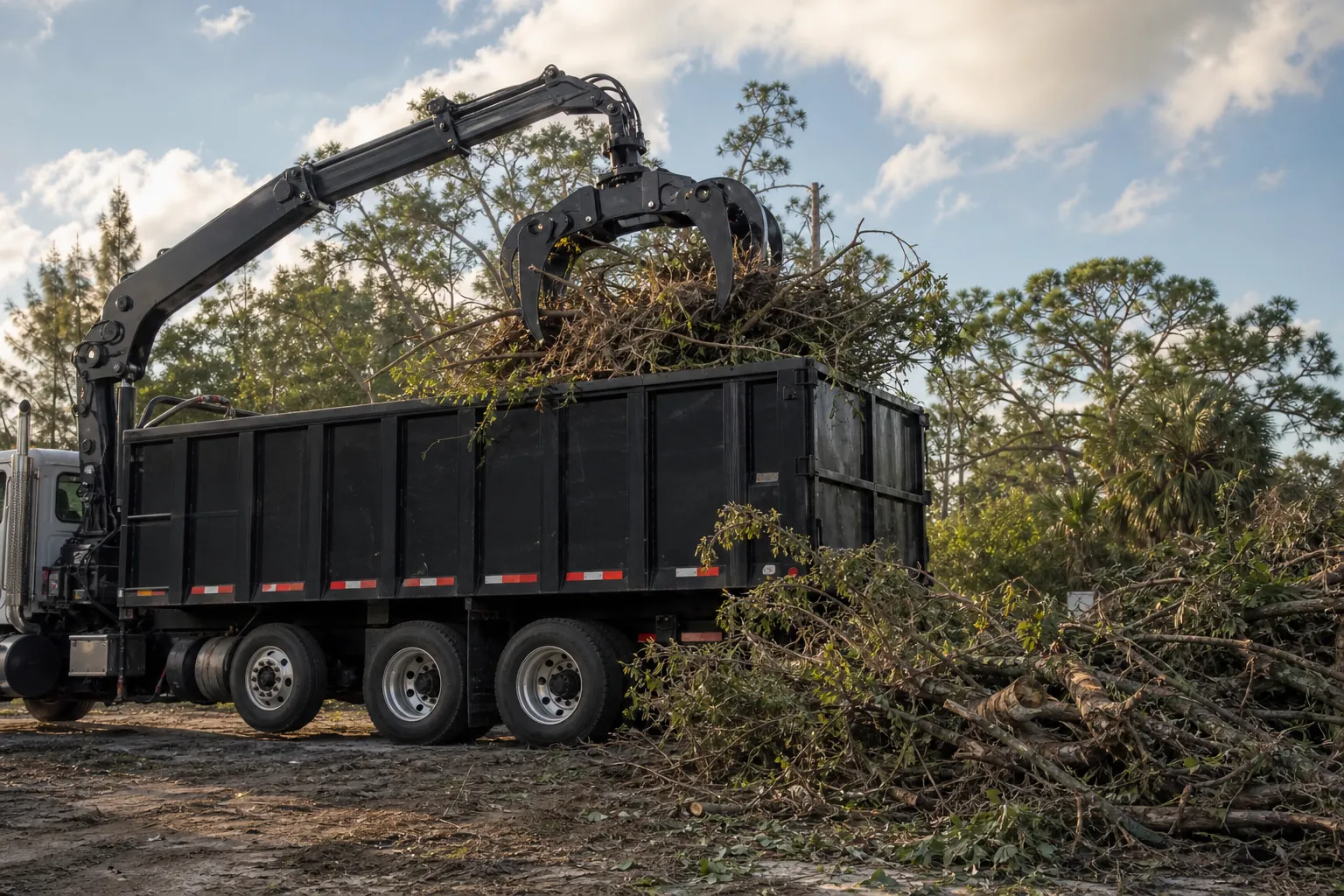
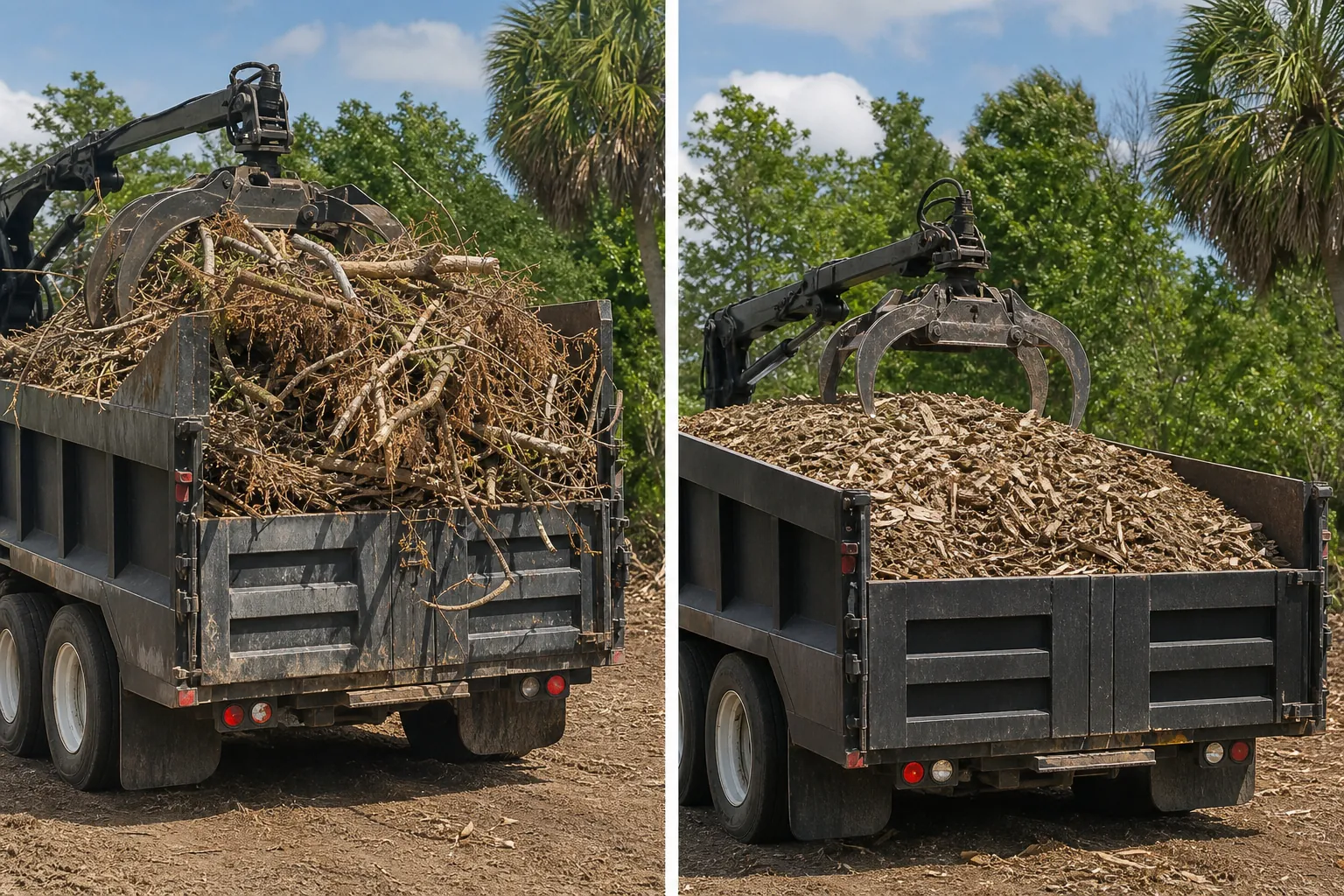
Light, bulky debris may fill a truck before reaching its maximum payload. Dense material can create the opposite problem, reaching the weight limit while substantial container space remains. This distinction is especially important when comparing tree debris with construction or storm cleanup material.
For example, dry palm fronds, small branches, and brush typically occupy considerable space relative to their weight. Logs, root balls, wet soil, roofing, concrete, and masonry are much denser. A grapple body that can accept a large volume of branches cannot necessarily carry the same volume of broken concrete.
Truck designs and configurations vary, so there is no universal tonnage that applies to every grapple truck. The correct limit comes from the vehicle's ratings, axle limits, body specifications, and applicable laws. A hauling provider should assess the debris rather than promise capacity based solely on a photo or rough pile size.
Debris characteristics that affect load weight
Material type is the starting point, but several less obvious conditions can alter a pickup. Florida's frequent rain and humid climate can make debris heavier than expected. Porous materials absorb water, soil clings to roots, and trapped moisture collects inside mixed piles.
- Moisture: Rain-soaked wood, carpet, yard waste, and drywall may weigh significantly more than dry material.
- Density: Concrete, dirt, brick, shingles, and large hardwood sections add weight quickly.
- Piece size: Large logs and stumps may leave empty space between pieces while still contributing substantial weight.
- Compaction: Smaller branches can settle as they are loaded, changing the pile's volume and weight distribution.
- Contamination: Hidden soil, rocks, metal, or demolition waste can make an apparently light vegetative pile much heavier.
- Load placement: Heavy pieces must be positioned to help maintain safe axle loading and vehicle balance.
- Disposal category: Mixed waste may need different handling or a different facility than clean vegetative debris.
Separating materials before service can make an estimate more useful and loading more efficient. It also helps the hauler identify items that may require special disposal or cannot be accepted with ordinary debris.
Common Florida cleanup scenarios
Routine landscape projects often produce branches, shrub cuttings, palm fronds, and sections of small trees. These loads are generally limited by container volume before weight, although large trunks, dense hardwood, and soil-covered root systems can change the calculation.
Storm cleanup is less predictable. Hurricane and tropical storm debris may include wet vegetation, fencing, roofing, lumber, and damaged outdoor structures. Mixed piles can conceal dense items and sharp materials, so they require careful review before loading. Public emergency debris programs may also impose sorting, placement, or eligibility rules that differ from private hauling services.
Construction and property improvement projects can produce cabinets, lumber, siding, fixtures, drywall, tile, and roofing. Some of these materials become heavy quickly. Concrete, dirt, and masonry often require a dedicated plan because their density can cause a truck to reach its payload limit well before the body is full.
Local access conditions matter too. Soft ground, narrow drives, low branches, overhead utility lines, septic areas, and restricted roads may affect where a grapple truck can safely operate. The loading arm needs appropriate clearance, and the truck needs a stable position that supports safe lifting.
How to prepare for an accurate hauling estimate
Start by identifying the materials in the pile and estimating its length, width, and height. Photos taken from multiple angles are useful, but include an object for scale. Tell the hauler if the pile contains logs, stumps, dirt, roofing, concrete, appliances, chemicals, batteries, tires, or other unusual items.
Keep different debris types separated when possible. Clean vegetation is easier to evaluate when it is not mixed with household junk or demolition waste. Avoid placing piles beneath power lines, against vehicles, behind locked gates, or directly over utility equipment. Do not block a public sidewalk or roadway unless local requirements allow it.
Weather timing can also affect service. If heavy rain is forecast, covering absorbent construction debris may help prevent added water weight, provided the covering is safely secured. Vegetative piles generally should remain accessible and free of plastic bags, wire, rope, and other materials that can tangle in loading equipment.
What to expect during pickup
Before loading, an experienced operator checks the debris, work area, overhead clearance, and ground conditions. The operator then lifts manageable sections while monitoring how the load settles. Dense items may be distributed across the body to support safe balance.
If the truck reaches its lawful or rated capacity before the pile is gone, another load may be necessary. This does not mean the container was used inefficiently. It means weight, axle loading, material type, or safe containment determined the practical stopping point.
Daytona Grapple Trucks helps customers across the Daytona area plan debris removal around material type, access, volume, and likely weight. For a calm, practical review of your Florida cleanup, call (386) 481-7913. Clear details and current photos can help the team discuss suitable pickup options before scheduling.
Call (386) 481-7913 to talk through next steps.