Large piles of brush, logs, storm waste, and construction debris can take days to move by hand. Grapple trucks make the work faster by combining a hydraulic loading arm with a high-capacity debris body. Understanding how loading works can help Florida property owners, contractors, and community managers prepare a site, avoid delays, and choose the right hauling service.
Daytona Grapple Trucks provides efficient debris loading and hauling for projects ranging from routine land cleanup to storm recovery. While each property has different access conditions, the basic loading process follows a careful sequence designed to protect people, equipment, pavement, and nearby structures.
What a grapple truck does
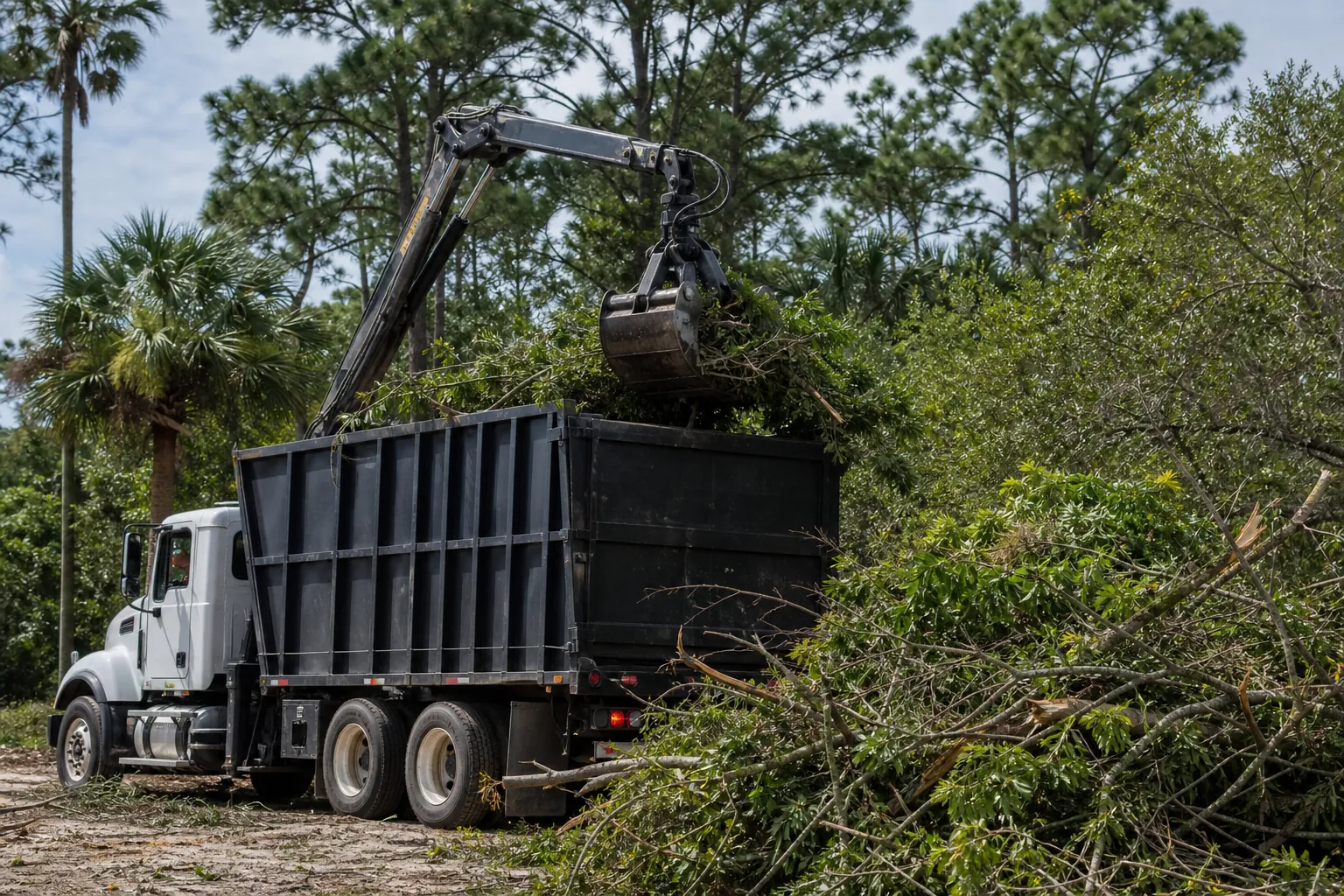
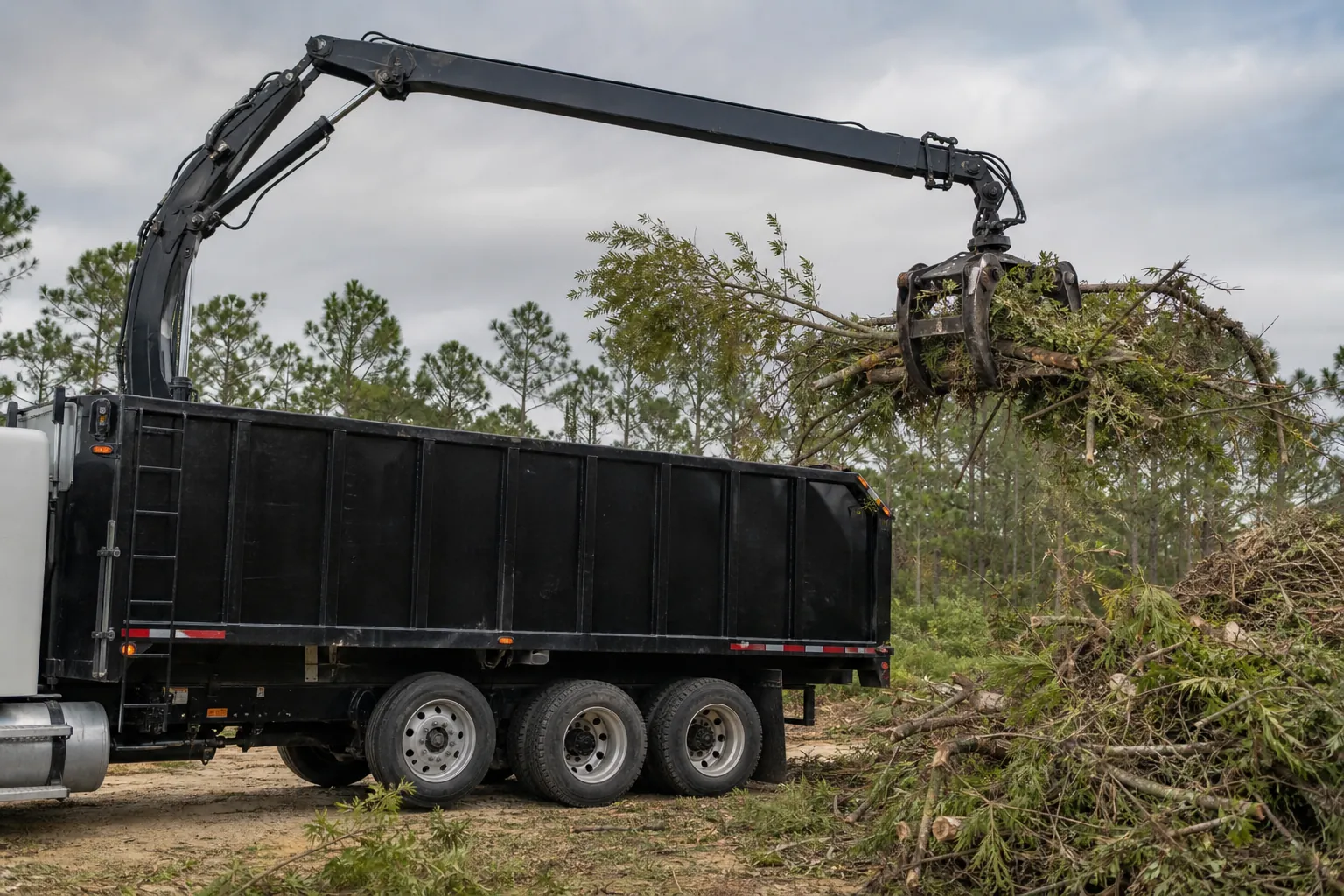
A grapple truck has a hydraulically operated boom fitted with a claw-like attachment. The operator controls the grapple from the truck, lifts material from a pile, and places it into the truck body. This eliminates much of the manual handling and separate equipment commonly required for bulky debris.
Grapple trucks are particularly useful for uneven, tangled, or heavy material that cannot be placed in standard trash containers easily. Depending on the job and disposal requirements, suitable loads may include tree limbs, brush, logs, yard waste, storm debris, clean wood, and selected construction or demolition materials.
Not every item can be mixed into one load. Chemicals, fuel, batteries, wet paint, asbestos-containing materials, pressurized cylinders, and other regulated waste typically require specialized handling. Identifying questionable materials before service helps prevent rejected loads and unexpected disposal costs.
How the site is evaluated before loading
The grapple truck loading process in Florida begins with access and material assessment. Before loading, the driver evaluates the pile location, overhead clearance, ground stability, traffic exposure, and the space needed to operate the boom. The truck must be positioned close enough for the grapple to reach the debris without extending beyond safe operating limits.
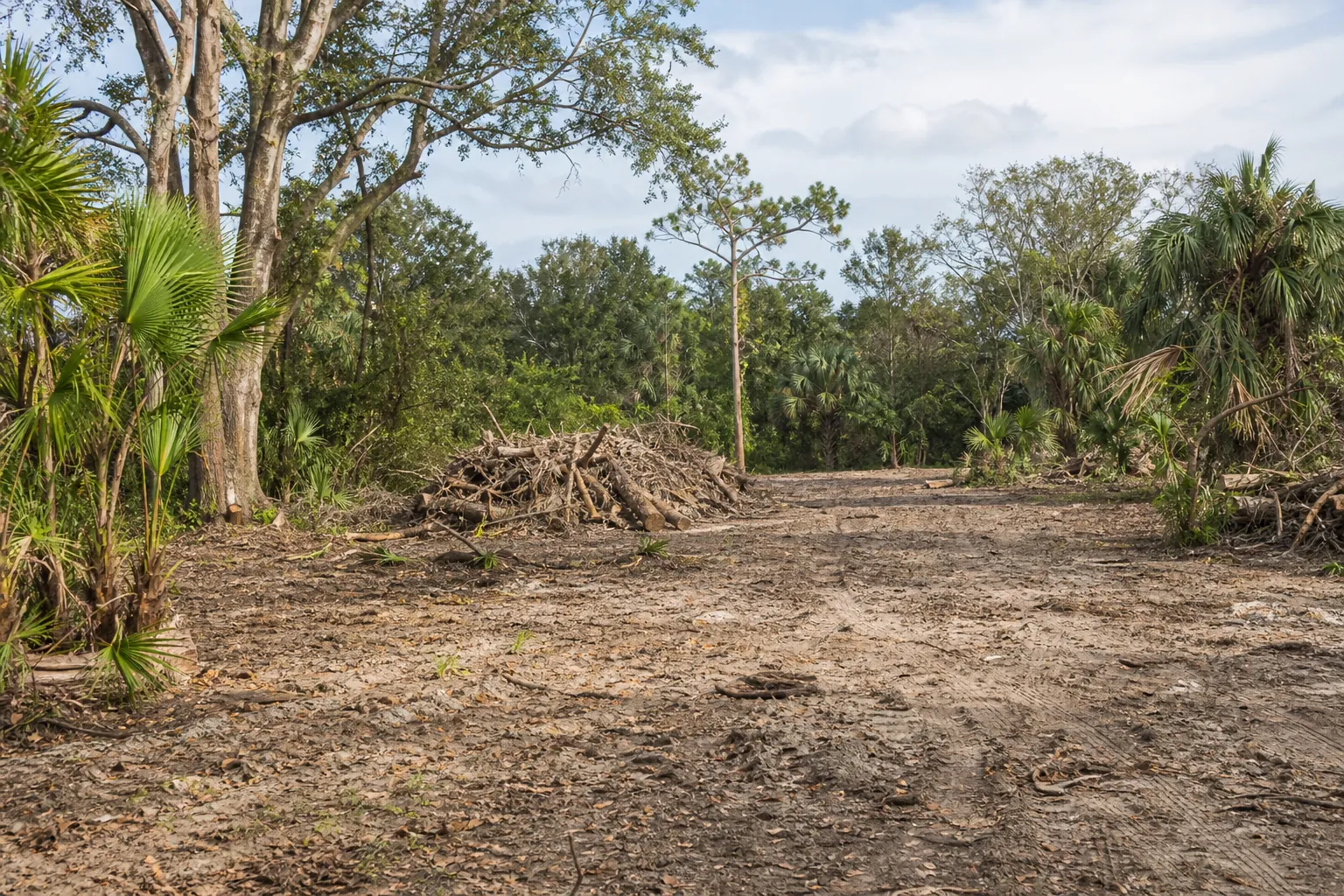
Florida sites can present distinct challenges. Soft shoulders, sandy ground, drainage swales, saturated soil, and recent storm damage may affect where a heavy truck can park. Low utility lines, palms, fences, mailboxes, and roof overhangs may also limit boom movement. A clear view of the work area allows the operator to lift material precisely.
The debris itself is reviewed for volume, weight, composition, and hidden hazards. Dense logs, concrete, soil, and roofing materials weigh much more than loose vegetation. Truck capacity is limited by both body volume and legal weight restrictions, so a visually small pile can still require multiple loads if it contains dense material.
Step-by-step loading and hauling process
Once the truck is placed safely, the operator stabilizes the work area and begins controlled loading. The grapple opens above the pile, closes around a manageable amount of material, and lifts it into the debris body. Loads are selected carefully to avoid pulling against buried objects, utility components, fencing, or materials that should remain on-site.
The operator distributes debris across the body rather than concentrating all weight in one area. Balanced loading supports vehicle stability and helps the truck remain within safe axle limits. Large pieces may be repositioned so they fit securely, while loose brush can be compacted by careful placement. The operator avoids overloading or allowing debris to extend unsafely from the truck.
A typical service sequence includes:
- Arrival and access confirmation: The driver verifies the pickup location, approved materials, and safe truck placement.
- Hazard inspection: The work zone is checked for people, pets, traffic, overhead lines, unstable surfaces, and concealed objects.
- Truck positioning: The vehicle is placed on firm, suitable ground within the boom's working reach.
- Material separation: Prohibited items or debris requiring a different disposal route are identified before loading.
- Controlled grapple loading: Debris is lifted in manageable amounts and distributed evenly inside the body.
- Load securement: The operator checks the load and uses required covers or restraints before travel.
- Transport and disposal: Material is taken to an appropriate recycling, processing, or disposal facility.
- Final site review: The pickup area is inspected for major remaining debris and any conditions requiring the customer's attention.
After loading, the driver confirms that the truck is road-ready. The load then travels to a facility that accepts its material type. Disposal destination, travel distance, load weight, and facility fees can all influence total project pricing.
How to prepare debris for an efficient pickup
Good preparation can shorten loading time and reduce preventable complications. Place debris in an open area that the truck can approach without crossing septic systems, irrigation components, decorative paving, or soft landscaping. The pile should be clear of parked vehicles and far enough from buildings to provide safe boom clearance.
Keep vegetation separate from concrete, household garbage, roofing, metal, and hazardous waste whenever possible. Mixed piles can require sorting, a different facility, or additional loads. Avoid placing debris beneath power lines or communication cables, even when the pile appears low. The boom needs considerably more vertical space than the debris itself.
Do not hide bags, stumps, concrete, or heavy objects under loose branches. Accurate information about the pile helps the hauling provider choose suitable equipment and estimate load requirements. If access is through a gate or private road, confirm that it is wide enough and that the surface can support a loaded commercial vehicle.
Safety considerations around the loading zone
Only the operator and authorized crew should enter the active loading area. A grapple may shift branches, release loose material, or expose objects hidden beneath the pile. Children, residents, tenants, workers, and pets should remain well away from the truck and boom throughout service.
Customers should never attempt to guide the grapple by hand or stand between the truck and the pile. If the operator needs clarification about items to remove, communicate from a safe location after the equipment has stopped. On roadside jobs, traffic visibility and local access rules may require extra planning or temporary controls.
Weather also matters. Heavy rain can soften the ground, reduce traction, and make debris unstable. Lightning and strong winds may create unsafe boom conditions. Rescheduling can be the responsible choice when conditions prevent controlled loading.
Planning your Florida debris removal
Grapple truck hauling is often a practical option after tree trimming, lot clearing, landscaping, renovation, or severe weather. Service needs vary based on pile dimensions, material density, access, hauling distance, and disposal requirements. Photos and a clear description can help with initial planning, but an on-site assessment may still be necessary for complex loads.
Before scheduling, note the debris type, approximate pile size, property access, nearby overhead lines, and any time or community restrictions. Daytona Grapple Trucks can review these details and explain an appropriate next step without pressuring you into unnecessary service.
For help planning a Florida grapple truck pickup, call Daytona Grapple Trucks at (386) 481-7913. A brief conversation about the material and site conditions can make loading day safer, smoother, and more predictable.
Call (386) 481-7913 to talk through next steps.