
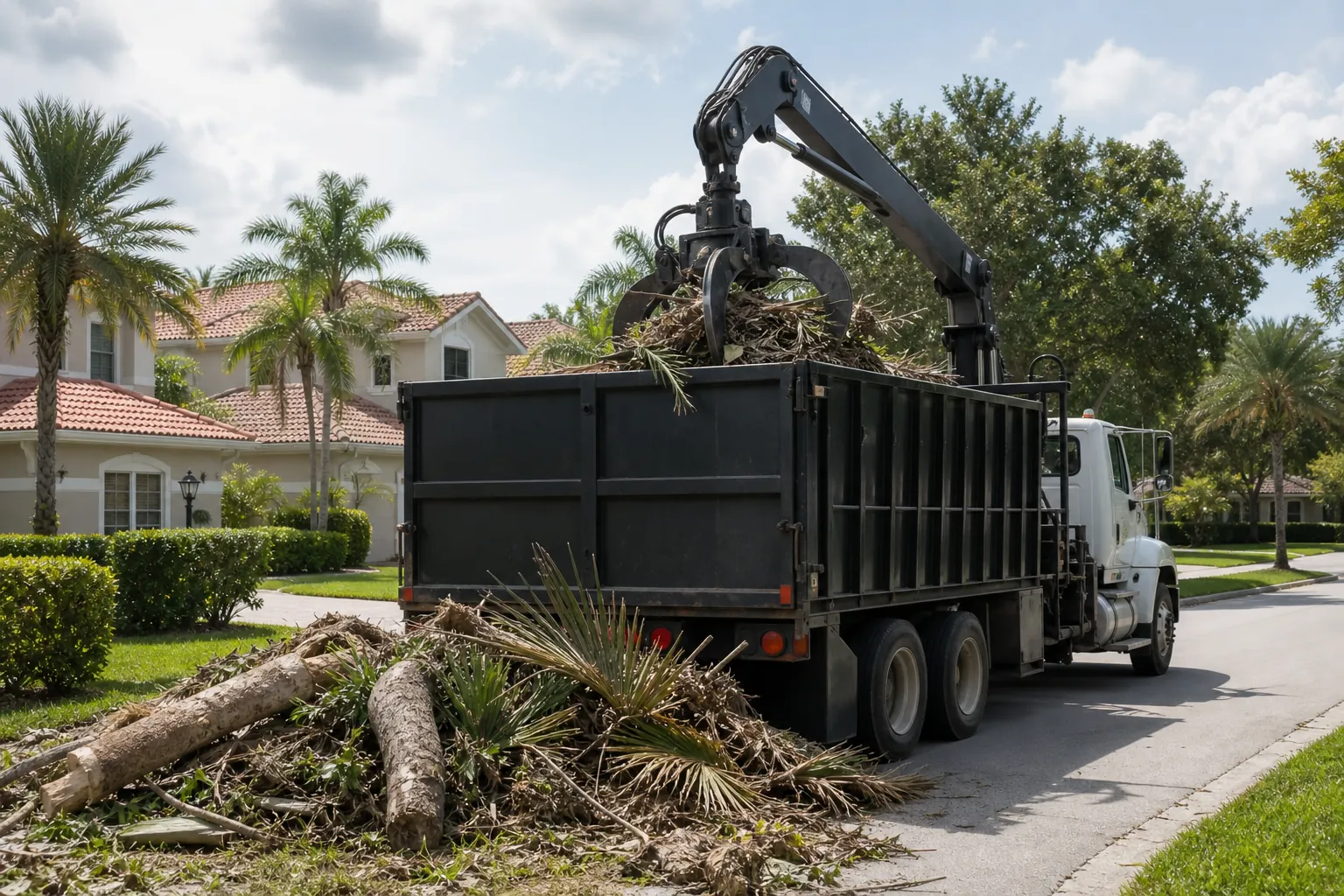
Large piles of branches, storm debris, and bulky yard waste can create a problem in an HOA community. Residents want the material removed quickly, while property managers and boards need vendors to follow access rules, parking restrictions, and community standards. Planning ahead helps the pickup move smoothly without creating unnecessary disruption.
Daytona Grapple Trucks provides debris hauling for homes, communities, and managed properties in Florida. If your neighborhood requires authorization before a commercial truck enters, understanding the grapple truck pickup HOA approval process can help you avoid delays and prepare the site correctly.
Why HOA Approval May Be Required
Every homeowners association has its own governing documents and operating procedures. Some communities allow service vehicles during established hours without advance notice. Others require residents to submit a vendor request, contact the property manager, or receive written board approval before scheduling work.
These policies often protect private roads, landscaping, gates, and shared parking areas. A grapple truck is designed to collect sizable debris with a hydraulic arm, so the HOA may want to confirm where it will park and how long the work will take. Approval may also be necessary when the pile is placed near a common area, sidewalk, retention pond, or community entrance.
Before booking service, review your community rules or ask the property manager which steps apply. This simple check is especially important in gated communities and neighborhoods with narrow streets.
Information To Provide Your HOA
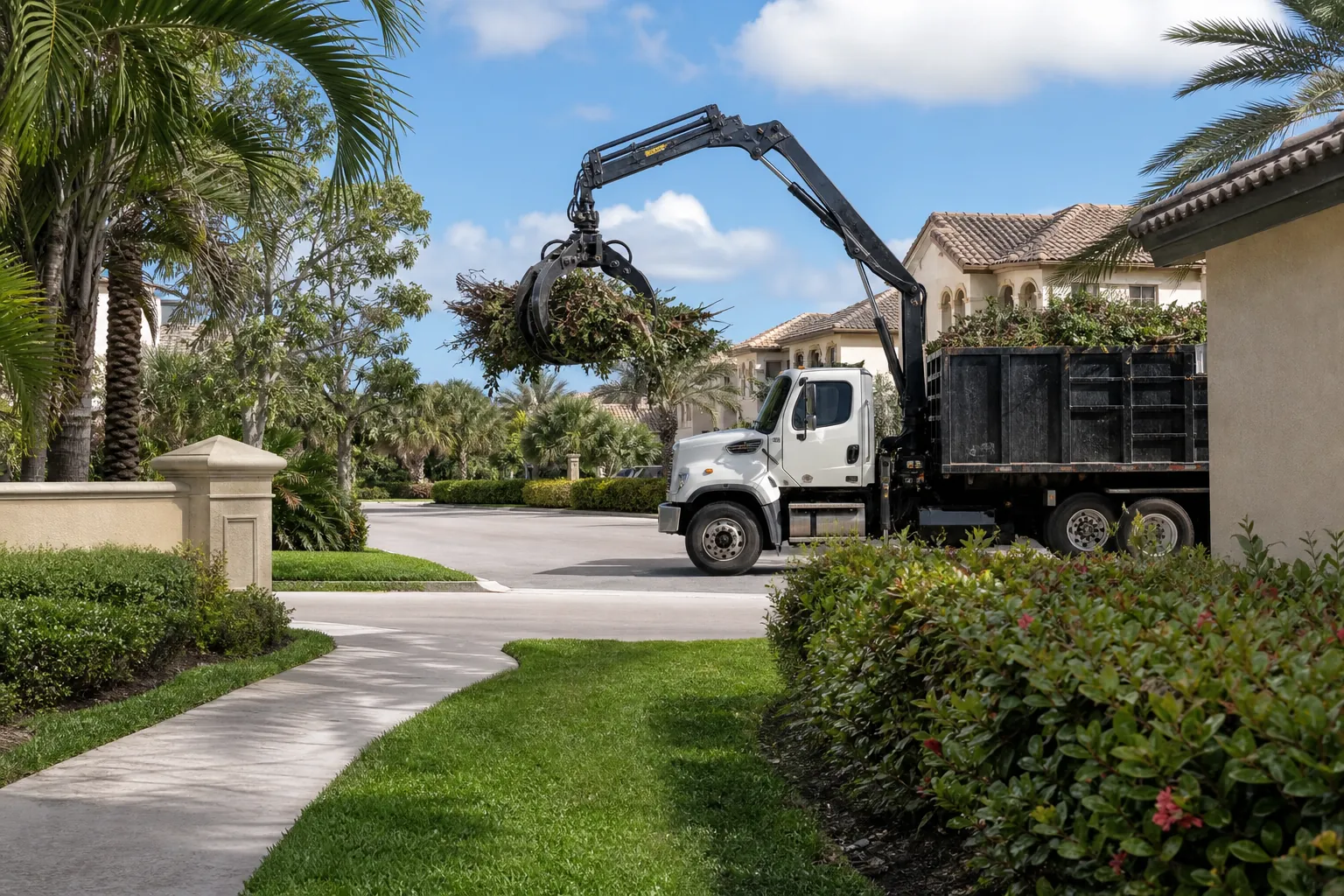
A clear request makes it easier for an HOA or management company to review the proposed pickup. Explain that the service involves a grapple truck collecting debris from an accessible location and hauling it away. Include the planned date, approximate arrival window, and expected parking location when those details are available.
Your request may need to address the following points:
- Type of debris: Identify whether the pile contains branches, logs, brush, construction debris, storm-damaged material, or mixed items.
- Pile location: State whether debris will be on the driveway, beside the road, or in another approved area.
- Truck access: Note gate procedures, road-width limitations, low tree limbs, weight restrictions, or designated service entrances.
- Service timing: Confirm that the planned visit falls within the HOA's permitted contractor hours.
- Traffic considerations: Explain whether temporary clearance around the pile or a brief parking adjustment may be needed.
- Vendor details: Provide the hauling company's name and contact information if management requests it.
- Cleanup expectations: Clarify what material will be removed and what level of final site cleanup is included.
Ask whether written confirmation is required. Saving an approval email or work-order number can prevent confusion at the gate or during the service visit.
How To Prepare The Debris Pile
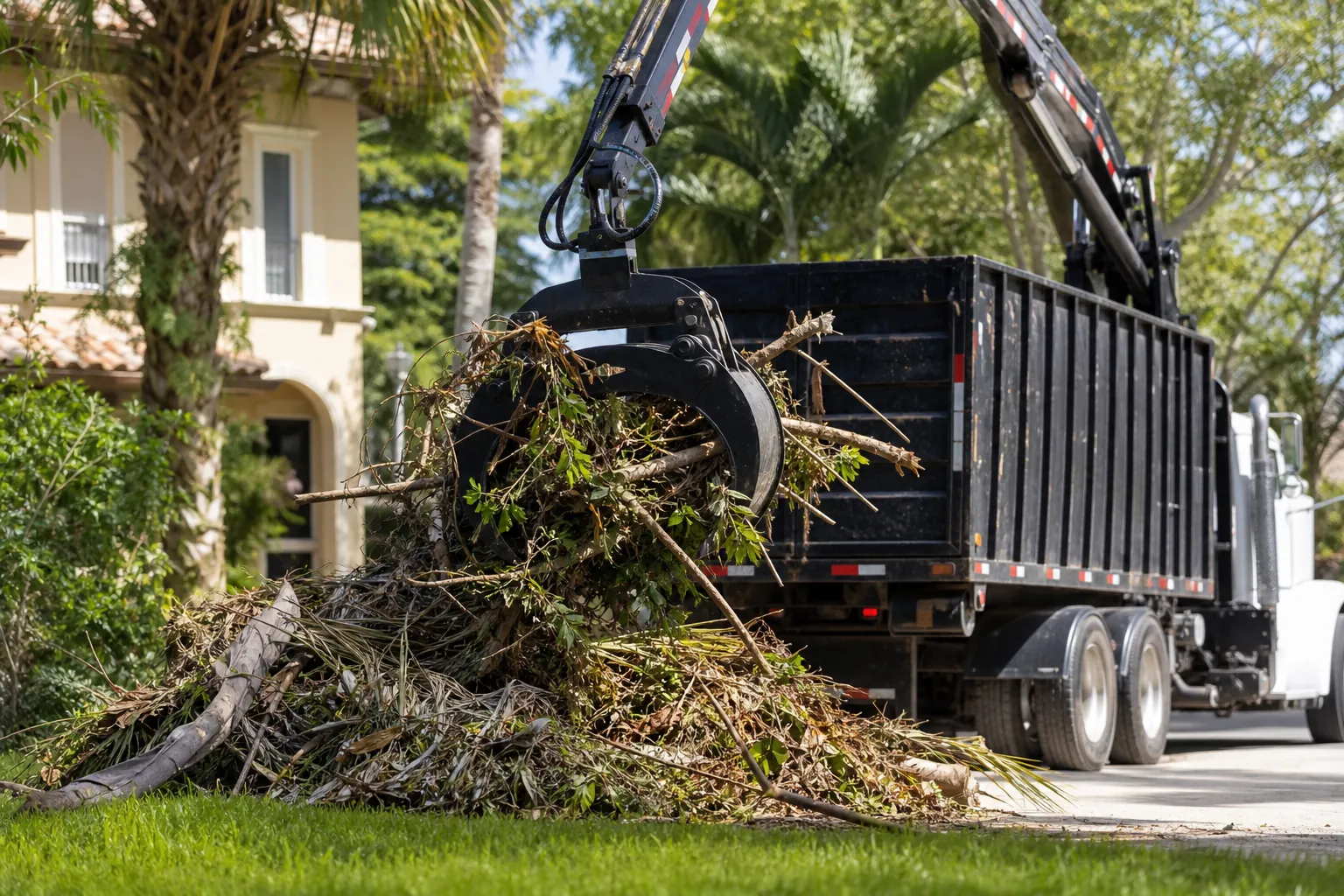
Proper placement supports a faster, safer pickup. A grapple arm needs clear overhead and side access to lift material into the truck. Place debris in the HOA-approved location only after confirming that the truck can reach it without crossing lawns, damaging irrigation systems, or blocking emergency access.
Keep the pile away from power lines, utility boxes, mailboxes, vehicles, fences, and low branches. Do not place debris beneath tree canopies where the hydraulic arm lacks safe operating space. The area in front of and beside the pile should remain open, particularly on the scheduled service day.
Separate materials when possible. Yard debris, logs, household junk, and construction waste may have different disposal requirements. Never add paint, fuel, chemicals, batteries, propane tanks, asbestos-containing materials, or other hazardous waste unless the hauler has specifically confirmed that an item is accepted. Clear photos can help the team understand the volume, pile composition, and access conditions before scheduling.
Coordinating Access In Gated Communities
Gate access is a common source of avoidable delays. Confirm whether the driver needs a temporary vendor pass, gate code, call-box authorization, or escort. If a guardhouse maintains a vendor list, make sure Daytona Grapple Trucks is added under the correct service date.
Consider the route from the entrance to the pickup location. Tight turns, decorative islands, parked cars, and weight-limited bridges can affect access. Property managers can often identify an approved service entrance or recommend the best time of day for larger vehicles.
On pickup day, move personal vehicles and ask nearby residents to keep the work area clear if necessary. Make sure sprinklers are off and pets remain indoors or securely contained. If the HOA requires cones or temporary traffic guidance, arrange those details before the truck arrives.
Planning After Florida Storms
Florida storms can generate substantial amounts of fallen limbs, palm fronds, fencing, and damaged outdoor materials. After a major weather event, HOA boards may establish temporary staging areas or special collection rules. Do not assume normal placement policies have been suspended. Contact management before moving debris into a roadway or common area.
Community-wide cleanup often benefits from coordinated scheduling. A property manager or board may choose to identify multiple approved piles and arrange service in an efficient sequence. Consolidation may reduce repeated truck movement through the neighborhood, but debris should only be combined where the HOA and hauler agree it is safe.
Municipal storm collection and private grapple hauling are not always governed by the same rules. Confirm who is responsible for the pile and whether private removal is permitted before booking. This is particularly important if debris has already been placed in a public right of way.
What To Confirm Before Scheduling
Once HOA authorization is in place, discuss the job details with the hauling provider. Describe the material accurately, estimate the pile dimensions, and mention any access concerns. Photos taken from several angles are useful for showing nearby obstacles and the available truck position.
Ask what materials are accepted, how pricing is determined, and whether the pile must be separated. Confirm the service area, scheduling expectations, and payment process. If your HOA needs vendor documentation, raise that requirement early so there is time to determine what can be provided.
Approval does not replace practical site evaluation. Weather, soft ground, road restrictions, and overhead hazards may affect whether the truck can safely reach the pile. Keeping communication open among the resident, HOA, and hauling team helps everyone understand the plan.
Arrange A Compliant Pickup
HOA debris removal does not need to be complicated. Start with the community's rules, obtain any required written authorization, prepare an accessible pile, and coordinate gate entry before the appointment. These steps help protect shared property while supporting an efficient collection.
For help planning grapple truck debris hauling in Florida, contact Daytona Grapple Trucks. Call (386) 481-7913 to discuss the debris type, pile location, HOA access requirements, and scheduling options.
Call (386) 481-7913 to talk through next steps.