Removing storm debris, tree limbs, brush, construction waste, or bulky outdoor material is easier when the site is ready before the truck arrives. One common question is whether a grapple truck pickup permit in Daytona is required. The answer depends on where the debris is placed, who controls that location, and whether the truck must occupy or obstruct a public area.
Permitting rules can vary by jurisdiction and project conditions. A pile fully contained on accessible private property may be treated differently from material placed in a street, sidewalk, swale, alley, or public right-of-way. Daytona Grapple Trucks helps customers think through access and placement, but property owners, contractors, and project managers should confirm current requirements with the appropriate local authority.
When a debris pickup may involve a permit
A routine pickup from private property does not automatically mean a permit is needed. If the grapple truck can enter a driveway, yard, commercial lot, or jobsite with the owner's approval and complete the loading process without blocking public travel, the situation may be straightforward.
Permit questions become more likely when debris or equipment affects public space. This can include placing a pile at the curb, staging material in a roadway, closing part of a sidewalk, restricting an alley, or positioning a truck where traffic must be redirected. Even a short pickup can create public safety concerns if pedestrians, cyclists, or vehicles cannot pass normally.
Projects within communities governed by homeowners' associations, condominium associations, property managers, or commercial centers may also require written approval. These approvals are separate from government permits and may address service hours, gate access, pavement protection, parking, noise, and debris placement.
Who to contact before scheduling
Daytona-area addresses may fall under different governmental authorities. Before assuming a rule applies, verify whether the property is within the City of Daytona Beach or another nearby municipality, or whether it is in an unincorporated area of Volusia County. The correct office may depend on the exact parcel and the type of public space involved.
Planning, public works, engineering, building, sanitation, or right-of-way staff may handle different parts of the process. For road occupancy or traffic impacts, additional review may be necessary. State-controlled roads can involve Florida Department of Transportation requirements rather than only local approval.
When contacting an agency, provide the service address, proposed pickup date, expected truck location, pile location, estimated duration, and whether any lane, sidewalk, shoulder, or drainage area will be affected. Clear information helps staff direct the request to the correct department.

How to prepare the pickup area
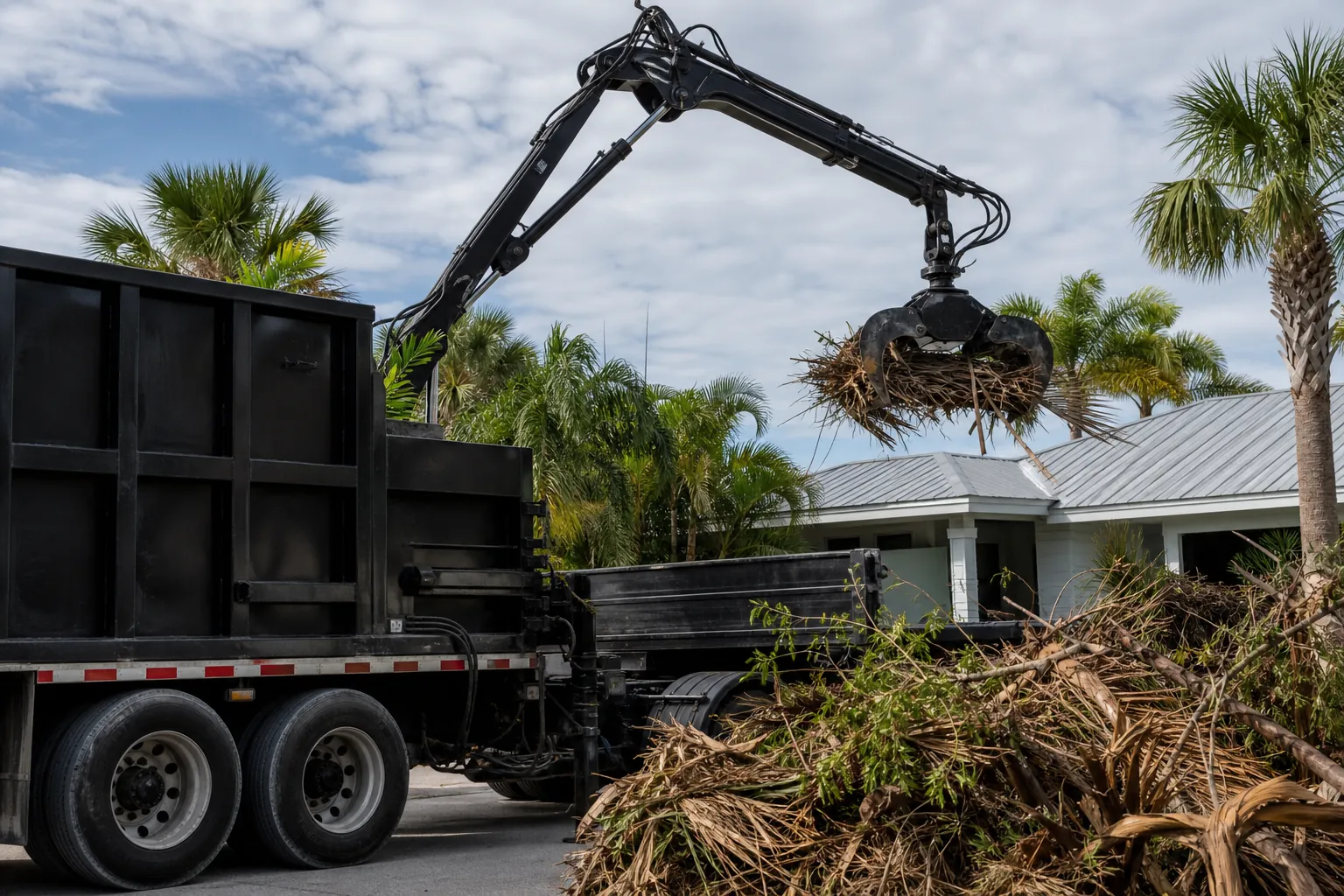
Good placement improves safety and allows the grapple operator to load efficiently. The truck needs enough room to approach, stabilize, and use its hydraulic arm without contacting buildings, vehicles, fences, utility lines, or landscaping. A pile that looks accessible from ground level may still be unsafe if branches or wires are overhead.
Use this checklist before the scheduled service:
- Keep debris on private property unless public placement has been authorized.
- Leave a clear route wide enough for a large commercial truck.
- Move parked vehicles, trailers, portable toilets, and equipment away from the loading zone.
- Check for overhead electrical, cable, and communication lines.
- Identify septic components, irrigation systems, soft shoulders, and underground utilities.
- Separate prohibited or hazardous materials from acceptable debris.
- Avoid placing piles over storm drains, fire hydrants, meters, or utility boxes.
- Confirm gate codes, access hours, and association rules before arrival.
- Photograph the pile and access route when requesting a quote.
- Tell the hauling provider about traffic, tight turns, soft ground, or limited clearance.
Florida rain can quickly soften unpaved surfaces and make heavy-truck access difficult. If the route crosses grass, sand, or a saturated area, discuss conditions in advance. Waiting for safer ground may prevent rutting, property damage, or a truck becoming stuck.
Debris types and disposal considerations
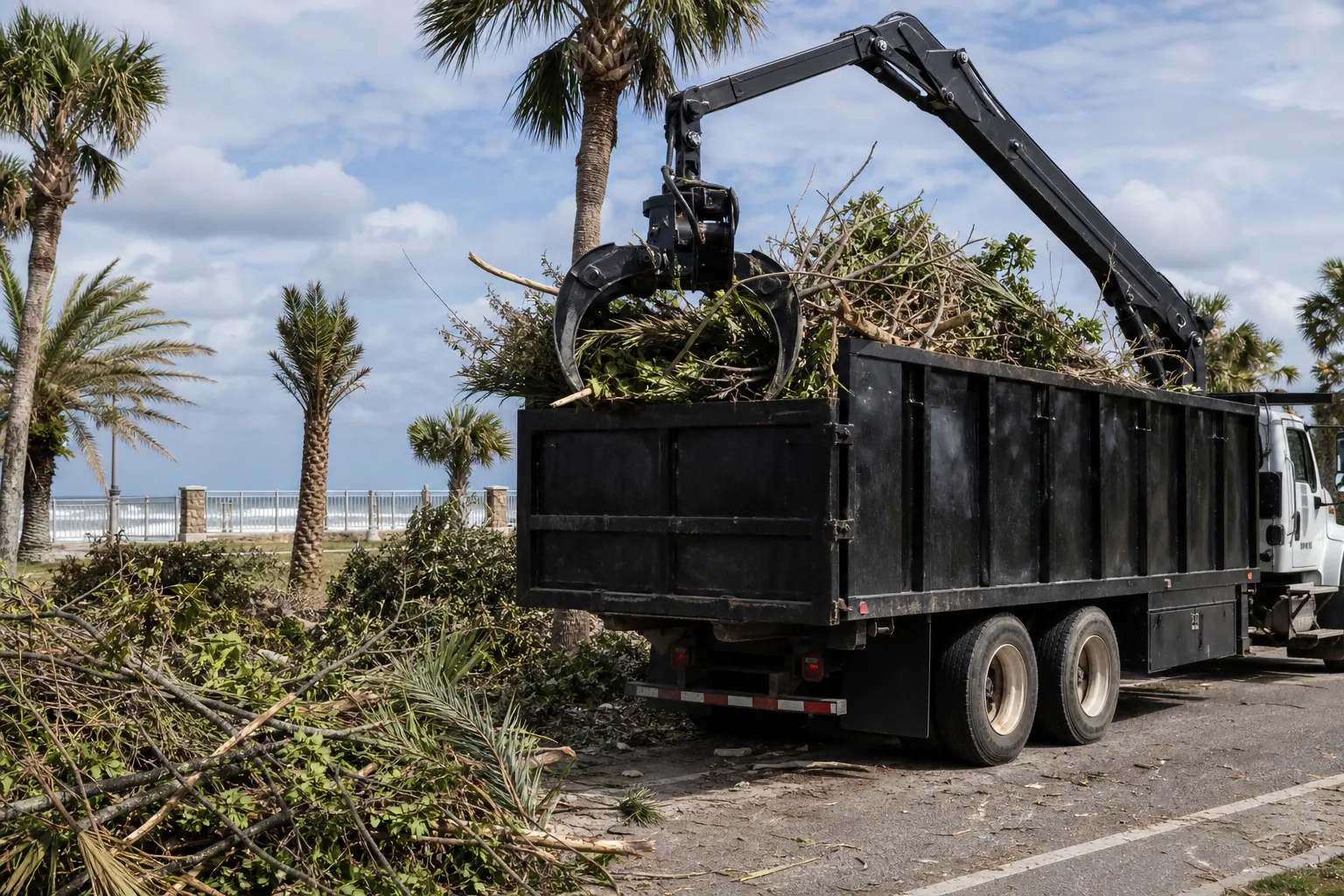
Grapple trucks are commonly used for vegetative debris, including limbs, logs, brush, and yard cleanup material. They can also support certain construction, demolition, and property cleanout projects when the material is suitable for mechanical loading and accepted at an approved disposal facility.
Do not assume every pile can be hauled together. Paint, chemicals, fuel, batteries, propane cylinders, asbestos-containing material, medical waste, electronics, tires, and other regulated items may require special handling. Concrete, soil, roofing, appliances, furniture, and mixed demolition debris may also affect the truck selection, disposal destination, load weight, and price.
Describe the contents honestly when requesting service. Photos are useful, but they may not reveal buried material. If a pile contains mixed waste, identify each material type and approximate volume. Proper classification supports safer loading and helps avoid delays or rejected loads at the disposal site.
What happens if public space is involved
If the pickup requires use of a public right-of-way, do not wait until the truck arrives to investigate. An agency may request an application, site sketch, insurance documentation, traffic-control plan, fee, or specific service window. Approval timelines vary, especially when multiple offices or road authorities are involved.
A permit does not necessarily authorize leaving debris in place indefinitely. It may limit the location, dates, hours, signage, barricades, or length of closure. The applicant may also be responsible for keeping drainage paths open and restoring the area after service.
Unapproved placement can lead to citations, relocation costs, pickup delays, or safety hazards. It can also prevent the operator from reaching the pile. When uncertain, keep material within the property boundary until the responsible authority confirms what is allowed.
Plan a smoother Daytona grapple pickup
Start by confirming the property jurisdiction, checking whether the pile or truck will affect public space, and asking the appropriate authority about current requirements. Then review site access, overhead clearance, ground conditions, debris type, and community restrictions. These steps reduce surprises and help the operator complete the work safely.
Daytona Grapple Trucks provides debris-hauling support for residential, commercial, landscaping, storm cleanup, and construction needs in the Daytona area. We do not replace official permitting guidance, but we can discuss truck access, pile placement, material details, and scheduling considerations.
For a calm, practical conversation about your pickup, call Daytona Grapple Trucks at (386) 481-7913. Have the service address, debris photos, material description, and preferred timing ready so the team can better evaluate the job.
Call (386) 481-7913 to talk through next steps.