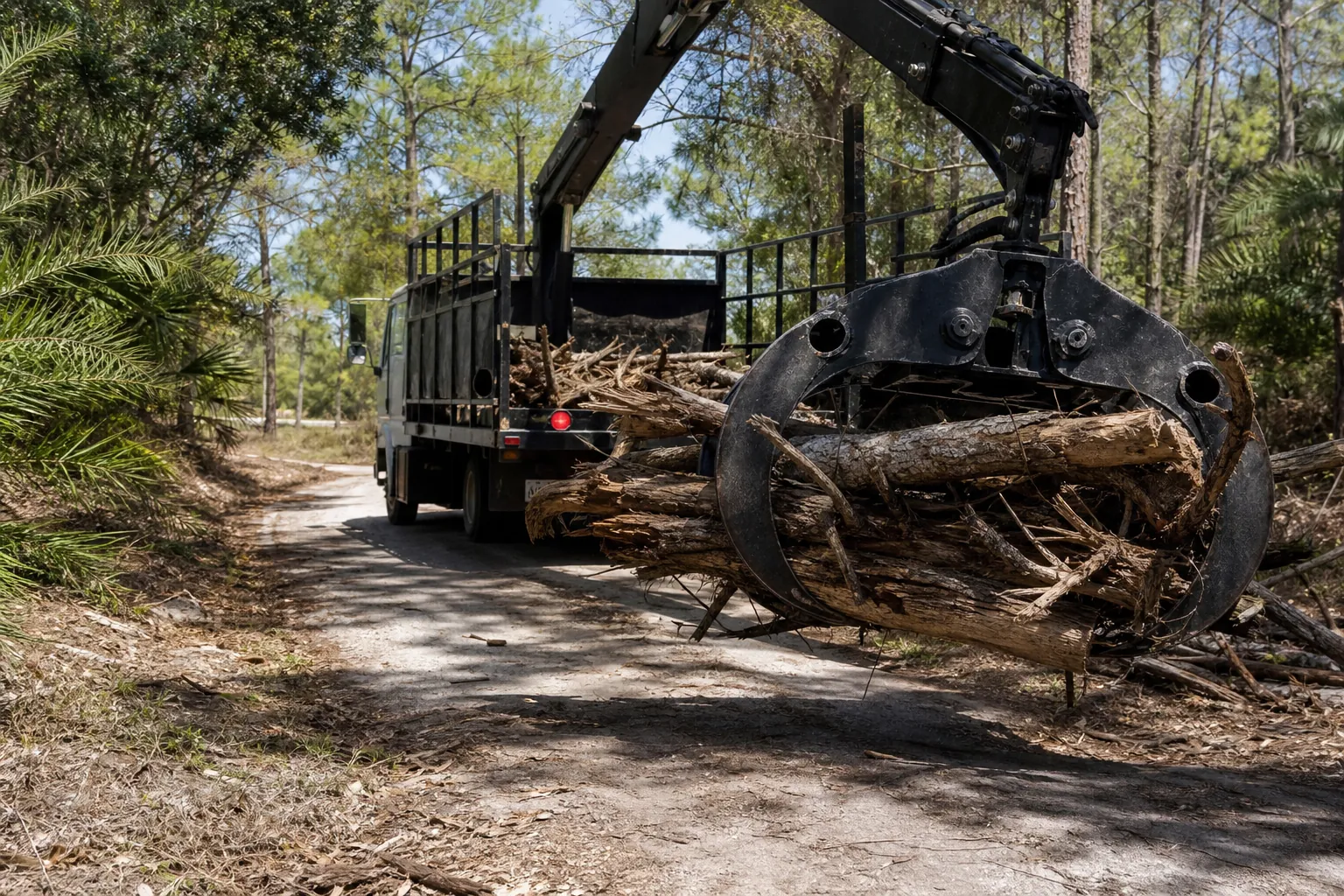
Planning grapple truck pickup on a private road in Volusia County starts with a clear description of the access. The person arranging pickup should identify who controls the road, where the material is located, and whether a large vehicle can approach without encountering preventable obstacles. Sharing these details before discussing the job helps Daytona Grapple Trucks understand the setting and ask focused questions. For a calm conversation about your property, call (386) 481-7913.
Confirm Who Controls the Private Road
Begin by determining who has authority over the road. A road may cross one property, serve several homes, or be governed by an association or written access agreement. Do not assume that using the road for a pickup is automatically acceptable simply because you regularly drive on it. If another owner, manager, or association controls entry, ask what permission is required before arranging access.
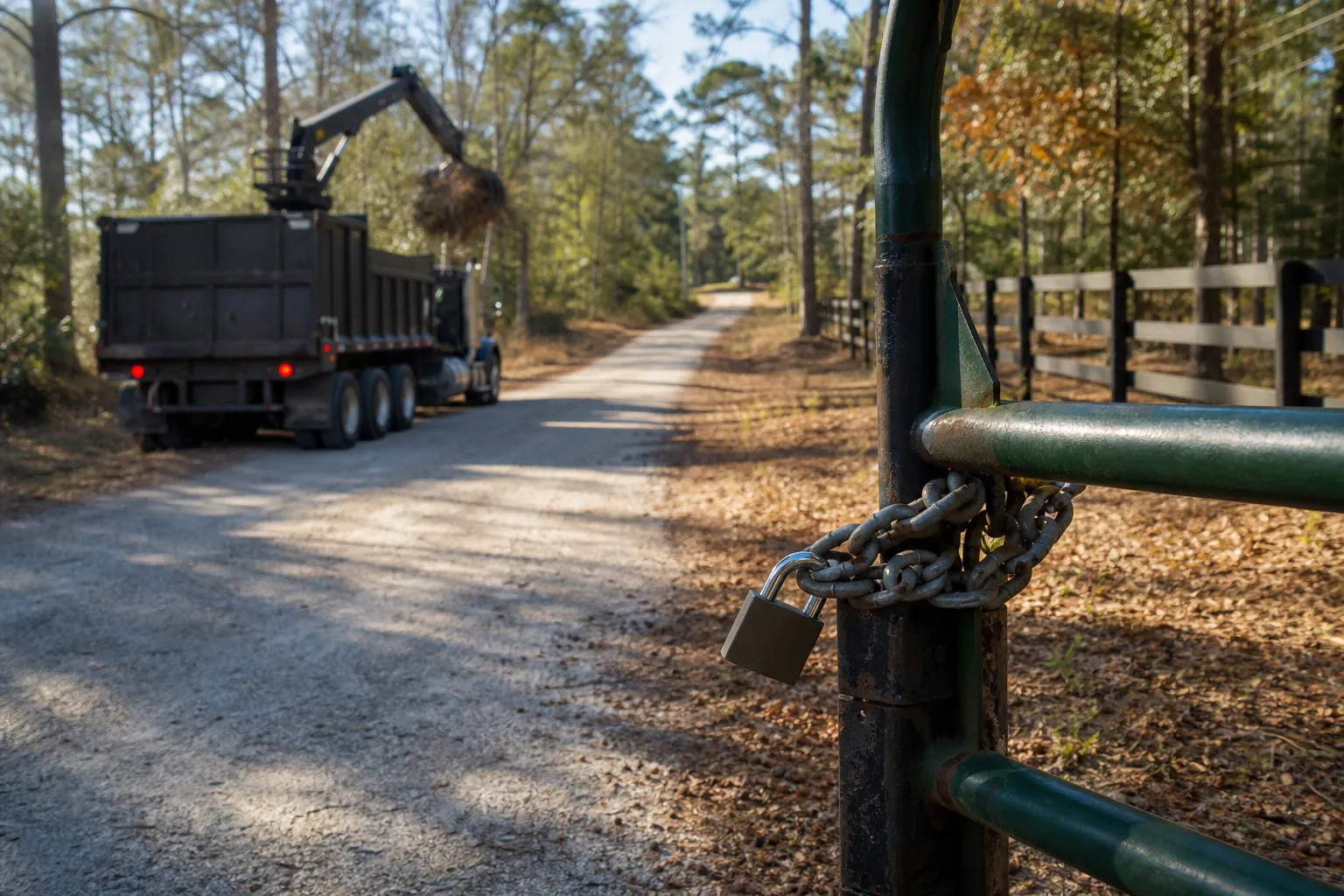
Clarify whether there is a gate, staffed entrance, call box, lock, or temporary access procedure. If a code or contact person is involved, confirm that the information will remain valid on the expected pickup date. Also identify any posted restrictions near the entrance. Sharing those details early can prevent an arrival from being delayed by a locked gate or unresolved permission question.
When you call, explain whether you own the road, share it with others, or have received approval from the controlling party. Daytona Grapple Trucks can then discuss the access information you provide without relying on assumptions about private-road use.
Describe the Road From Entrance to Material
A useful access description covers the entire route, not only the spot where the material sits. Start at the public-road entrance and mentally follow the private road to the pickup area. Note narrow points, sharp turns, steep changes, low branches, overhead lines, gate openings, parked vehicles, mailboxes, fences, culverts, and decorative features close to the travel path.
Photos can help communicate conditions, but they should show scale and sequence. Take views of the entrance, the narrowest section, major turns, overhead conditions, and the area beside the material. Mention anything that may not be obvious in a photograph, including soft edges, hidden drainage features, loose sand, or a turnaround that becomes blocked when other vehicles are present.
A simple checklist makes the initial conversation more productive:
- Who authorizes access to the road?
- Is there a gate, code, key, or entry contact?
- Where are the narrowest turn and lowest overhead point?
- What is the road surface, and has weather changed it?
- Can parked vehicles or movable obstacles be cleared?
- Is there an open area for turning or leaving?
Evaluate Surface Conditions and Road Edges
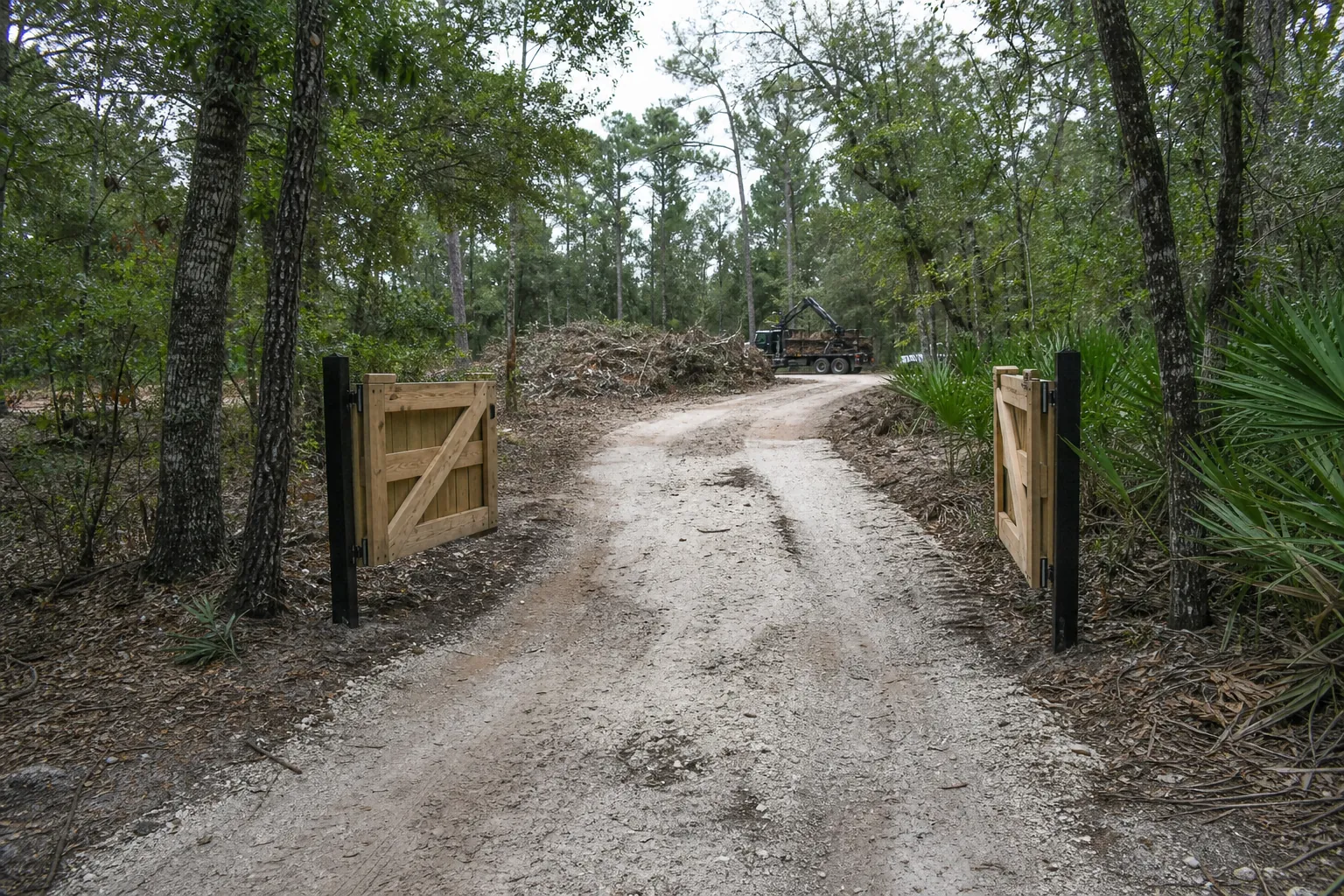
Private roads vary widely in construction and upkeep, so describe the surface in plain terms. State whether the route is paved, gravel, shell, sand, dirt, or a combination. Point out potholes, ruts, washouts, soft shoulders, standing water, recently filled areas, and places where the road narrows over a ditch or culvert. If the condition changes along the route, explain where that transition occurs.
Weather can alter access between the first call and the planned pickup. Rain may soften an unpaved section, deepen existing ruts, or make a previously firm edge uncertain. If conditions change, provide an update rather than assuming the original description still applies. Current information supports a more useful access discussion.
Also consider what lies beneath or beside the visible road. Septic areas, irrigation components, drainage structures, buried utilities, and landscaped borders may not be designed as driving or turning space. Identify known sensitive areas and avoid presenting lawns or shoulders as available access unless their use has been addressed by the property owner.
Place Material With Access in Mind
Material location is part of the access decision. Before moving or adding to a pile, describe where it is relative to the road, nearby structures, fences, trees, utility lines, and drainage features. Avoid placing material where reaching it would require crossing an uncertain surface or where surrounding obstacles leave little working space. If the pile already exists, accurate photos and measurements can help explain the layout.
Keep the approach as clear as reasonably possible. Move personal vehicles, trailers, portable recreation equipment, and other movable items away from the route and pickup area. Coordinate with neighbors when shared parking or roadside activity could block entry. Keep children and pets away from the work area, and tell other road users that vehicle access is being discussed.
Do not relocate material solely on a guess about what access is needed. Call first and explain the current placement. That conversation may prevent unnecessary handling. For broader budgeting considerations, review the guide to grapple truck pickup cost factors in Daytona Beach.
Prepare Specific Details Before You Call
A concise set of facts makes it easier to discuss a private-road pickup. Have the property address available and explain how the private-road entrance is identified. State the road surface, approximate route length from the entrance to the material, gate situation, known clearance concerns, turning area, and current weather-related conditions. Explain whether the road is shared and whether permission has been confirmed.
Be ready to describe the material without assuming that every item is suitable. The supplied business information does not define an accepted-material list, so ask directly about what you have. Mention mixed contents, unusually long pieces, or anything near utilities, structures, fences, or drainage areas. Clear disclosure supports an accurate conversation about the situation.
Finally, decide who will be available to answer access questions and how entry will be handled. If another person controls the gate or road, make sure that person knows about the request. If conditions change after your call, report the change. Up-to-date details are more useful than an earlier description that no longer matches the property.
Discuss Your Private-Road Access
Gather the road, gate, clearance, surface, and material details, then call Daytona Grapple Trucks at (386) 481-7913. Describe the property as it is today and ask about the information needed for your Volusia County pickup decision.
Call (386) 481-7913 to talk through next steps.