
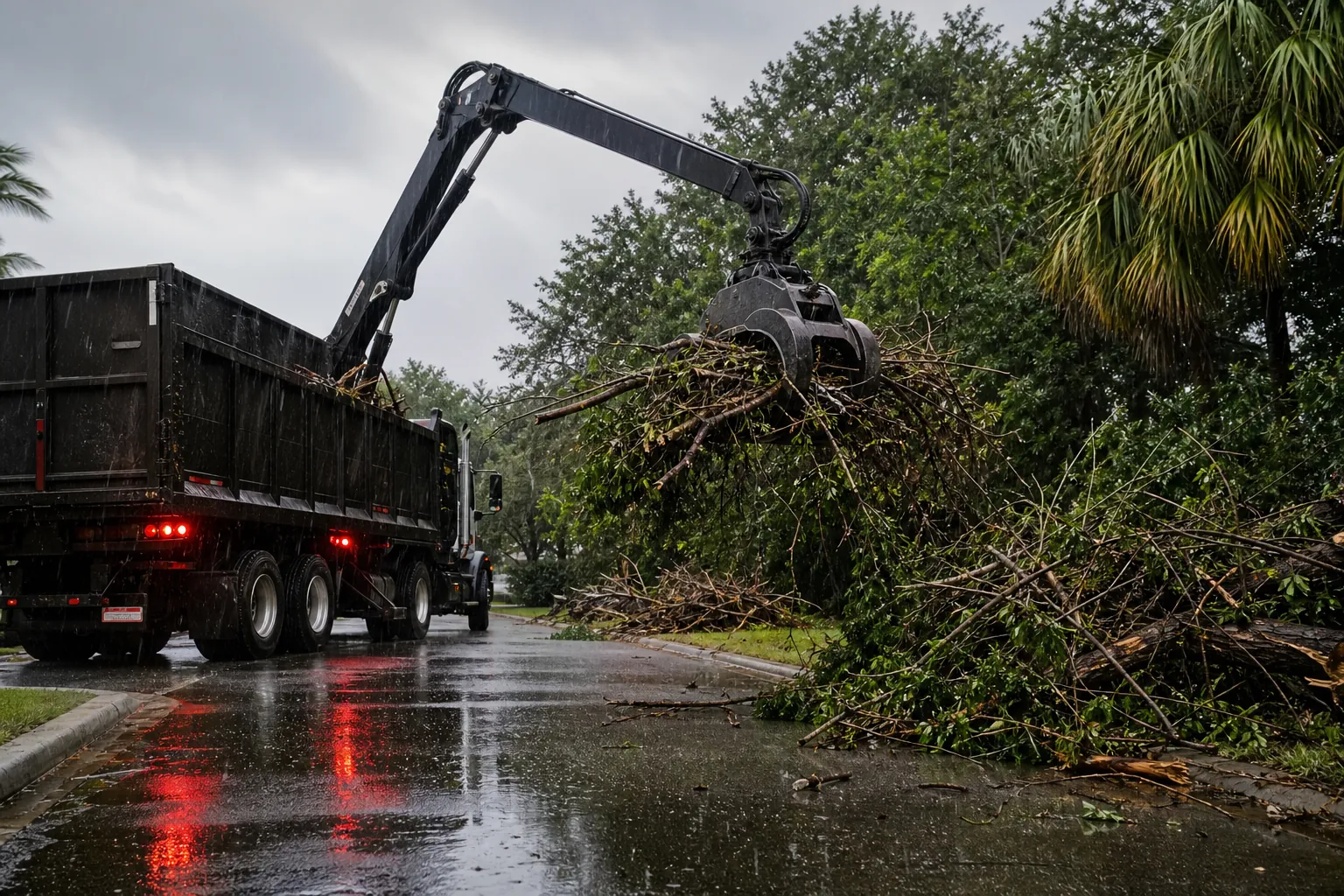
Rain is part of life in Florida, especially during the summer storm season. Most light showers do not automatically stop debris hauling, but wet ground, lightning, flooding, and poor access can change what is safe or practical. Understanding a grapple truck pickup rain policy helps property owners prepare their piles, protect surrounding surfaces, and avoid preventable delays.
At Daytona Grapple Trucks, weather decisions are based on conditions at the pickup site and along the route. A brief shower may have little effect, while a severe thunderstorm or saturated yard can make lifting and loading unsafe. The goal is to complete each job efficiently without damaging property or placing people and equipment at unnecessary risk.
Does Rain Automatically Cancel A Grapple Truck Pickup?
Not always. Grapple trucks can often collect debris during light rain when visibility is good, the truck has stable access, and the material can be loaded safely. Paved driveways, firm parking areas, and roadside piles are generally less affected than piles located on grass, loose soil, or low-lying ground.
Conditions are evaluated individually because Florida storms can vary from one neighborhood to the next. A property may be dry enough for service even when rain is falling nearby. Conversely, a site may remain too soft for a heavy truck after the sky clears.
Pickup may be postponed when lightning is active, rain significantly reduces visibility, water covers the access route, winds make material difficult to control, or the truck could sink into saturated ground. Severe weather alerts and unsafe road conditions can also affect the schedule.
Why Wet Ground And Access Matter
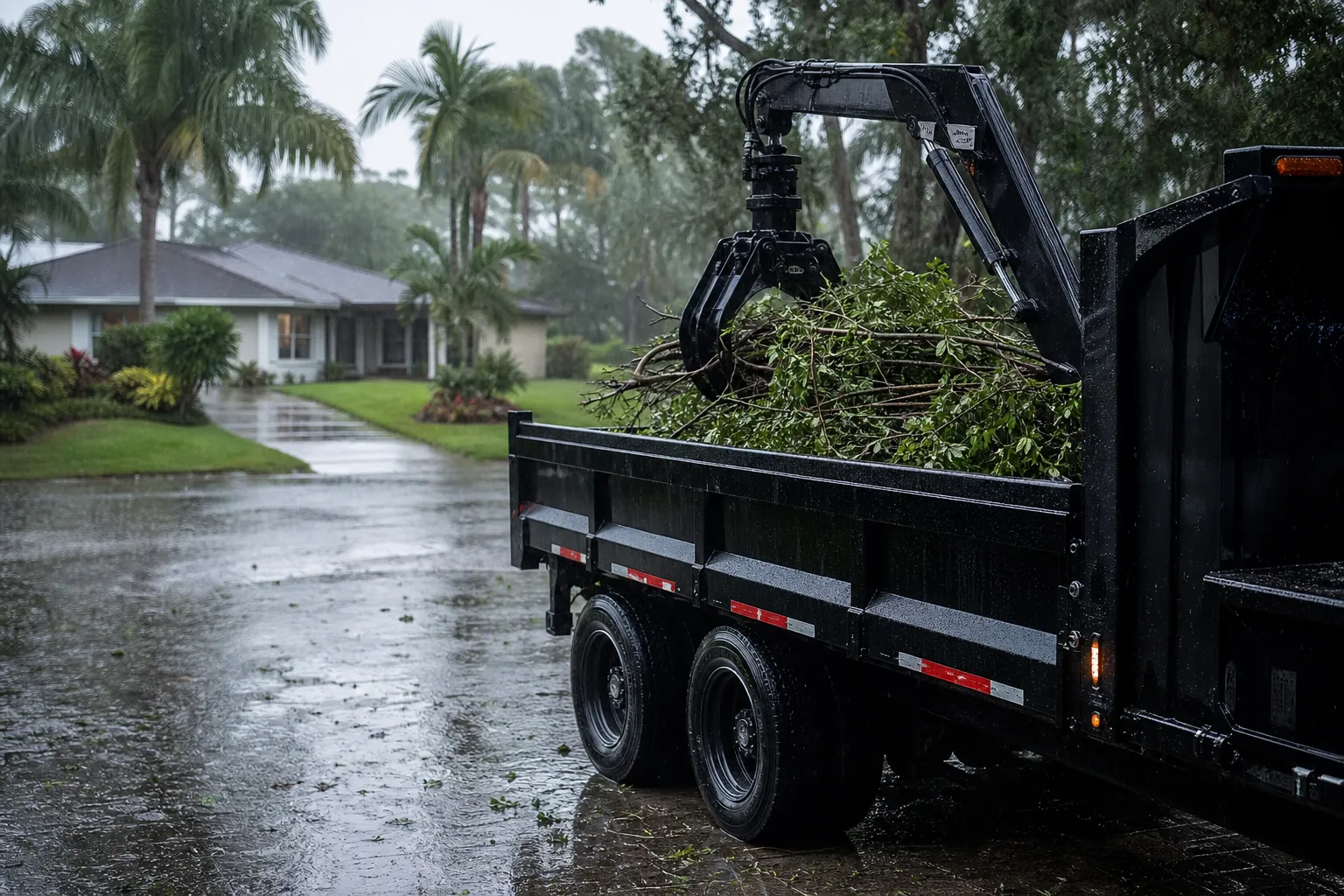
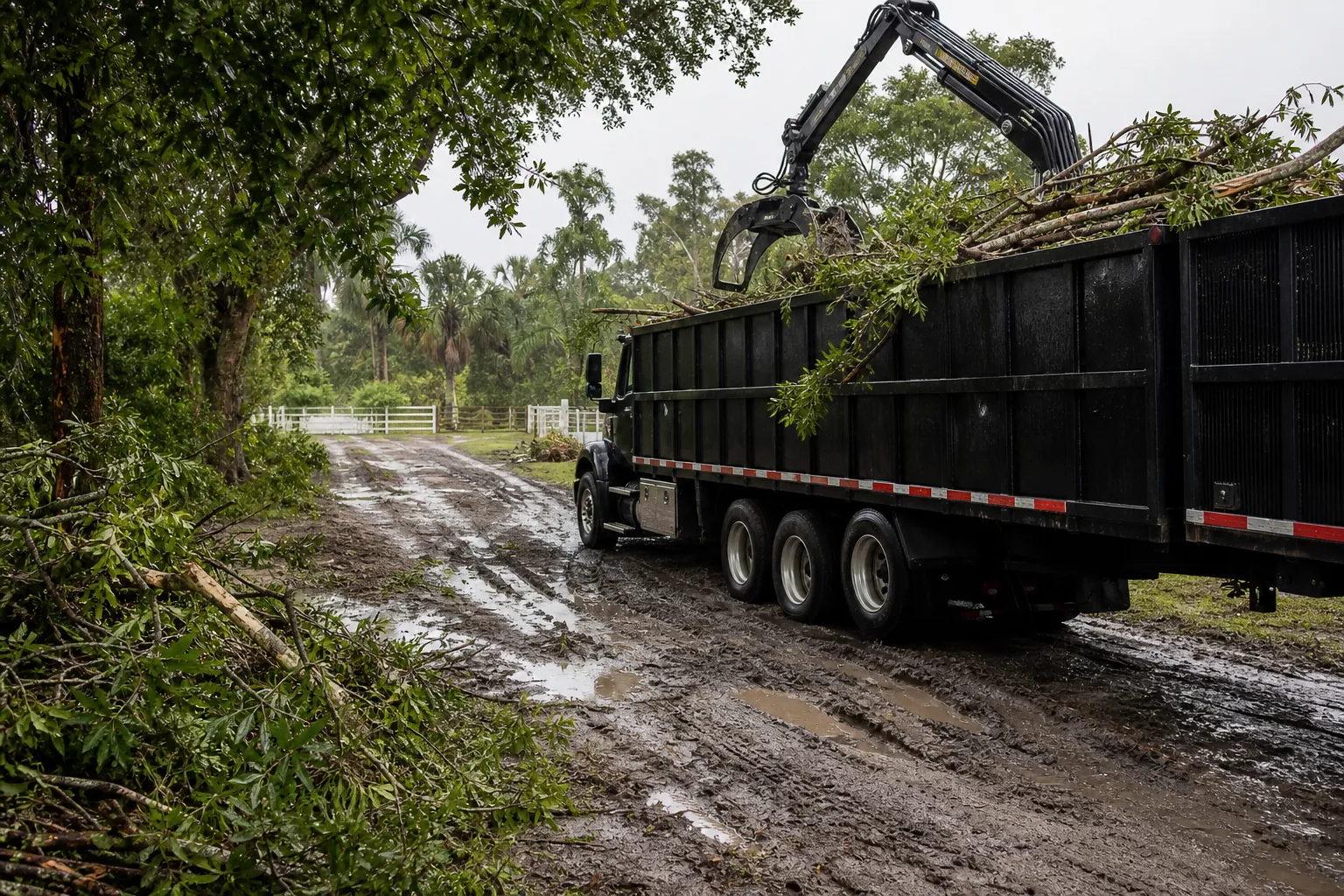
A loaded grapple truck is heavy. Even if a lawn appears firm on the surface, saturated soil underneath may not support the truck's weight. Driving onto soft ground can create deep ruts, damage irrigation lines, disturb landscaping, or leave the vehicle stuck.
The safest pickup location is typically beside a firm, legal access surface where the hydraulic grapple can reach the debris without the truck entering a yard. A paved driveway may work if it has adequate clearance and is designed to handle heavy vehicles. Public sidewalks, drainage structures, septic areas, and decorative pavers require special care.
Overhead access matters too. Wet branches can sag, and storms may bring down utility lines. The operator needs open space above the pile for the grapple boom. Never place debris beneath power lines, low tree limbs, cable lines, or structures.
How To Prepare A Debris Pile Before Rain
Good placement can keep a routine shower from becoming a scheduling problem. Set the pile on firm ground before heavy rain begins, and keep it close enough to an approved truck access point for the grapple to reach. Avoid ditches and swales because they carry stormwater and can quickly become muddy or flooded.
Use these practical preparation steps:
- Choose stable ground: Place debris near pavement or another firm surface rather than in a soft lawn or recently disturbed soil.
- Keep drains clear: Do not block storm drains, gutters, culverts, or roadside drainage paths with branches and bulky waste.
- Separate problem materials: Keep paint, fuel, chemicals, batteries, propane tanks, and other potentially hazardous items out of the pile.
- Avoid overhead hazards: Leave generous clearance from utility lines, tree canopies, roofs, signs, and fences.
- Maintain truck access: Move vehicles, trailers, and portable equipment before the scheduled arrival window.
- Contain lightweight debris: Bag or secure loose items that wind or runoff could scatter, but confirm that the material is acceptable for collection.
- Do not cover the pile with a loose tarp: A tarp can hide prohibited objects and become tangled in the grapple. Ask before using any cover.
- Share site details: Mention gates, soft shoulders, steep grades, septic systems, or recent flooding when arranging service.
Photos can be helpful when rain has changed the site. A current image of the pile and access area may help determine whether the pickup can proceed or should be moved to a safer time.
Materials That Become More Difficult When Wet
Rain affects debris in different ways. Tree limbs and brush usually remain manageable, although soaked vegetation becomes heavier. Logs, palm debris, and storm-damaged branches may shift as they are lifted, so the pile must have adequate clearance from vehicles and structures.
Construction and cleanout debris may absorb substantial water. Carpet, drywall, insulation, mattresses, upholstered furniture, and similar materials can become much heavier after exposure. Added weight can change the estimated load size, the number of loads required, and disposal considerations.
Mud mixed into a pile also creates complications. The grapple is intended to lift debris, not excavate soil. Keeping material on a firm surface helps reduce unwanted dirt in the load and makes cleanup more efficient. If debris is mixed with hazardous substances, household chemicals, or unknown liquids, service may require a different disposal solution.
Lightning, Wind, And Severe Florida Weather
Rain alone is only one factor. Hydraulic equipment should not operate near lightning, and the boom must remain well away from electrical lines. Strong wind can move sheet material, fencing, palm fronds, and other broad or lightweight items while they are being lifted.
During tropical storms, hurricanes, or severe thunderstorms, pickups may be delayed until roads reopen and the site can be assessed. Storm debris volumes can also affect disposal facility hours, traffic, and turnaround times. A safe route to the property and an open receiving facility are necessary before service can be completed.
After major weather, check the pile for downed wires, sharp metal, unstable trees, standing water, and hidden objects. Do not approach any line on the ground. Contact the appropriate utility or emergency authority and keep everyone away from the area.
What Happens If Service Must Be Rescheduled?
If conditions become unsafe, the pickup can be moved to the next practical service opportunity. Timing depends on the weather, ground recovery, route availability, disposal operations, and previously scheduled work. The site may need more than a few sunny hours to dry, particularly in shaded areas or locations with poor drainage.
Customers can help by keeping access open and reporting changes before the truck arrives. If the pile has grown, shifted into a drainage area, or become mixed with additional materials, updated details allow the hauling plan to be adjusted.
Plan A Safer Rainy-Season Pickup
A sensible grapple truck pickup rain policy is flexible because safety depends on actual site conditions. Light rain may allow work to continue, while lightning, flooding, high wind, or saturated soil may require a delay. Proper pile placement is the best way to improve access and protect your Florida property.
For questions about weather, acceptable debris, pile placement, or current scheduling, call Daytona Grapple Trucks at (386) 481-7913. The team can review the situation and help plan a practical pickup based on local conditions.
Call (386) 481-7913 to talk through next steps.