When branches, brush, logs, construction debris, or storm waste are piled on a property, the next question is usually simple: how soon can it be removed? Grapple truck pickup turnaround time depends on several practical factors, including location, debris volume, material type, site access, weather, and current demand.
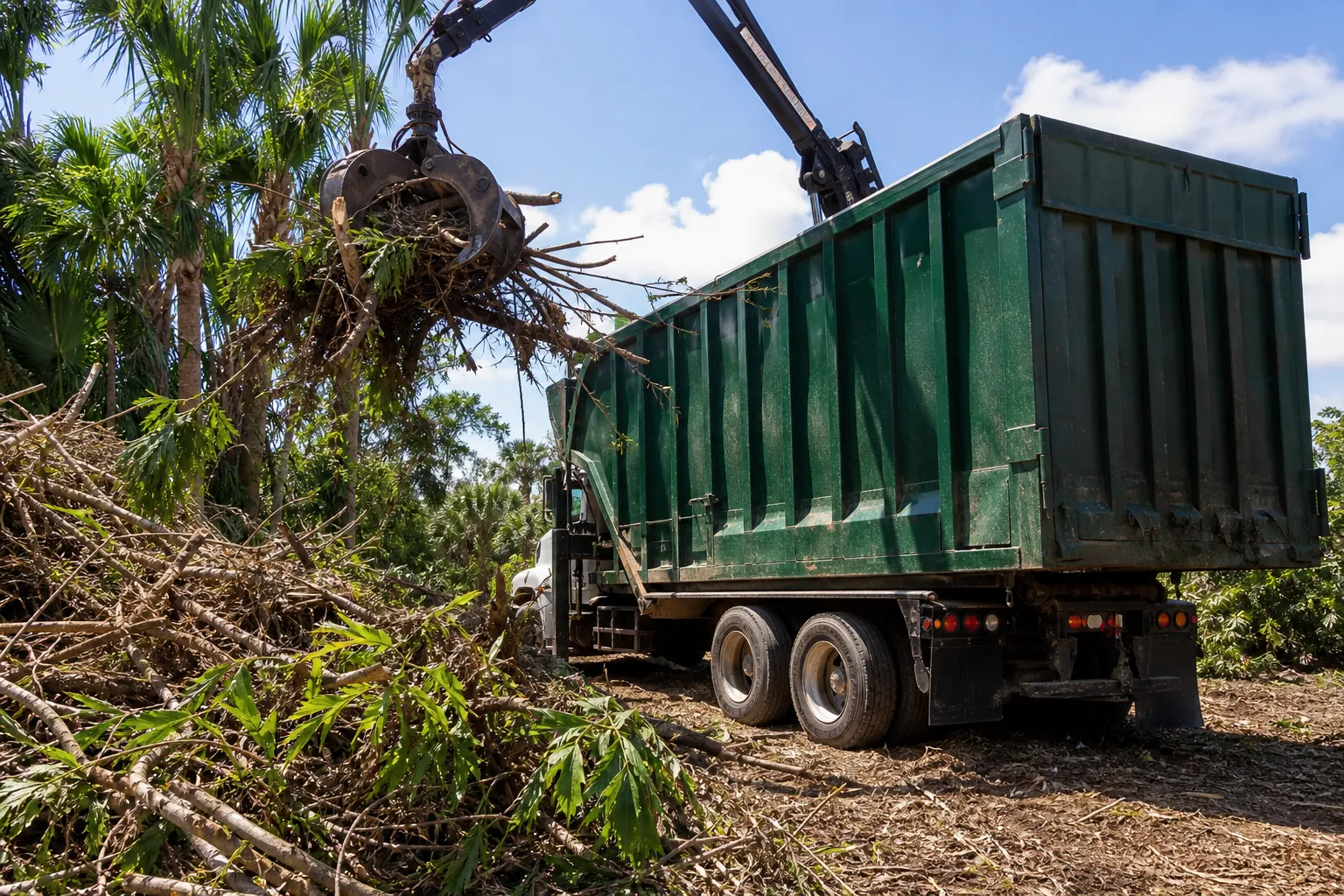
Daytona Grapple Trucks serves customers in Florida who need an efficient way to clear bulky debris. A grapple truck combines a hydraulic loading arm with a large hauling body, allowing crews to load many materials without relying on extensive manual labor. Understanding the scheduling process can help property owners, contractors, and managers avoid delays and prepare for a smoother pickup.
What Determines Grapple Truck Pickup Timing?
There is no single turnaround time that applies to every project. A small, accessible pile near a paved road may be handled faster than multiple loads spread across a large property. Accurate scheduling starts with clear information about the job.
Location is one of the biggest factors. Travel distance, traffic, disposal facility hours, and the availability of nearby trucks all affect the service window. Routes may also be grouped by area so several Florida customers can be served efficiently during the same trip.
Debris volume matters because it determines how many truckloads may be required. A pile that looks manageable from the ground can contain more material than expected, especially when branches are loosely stacked. Dense logs, soil, concrete, and mixed construction waste can reach weight limits before the truck body appears full.
Material type also affects where debris can be taken. Clean vegetative material may qualify for recycling or processing at a yard waste facility, while mixed waste may need to go to a different approved location. Disposal requirements can influence both timing and cost.
Typical Scheduling Situations In Florida
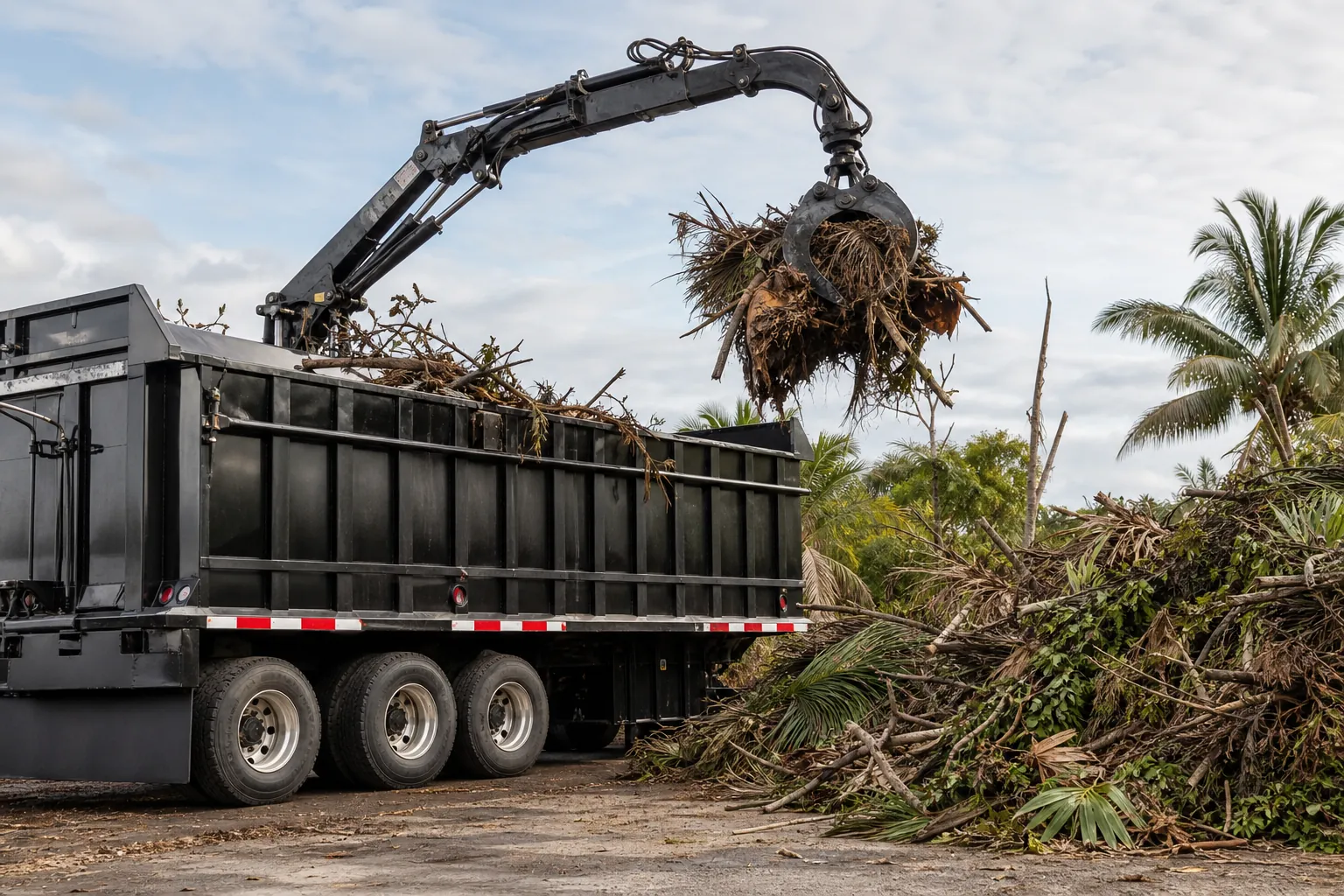
Routine pickup requests can often be placed on an upcoming route after the company confirms the pile size, contents, address, and access conditions. Advance scheduling is helpful for planned tree trimming, landscaping work, renovations, property cleanouts, and construction projects.
Urgent requests may be available when trucks and disposal sites have capacity, but same-day service should not be assumed. Calling early gives the dispatcher more flexibility to review the route and determine whether an expedited pickup is practical.
Storm events create a different situation. Hurricanes, tropical storms, and severe thunderstorms can generate large amounts of vegetative debris across an entire region. Demand rises quickly, roads may be restricted, disposal sites may operate under temporary procedures, and local governments may begin separate collection programs. During these periods, turnaround times can be longer than normal.
Commercial and recurring customers may benefit from coordinating pickups before piles become oversized. Contractors, property managers, tree services, and community associations can plan service around project phases or anticipated debris volume instead of waiting until material blocks a work area.
How To Prepare For A Faster Pickup
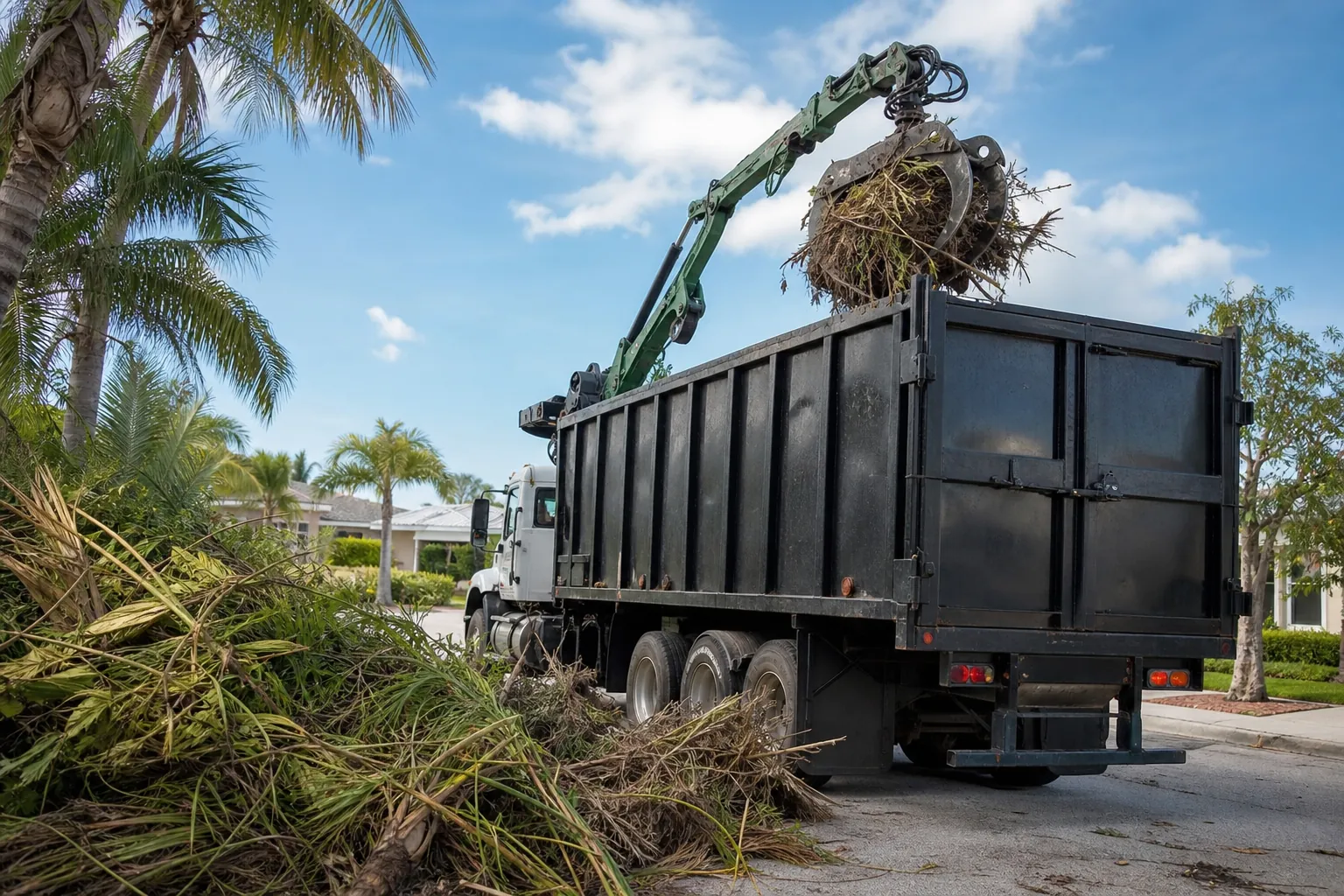
Good preparation can reduce loading time and prevent a truck from arriving only to find that the pile cannot be reached safely. The grapple arm needs clear overhead and side access, while the truck needs stable ground and enough room to approach, load, and leave.
Before requesting service, review these details:
- Separate material types: Keep vegetative debris apart from household trash, roofing, concrete, metal, and hazardous items whenever possible.
- Provide clear photos: Take images from several angles so the dispatcher can estimate pile dimensions, density, and truck access.
- Describe the volume: Include approximate length, width, and height rather than saying the pile is small or large.
- Confirm access: Mention narrow gates, soft soil, steep grades, low branches, utility lines, parked vehicles, and restricted entrances.
- Place debris carefully: Use a location the truck can reach without crossing septic systems, irrigation components, landscaping, or weak pavement.
- Identify prohibited items: Disclose paint, chemicals, batteries, fuel containers, asbestos, or other potentially hazardous materials before scheduling.
- Share site instructions: Provide gate codes, contact information, business hours, and any community or jobsite entry rules.
Do not place debris under power lines or directly against fences, mailboxes, buildings, or vehicles. The grapple needs room to close around the material and lift it safely. A well-positioned pile can shorten the onsite portion of the job and help the route stay on schedule.
Why Accurate Estimates Matter
A reliable turnaround estimate depends on reliable job details. If the pile is much larger than described or contains unexpected heavy material, the planned truck may not have enough legal payload capacity. Additional trips may be necessary, which can change the completion timeline.
Photos and measurements help determine whether the project is likely to require one load or several. They also help identify situations that may need special equipment or an onsite review. For ongoing work, customers should explain how quickly new debris is being generated so service frequency can be planned appropriately.
Customers should also distinguish between an arrival window and final project completion. A truck may arrive as scheduled but need multiple disposal runs to finish a large cleanup. Disposal facilities can experience lines, temporary closures, or material-specific restrictions that are outside the hauler's control.
Weather, Traffic, And Disposal Site Delays
Florida weather can change site conditions quickly. Heavy rain may soften unpaved surfaces, create standing water, or make a loading area unsafe for a heavy truck. Lightning can pause outdoor operations, while high winds may affect handling of long branches and lightweight debris.
Traffic congestion, road construction, bridge restrictions, and special events can also affect arrival windows. Professional routing accounts for known conditions, but unexpected incidents may still cause delays. Providing a working phone number allows the team to communicate if the schedule changes.
Disposal destinations are another important part of the timeline. Trucks must follow facility rules, operating hours, load limits, and sorting requirements. Preparing a clean, accurately described pile reduces the chance that a load will need to be redirected.
Plan Your Florida Debris Pickup
The best way to get a realistic service window is to provide the pickup address, debris type, approximate pile dimensions, photos, access notes, and preferred completion date. If the work is tied to a closing, inspection, contractor deadline, or community requirement, mention that timing when requesting an estimate.
Daytona Grapple Trucks can review your project details and explain the likely scheduling options without making unrealistic promises. For help planning debris removal in Florida, call (386) 481-7913. A short conversation and clear site information can make the pickup process more predictable from the start.
Call (386) 481-7913 to talk through next steps.