
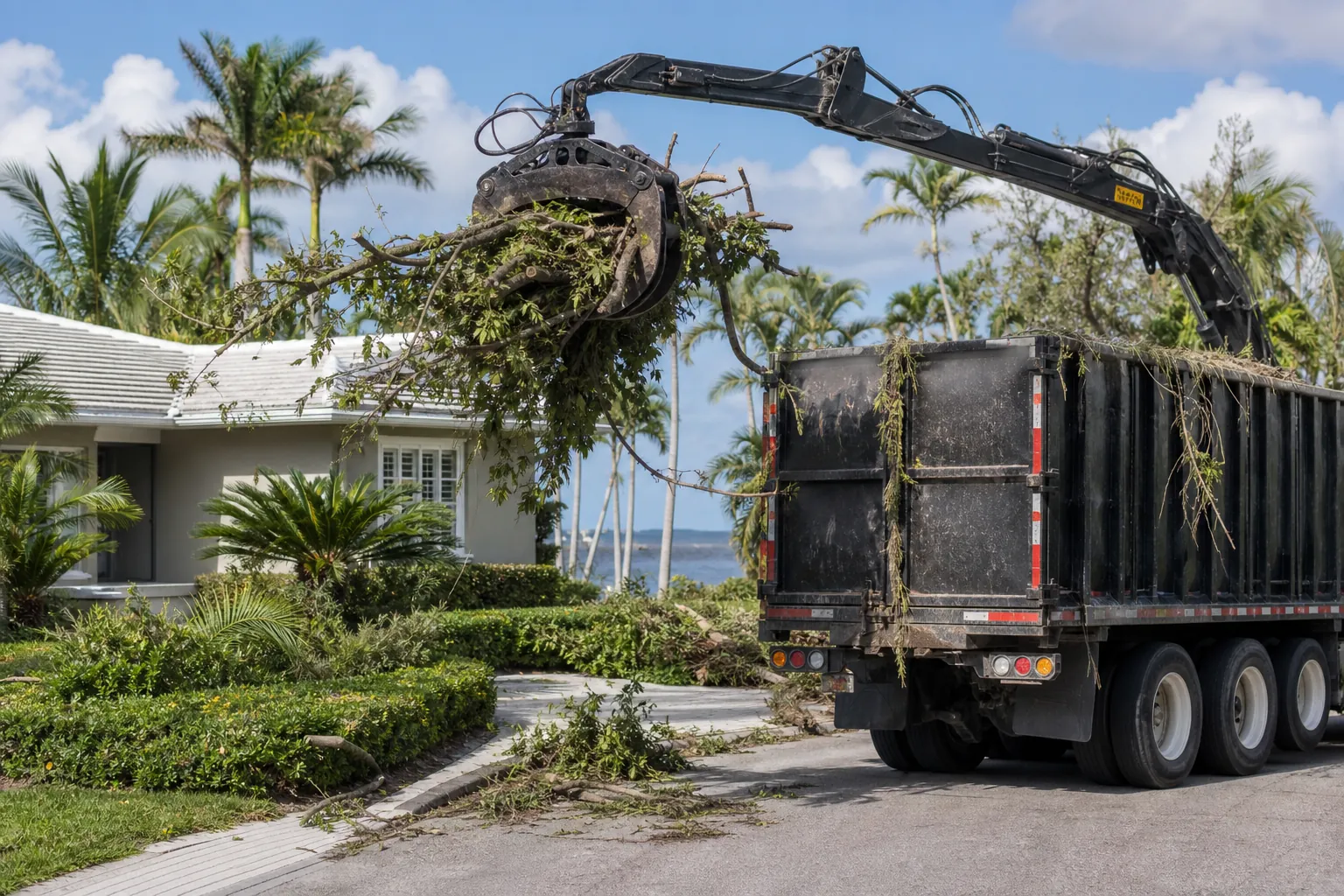
Grapple trucks make quick work of storm debris, tree limbs, brush, construction waste, and other bulky materials. Their reach and lifting capacity can reduce manual handling and clear a property efficiently. However, heavy equipment must be operated with care, especially around roofs, fences, driveways, utility lines, landscaping, and neighboring structures.
Effective grapple truck property damage prevention begins before the boom moves. A professional crew evaluates access, ground conditions, debris placement, overhead hazards, and the safest position for the truck. At Daytona Grapple Trucks, we use deliberate planning and controlled operation to help Florida property owners remove debris without creating avoidable problems.
Why Site Assessment Matters Before Debris Removal
Every pickup location presents a different combination of hazards. A wide commercial lot may offer ample working room, while a residential driveway can place the truck near gutters, vehicles, mailboxes, irrigation systems, or decorative pavers. Recent rain may also soften soil and reduce the stability of shoulders or unpaved areas.
Before loading begins, the operator should identify where the truck can safely park and how the grapple will approach the pile. The assessment should account for the boom's path, the truck's turning space, and the distance between debris and fixed objects. It is also important to check whether the pile contains hidden materials that could shift unexpectedly.
Florida properties often have additional considerations, including sandy soil, drainage swales, septic components, low-hanging branches, and overhead power lines. Recognizing these conditions early allows the crew to choose a safer loading strategy rather than reacting after equipment is already in position.
Smart Debris Placement Reduces Risk
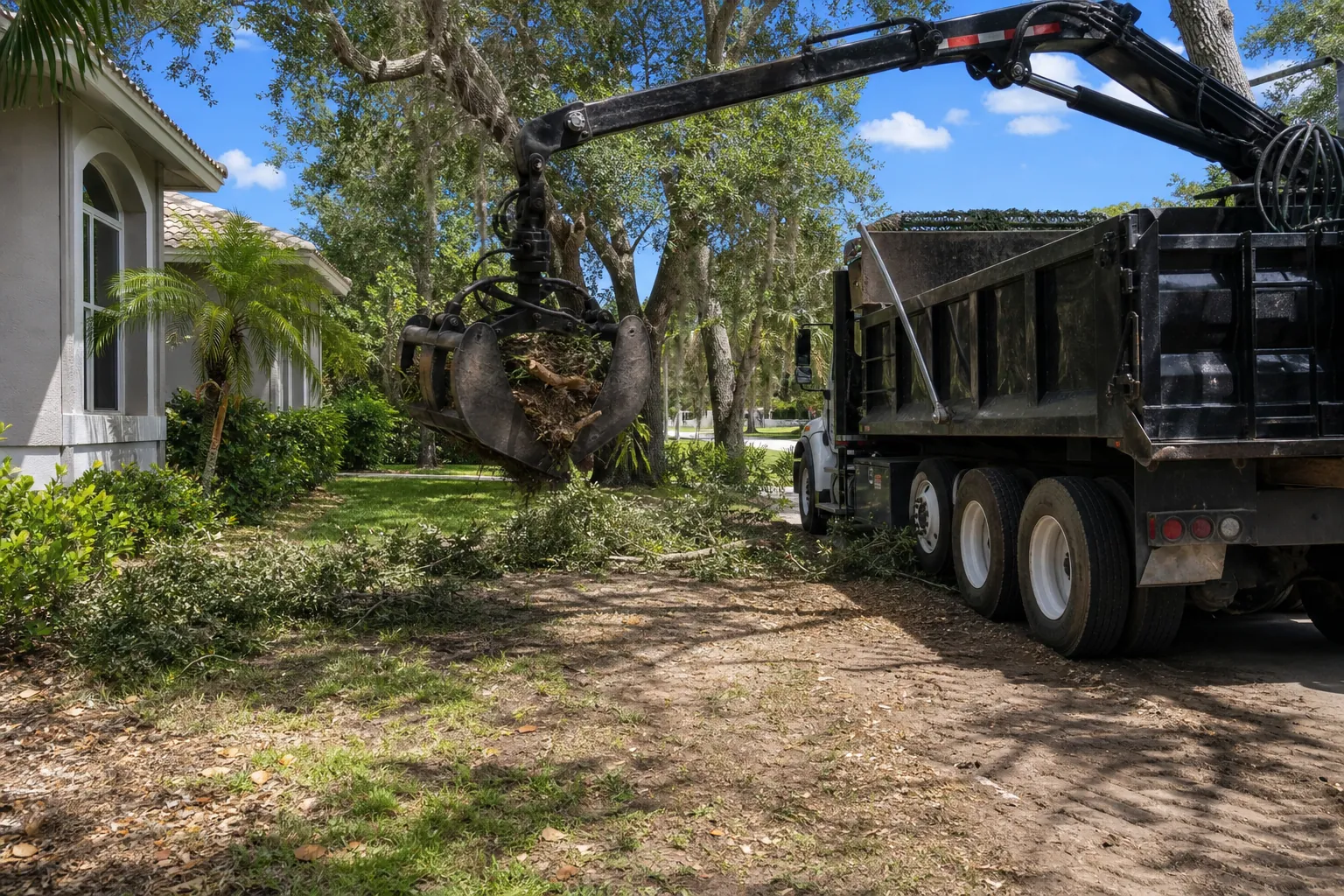
Where debris is placed has a major effect on safe removal. A pile located directly beneath a power line or pressed against a fence leaves little room for the grapple to work. Materials stacked over a water meter, storm drain, or irrigation head may conceal vulnerable property features.
When possible, customers should place debris in an open, accessible area near the road or designated pickup point. The pile should remain on the property and should not block sidewalks, traffic lanes, drainage paths, or neighboring access. Keeping materials away from parked vehicles and buildings gives the operator more room for controlled lifting.
Useful preparation steps include:
- Keep piles clear of overhead electrical, cable, and communication lines.
- Leave space between debris and fences, gates, walls, signs, and mailboxes.
- Mark septic tanks, drain fields, wells, irrigation equipment, and buried utilities.
- Move vehicles, trailers, portable basketball hoops, and outdoor furniture away from the work zone.
- Separate loose yard waste from concrete, metal, roofing, or demolition materials when practical.
- Avoid placing heavy debris on decorative pavers, soft lawns, or unsupported driveway edges.
- Tell the hauling company about sharp objects, unstable loads, or hazardous materials before service.
If there is no clearly safe location, contact the hauling provider before moving the debris. A brief conversation can prevent a pile from being placed somewhere that makes pickup difficult or unsafe.
Controlled Grapple Operation Protects Surroundings
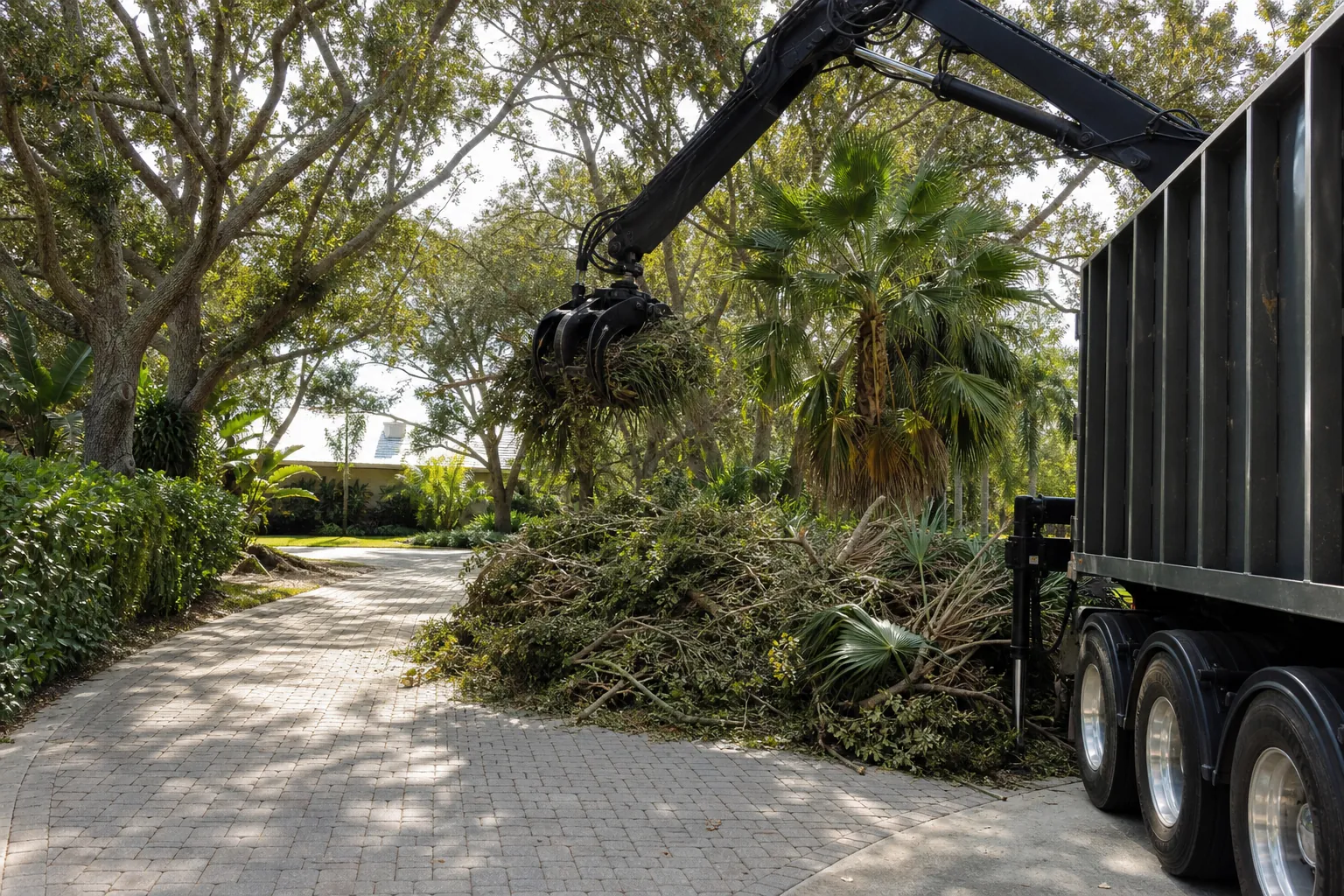
The grapple should be used as a precise lifting tool, not as a device for dragging debris across finished surfaces. Controlled movements help prevent gouged pavement, damaged turf, scraped fences, and contact with nearby structures. Smaller, balanced grabs may take slightly longer, but they can offer better control than attempting to lift an oversized or tangled load.
An experienced operator also watches how materials behave as they are lifted. Branches can swing, boards can slide, and loosely stacked debris can separate. Keeping the load stable and maintaining clearance around obstacles reduces the chance that an item will strike a roof, vehicle, sign, or landscaping feature.
Debris should be placed securely in the truck body without overloading it. Proper load distribution supports vehicle stability and helps prevent material from falling during loading or transport. Once hauling begins, containment and compliance with applicable road requirements are important parts of responsible service.
Truck Positioning And Ground Conditions
Safe positioning provides a stable base for lifting. The operator must consider slope, pavement strength, shoulder condition, soft ground, and the location of curbs or driveway edges. Parking too close to an unsupported edge can crack pavement or cause settling, particularly when the truck is carrying a heavy load.
Florida's weather can change site conditions quickly. Saturated soil after a thunderstorm may not support the same weight as dry ground. Standing water can also hide potholes, erosion, or drainage structures. If the surface appears unstable, the safer choice may be to reposition the vehicle, adjust the reach, or postpone service until conditions improve.
Access routes matter as well. Low branches, narrow gates, tight corners, and limited turnaround space can expose buildings and landscaping to damage. Accurate information about site access helps the crew arrive prepared and avoid forcing a large vehicle into an unsuitable area.
Communication Helps Prevent Costly Surprises
Property owners know details that may not be visible to the operator. Underground irrigation lines, recently installed sod, weak driveway sections, hidden septic components, and property boundary concerns should be discussed before work starts. Clear communication allows the crew to incorporate those factors into the pickup plan.
It is also helpful to explain what the pile contains and provide approximate dimensions. Storm cleanup may include tangled branches and fencing, while renovation debris may contain nails, glass, tile, or sheet metal. Different materials require different handling methods, and some items may need specialized disposal rather than standard debris hauling.
During service, people and pets should remain outside the operating area. One designated contact can communicate with the operator from a safe location. Keeping bystanders away reduces distractions and prevents anyone from entering the boom's working radius.
Choosing A Careful Florida Grapple Truck Provider
Price and speed matter, but they should not outweigh safe operating practices. A reliable provider should ask about access, debris type, pile location, overhead lines, and sensitive property features. The company should also be willing to explain how the truck will be positioned and whether site conditions create limitations.
Look for a team that values preparation, communicates clearly, and treats the surrounding property as seriously as the debris itself. Professional grapple truck debris hauling is not only about removing a pile. It is about completing the work efficiently while minimizing disruption to the driveway, lawn, structures, utilities, and neighboring areas.
Plan A Safer Debris Pickup
Good preparation, thoughtful pile placement, stable truck positioning, and controlled lifting all contribute to safer debris removal. These practices are especially important in Florida, where soft soil, frequent rain, storm debris, and dense residential development can complicate access.
If you need help evaluating a debris pile or arranging responsible grapple truck hauling, contact Daytona Grapple Trucks. We can discuss the material, access conditions, and pickup location before scheduling service. Call (386) 481-7913 for a calm, practical conversation about your Florida debris removal needs.
Call (386) 481-7913 to talk through next steps.