
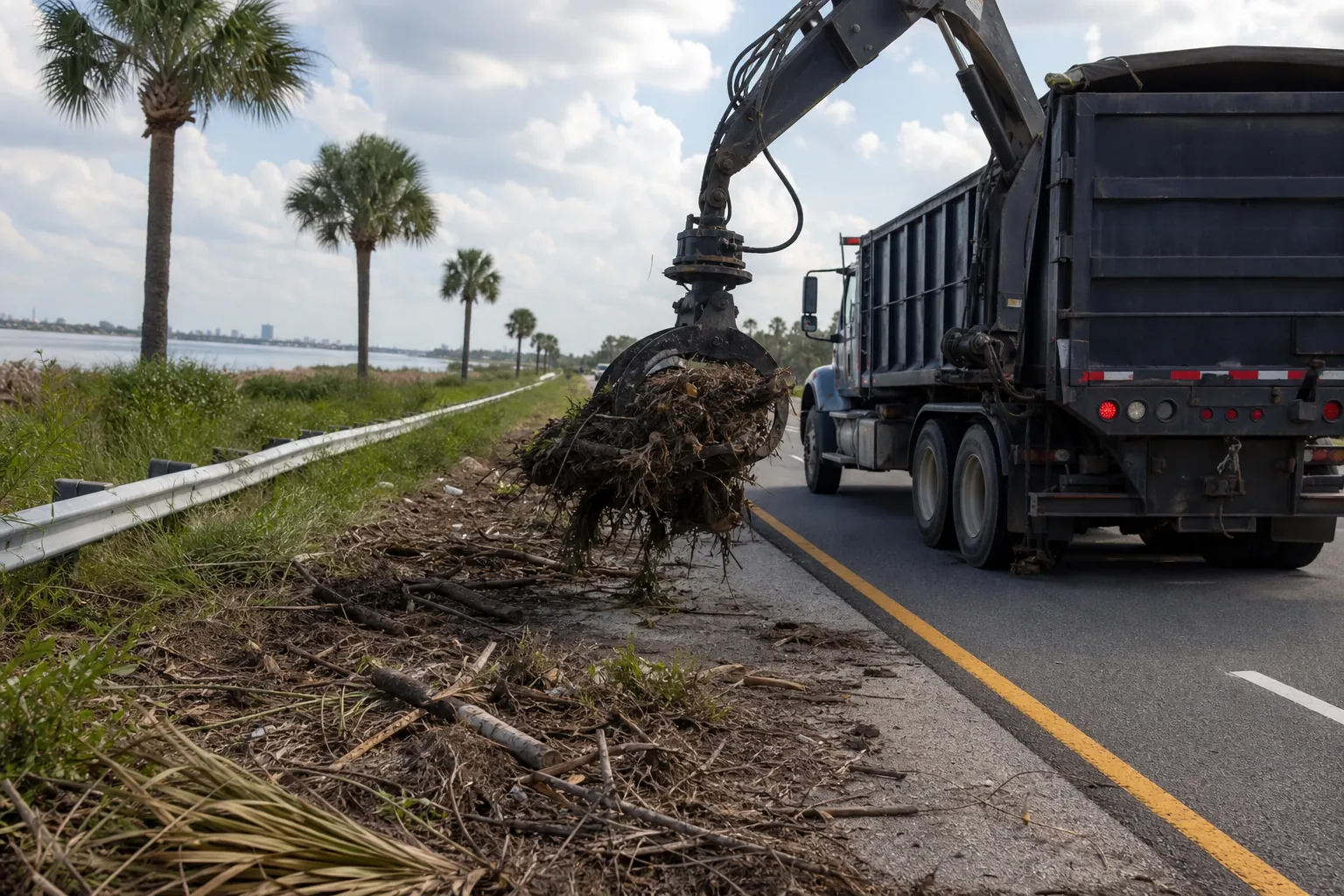
Roadside debris can quickly turn a routine drive into a serious hazard. Storm-damaged limbs, dumped furniture, construction scraps, and loose vegetation may block shoulders, reduce visibility, or force drivers to make sudden lane changes. In Daytona, where busy streets, seasonal storms, and steady visitor traffic often overlap, prompt cleanup is an important part of keeping roads usable.
Grapple trucks provide an efficient way to lift and haul bulky material without requiring crews to handle every item manually. However, safe service depends on more than having the right equipment. Careful site evaluation, traffic awareness, stable truck placement, and controlled loading all contribute to grapple truck roadside safety in Daytona.
Why Roadside Debris Requires Prompt Attention
A pile located away from moving traffic may appear harmless, but conditions can change. Wind can push branches into a travel lane. Heavy rain can wash loose material toward a drain or intersection. Drivers may also pull onto a blocked shoulder during an emergency and collide with debris they did not expect.
Large piles can obscure pedestrians, cyclists, signs, mailboxes, and vehicles leaving nearby properties. Organic debris may contain sharp limbs, while renovation waste can include nails, broken boards, or jagged materials. Fast, organized removal helps reduce exposure to these risks.
Prompt service is especially valuable after severe weather. Tropical systems and strong thunderstorms can leave scattered debris across multiple neighborhoods. A grapple truck can consolidate and remove large volumes efficiently, helping property owners, contractors, and community managers restore safer access.
How Grapple Trucks Support Safer Cleanup
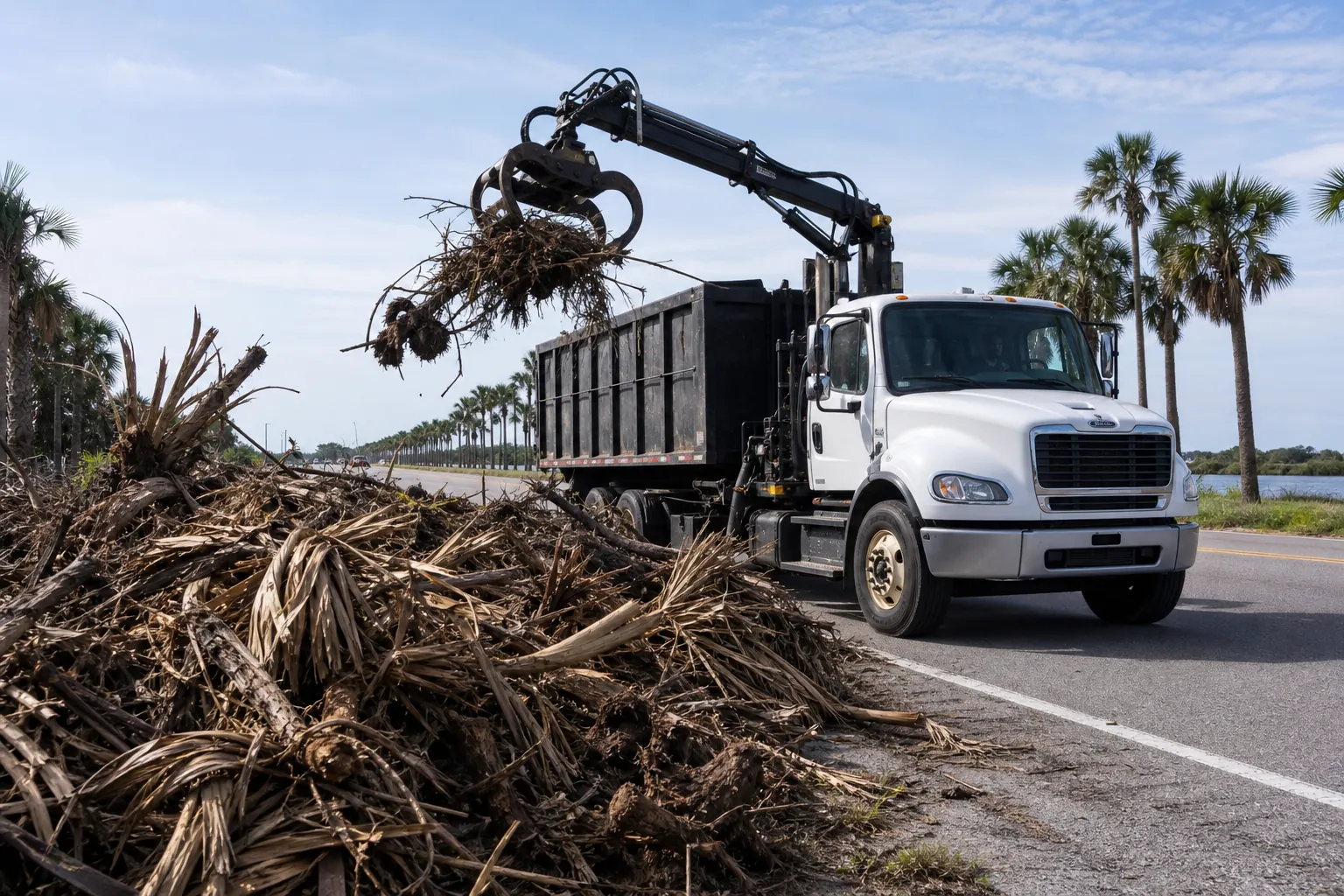
A grapple truck combines a hydraulic boom and claw with a hauling body. The operator can lift branches, logs, brush, and other approved bulky debris from a controlled position near the truck. This reduces repetitive manual lifting and can shorten the amount of time workers spend close to roadside traffic.
The grapple also allows material to be placed directly into the truck body. Fewer intermediate steps mean less equipment and loose debris around the work zone. When the site and material are suitable, this streamlined process can minimize disruption for passing motorists and nearby properties.
Efficiency does not mean rushing. A trained operator must account for overhead lines, underground utilities, soft shoulders, parked vehicles, traffic flow, and the reach of the boom. Loads should be balanced and contained so material remains secure during transport.
What Crews Evaluate Before Loading Begins
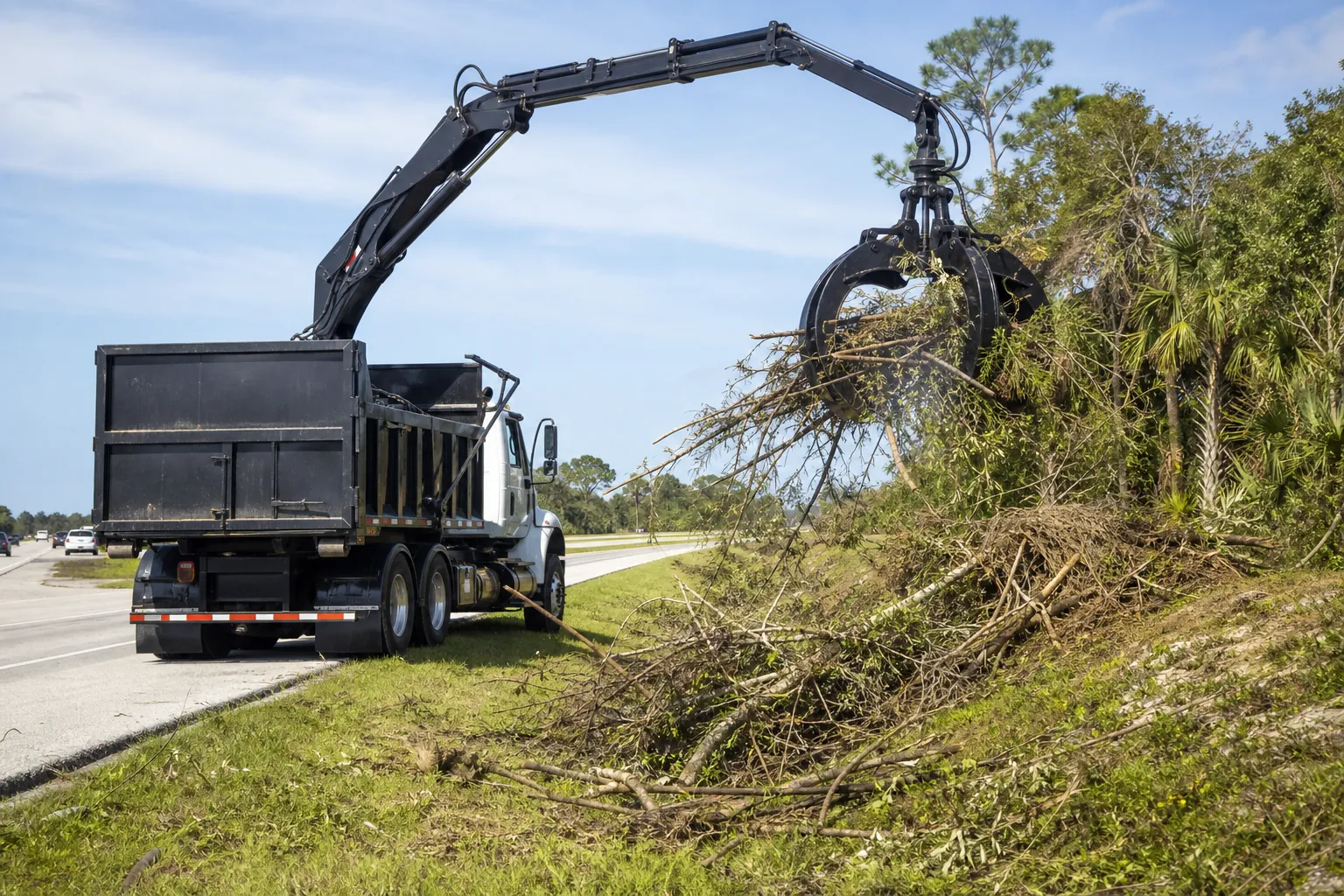
Every roadside pickup has different conditions. Before operating the grapple, the crew should confirm that the truck can enter, work, and leave without creating an unnecessary hazard. That review includes the pile itself and the surrounding area.
- Traffic speed and volume: Busy or high-speed roads may require additional spacing, warning devices, or traffic control coordination.
- Truck stability: The vehicle needs firm, reasonably level ground that can support its weight during loading.
- Overhead clearance: Power lines, communication cables, trees, signs, and building features must remain clear of the boom.
- Pile accessibility: Debris should be within safe reach without forcing the grapple over traffic, fences, vehicles, or structures.
- Material type: Crews need to identify prohibited, hazardous, unusually heavy, or concealed items before lifting.
- Public movement: Sidewalk users, cyclists, residents, pets, and nearby workers should stay outside the operating area.
- Exit planning: The truck should have a safe route back into traffic after the load is secured.
If a location is not ready for safe pickup, repositioning the pile or arranging appropriate traffic control may be necessary. Resolving these issues before the truck arrives can make service smoother.
How To Prepare Debris For Roadside Pickup
Good pile placement helps a grapple truck operate efficiently. Place approved debris in an open, accessible location on the property side of the roadside whenever possible. Keep the pile out of active lanes, bike lanes, sidewalks, drainage areas, and intersections. Do not place material where it blocks sightlines for drivers entering or leaving a driveway.
Maintain clearance from utility poles, low wires, fire hydrants, mailboxes, fences, parked cars, and overhanging structures. A grapple needs room to approach the material from above and transfer it to the truck body. Even a pile that looks accessible from the ground may be unsafe if electrical lines cross over it.
Separate debris by type when requested. Yard waste mixed with concrete, roofing, appliances, chemicals, or household garbage may require different handling or disposal. Never hide paint, fuel, batteries, pressurized containers, or other potentially hazardous items inside a vegetative pile. Tell the hauling company what the pile contains when scheduling service.
Safety Considerations During Florida Storm Cleanup
Florida weather creates special roadside challenges. Saturated soil can make shoulders unstable beneath a heavy truck. Standing water may conceal drop-offs, drains, or damaged pavement. Hanging limbs can also remain under tension after a storm and shift unexpectedly when nearby debris is moved.
Property owners should avoid approaching equipment while it is operating. The grapple's working radius must remain clear because materials can rotate, break, or release smaller pieces during lifting. Children, pets, tenants, and bystanders should stay well away from the cleanup zone.
Storm urgency should not override basic precautions. If downed lines are present, treat them as energized and contact the appropriate utility or emergency authority. Debris touching utility equipment should not be moved until qualified personnel confirm that the area is safe.
Choosing A Local Grapple Truck Service
A dependable provider should ask practical questions about access, debris type, pile size, overhead obstructions, and road conditions. Photos can help the company assess the location before dispatch, although an on-site review may still be needed. Clear communication reduces surprises and helps match the truck and service plan to the project.
Ask what materials are accepted, how loads are measured or priced, and whether special access or traffic arrangements are required. Contractors and property managers may also want to discuss recurring hauling for land clearing, renovation work, or ongoing landscape maintenance.
Daytona Grapple Trucks provides local debris hauling solutions for bulky roadside and property cleanup needs in the Daytona area. To discuss the material, access, and safest pickup approach, call (386) 481-7913. A brief conversation about site conditions can help you prepare the pile and schedule an orderly removal.
Call (386) 481-7913 to talk through next steps.