
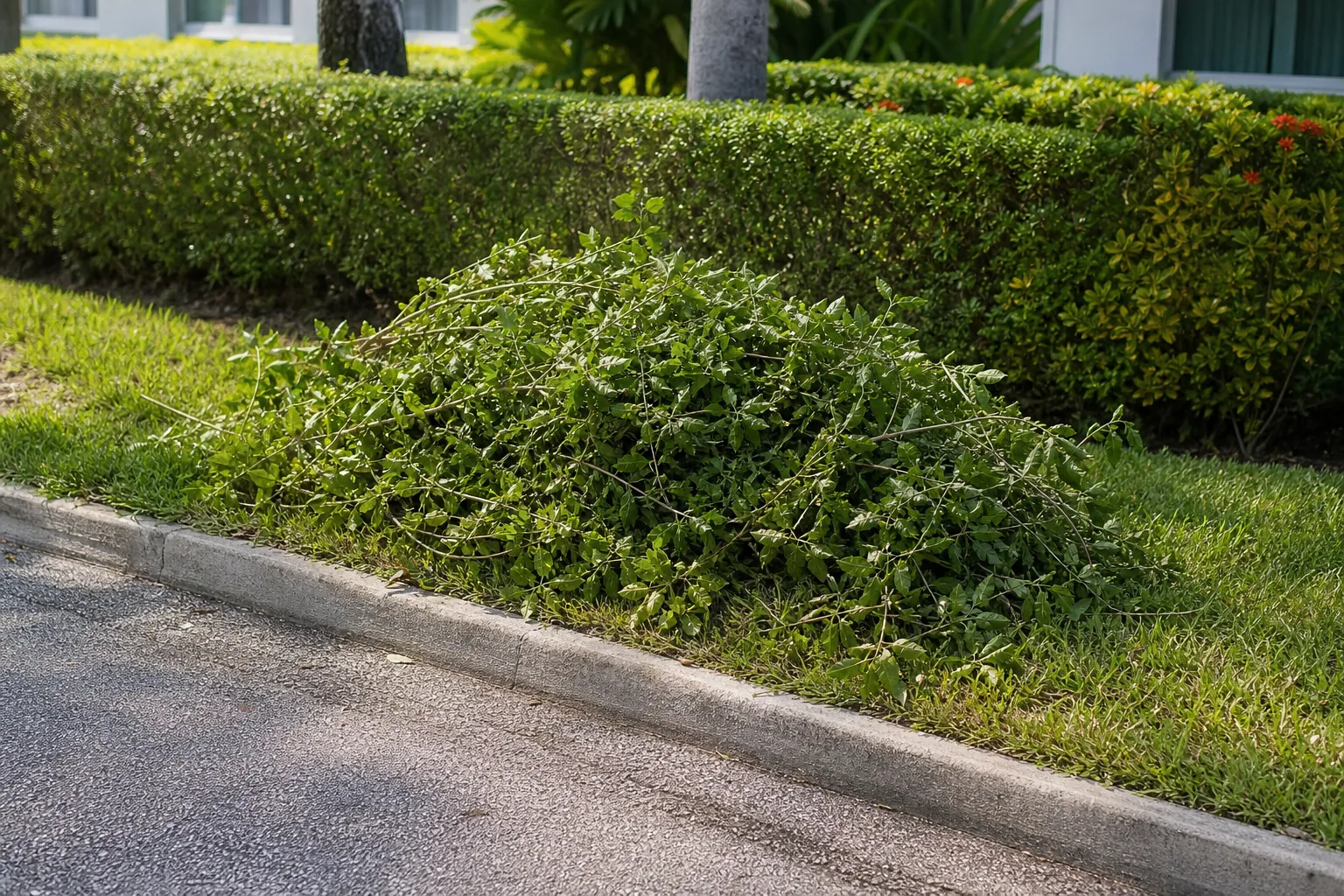
Hedge trimming can leave a surprisingly bulky pile of branches, leaves, and clipped growth. If you are planning debris pickup in Port Orange, thoughtful staging can make the pile easier to assess and access. Before choosing a location, look at how debris must move from the hedge to the pickup point, what obstacles are nearby, and whether the pile contains anything besides plant material. These practical steps will help you prepare for a conversation with Daytona Grapple Trucks without assuming requirements that may vary by property.
Choose an Open and Accessible Staging Area
Start by identifying a staging area that can be clearly seen and discussed when you arrange pickup. A wide, open space is generally easier to evaluate than a narrow side yard, fenced corner, or area behind parked vehicles. Look above the proposed pile for branches, wires, roof edges, or other overhead features. Also note gates, walls, mailboxes, landscaping, and other objects around it.
Do not assume that the curb, sidewalk, street, drainage area, or another public space is an acceptable location. Placement rules can depend on the property and applicable local requirements. Instead, call before moving a large volume of trimmings and describe the location you have available.
If the hedge is far from the intended staging point, plan the route first. Moving smaller loads in a tarp or yard cart can reduce scattered leaves. Keep the path clear so you do not have to drag branches around fragile plants, outdoor furniture, or vehicles.
Keep Hedge Trimmings Separate From Other Materials
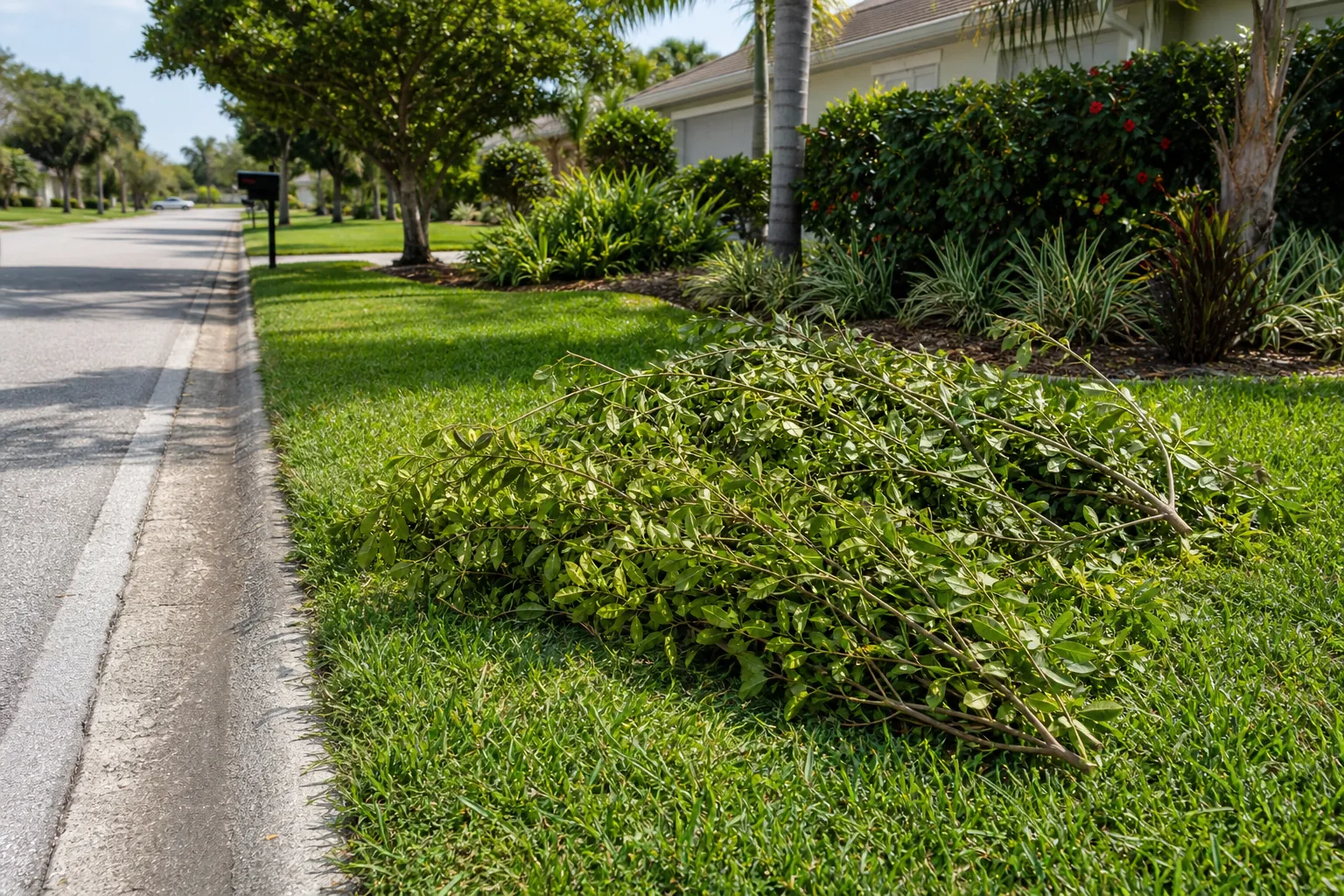
A clean, distinct pile is easier to describe than a mixed mound of yard debris, household items, containers, soil, and construction material. As you trim, place branches and leafy clippings together rather than using the pile as a general cleanup spot. Remove tools, gloves, tarps, plant pots, ties, wire, and plastic bags before pickup.
If you discover material that is not part of the hedge trimming project, set it aside until you have confirmed how it should be handled. Do not bury questionable items under branches. Hidden material can complicate an otherwise straightforward discussion about the load.
- Place hedge branches and leafy clippings in one visible pile.
- Remove plastic bags, rope, wire, and plant containers.
- Keep soil, rocks, fencing, and project materials separate.
- Check the pile for hand tools before leaving the area.
- Photograph the finished pile from more than one angle.
Clear separation also helps you explain exactly what you need collected when you call.
Build a Compact, Visible, and Stable Pile
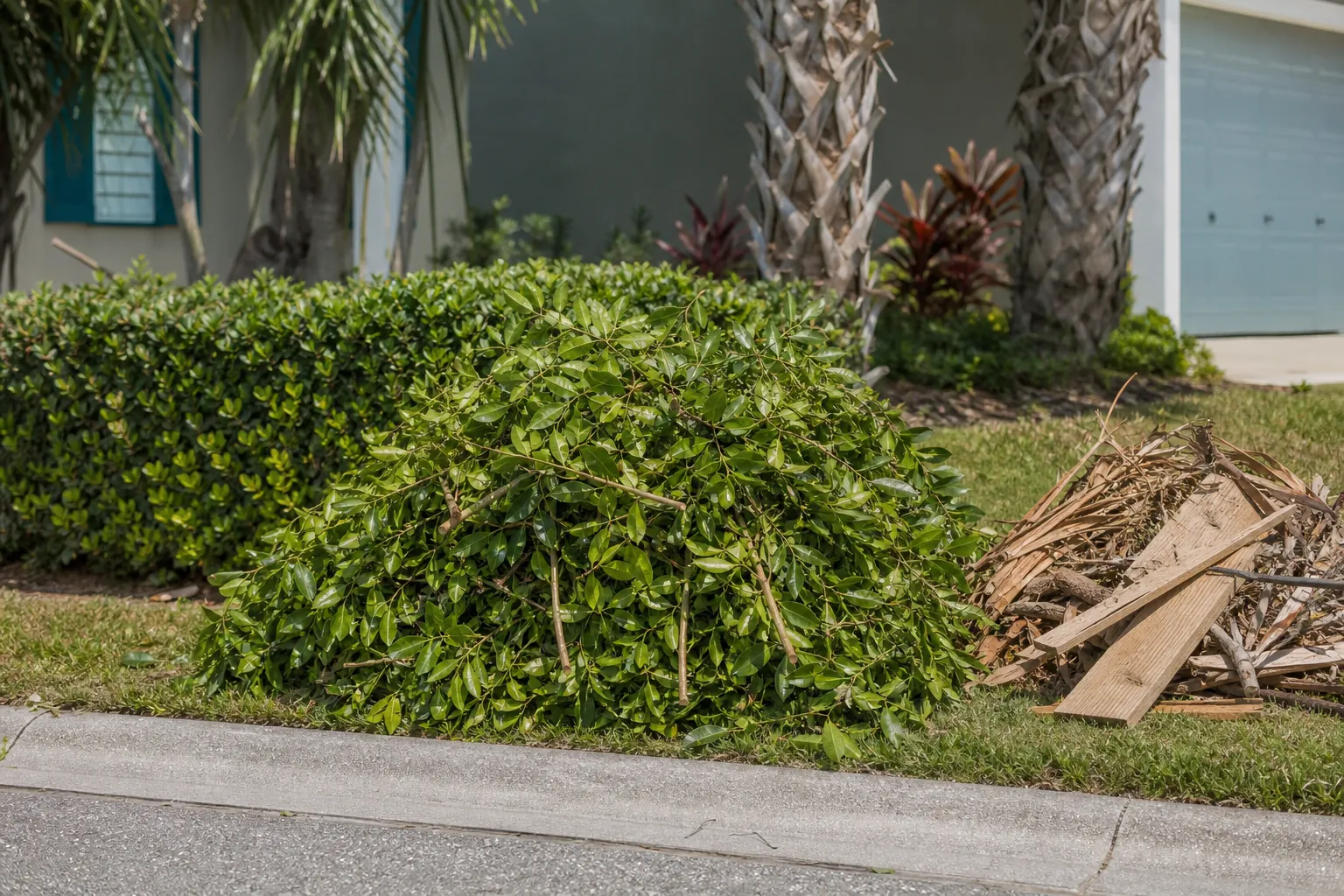
Do not scatter trimmings across a long strip simply because the hedge runs along that area. Consolidate the material into a compact pile where practical, while keeping it stable and visible. Place larger cut branches down carefully, then add smaller branches and leafy clippings. Avoid forcing branches into an unstable stack that could roll, spring outward, or spread in wind.
Keep the edges easy to identify. A defined footprint lets you estimate the pile's length and width more accurately. Measure the approximate height at its tallest point, but do not climb on or compress the pile to obtain a measurement. If branches extend well beyond the main mound, include that extra length when describing it.
Avoid placing the pile against a fence, building, tree trunk, utility feature, or parked vehicle. Leave practical clearance around objects you want protected. If your available space is constrained, take photos and ask Daytona Grapple Trucks about placement before finishing the entire trimming job.
Estimate the Amount Before Arranging Pickup
You do not need a perfect calculation to have a useful scheduling conversation. Begin with approximate pile dimensions and clear photos. Record the length, width, and height, then note whether the pile is loose and leafy or dominated by thicker branches. Mention whether there is one pile or several piles in different parts of the property.
Access and material characteristics can matter when a pickup is evaluated. The amount of debris is only one part of the picture. The route to the pile, surrounding obstacles, branch size, pile separation, and other site details may also be relevant. For a broader explanation of considerations that may affect a project, read this guide to grapple truck pickup cost factors.
When taking photos, include a wide view showing the pile's surroundings and closer views showing its contents. Accurate descriptions are more helpful than guesses. If trimming is not finished, say so and estimate how much work remains.
Confirm Placement Before the Pickup Date
Before relying on your chosen staging area, call Daytona Grapple Trucks and explain that you have hedge trimming debris in Port Orange. Be ready to describe the debris, approximate dimensions, number of piles, and property access. Mention fences, gates, overhead features, nearby vehicles, tight turns, soft ground, or other conditions that could affect access. Ask whether photos would be useful and confirm where the pile should be located.
Once placement is discussed, keep the area from changing. Do not park in front of the pile, add unrelated material, or move debris to a different location without communicating. Check the site after wind or rain and restack only if you can do so safely. If the pile grows because additional hedges are trimmed, provide an updated description.
Planning ahead is more efficient than moving a finished pile twice. It also gives you a chance to address access questions before the pickup date instead of making assumptions about what will work.
Discuss Your Hedge Trimming Debris
For calm, direct guidance about staging hedge trimmings for pickup in Port Orange, call Daytona Grapple Trucks at (386) 481-7913. Describe the pile and access conditions so you can discuss the next step.
Call (386) 481-7913 to talk through next steps.