
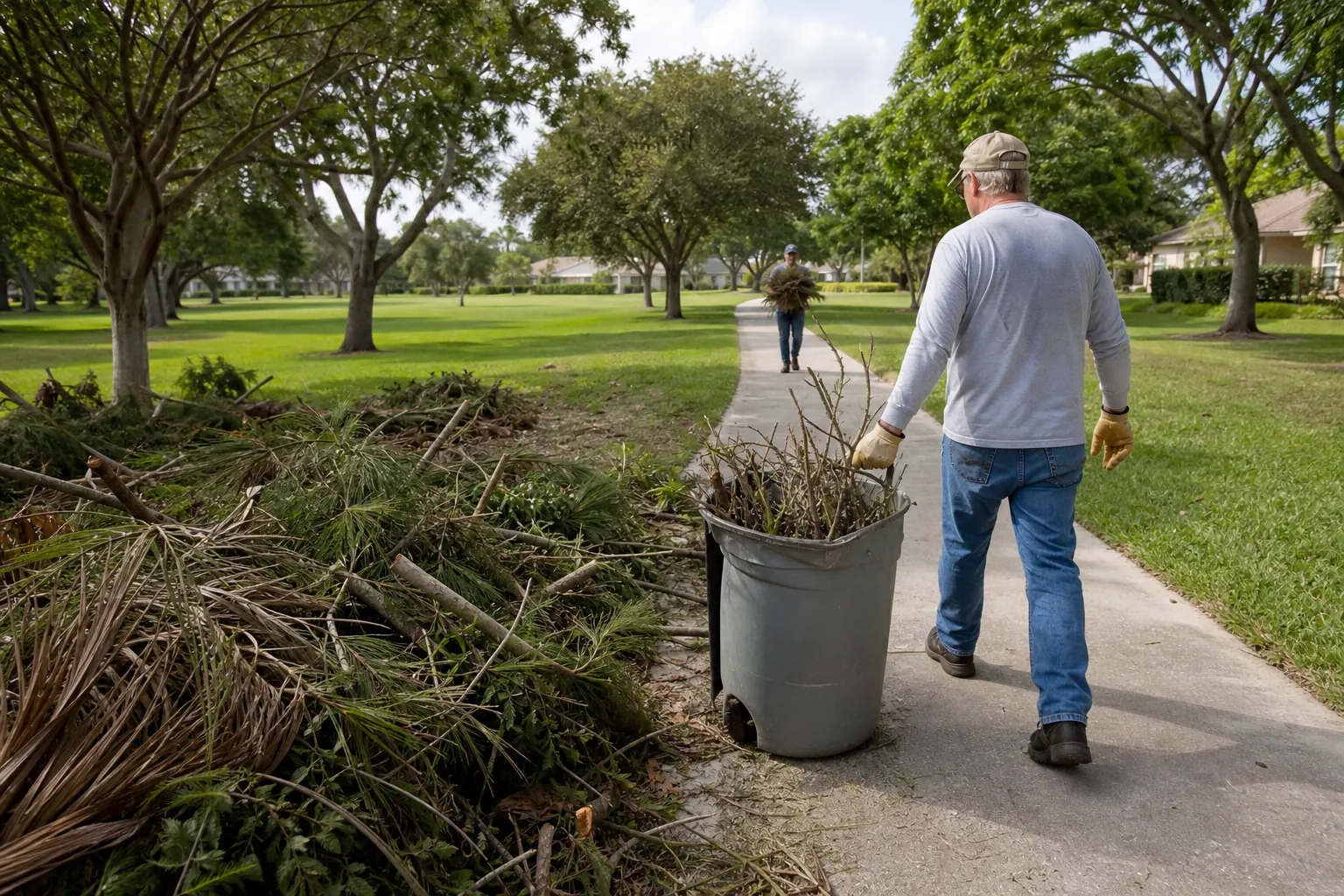
Branches along a shared walkway, palm fronds beside an entrance, and brush left after landscape maintenance can make an otherwise tidy community look unfinished. For an HOA, removing that material involves more than arranging a truck. Someone must identify the debris, choose an accessible staging location, protect shared property, and keep residents informed.
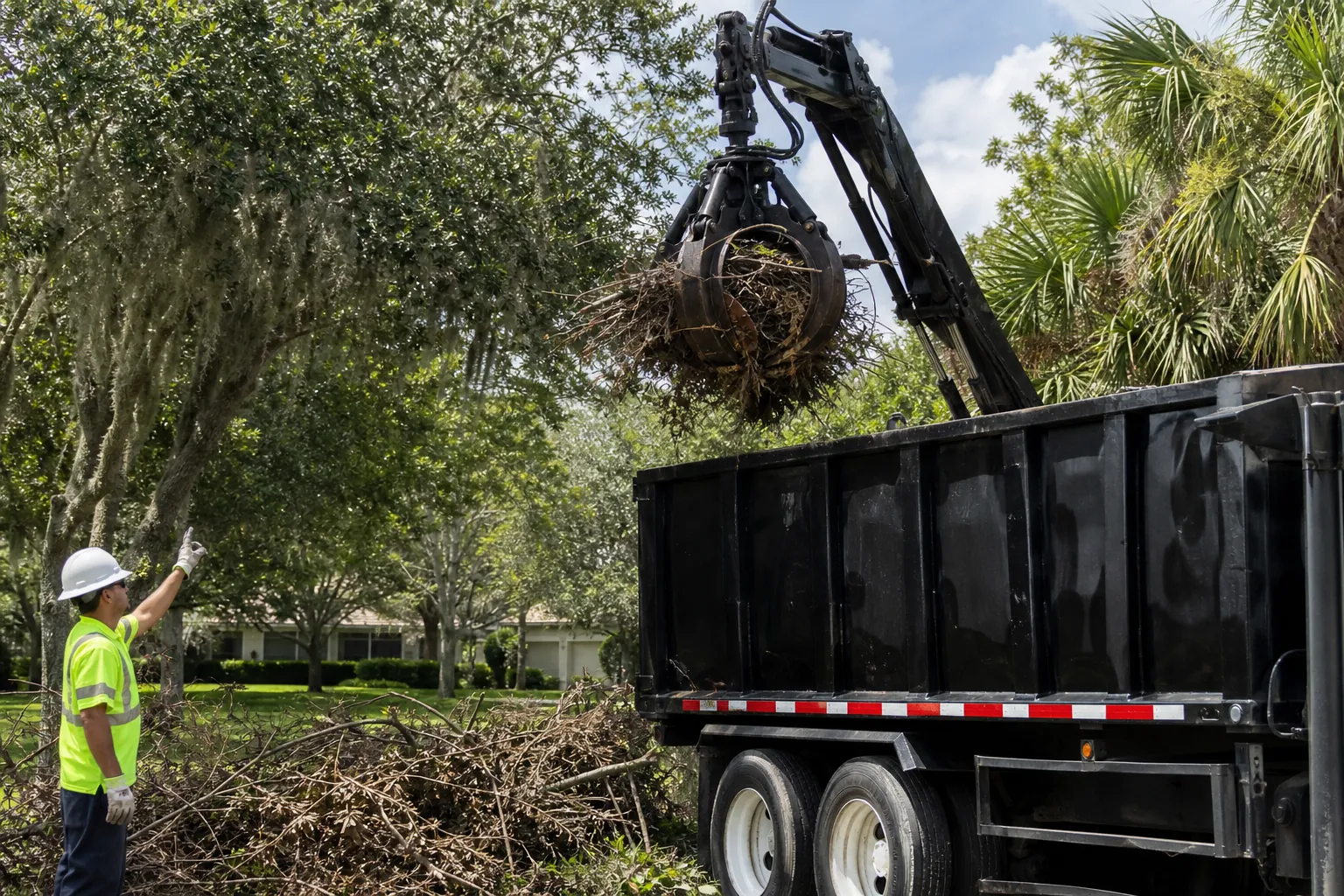
Daytona Grapple Trucks is a contact for HOA common area debris pickup in Deltona, FL. A grapple truck uses a hydraulic loading arm to lift suitable debris into a hauling body. For loose, bulky landscape material, that loading method can reduce the need to move every branch by hand. The right plan still depends on the material, the site, and the available access.
This guide helps HOA board members, property managers, and landscape coordinators prepare for pickup without turning shared areas into temporary dumping grounds.
Start With A Clear Scope For Shared Areas
Before requesting hauling, decide which areas and materials belong in the job. HOA-maintained entrances, landscaped islands, shared green spaces, and private common roads may have different maintenance responsibilities. A pile near a property boundary is not automatically the association's responsibility.
Review the association's maintenance map, landscaping agreement, and any applicable governing documents. If the responsibility is unclear, resolve it before authorizing collection. This helps avoid paying to remove material from a location the HOA does not maintain.
Then walk the site and record each pile. Note whether the material is freshly cut vegetation, older accumulated brush, storm-related debris, or a mixture. A written scope gives the hauling provider something more useful than a general request to clean up the neighborhood.
- Identify each pickup location by a clear landmark, address, or marked community map.
- Describe the material in each pile, including branches, palm fronds, logs, or other items.
- State whether the debris is already staged or still needs to be consolidated by another contractor.
- Identify the person authorized to approve changes if additional material is discovered.
Keep private homeowner waste separate from the planned common-area work unless the association has explicitly authorized its inclusion. A clear boundary protects the budget and helps residents understand what the scheduled pickup covers.
Understand What A Grapple Truck Can And Cannot Solve
A grapple truck is designed to lift and load suitable bulky material with a mechanical grapple. It can be useful when an HOA has accumulated substantial landscape debris that would otherwise require repeated manual loading. However, its usefulness depends on whether the truck can safely reach the pile.
The equipment does not make every material acceptable, and it does not automatically include cutting, demolition, raking, or landscape restoration. Confirm the actual scope with the provider rather than assuming that all cleanup tasks are included in hauling.
Branches and brush from common-area maintenance are different from bagged household garbage, chemicals, appliances, or construction waste. Mixed piles can create disposal complications and may require a different service or separate handling.
- Ask whether the provider accepts the specific vegetation and bulky debris in your planned pickup.
- Disclose logs, root balls, or unusually heavy pieces before scheduling so equipment suitability can be assessed.
- Keep paint, fuel, batteries, chemicals, and unidentified containers out of the debris pile.
- Ask separately about fencing, concrete, treated lumber, or other nonvegetative materials rather than assuming they can be collected.
If a pile contains questionable material, photograph it and ask for guidance before moving it. Advance disclosure is more useful than discovering a restriction when the truck arrives.
Choose Staging Locations That Protect The Community
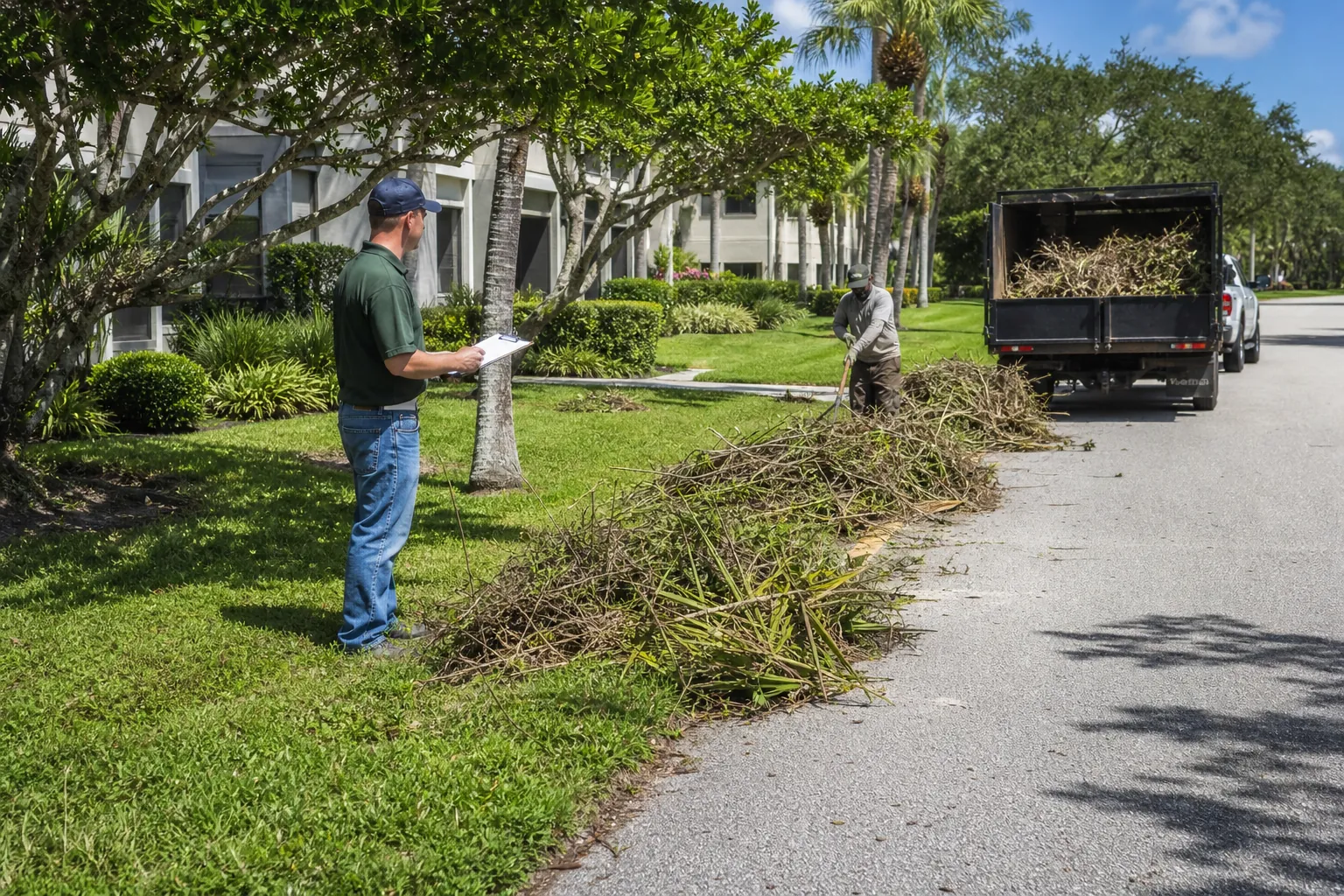
The best staging location balances loading access with protection for residents and shared property. A convenient pile is not necessarily a safe pile. Placing debris beneath utility lines, against a fence, or beside parked vehicles can limit access and complicate loading.
Ask the hauling provider to review proposed staging locations before the landscape crew starts building piles. Photos should show the entire area, including the roadway, overhead conditions, nearby structures, and the approach a truck would use.
Avoid assuming that a landscaped island, soft shoulder, or narrow lane can accommodate heavy equipment. Ground conditions and pavement suitability need attention, particularly after rain. The provider should determine whether the proposed setup is workable.
- Keep sidewalks, pedestrian routes, entrances, and emergency access clear throughout the staging period.
- Do not cover storm drains or place loose material where runoff could carry it into drainage structures.
- Keep debris away from irrigation heads, utility boxes, signs, lighting, and decorative landscaping.
- Leave suitable separation from vehicles, fences, buildings, and overhead obstructions as directed by the provider.
- Use only locations the HOA has permission to occupy, and confirm any requirements affecting roadway staging.
Where feasible, consolidate suitable material into fewer accessible piles. That can reduce repositioning, but one oversized or poorly placed pile may be less practical than several well-planned locations. Let access and equipment requirements guide the arrangement.
Coordinate Landscape Work And Pickup Timing
Landscape crews and hauling providers often handle different parts of a cleanup. The landscape contractor may cut branches and gather vegetation, while the hauling provider loads and removes the staged material. Defining that handoff prevents gaps in responsibility.
For planned trimming, aim to finish the agreed work before the scheduled pickup. If a crew continues adding debris after collection begins, the original estimate may no longer match the job. The HOA should have a simple process for approving extra material or another visit.
Florida weather can affect both maintenance and access. Rain can soften staging areas, while wind can scatter loose vegetation. Schedule with enough flexibility to adjust when conditions make the original plan unsuitable.
Confirm gate access, entry procedures, and any community work-hour restrictions in advance. A driver should not have to wait while board members search for a gate code or decide whether a temporary parking restriction was authorized.
- Give the landscape contractor the approved pile locations before trimming begins.
- Ask the hauling provider what completion window is practical for the staged work.
- Assign one onsite contact who can answer access questions and confirm the intended piles.
- Arrange for vehicles to be moved from the loading area when needed and permitted.
For recurring landscape maintenance, review how quickly debris accumulates. A predictable hauling plan may be easier to manage than repeatedly arranging urgent pickups, but the appropriate frequency should follow actual volume rather than a fixed assumption.
Provide Useful Information For A Pickup Estimate
A helpful estimate begins with accurate information. The number of piles alone says little about a job. Three small brush piles may contain less material than one large pile of branches, and tightly packed logs present a different loading task from loose palm fronds.
Send current photos from multiple angles. Include an overview showing the pile and its surroundings, plus closer images that make the material identifiable. Basic measurements of length, width, and height can help, although pile shape and density still affect the estimate.
Explain whether the material is scattered across the property or consolidated near an accessible loading point. If the truck must move among several locations, disclose that. Also mention gates, narrow turns, limited parking, and any known restrictions.
- Ask how the price is determined, such as by estimated volume, load, time, or a defined job scope.
- Confirm which loading and hauling tasks are included and whether any disposal-related charges are separate.
- Ask what happens if the actual quantity differs from the photos or measurements.
- Clarify whether small residual pieces, hand raking, or surface cleanup are included.
- Request the agreed scope and relevant pricing terms in writing before authorizing work.
The goal is not simply to obtain the lowest initial number. An estimate that clearly describes the material, access assumptions, and cleanup expectations gives the board a better basis for comparing options and managing the final cost.
Keep Residents Informed Without Inviting Extra Dumping
A short resident notice can prevent avoidable problems. Explain where work will occur, what access may be temporarily affected, and whether residents need to move vehicles. Give a contact for questions so the hauling crew is not asked to resolve association policy onsite.
Be precise about the purpose of the pickup. If it covers only HOA-generated landscape debris, say so. An announcement that simply says debris pickup is scheduled may encourage residents to add furniture, bags, or renovation waste to the common pile.
For a community that is allowing specific resident contributions, establish those rules separately and confirm the expanded scope with the provider first. Define accepted material, staging dates, and authorized locations. Do not promise that unreviewed items will be collected.
- Tell residents which common areas are included in the scheduled work.
- State clearly whether private household or yard debris is excluded.
- Provide the relevant parking or access instructions without sharing sensitive gate information publicly.
- Explain whom residents should contact if they notice an unsafe or unauthorized pile.
Use the communication channels residents actually follow, such as the community portal, email list, or posted notices where allowed. Clear instructions are especially helpful when a pile will remain onsite overnight or through a weekend.
Handle Storm-Related Debris With Extra Care
Storm cleanup can create a different set of challenges from routine trimming. Fallen limbs may be entangled with fences, structures, or utility equipment. Standing water, unstable trees, and hidden objects can make a simple-looking pile unsafe to approach.
Do not treat debris hauling as a substitute for hazard assessment or specialized tree work. Keep residents and maintenance crews away from suspected electrical hazards and unstable trees. Contact the appropriate utility, emergency service, or qualified professional when the situation requires it.
Once the site is safe, document the debris before moving it. If insurance, reimbursement, or another recovery process may apply, ask the relevant administrator what records are needed. Photographs and invoices can be useful, but documentation requirements vary.
Check current collection instructions before combining private hauling with any public storm-debris program. Eligibility, accepted materials, timing, and staging requirements may differ. Do not assume that HOA property qualifies for the same collection arrangements as individual residential properties.
For Deltona communities, a practical storm plan should identify decision-makers, potential staging locations, and emergency access priorities before severe weather arrives. The plan should remain flexible because the actual damage and access conditions will determine what can be done safely.
Inspect The Site And Close Out The Job
After pickup, compare the completed work with the approved scope. Check every listed location rather than relying on the appearance of the main staging area. If an inaccessible pile remains, record the reason and determine whether another service or revised setup is needed.
Small fragments may remain after mechanical loading, depending on the surface, material, and agreed service. This is why cleanup expectations should be discussed before booking. A separate landscape visit may be appropriate for detailed raking or turf care.
- Verify that the agreed piles have been collected and note any approved exceptions.
- Check that walkways, gates, and drainage openings are unobstructed after the work.
- Inspect nearby irrigation, signs, curbing, and landscaping for any concerns that need follow-up.
- Save completion photos, the invoice, and any scope changes with the association's maintenance records.
If something appears wrong, report it promptly with clear photos and the location. Avoid guessing about the cause before the issue has been reviewed. Good records support a more straightforward conversation between the HOA and its contractors.
Use the completed job to improve the next pickup. Note which staging points worked, where access was difficult, and whether the estimated volume matched the actual accumulation. Those details can make future planning more consistent.
Common Questions About HOA Debris Pickup
Can pickup be arranged before all trimming is finished?
You can discuss scheduling before the work is complete, but explain that the final volume is not yet known. Ask how the provider handles added material and confirm when the landscape crew needs to finish. A preliminary estimate should not be treated as a guarantee for an undefined quantity.
Should the HOA bag all landscape debris?
Do not bag material solely on the assumption that it will improve grapple loading. Ask the provider how the specific debris should be prepared. Loose branches, bagged leaves, and mixed vegetation may require different handling, and accepted formats should be confirmed before the crew spends time preparing them.
Can the truck collect debris from behind buildings?
That depends on the route, clearances, ground conditions, and loading reach. Send photos and describe the access rather than assuming the equipment can enter. If the location is unsuitable, another contractor may need to move the material to an approved staging point.
Does hauling include trimming or removing standing trees?
Do not assume that it does. Loading staged debris is a different task from cutting trees or removing hazardous limbs. Ask which services are available and use an appropriately qualified contractor for work outside the hauling scope.
Plan Your Next Common Area Cleanup
A well-organized pickup starts with three basics: a defined material list, an approved staging location, and clear access instructions. Add photos, realistic volume information, and a single authorized contact, and the conversation becomes much easier for everyone involved.
For HOA common area debris pickup, Daytona Grapple Trucks can discuss your Deltona site's needs. Call (386) 481-7913 with the material types, approximate pile sizes, and access details. Confirm availability, accepted debris, and the proposed scope before scheduling, so your association knows what to expect.
Call (386) 481-7913 to talk through next steps.