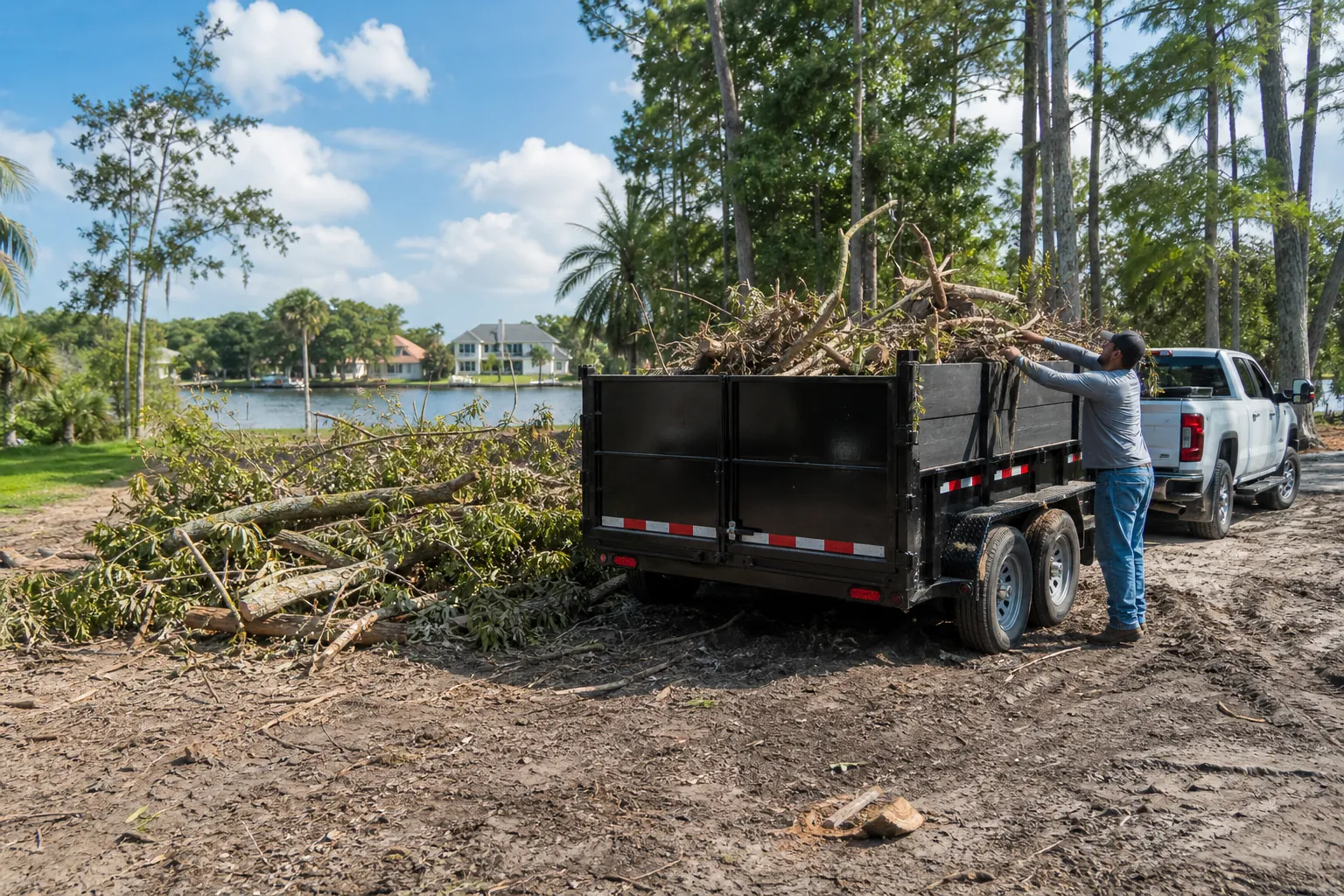
Clearing a Florida property creates two separate jobs: removing unwanted vegetation and getting the resulting material off the site. A lot can look more open after cutting, yet still be difficult to use when branches, trunks, roots, and brush occupy the driveway or work area. Planning the haul before clearing begins helps keep that second job manageable.
For property owners in Edgewater, a land clearing debris haul should account for more than the size of a pile. The material, loading location, ground conditions, and truck approach all affect how the pickup can proceed. Daytona Grapple Trucks is a contact for discussing those details and arranging an appropriate debris hauling plan. The following guide explains what to prepare, what to ask, and how to avoid turning a straightforward cleanup into unnecessary rehandling.
Understand What A Grapple Truck Can Help Remove
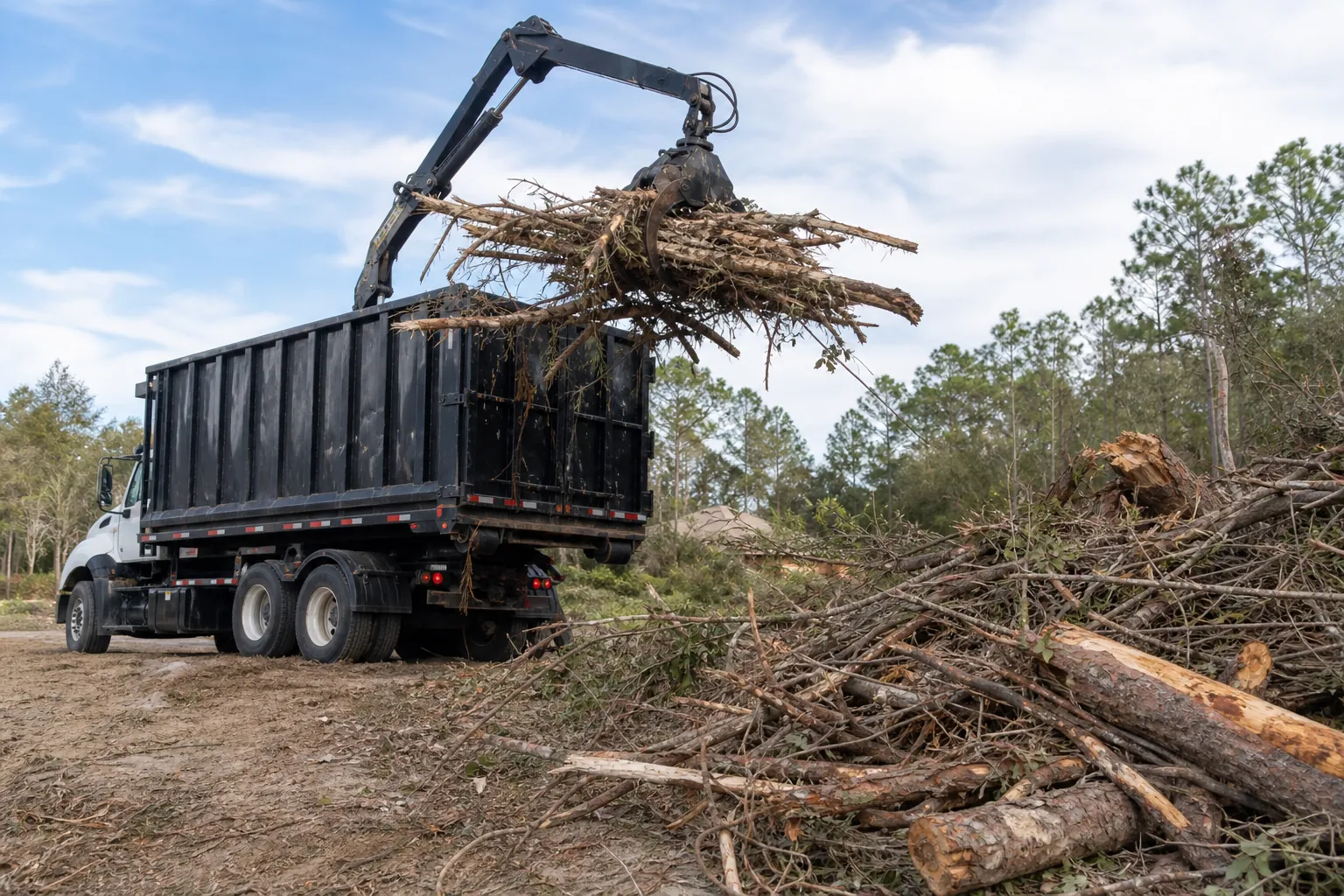
A grapple truck uses a hydraulic loader to lift accessible debris into its hauling body. This approach can be useful for bulky vegetation that would otherwise require repeated manual handling or multiple smaller loads. It is particularly relevant when cleared material is already gathered into organized piles.
Common clearing debris includes cut limbs, woody brush, sections of tree trunk, and vegetation removed to open a property. Root balls, stumps, and heavy logs require a closer discussion because their dimensions, weight, and attached soil can change the loading plan. Do not assume that every item produced during clearing belongs in the same load.
Construction waste, old fencing, household trash, tires, chemicals, and other nonvegetative materials need separate attention. A hauling arrangement for brush does not automatically include these items. Confirm acceptance before mixing them into a pile.
- Describe whether the material is mainly brush, logs, stumps, or a combination.
- Identify any soil attached to roots or mixed through the debris.
- Point out unusually long, heavy, or tangled pieces before scheduling.
- Keep unrelated waste separate until its handling requirements are confirmed.
The goal is a clear agreement about what will be loaded, not simply a general request to remove everything on the property.
Plan The Haul Before The Clearing Crew Starts
The best time to decide where debris will go is before the first tree or dense brush area is cut. Once material has been scattered across a lot, consolidating it can become a separate task. Clearing equipment may have to return, or workers may spend extra time moving piles that could have been positioned correctly from the beginning.
Ask the hauling provider to review the intended loading area before directing the clearing crew to stack material there. The spot should allow a suitable truck approach and keep the pile within workable reach without blocking essential access. Reach and placement requirements depend on the equipment and site, so avoid guessing a universal distance.
For a phased project, decide whether hauling will happen once at the end or between clearing stages. Intermediate pickups can preserve workspace on a confined lot. A final pickup may be more practical when there is adequate staging space and the clearing work will finish promptly.
Make the division of responsibilities explicit. Cutting vegetation, extracting roots, moving debris across the property, loading, hauling, and final ground cleanup are different activities. Ask which are included in the proposed service. This prevents the assumption that a truck pickup also includes clearing untouched vegetation or gathering scattered branches from every corner of the lot.
Build Piles That Are Easier To Assess And Load
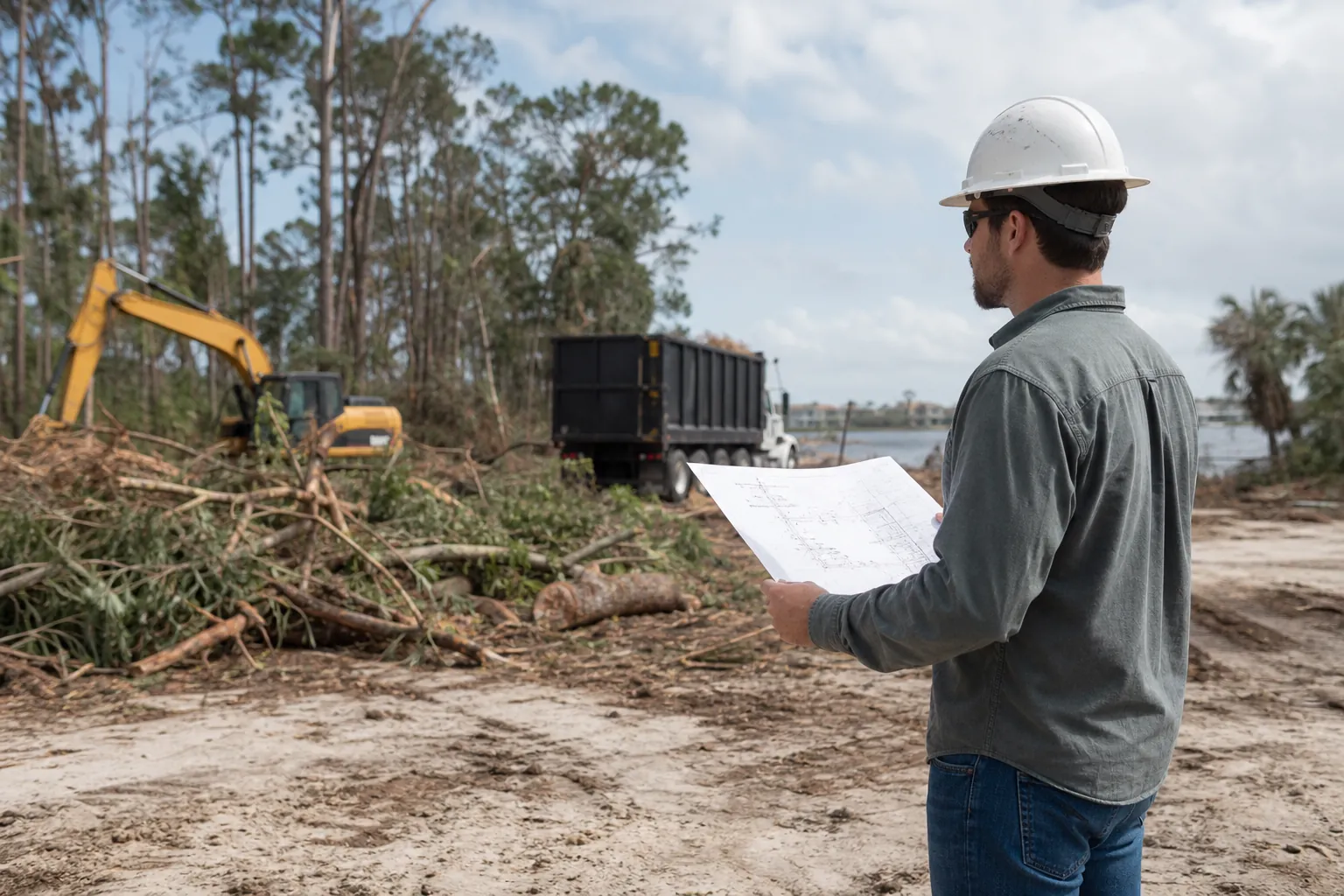
A useful debris pile is accessible, reasonably consolidated, and free of hidden surprises. It does not need to look perfect, but its arrangement should let the operator understand what is present and work without unnecessary interference. Several separate piles can be appropriate if they match the site's access and loading plan.
Keep loose brush together rather than spreading it in a thin layer across the clearing. Place heavier wood where it can be identified, and avoid burying logs under a large blanket of small branches. Ask whether long pieces should be cut down before pickup and what size is appropriate for the actual truck.
Do not push debris against structures, fences, utility equipment, or retained trees. A pile wedged into a tight corner may require repositioning before a grapple can lift it safely. Avoid stacking material under overhead wires or where the loader would need to work close to them.
- Choose the pile location with the hauling provider before stacking begins.
- Keep brush and woody material visible enough for a useful assessment.
- Separate heavy root balls from light vegetation when requested.
- Leave gates, driveways, drainage paths, and pedestrian routes usable.
- Tell the provider if metal, wire, or other concealed material may be present.
Never move debris into a street, roadside ditch, or public right-of-way simply to make it easier to reach. Confirm applicable placement rules and obtain any required permission first.
Check Truck Access And Florida Ground Conditions
A passenger vehicle reaching the pile does not establish that a loaded grapple truck can use the same route. The truck needs an appropriate approach, operating position, and exit. Narrow gates, tight turns, low branches, soft shoulders, and limited turnaround space can all influence the pickup plan.
In Edgewater, as elsewhere in Florida, rainfall can change an unpaved site's conditions quickly. A surface that seemed firm during clearing may become unsuitable after a storm. Sandy areas, saturated soil, and recently disturbed ground deserve attention before a heavy vehicle enters.
Tell the provider about septic components, underground utilities, irrigation lines, culverts, buried tanks, and other features along the proposed route. Do not assume that a driveway or private crossing is suitable for the truck's weight. If its capacity is uncertain, discuss another staging location rather than taking a chance.
Photographs help, but they do not replace a site assessment when access is questionable. Include pictures of the gate, approach, turns, pile, and overhead conditions. Explain anything that the images cannot show, such as ground softness or a known underground installation.
Keep an alternate plan available if weather makes entry impractical. Moving the appointment or arranging a different loading position may be preferable to risking property damage. Safe access protects both the property and the people doing the work.
Separate Materials To Keep The Disposal Plan Clear
Vegetation-only debris and mixed waste may require different destinations and handling arrangements. The receiving facility's rules matter as much as the loading equipment. A grapple may be able to lift an object that cannot be accepted with the rest of the load.
Land clearing can reveal older waste hidden under brush. Fence wire, dumped containers, treated wood, concrete pieces, and miscellaneous household items should not disappear into a vegetation pile. Set them aside and disclose them so the hauling provider can explain whether a separate arrangement is needed.
Root balls deserve particular attention because attached soil adds weight and can affect acceptance. Similarly, removing vegetation around an old structure may create demolition debris that should not be described simply as brush. Accurate material descriptions help avoid a mismatch between the pickup request and the actual load.
- Keep recognizable vegetation separate from construction and household waste.
- Do not place paint, fuel, batteries, or chemical containers in brush piles.
- Identify treated lumber, fencing, and wire before requesting a quote.
- Ask how soil-heavy roots and stumps will be evaluated.
If you encounter suspicious containers or potentially hazardous materials, stop handling them and seek appropriate guidance. Do not open, crush, or bury them in the debris. Ordinary clearing cleanup is not a substitute for specialized hazardous-material handling.
Give Useful Information When Requesting A Quote
A useful quote starts with a useful description. Saying that you have a large pile leaves too much open to interpretation. Share the property's Edgewater location, the type of clearing performed, and whether the debris is already staged for loading.
Take several photographs instead of one close-up. A wide image shows the pile in relation to the property, while side views help communicate its height and depth. Include a familiar reference point or provide approximate dimensions, but avoid presenting a rough estimate as an exact volume.
Ask how the work will be priced. Depending on the arrangement, relevant factors can include truckloads, volume, weight, loading time, material type, disposal requirements, and access difficulty. Confirm the basis used for your project rather than assuming that all hauling services calculate charges the same way.
- State approximately how many piles are present and where they are located.
- Describe the biggest logs, stumps, or root balls in the material.
- Explain whether equipment must move debris before the truck can load it.
- Share your preferred timing and any deadline tied to the next contractor.
- Ask what could change the estimate once the site is reviewed.
Request clarity on what the quoted scope excludes. Small scattered scraps, soil leveling, stump grinding, and restoration should not be assumed to be part of a debris haul unless they are specifically included.
Coordinate Pickup With The Next Stage Of Work
Debris removal often sits between clearing and another project activity. That next activity might be surveying, fence installation, landscaping, site preparation, or a contractor's inspection. Schedule the haul around the actual dependency rather than selecting a date without considering who needs the space next.
If a surveyor needs access to boundary areas, a pile placed along those edges may interfere even when the middle of the lot is open. If equipment must enter through one driveway, brush stacked there can delay the next crew. Discuss these requirements before choosing the staging area.
Leave some flexibility for Florida weather and unfinished clearing work. A hauling appointment made before all cutting is complete can leave a second batch behind. Conversely, waiting until every detail is finished may not make sense when debris blocks ongoing work. Match the pickup sequence to the project.
For active sites, identify one person who can answer questions about access, material acceptance, and any approved changes. That person should know which piles are included and which vegetation is meant to remain. Clear communication is especially important when the property owner, clearing contractor, and hauling provider are different parties.
Before pickup day, check that parked vehicles, deliveries, equipment, and locked gates will not prevent entry. A short confirmation can resolve these practical problems before the truck arrives.
Know What A Finished Haul Should Look Like
A completed haul should match the agreed scope, but it does not necessarily produce a landscaped or construction-ready surface. Removing the main brush piles can leave small twigs, bark, chips, disturbed soil, or low spots. The final condition depends on how the clearing was performed and what cleanup was included.
Discuss your expectations in concrete terms. If you need a driveway fully usable, say so. If a contractor needs a specific work zone free of bulky debris, identify it. If you expect hand cleanup of small fragments, ask whether that work is available and included rather than treating it as automatic.
After loading, review the agreed pile locations and access route when it is safe to do so. Look for remaining large pieces or material that was excluded from the load. Avoid entering the loading area while the operator is still working.
Root removal, grading, compaction, drainage correction, and seeding are separate project considerations. A debris haul does not establish that the soil is suitable for construction or that a site meets permit conditions. Obtain the necessary review from the relevant professional for the next phase.
This distinction helps you budget realistically. You can arrange hauling for the bulky material while making a separate plan for finishing the ground, instead of expecting one service to solve every consequence of clearing.
Common Questions About Clearing Debris Pickup
Should I wait until all clearing is finished?
Not always. One final pickup can be practical when there is enough staging space. Phased pickups may work better when piles obstruct access or the clearing project takes place in sections. Discuss both the expected debris volume and the work sequence.
Can the truck collect debris from inside the property?
That depends on truck access, ground conditions, loading reach, and site hazards. An interior pile may need to be moved to an approved staging area first. Share site photographs and ask for a review before relying on direct loading.
Can stumps go with the brush?
Acceptance depends on stump size, weight, attached soil, and the disposal arrangement. Identify stumps separately in your request. A brush-hauling plan should not be assumed to include every root ball produced by clearing.
Will debris hauling remove the need for permits?
No. Hauling is separate from permissions for tree removal, clearing, development, or work near regulated areas. Verify requirements with the appropriate authorities before starting the underlying project. Private debris pickup also should not be confused with eligibility for a public collection program.
Arrange A Clear Plan For Your Edgewater Property
The most effective land clearing debris haul starts with four basics: accurately described material, an agreed staging location, suitable truck access, and a defined cleanup scope. With those details settled, you can coordinate the pickup with the next stage of work and reduce avoidable delays.
Before calling, gather a few current photographs and note any stumps, mixed waste, soft ground, or access restrictions. You do not need a perfect volume calculation to begin the conversation. A straightforward description gives the hauling provider a better starting point for evaluating the job.
To discuss clearing debris removal in Edgewater, call Daytona Grapple Trucks at (386) 481-7913. Explain what has been cleared, where the piles are located, and when you need the area available. Confirm the accepted materials, service scope, and scheduling details before pickup.
Call (386) 481-7913 to talk through next steps.