
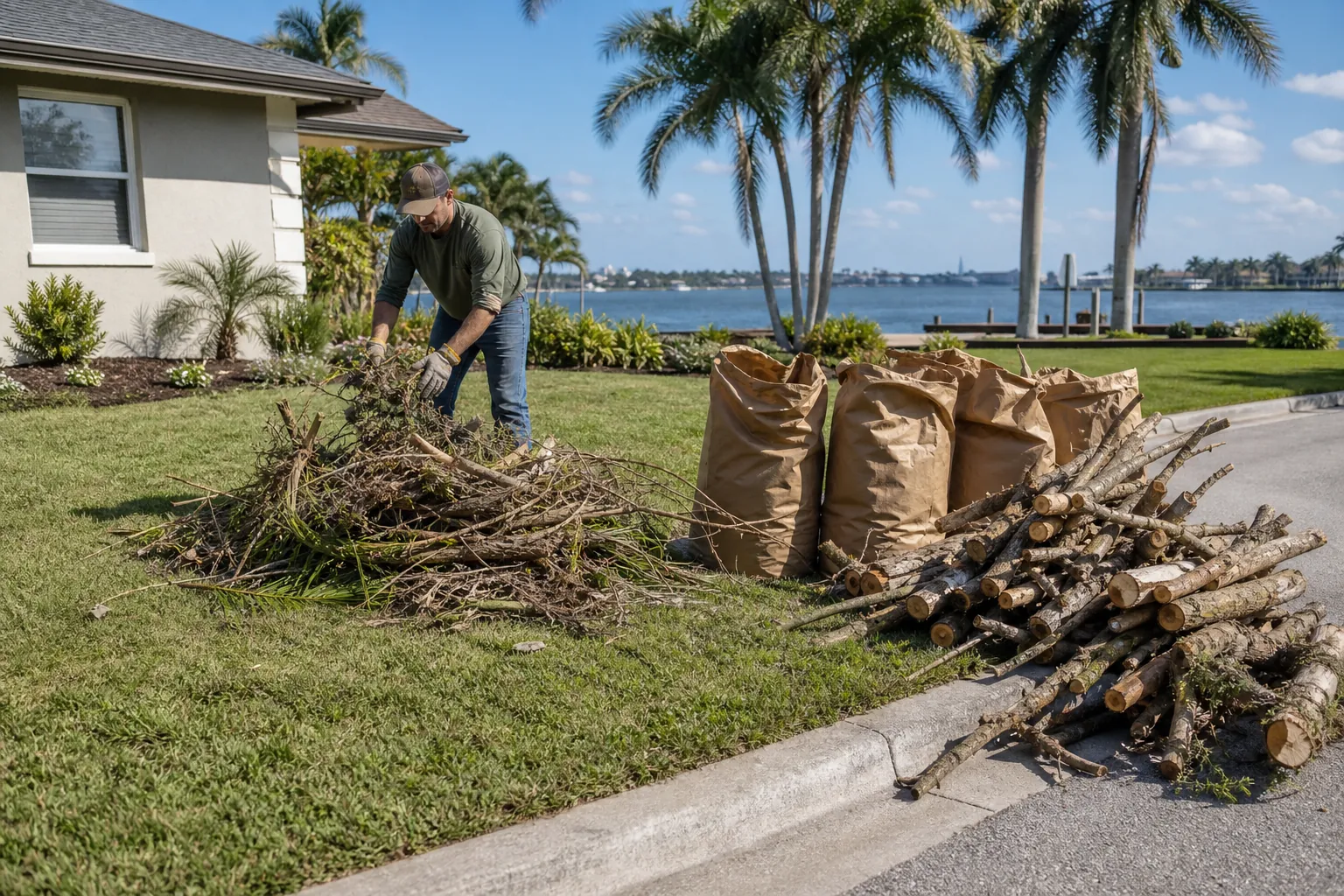
After sod installation, the cleanup plan matters almost as much as the placement of the new turf. Loose soil, old grass, roots, branches, pallets, and packaging can block access or damage freshly laid sod if they are handled carelessly. Before arranging removal in Edgewater, separate the material, choose an accessible staging area, and document what is in the pile. These steps make it easier to explain the job and avoid unnecessary movement across the finished lawn.
Protect the New Sod Before Moving Debris
Begin by treating the installed sod as a protected work zone. Do not use it as a shortcut between the debris pile and the street, driveway, or equipment area. Repeated foot traffic, wheelbarrow trips, dragged branches, and turning vehicles can shift pieces or disturb edges. If debris remains within the landscaped area, plan a route that uses existing hard surfaces whenever possible.
Remove lightweight scraps by hand before they become mixed with soil or wet material. Pick up plastic, sod netting, straps, labels, and other packaging separately. Avoid stacking tools, pallets, old turf, or branches on the finished lawn, even temporarily. A pile can place uneven pressure on the surface and make later cleanup more difficult.
If the installation crew left a designated path, keep that route clear until cleanup is complete. When no route exists, pause before moving heavy material. Deciding where everything will go first is usually safer than relocating the same debris several times.
Sort Materials Before Building the Pile
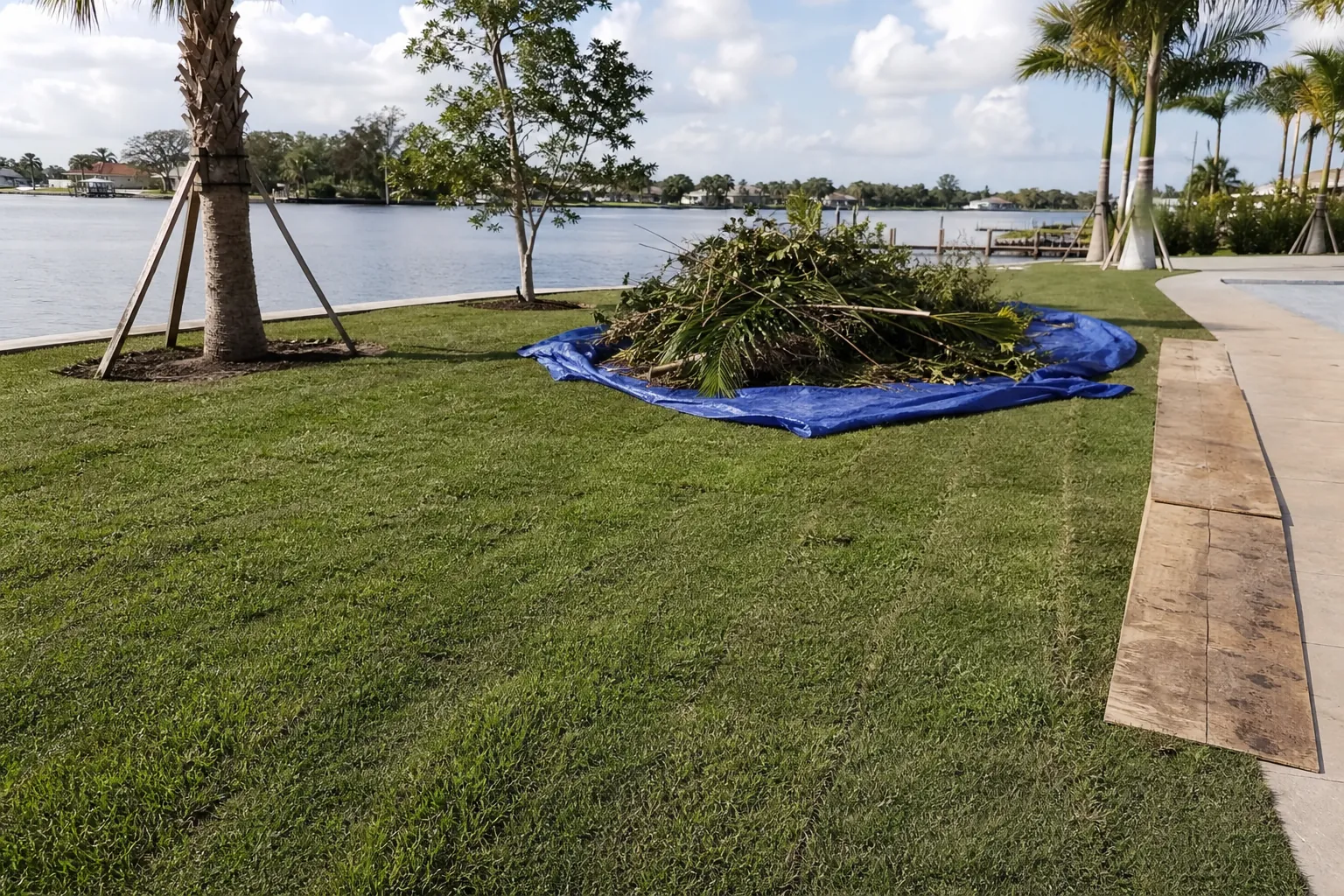
A mixed pile is harder to describe and may contain items that require different handling. Sorting also helps you see the true volume of landscape debris. Start by identifying what came directly from site preparation and sod installation. Typical project remnants may include removed grass, loose soil, roots, trimmed vegetation, branches, empty pallets, and packaging. Actual materials vary by project, so inspect the pile rather than assuming everything belongs together.
Use a simple sorting plan:
- Group plant material, such as old grass, roots, leaves, and branches.
- Keep loose soil contained and separate from lightweight debris.
- Set pallets and other bulky pieces aside where they remain visible.
- Bag or bundle plastic, straps, labels, and small packaging.
- Remove household trash and unrelated project waste from the landscape pile.
- Flag any item you cannot identify before discussing pickup.
Do not hide questionable items beneath vegetation or soil. A clear account of the pile helps support a more useful conversation about access, material type, and next steps.
Choose a Stable and Accessible Staging Area
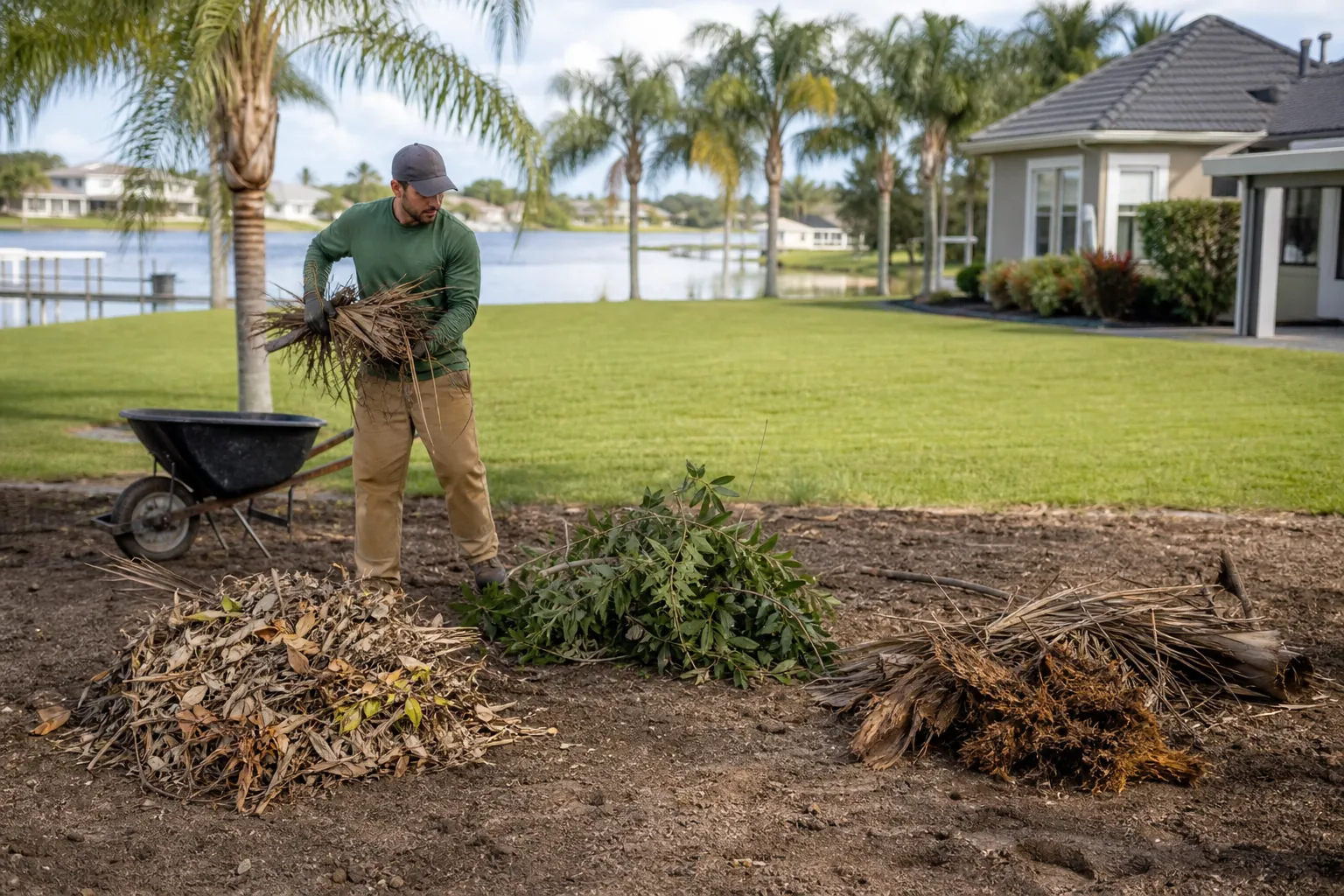
The best staging point protects the sod while allowing the pile to be approached without crossing the new lawn. Existing pavement or another stable area may be preferable when it can be used safely and without blocking normal access. Keep the pile away from gates, parked vehicles, utility equipment, mailboxes, and other features that could restrict movement.
Consider vertical and overhead clearance as well as ground access. Low branches, wires, roof edges, and tight turns can affect how easily a pile can be reached. Avoid placing material against fences, walls, trees, or landscaping that you want to preserve. Leave visible separation around the pile so its boundaries are easy to understand.
Do not stage debris where it creates a traffic hazard or obstructs drainage. If the property has limited frontage or a narrow driveway, take photographs before committing to a location. Daytona Grapple Trucks can review the information you provide, but the property owner should first identify access constraints and explain them clearly by phone.
Build a Pile That Is Easy to Evaluate
Once the staging location is selected, consolidate compatible debris into an orderly footprint. Place dense material low and keep loose, lightweight pieces from blowing away. Avoid creating several small piles around the property unless separation is necessary. One clearly staged area is easier to photograph, measure, and discuss than scattered material behind shrubs, beside the house, and near the street.
Do not overpack bags or build an unstable stack. Branches should not project into walkways or vehicle paths. Keep soil from spreading onto the sod, pavement, or drainage areas. If rain is expected, consider how runoff could carry sediment away from the pile. The goal is not to create a perfect stack. It is to make the material visible, contained, and reachable while protecting the completed landscape.
Take photos from several angles after staging. Include a wider image showing access from the driveway or street and closer images showing the contents. These details can make an initial phone conversation more specific.
Prepare Useful Details Before You Call
Before contacting Daytona Grapple Trucks, write down the property location in Edgewater, the types of debris present, the approximate pile dimensions, and where the pile sits on the property. Mention gates, narrow approaches, overhead obstacles, parked vehicles, soft ground, or any need to avoid the newly installed sod. If the material is divided into separate groups, explain why.
Cost can depend on practical job details rather than one isolated factor. For additional planning context, read grapple truck pickup cost factors. Use that information to prepare questions, not to assume that one property will match another.
Be direct about anything mixed into the landscape debris. Photos and measurements are useful, but they do not replace an accurate description. Ask what information is needed to evaluate the pile and whether its current placement appears suitable. Do not move material onto new sod merely to make it look closer or more compact. Protecting the finished installation remains the priority.
Discuss Your Edgewater Debris Pile
If landscape debris remains after sod installation, stage it carefully and gather clear details before making arrangements. For a calm, practical conversation about your pile and property access, call Daytona Grapple Trucks at (386) 481-7913.
Call (386) 481-7913 to talk through next steps.