
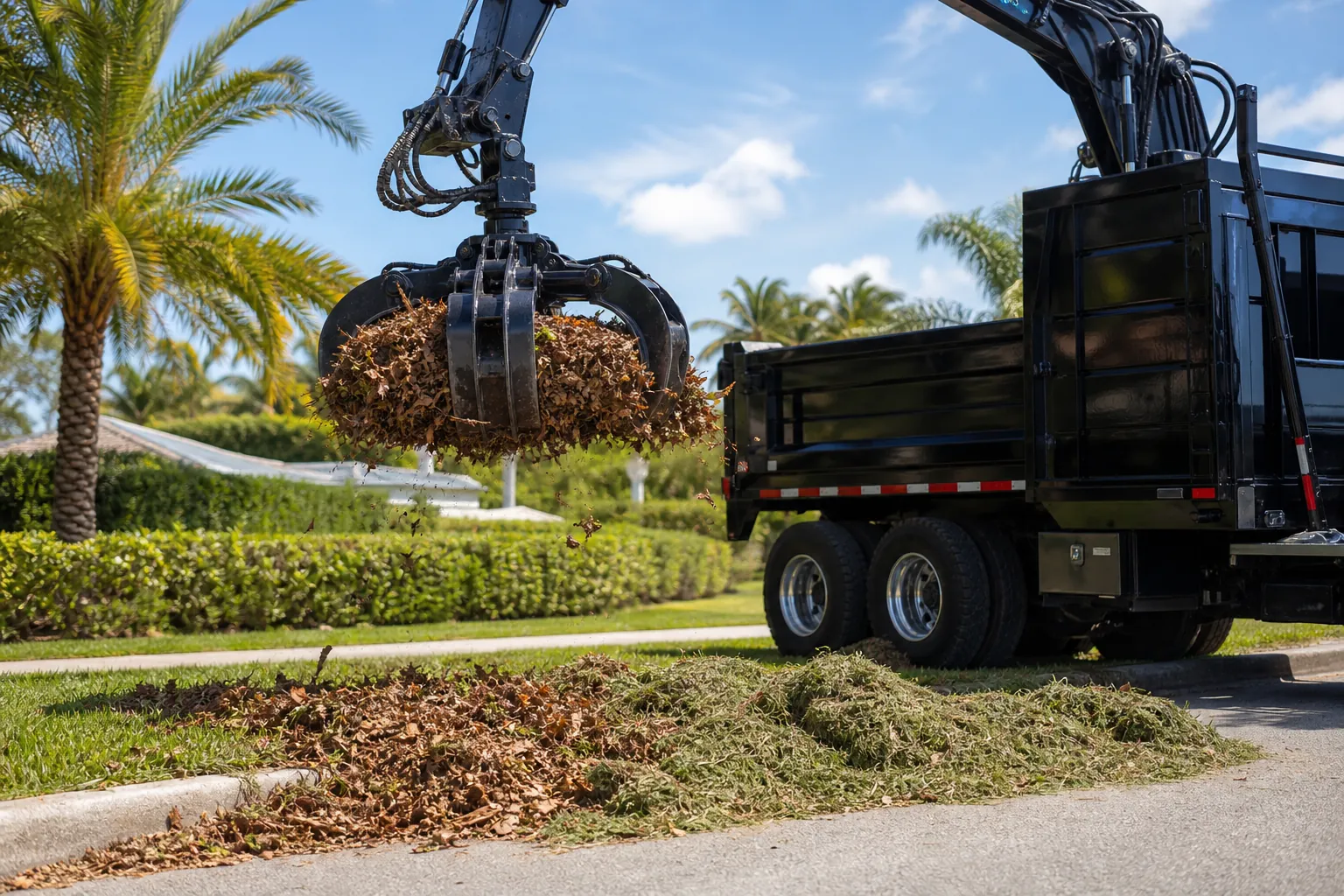
Loose leaves and small grass clippings can be difficult to handle with a grapple because the material is light, fine, and easily scattered. Whether a particular pile can be collected depends on how it is prepared, what else is mixed into it, and the conditions at the pickup area. Before arranging service in Florida, organize the material so it can be evaluated clearly and ask how the pile should be presented.
Why Loose Yard Material Needs Special Consideration
A grapple is designed to grab material, so pile structure matters. Leaves and short grass clippings do not hold together like larger pieces of debris. A loose layer spread across a lawn or pavement may slip through a grapple or scatter as it is disturbed. Wind and wet conditions can also change how the material behaves.
This does not mean every pile containing leaves or clippings presents the same situation. A compact, clearly defined pile may be easier to assess than a thin layer covering a broad area. Material mixed with larger pieces will also behave differently from leaves alone. The practical first step is to describe the pile accurately rather than assuming all yard material can be handled in one way.
When you call, explain whether the pile is mostly leaves, mostly grass clippings, or a mixture. Mention whether it is loose, bagged, wet, compacted, or combined with larger material. These details help frame the pickup question before plans are made.
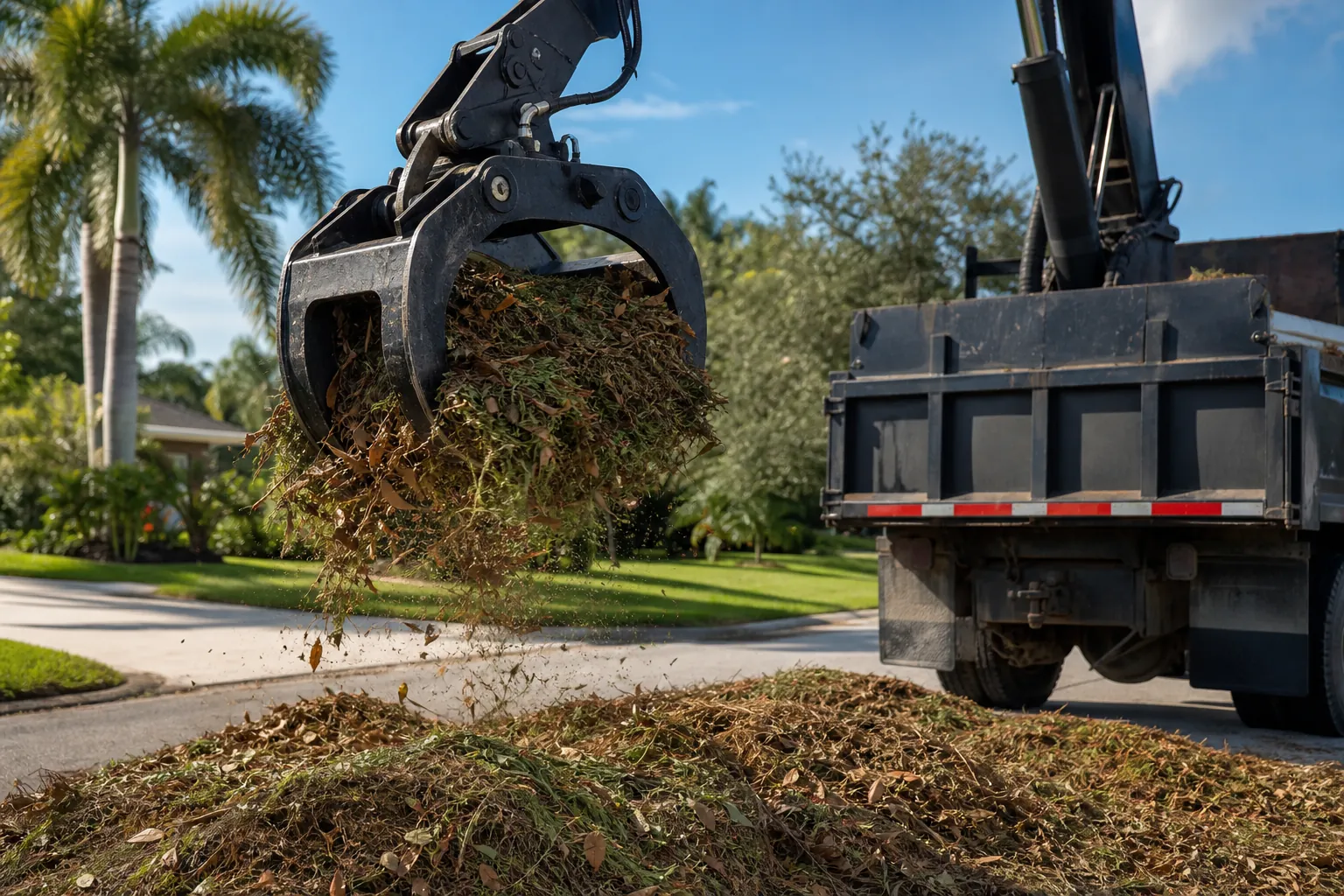
Prepare A Defined Pile For A Clear Assessment
Preparation begins with consolidation. Rake or move the leaves and clippings into one defined area instead of leaving them scattered across the property. Keep the edges of the pile clear enough that its size and contents are visible. Avoid placing a light layer along a long curb or across multiple parts of a yard unless you have first discussed that arrangement.
Do not add unrelated materials simply to make the pile larger or heavier. Mixing contents can make it harder to explain what needs collection and may affect how the pile is evaluated. If larger yard material is already present, identify it when asking about pickup.
- Gather loose material into a compact, visible pile.
- Separate unrelated items rather than hiding them beneath leaves.
- Estimate the pile's length, width, and height.
- Note whether the material is dry, damp, or saturated.
- Take clear photos from several angles for reference.
- Ask where the pile should be placed before moving it.
These steps provide useful information without presuming that the pile is suitable for collection.
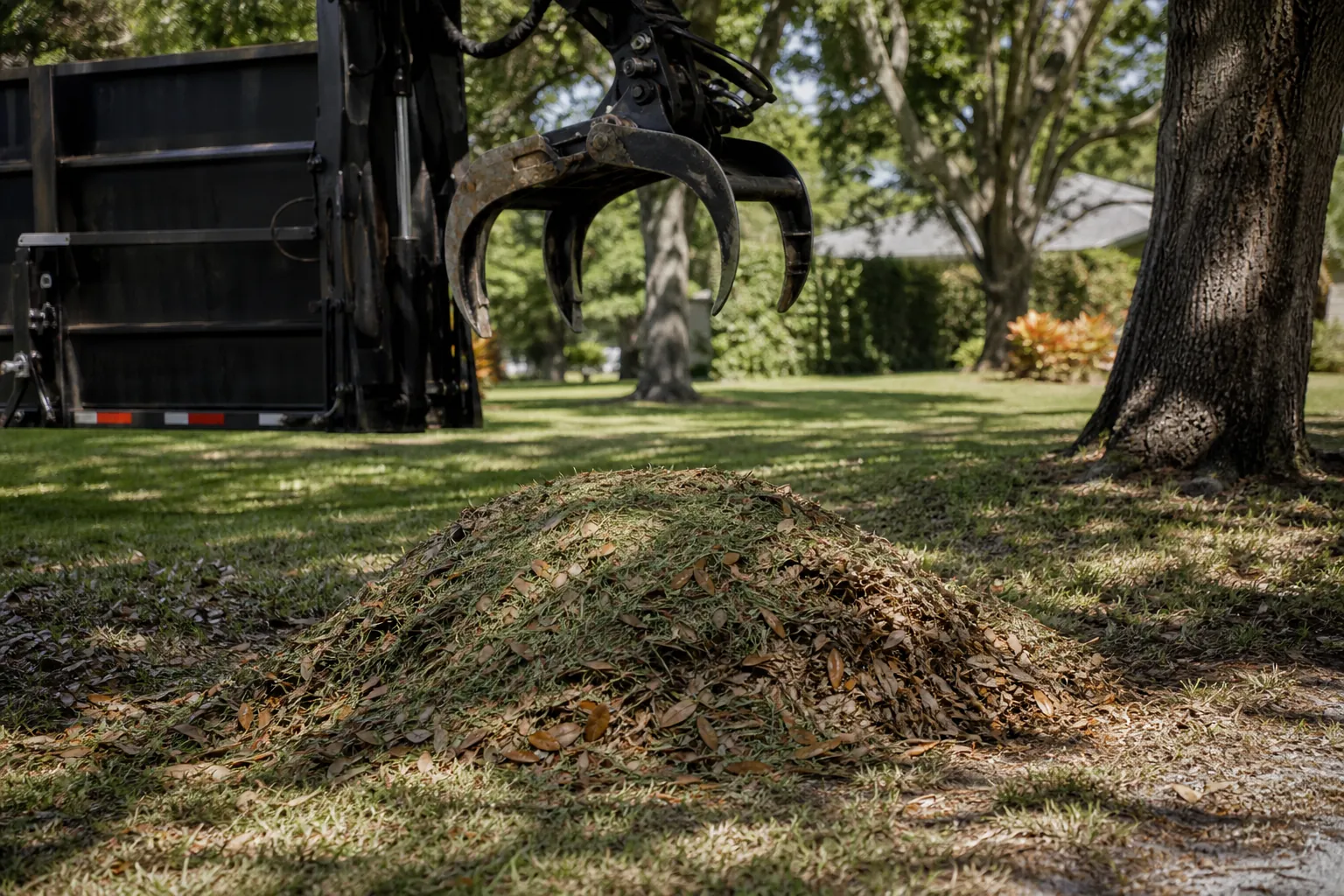
Keep Access And Surroundings In Mind
The material itself is only part of the decision. The pickup area and its surroundings also need consideration. When describing the job, identify where the pile sits and what is nearby. A pile beside open pavement presents a different question from one behind a fence, under tree limbs, next to parked vehicles, or close to landscaping.
Do not choose a placement point solely because it is convenient for raking. Ask where the material should be staged. Moving a pile later can require additional work, especially after rain has made leaves or grass clippings heavier and more compacted.
Keep people, pets, vehicles, and movable objects away from the proposed work area. Point out gates, narrow approaches, overhead obstructions, soft ground, irrigation components, and other features that may affect access. If the property has limited space, say so during the initial conversation. Photos showing both the pile and the approach can make the situation easier to understand. Clear communication about access reduces uncertainty before a pickup is considered.
Understand What Can Affect The Pickup Cost
It is difficult to evaluate cost from the words “leaves and clippings” alone. The amount of material, its condition, the way it is staged, and the characteristics of the pickup area may all be relevant to the discussion. A small but widely scattered layer is not equivalent to a compact pile, and wet organic material is not the same as dry material.
Prepare basic measurements and photographs before requesting information. Describe whether the pile contains only fine yard material or includes larger pieces. Also explain whether it is already consolidated and whether the area around it is open or restricted.
For a broader look at the questions that can shape pricing, read this guide to grapple truck pickup cost factors. Use it to build a complete description of the job rather than relying on a rough visual guess. A useful cost conversation starts with accurate details, including what is in the pile, how much space it occupies, and where it is located.
Ask Direct Questions Before Scheduling
Before making a decision, confirm that the person you speak with understands that your material is primarily loose leaves, short grass clippings, or both. Do not describe the pile only as yard debris because that broad term may not communicate the fine, lightweight nature of the contents.
Ask whether the material should remain loose, be consolidated further, or be prepared in another specified way. Confirm the preferred placement before relocating anything. If the pile changes after your conversation because of added material, rain, wind, or ongoing lawn work, provide updated information.
A focused call should cover the pile's contents, approximate dimensions, moisture condition, current location, and surrounding access. Have photos available if they are requested. Also disclose any mixed-in objects or larger pieces rather than expecting them to be noticed later. The goal is a clear decision based on the actual pile and property conditions. That approach is more useful than assuming that all loose leaves and small clippings can be collected identically.
Discuss Your Pile Before Making Plans
For a calm, direct conversation about loose leaves or small grass clippings, call Daytona Grapple Trucks at (386) 481-7913. Describe the material, pile dimensions, condition, placement, and access so the situation can be considered clearly.
Call (386) 481-7913 to talk through next steps.