
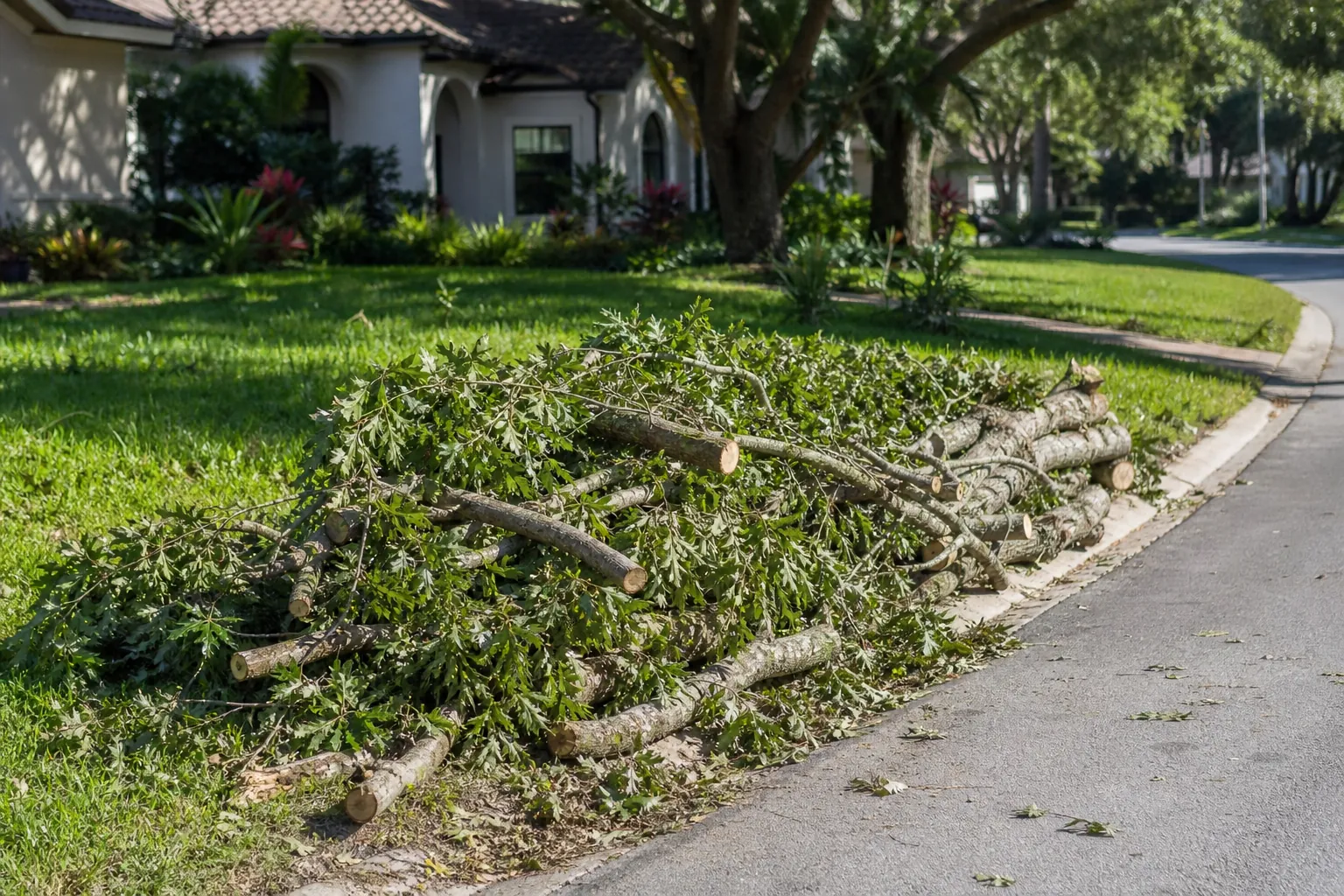
Large oak limbs can be heavy, irregular, and difficult to move twice. Before arranging oak limb debris pickup in Daytona Beach, organize the material so its size, location, and accessibility are easy to evaluate. A well-defined pile also makes it easier to discuss the job and understand which site conditions may affect pickup. Use the following steps to prepare without making assumptions about equipment access, property boundaries, or local collection rules.
Start by Evaluating the Limbs and Work Area
Before moving anything, look at the entire debris area. Identify whether the material consists only of detached limbs or also includes leaves, loose brush, logs, fencing, soil, or household waste. Keeping different materials separate creates a clearer picture of what needs to be picked up. It also prevents smaller items from becoming hidden beneath heavy wood.
Do not attempt to move a limb that is suspended, under tension, touching a structure, or connected to a standing tree. Those conditions are different from arranging debris that is already safely on the ground. Avoid working near utility lines or other hazards. If the limbs are stable and manageable, note their approximate length and diameter before building the pile. Photos from several angles can help communicate the quantity, but they should include the surrounding access area as well as the wood. The route to the debris often matters as much as the pile itself when discussing pickup.
Build One Organized and Visible Debris Pile
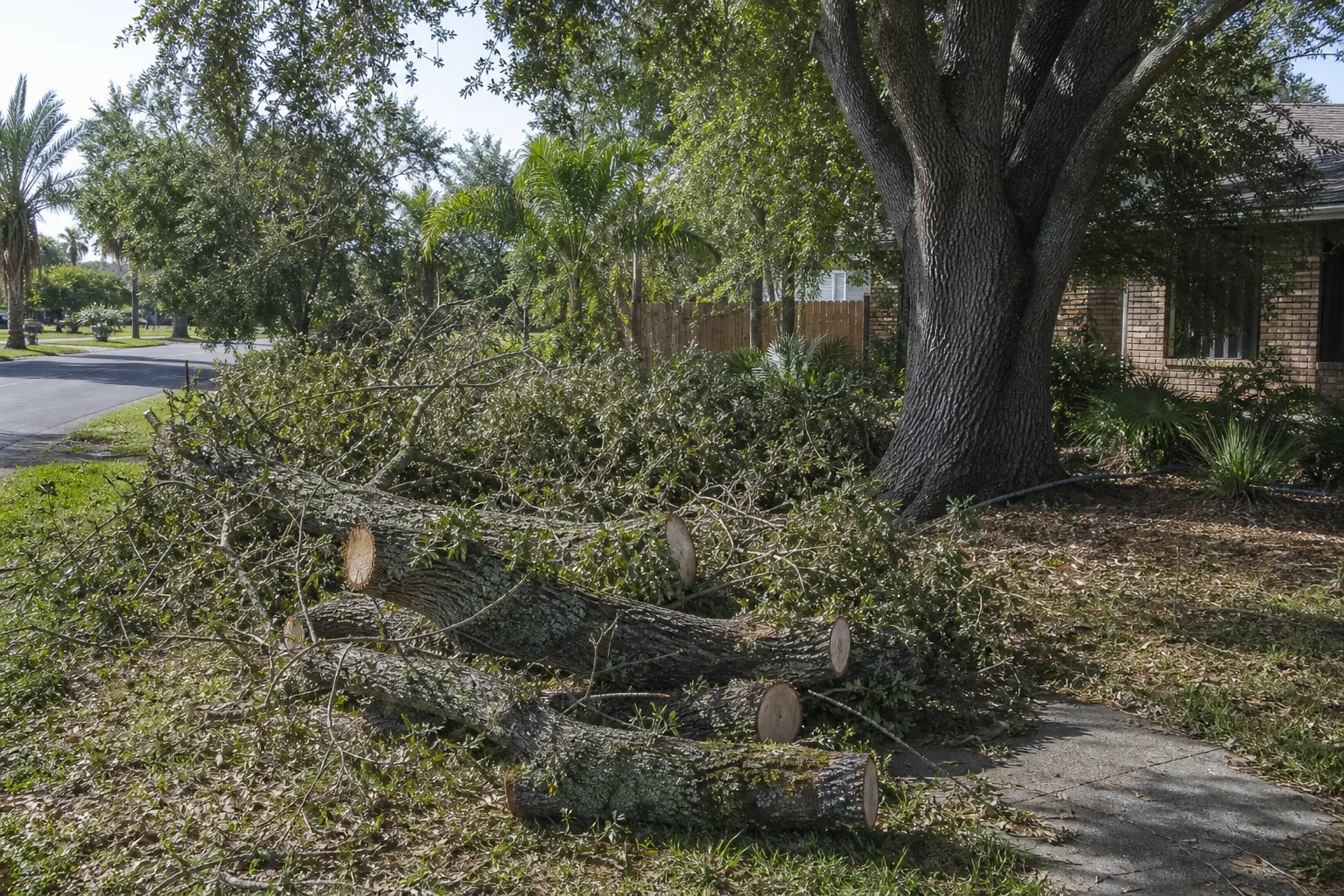
When conditions allow, consolidate detached oak limbs into one orderly pile instead of leaving small stacks throughout the property. Place the larger pieces at the bottom and lighter brush above them. Keeping the debris together makes the pile easier to inspect and reduces uncertainty about the total volume.
Arrange long limbs in the same general direction. Aligning the thicker ends can make the pile more compact and easier to understand from photographs. Avoid weaving branches tightly together or packing material beneath vehicles, structures, or low overhead obstacles. The objective is a stable, visible pile, not the smallest possible bundle.
- Separate oak limbs from household trash, construction debris, soil, and unrelated material.
- Keep the pile within the property area where placement is permitted.
- Leave gates, sidewalks, driveways, drains, and normal travel paths clear.
- Do not place debris under utility lines or against utility equipment.
- Photograph the full pile and the approach to it.
Choose a Location With Practical Access
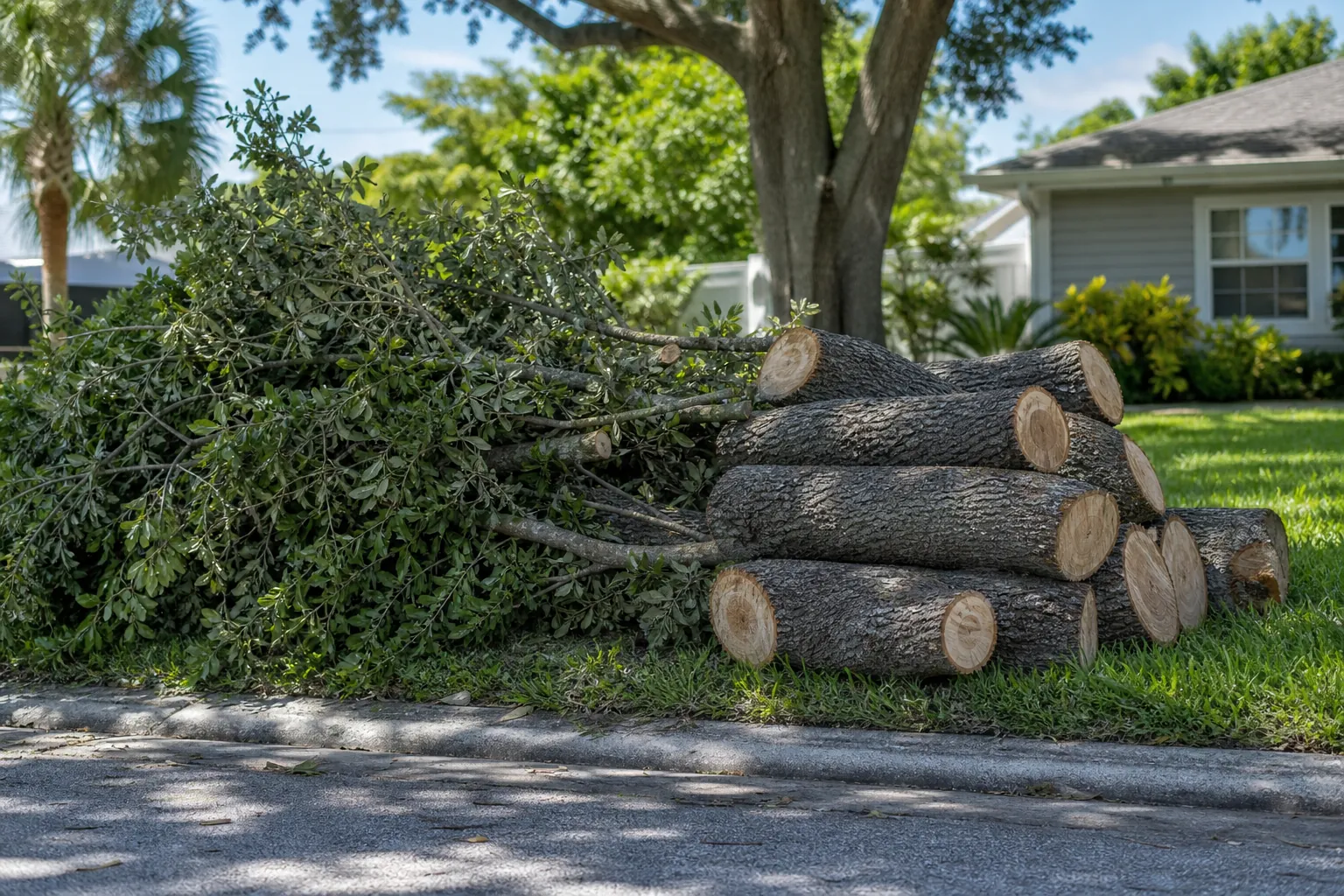
Pickup planning depends on whether the debris can be approached without unnecessary obstacles. Before settling on a pile location, consider the width and condition of the access route. Parked vehicles, narrow gates, soft ground, landscaping, low branches, fences, and tight turns can all affect how straightforward the site is to evaluate.
Do not block a public roadway or move debris into a right of way unless you have confirmed that placement is allowed. Requirements can vary, so property owners should verify applicable local rules rather than assuming a curbside pile is acceptable. If the debris is already near the street, keep it away from storm drains, mailboxes, signs, hydrants, utility boxes, and areas needed for visibility.
If there is no suitable place to consolidate the limbs safely, leave them where they are and describe the layout when calling. Moving heavy oak solely to improve appearance can create avoidable risk. Clear information about the existing arrangement is more useful than forcing the material into an unsafe location.
Separate Materials Before Requesting Pickup
A pile labeled as oak limb debris should contain identifiable tree material. Mixing in bagged waste, furniture, roofing, concrete, metal, fencing, or soil can make the scope difficult to assess. If other materials are present, create separate groups and disclose them when discussing the job. Do not assume that every item in a mixed pile belongs in the same pickup.
Leaves and small twigs can remain with the limbs when they are naturally attached or part of the same tree debris. Loose material should not be used to conceal unrelated waste. If a storm or property project produced several debris types, photograph each group independently and include a wide image showing where they sit in relation to the access route.
This preparation is also helpful when comparing the elements that can influence a quote. For more context, review these grapple truck pickup cost factors in Daytona Beach. An organized pile supports a more focused conversation about the debris actually requiring pickup.
Prepare the Details Needed for a Clear Call
Before calling, gather a short description that answers practical questions. State that the material is oak limb debris and explain whether it is in one pile or several locations. Mention any logs, trunk sections, root material, mixed waste, or unusually large pieces. Describe where the pile sits, such as beside a driveway, behind a gate, or in another accessible area of the property.
Share relevant access conditions, including narrow entrances, overhead obstacles, soft ground, parked vehicles, or limited turning space. Photos should show the complete pile, an object that provides a useful sense of scale, and the route from the nearest practical approach. Avoid close-up images alone because they can make volume and access difficult to judge.
It is also useful to confirm whether the limbs are fully detached and resting on the ground. Clear descriptions help distinguish straightforward debris pickup planning from situations involving hanging limbs, standing trees, structures, or utilities. Do not cut, drag, or reposition hazardous material simply to prepare for a call.
Discuss Your Oak Limb Debris
For a calm, direct conversation about oak limb debris pickup in Daytona Beach, call Daytona Grapple Trucks at (386) 481-7913. Be ready to describe the material, pile location, and access conditions so the scope can be discussed clearly.
Call (386) 481-7913 to talk through next steps.