
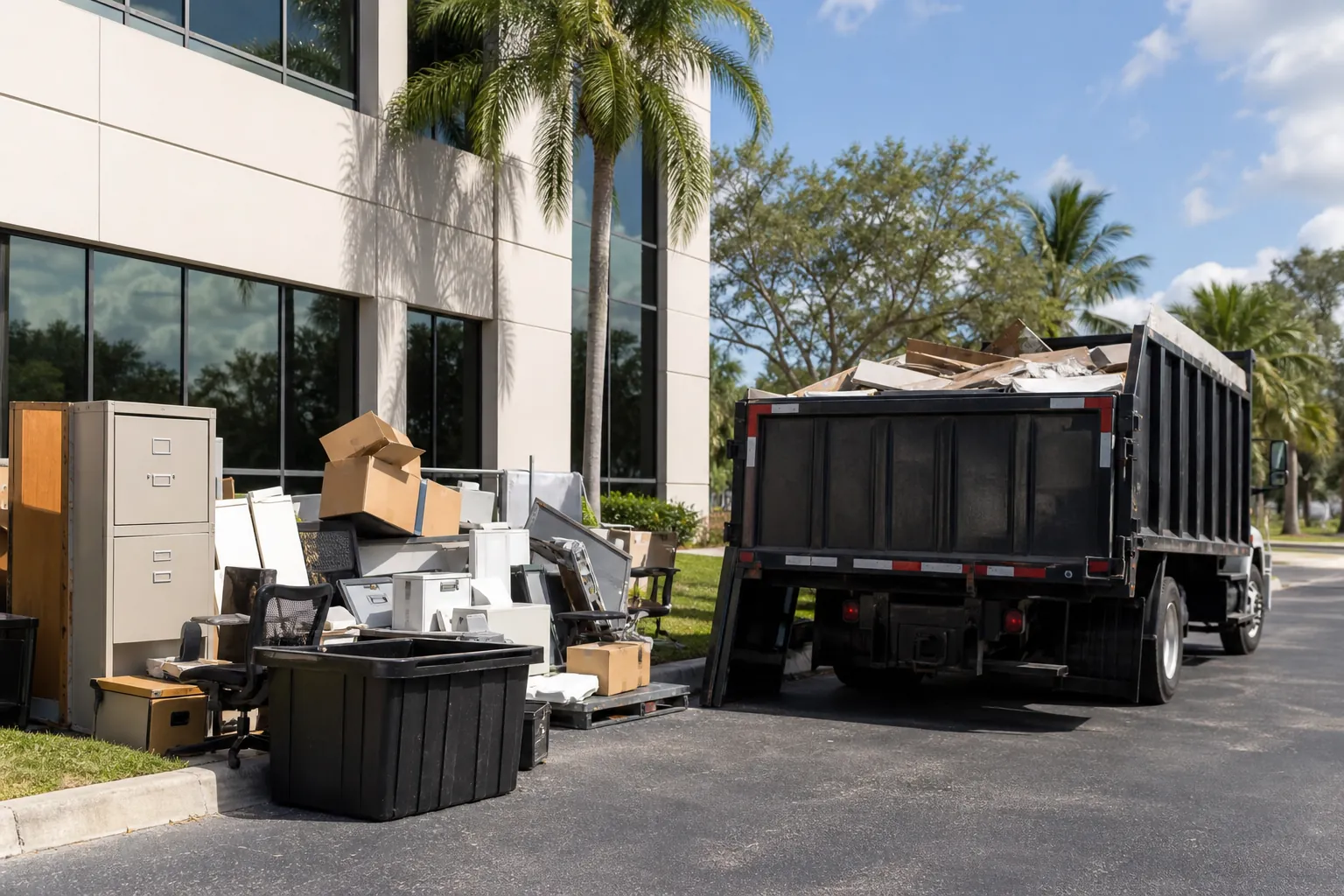
Clearing an office can create more debris than expected. Desks, shelving, cabinets, partitions, flooring, packaging, and renovation materials quickly fill hallways and loading areas. For property managers, business owners, contractors, and commercial landlords, the challenge is not only removing everything. The project must also stay organized, protect the property, and avoid unnecessary disruption.
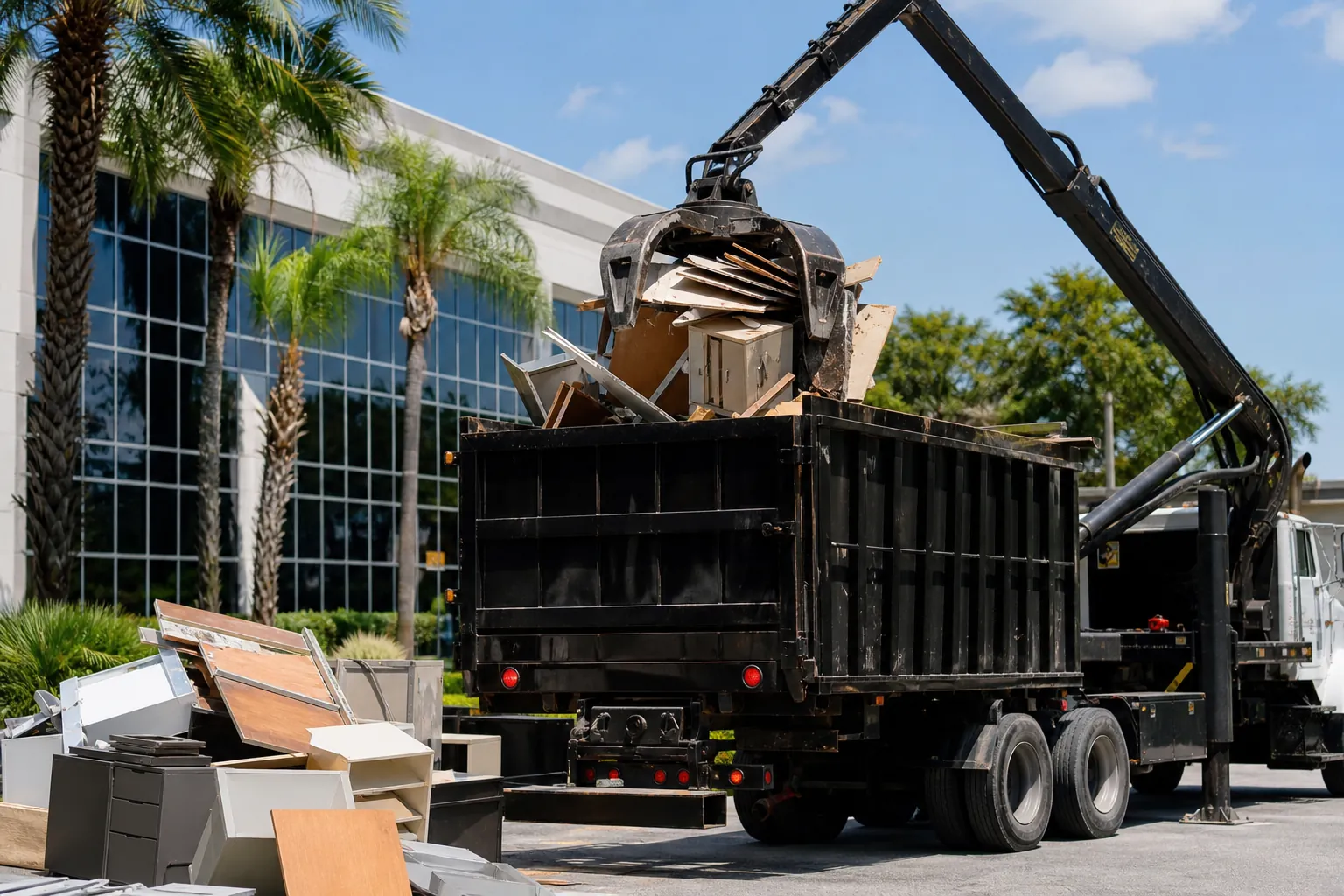
Daytona Grapple Trucks provides office cleanout debris hauling in Volusia County, Florida. Grapple truck service is especially useful when bulky, non-hazardous material has already been moved to an accessible collection point. The truck's hydraulic grapple can pick up large volumes efficiently, reducing the amount of manual loading required at the pile.
Whether you are preparing a suite for a new tenant, clearing an office after a move, or managing debris from a commercial renovation, a practical hauling plan can help keep the site safer and the project on schedule.
When Grapple Truck Hauling Fits An Office Cleanout
Grapple trucks are built to collect loose and bulky debris from accessible outdoor areas. For an office cleanout, crews typically bring unwanted materials out of the building and place them in an approved staging location. The grapple then lifts the pile into the truck for removal.
This approach can be a strong fit for multi-room cleanouts, tenant turnover projects, office remodeling, and commercial property improvements. It can also help when furniture or construction debris would require repeated loading by hand.
Access is important. The truck needs adequate room to enter, position safely, operate the grapple, and leave without blocking traffic or damaging nearby features. Overhead wires, tree limbs, covered loading zones, parked vehicles, soft ground, and narrow driveways may affect where collection can occur. Sharing site details before service helps determine the best setup.
Common Materials From Volusia Office Projects
Every office cleanout is different. A professional suite may contain mostly desks and filing cabinets, while a remodeled retail office could generate drywall, wood, ceiling material, and fixtures. Separating prohibited or specialized waste before pickup helps prevent delays.
Common non-hazardous materials may include:
- Wood desks, tables, bookcases, and shelving
- Office chairs and other bulky furnishings
- Wooden cabinets, counters, and reception components
- Interior doors, trim, framing, and lumber
- Drywall and compatible remodeling debris
- Carpet, padding, and removed flooring materials
- Cardboard, crating, and move-related packaging
- Non-hazardous fixtures and dismantled partitions
- Storm-damaged materials from commercial properties
Computers, monitors, batteries, fluorescent lamps, chemicals, paint, solvents, refrigerants, confidential documents, and other regulated items may require separate handling. These materials should not be mixed into a general debris pile without confirming acceptance. A quick description of the load can help clarify what may be hauled and what needs another disposal option.
How To Prepare The Property For Collection
Good preparation begins inside the office. Identify what will be retained, donated, recycled, securely destroyed, or discarded. Labeling items by category reduces confusion, especially when employees, movers, and contractors are working in the same space.
Before placing furniture outside, dismantle oversized items when practical. Remove drawers and loose components that could shift while being moved. Keep sharp edges, broken glass, and protruding fasteners controlled to protect workers and visitors. Confidential records should go through an appropriate document destruction process rather than entering a mixed debris pile.
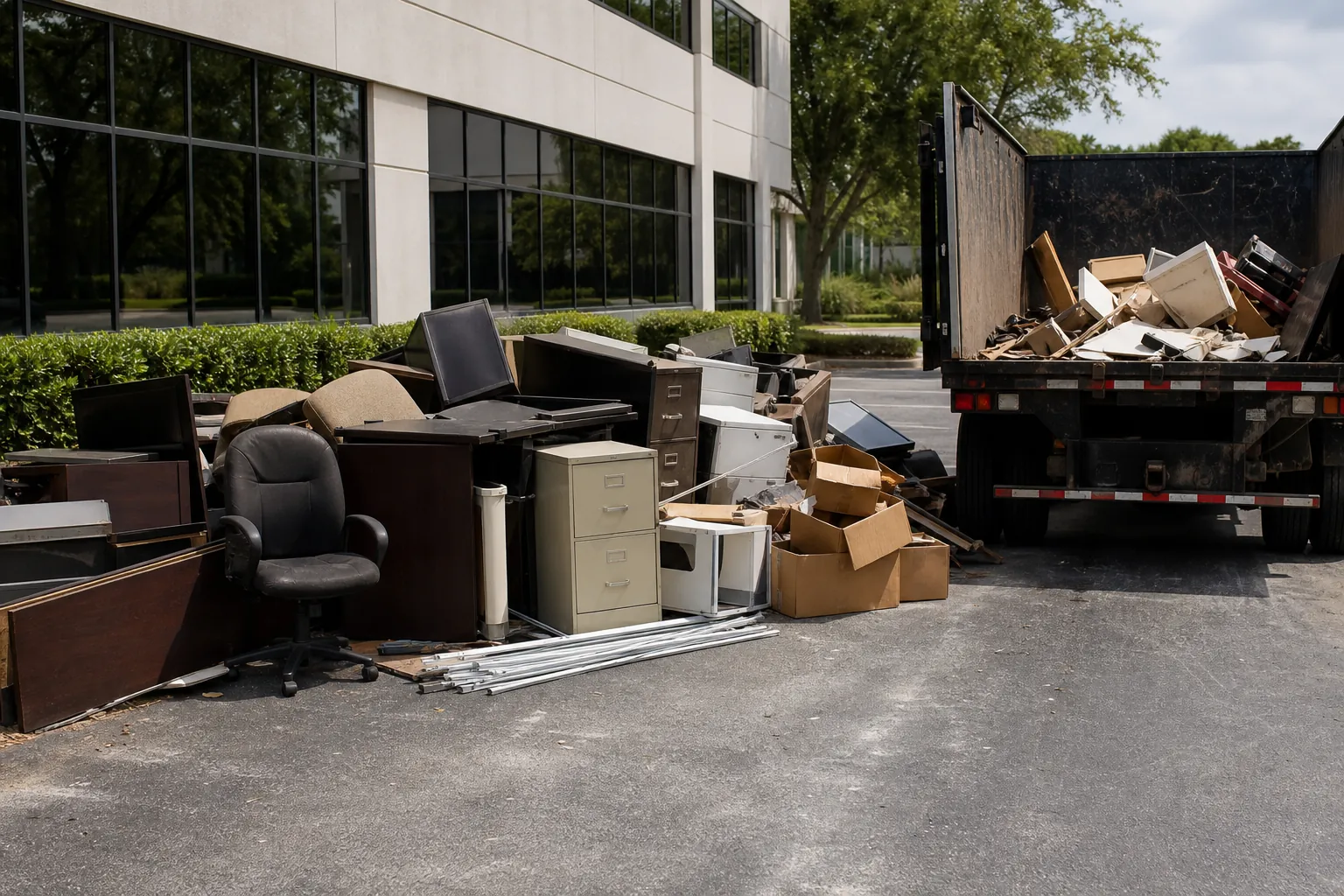
Choose a staging area on a stable, open surface with clear vertical access. Keep the pile away from buildings, fences, utility equipment, fire lanes, storm drains, landscaping, and vehicles. Avoid placing debris beneath power lines or low branches. The location should also comply with property rules and local requirements.
Consolidating compatible material into one orderly pile usually makes collection more efficient. Scattered debris may require additional preparation and can limit the grapple's reach. If the property has a gate, loading dock, parking restrictions, or scheduled delivery traffic, provide those details when arranging service.
Planning Around Business Operations
An office cleanout often happens while part of the property remains active. Tenants may still need parking, customers may use the main entrance, and contractors may be completing other work. The hauling plan should account for these daily operations.
Property managers can designate a temporary debris zone and communicate it to tenants and vendors. Cones or signs may help prevent vehicles from parking near the collection area. When possible, schedule internal removal work so the pile is ready before the truck arrives. This keeps the loading area from becoming a long-term obstruction.
For renovation projects, coordinate hauling with demolition phases. Removing debris at logical milestones can preserve workspace and prevent waste from spreading around the property. It also gives contractors a clearer area for tools, deliveries, and the next stage of work.
Florida weather should be considered as well. Heavy rain can affect soft surfaces and make some materials harder to manage. Wind may scatter lightweight packaging or ceiling materials, so those items should be contained until collection. Early communication is useful if conditions change site access.
Why Local Hauling Support Matters
Volusia County includes busy commercial corridors, downtown properties, industrial sites, suburban office parks, and mixed-use buildings. Each location presents different access concerns. A standalone office may offer an open parking lot, while a compact suite may require careful coordination around neighboring businesses.
Local service helps property owners plan for the realities of commercial cleanouts in the Daytona Beach area and surrounding Volusia communities. Clear information about the debris, pile size, surface, and access route allows the hauling provider to evaluate the job more accurately.
Photos can be helpful when discussing a project. Include wide views of the pile, nearby structures, overhead clearance, the driveway, and the route the truck would use. Also mention whether the debris contains dense material, long pieces, mixed contents, or items that may need special handling.
Arrange Office Debris Hauling
A cleanout is easier to manage when disposal is planned before furniture and renovation waste start accumulating. Decide what is leaving, separate specialized materials, confirm a safe staging area, and coordinate access with everyone working on the property.
Daytona Grapple Trucks can help evaluate office cleanout debris hauling needs across Volusia County. To discuss the materials, access conditions, and preferred timing, call (386) 481-7913. A calm, well-organized plan can help move the project forward while keeping your commercial property functional.
Call (386) 481-7913 to talk through next steps.