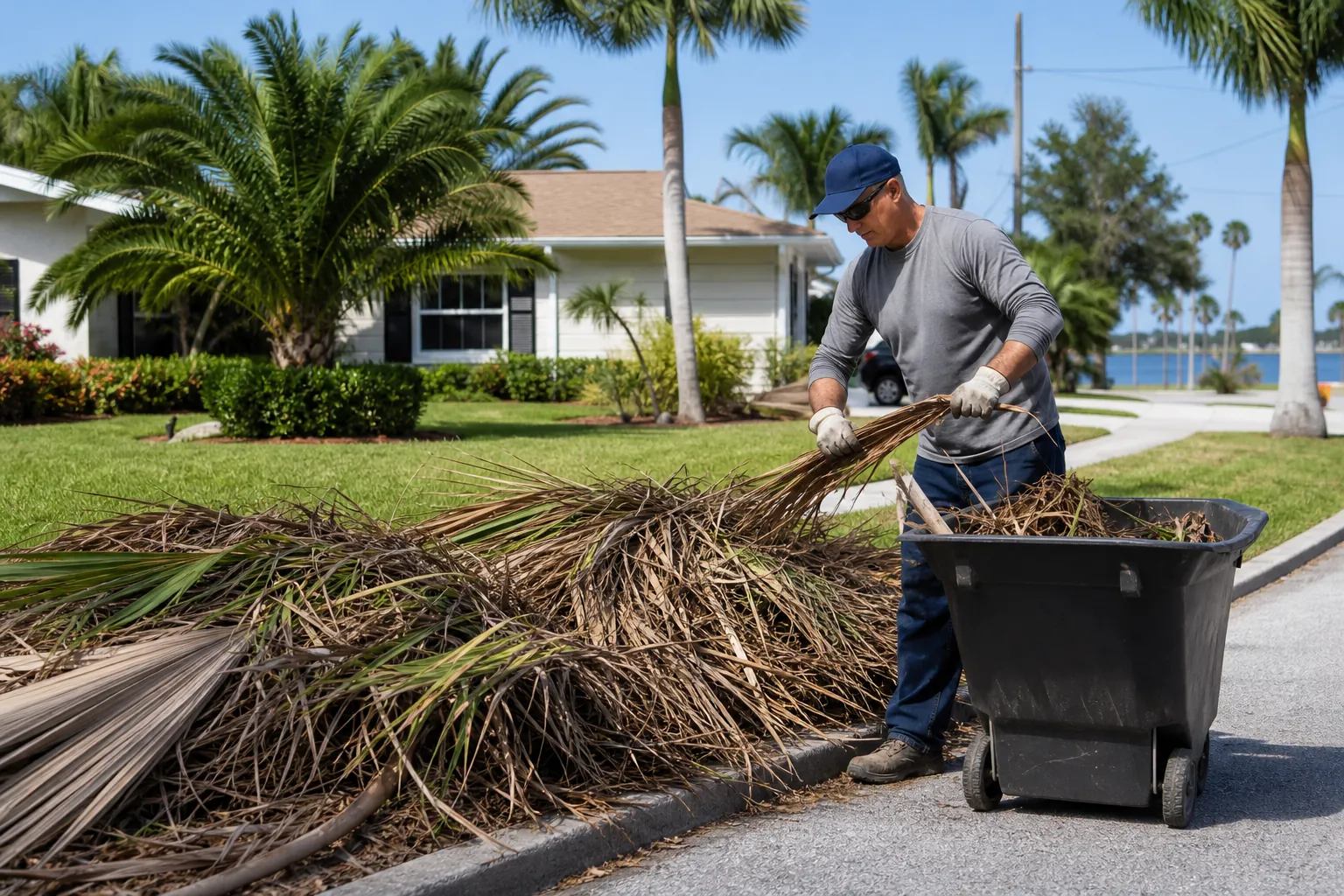
Fallen palm fronds can turn a tidy property into a difficult cleanup project surprisingly quickly. A few dry fronds may fit into a manageable bundle, but a seasonal trimming or windy afternoon can leave long, tangled debris across a driveway, lawn, or planting bed. In Holly Hill, FL, the challenge is often less about gathering the material and more about finding a practical way to get it off the property.
Daytona Grapple Trucks helps property owners think through that final hauling step. If you are searching for palm frond debris removal Daytona options for a property in Holly Hill, understanding the pile, access conditions, and pickup requirements can make the process more straightforward. This guide explains when hauling makes sense, how to stage debris safely, and what information to provide before scheduling.
Why Palm Fronds Need A Different Cleanup Approach
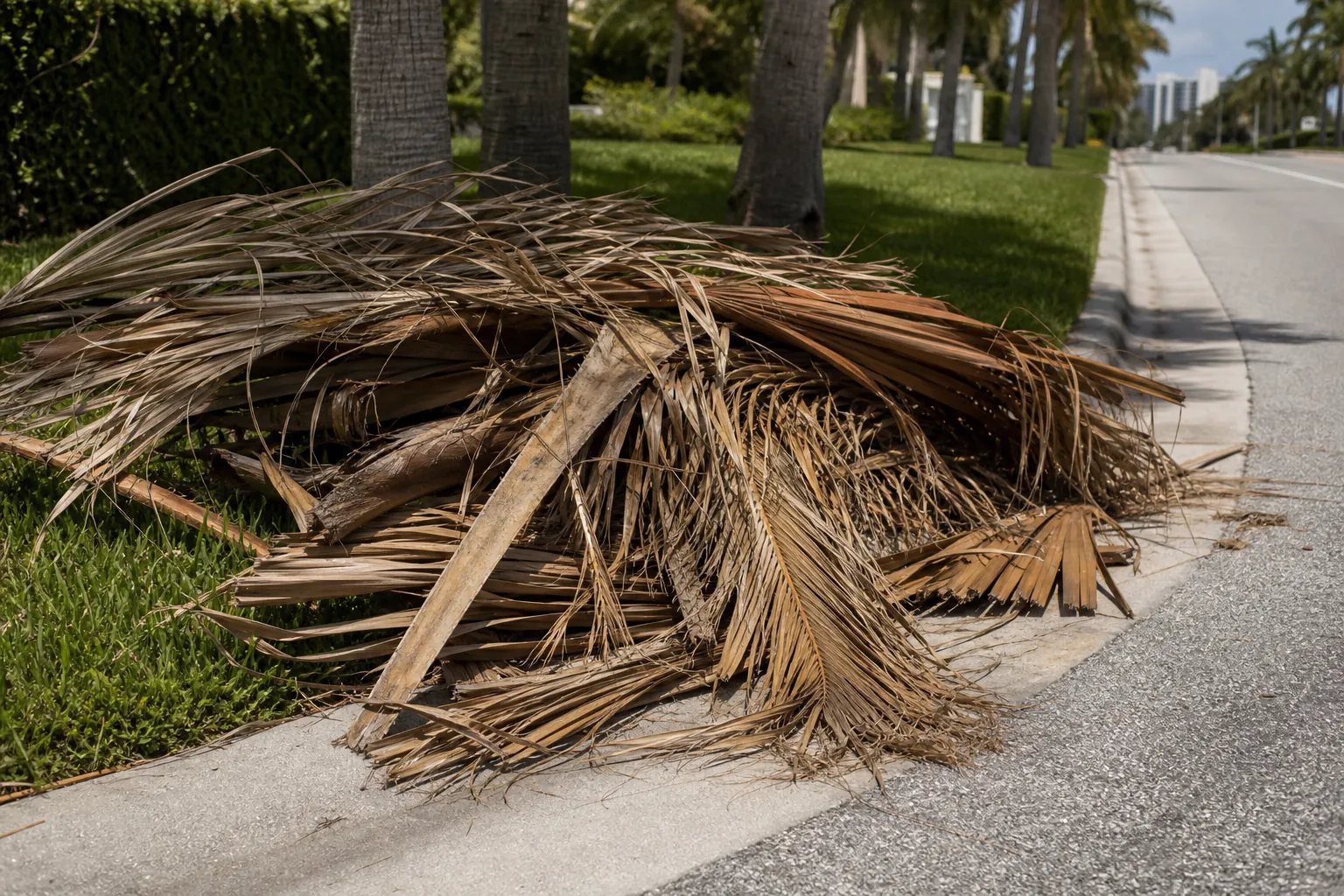
Palm fronds are bulky relative to their weight. Their broad leaves, stiff ribs, and long stems can create a pile that occupies substantial space even when it does not look especially heavy. That shape makes them awkward to load into ordinary containers and difficult to stack securely in a small vehicle.
Freshly cut fronds may retain moisture, while older material can become brittle and break apart during handling. Some palm species have sharp edges or spines near the stem. These features matter when choosing gloves, deciding how much handling to do yourself, and planning where the pile should sit before removal.
Loose fronds also tend to bridge across other debris. A pile that appears compact at first can spring apart when someone pulls out a single piece. Rather than repeatedly packing the same material into smaller containers, a property owner may find a bulk hauling approach more practical.
The important distinction is between removing material already on the ground and trimming material still attached to a palm. Debris hauling is not a substitute for qualified tree care. Hanging fronds, unstable trunks, or material caught near electrical lines should be evaluated by the appropriate professional before anyone attempts cleanup.
When Grapple Truck Hauling Makes Sense
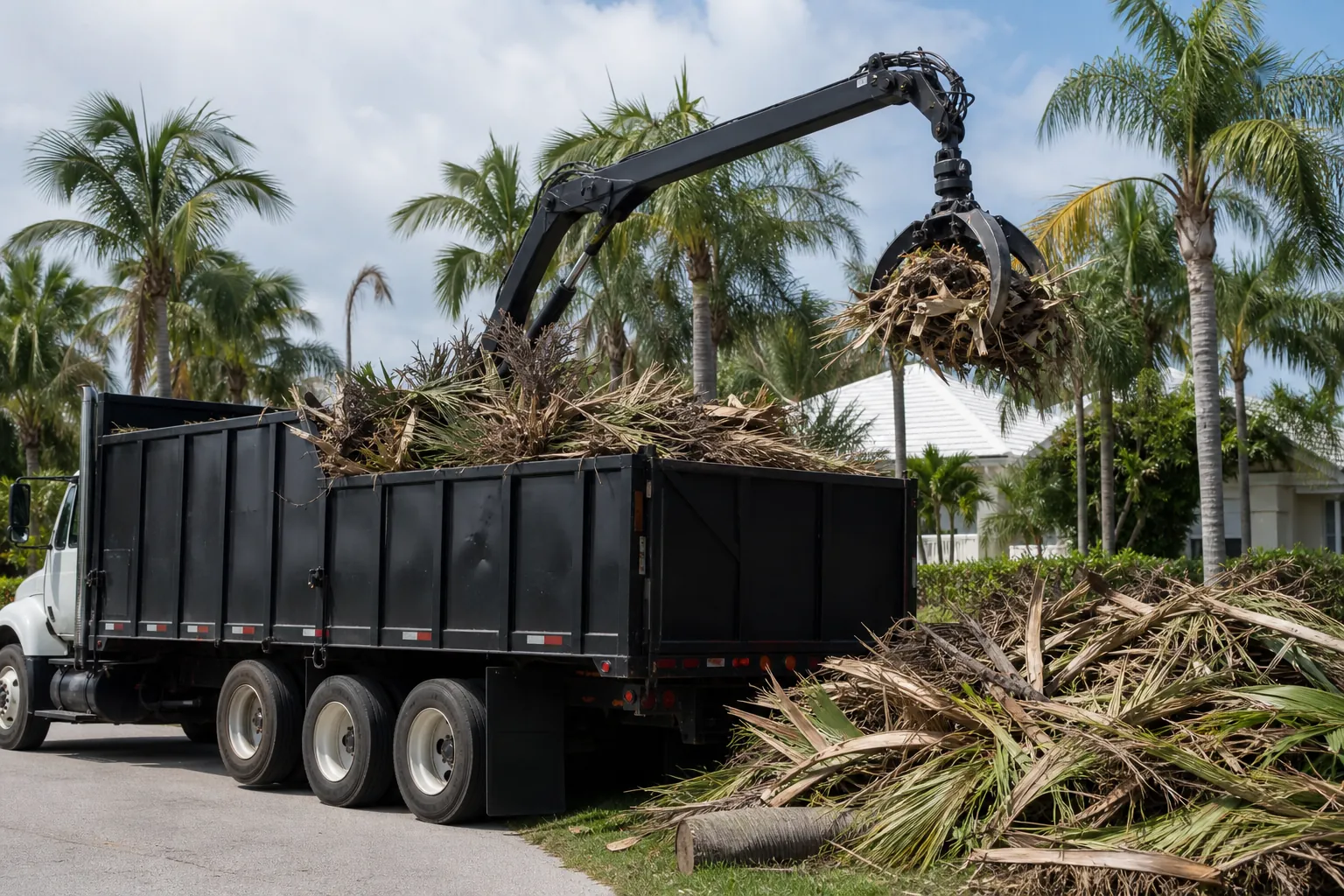
A grapple truck uses a mechanical arm and grabbing attachment to collect accessible bulk material. For a substantial palm-frond pile, that loading method can reduce the amount of repeated lifting involved in moving debris into a truck by hand. Whether it fits your job depends on the amount of material and the available loading space.
Good candidates often include completed palm trimming projects, accumulated seasonal debris, and larger yard cleanups where the material has already been gathered. The truck still needs a suitable place to stop, and the operator needs to assess whether the pile can be reached without risking damage to nearby features.
- A large, accessible pile may justify a hauling conversation when ordinary yard-waste containers cannot hold the fronds comfortably.
- Several smaller piles may be easier to collect if they can be consolidated safely in an approved pickup location.
- A cleanup involving palm fronds and other vegetation should be described clearly so the hauler can evaluate the full load.
- A pile inside a fenced yard or behind a building requires an access discussion before assuming mechanical collection is possible.
For just a few fronds, an available local yard-waste option may be sufficient. For larger quantities, compare that option with hauling based on preparation requirements, pickup timing, and how much handling you would otherwise need to do. The best choice is the one that fits the actual debris and property conditions.
Check Local Collection Rules Before Moving The Pile
Before placing palm debris near the street, review the current City of Holly Hill collection guidance or contact the relevant local collection office. Yard-waste schedules, size limits, bundling instructions, and placement rules can change. Do not assume that material accepted at one time will be accepted under the same conditions later.
Ask specifically about palm fronds, not just general yard waste. Long fronds, large trimming piles, and debris produced by a contractor may have different handling requirements. If public collection is your preferred route, confirm whether your pile qualifies before spending time preparing it.
Private hauling also requires coordination. A location that looks convenient from the house may not be appropriate for a grapple truck. The operator may need room to position the vehicle, avoid traffic conflicts, and load without reaching over sensitive landscaping or obstacles.
Keep sidewalks, drainage openings, and travel lanes clear while you sort out the pickup plan. Avoid placing material in a swale or against a storm drain, where it may interfere with water movement during Florida rainfall. If the only possible staging location is near the right-of-way, ask about permitted placement before moving debris there.
How To Prepare Palm Fronds For Pickup
Preparation should make loading simpler without creating a new safety problem. Start by asking Daytona Grapple Trucks about the preferred staging location for your property. That conversation can prevent moving the same pile twice or placing it where equipment cannot safely reach it.
If you can handle the fronds safely, gather them into a clearly defined area rather than spreading them along the property frontage. Keep the pile separate from items that are not part of the intended vegetation load. Avoid dragging heavy material across sprinkler heads, delicate ground cover, or exposed irrigation lines.
- Wear sturdy gloves, closed-toe shoes, and clothing that protects your arms and legs while handling rough stems.
- Leave adequate clearance around the pile so the operator can distinguish debris from nearby objects.
- Remove loose plastic bags, plant pots, wire, and other nonvegetative items from the material whenever it is safe to do so.
- Keep children and pets away from the staging area, especially while debris is being moved or loaded.
- Tell the hauler if you cannot consolidate the material safely, rather than attempting a risky lift or an improvised move.
Do not cut every frond into short pieces unless the chosen collection method requires it. Extra cutting can add work and scatter small fragments through the yard. Ask whether full-length fronds are suitable for the planned pickup and whether any preparation is needed for unusually long stems.
If debris contains hidden objects or sharp material, identify that concern before loading. A pile should never conceal broken glass, metal stakes, or discarded tools. Clear communication about what is inside the pile helps the hauler decide how the job should be approached.
Access Details That Can Affect A Holly Hill Pickup
Truck access is about more than reaching the street address. The loading position, overhead clearance, ground conditions, and nearby property features all matter. Holly Hill properties vary in driveway width, frontage layout, and available open space, so photographs are often useful during an initial discussion.
Describe overhead utility lines, low branches, gates, parked vehicles, and anything that limits maneuvering. Never place a pile directly under electrical lines expecting the loading arm to work around them. The operator must determine appropriate clearance and may ask for a different staging location.
Ground conditions deserve attention after rain. A lawn that feels firm to someone walking across it may not support a loaded truck. Do not assume the vehicle can drive onto grass, cross a soft shoulder, or use a paver area without evaluation. Discuss where the truck is expected to remain during loading.
Let the hauler know about septic components, underground utilities, drainage structures, or other vulnerable areas near the proposed loading position. You may not know every detail, but sharing known concerns helps avoid treating sensitive ground as an ordinary access route.
Also consider what happens during pickup. A driveway may be temporarily unavailable while the truck is positioned. Move vehicles beforehand if requested, coordinate with other household members, and keep the work area clear. For managed properties, confirm who has authority to approve access and staging.
What To Share When Requesting A Hauling Estimate
A useful estimate starts with a useful description. Saying that you have a few palm trees does not necessarily indicate how much debris is waiting for removal. A better description includes the pile's approximate dimensions, the type of material, and how close it is to an accessible loading position.
Photographs can add context that measurements alone miss. Take one wide image showing the pile and its surroundings, then another from a different angle. Include visible reference points such as a driveway or fence, but avoid entering traffic or climbing onto unstable material to get a better picture.
- Provide the Holly Hill property address and explain where the debris is located on the property.
- Estimate the pile's length, width, and height without climbing on it or compressing it by hand.
- State whether the pile contains only palm fronds or also includes branches, trunks, roots, or other material.
- Identify gates, narrow approaches, overhead obstacles, and soft ground that could affect collection.
- Explain your preferred timing and whether additional trimming will add more debris before pickup.
Ask what is included in the proposed work. Clarify whether the estimate assumes one accessible pile, whether scattered material must be gathered beforehand, and how changes in the debris quantity will be handled. An estimate based on photographs may need review if the actual conditions differ substantially.
Pricing can depend on load volume, material characteristics, access, loading effort, transport, and disposal arrangements. Rather than relying on a generic online price, request an assessment based on your specific pile. Also ask how the material will be handled after removal and whether anything in the load is unacceptable.
Keep Palm Debris Separate From Other Cleanup Materials
Yard cleanups often uncover more than vegetation. Old edging, broken pots, landscape fabric, fencing scraps, and household items can end up beside palm fronds. Mixing those items into the pile may change the loading plan or disposal requirements, so separate them before seeking a final estimate.
Do not include paint, fuel containers, chemicals, batteries, or other potentially hazardous materials in a vegetation pile. These items need appropriate handling through an authorized option. If you discover an unidentified container beneath the debris, stop handling it and ask the relevant local authority about safe disposal.
Large palm trunk sections and root balls should also be mentioned separately. They differ from fronds in weight and shape, and soil attached to roots may affect the load. Even if all the material came from the same landscaping project, the hauler needs an accurate inventory.
After a pickup, small leaf fragments may remain depending on the agreed scope. Confirm whether the service includes only bulk removal or any additional cleanup. Planning for a final rake-through helps set realistic expectations and gives you a chance to check for small hazards before reopening the area.
Plan Around Trimming, Weather, And Property Use
If palm trimming is scheduled, coordinate the hauling discussion before work begins. Ask the trimming crew where debris will be left and whether that location matches the hauling plan. A properly placed pile is generally more useful than one dropped in the nearest empty corner of the yard.
For a multi-day project, explain when the final debris quantity will be ready. Scheduling removal too early can leave you with a second pile after the truck has gone. Conversely, allowing material to accumulate without a plan can restrict parking or make routine property maintenance harder.
Florida weather can affect both staging and access. Wind may scatter loose pieces, while rainfall can soften loading areas. Keep debris away from drainage paths, and ask how weather-related access issues would be handled. Avoid assuming that a particular date is guaranteed before the appointment is confirmed.
Following a storm, assess the area for hazards before collecting anything. Stay away from downed lines, damaged trees, unstable structures, and material resting on electrical equipment. Safety takes priority over getting a pile ready quickly, and some conditions require utility or tree-care assistance first.
Common Questions About Palm Frond Removal
Should I tie the fronds into bundles?
That depends on the collection method. Public yard-waste collection may have bundling requirements, while mechanical loading may call for a different arrangement. Confirm instructions with the provider you intend to use before tying, bagging, or cutting the material.
Can the truck collect debris from my backyard?
Do not assume it can. Reach depends on the layout, obstacles, truck position, and safe operating clearances. Describe the backyard location and provide photographs so the hauler can explain whether relocation or a different approach is needed.
Can I add more debris after receiving an estimate?
Tell the hauler before pickup if the pile grows or its contents change. Additional material can affect the amount of truck space required and the time involved. Updating the estimate is more straightforward than discovering a substantially different load on arrival.
Do palm fronds need to be dry before removal?
Ask about the specific load rather than waiting solely for drying. Moisture can affect weight and handling, but access, volume, and accepted materials also matter. Let the hauler know if the pile is freshly cut, rain-soaked, or mixed with older vegetation.
Arrange A Clear Pickup Plan With Daytona Grapple Trucks
Successful palm frond removal begins with an accurate description and a safe, agreed-upon staging area. For your Holly Hill property, gather photographs, note the approximate pile size, and identify anything that could limit access. Those details help turn a bulky yard problem into a defined hauling job.
Call Daytona Grapple Trucks at (386) 481-7913 to discuss palm frond debris removal in Holly Hill, FL. Ask about suitability, preparation, scheduling, and the scope of the estimate before moving the pile. A short planning conversation can help you avoid unnecessary handling and choose a practical next step.
Call (386) 481-7913 to talk through next steps.