
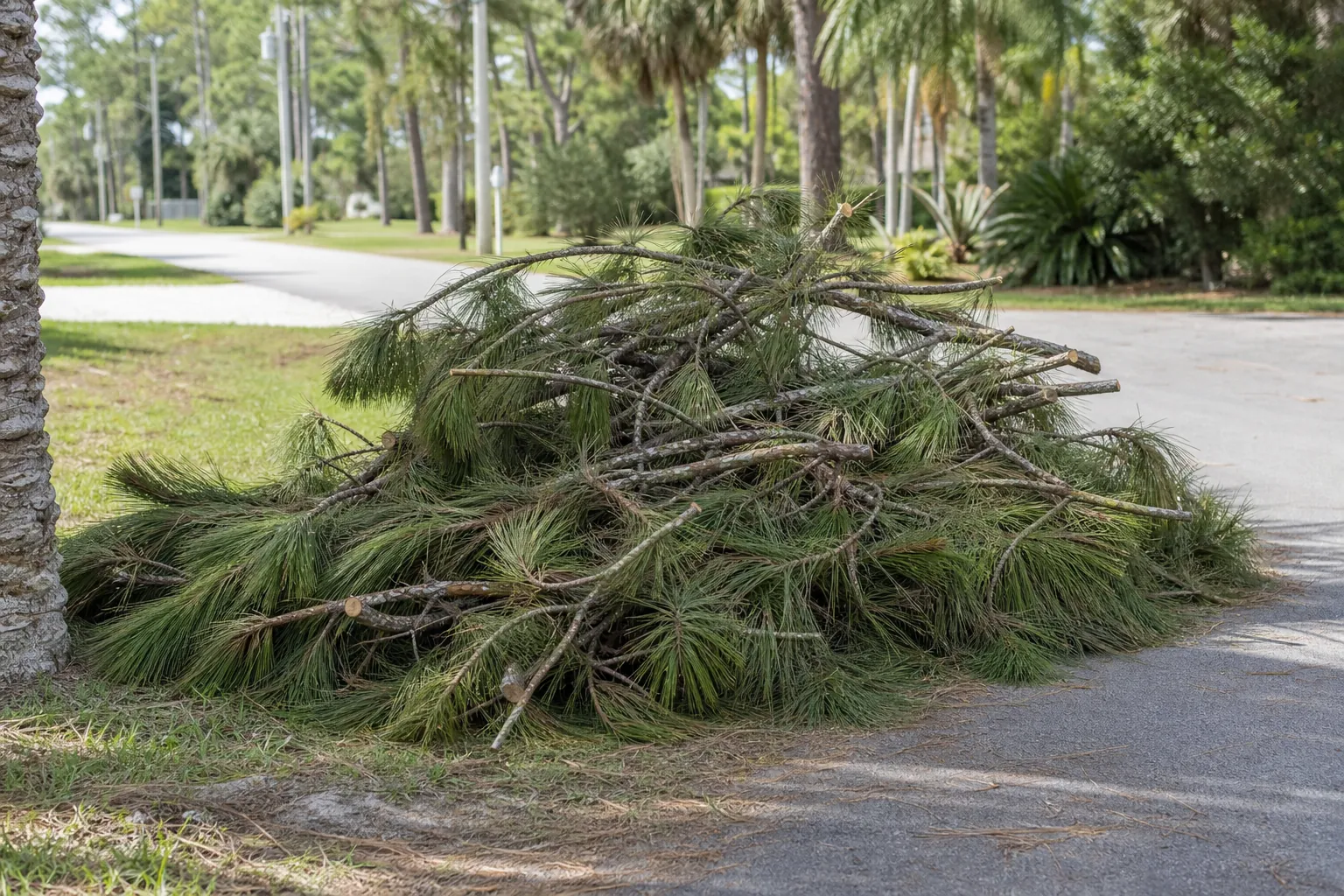
A pine branch pile is easier to discuss when its contents, size, and access conditions are clear. Before arranging pickup in Ormond Beach, separate the branches from unrelated material, identify anything hidden underneath, and check whether the pile can be approached without crossing an obstacle. These practical steps help you describe the situation accurately and ask useful questions before making a decision.
Start by Checking What Is Actually in the Pile
Walk around the pile and identify everything it contains. Pine limbs, needles, cones, and small twigs may be obvious on top, while other items can disappear beneath dense branches. Look for wire, fencing, bags, containers, lumber, rocks, soil, household items, and other materials that may have been added over time. Do not reach blindly into a compact pile. Instead, inspect it from several angles and carefully move only what you can handle safely.
If the pile contains more than pine branches, note each material before calling. A mixed pile is different from a clearly separated branch pile, and an accurate description supports a more useful conversation. Photos taken from the front, side, and a wider distance can also document the contents. If you cannot determine what is underneath, say so. Clear uncertainty is more helpful than guessing, especially when the pile has been sitting for a while or was created by several people.
Choose a Clear and Practical Placement Area
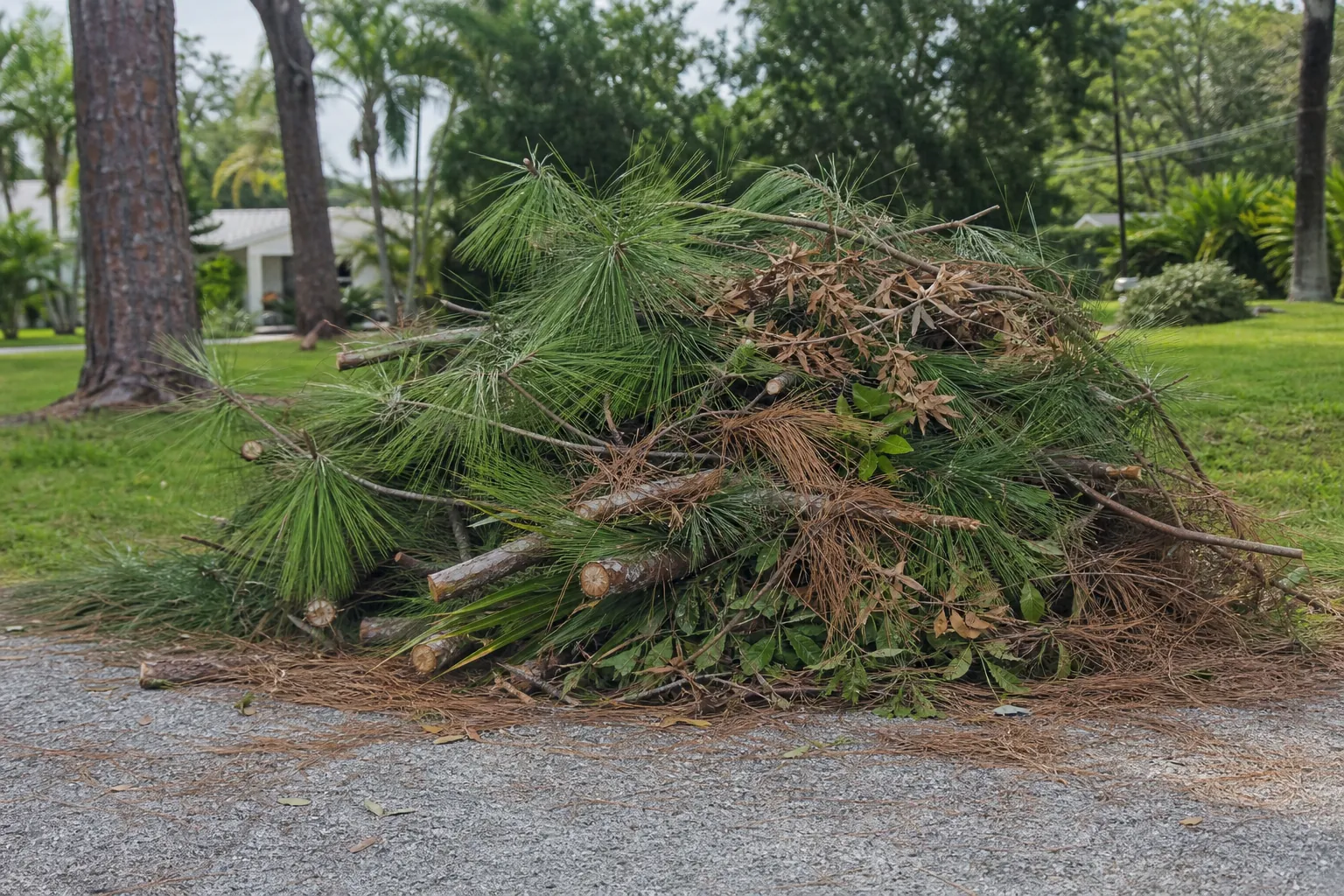
Placement affects how straightforward the pickup discussion can be. Keep the pile in a visible area with a practical approach, but do not move it into a road, sidewalk, drainage feature, or another space where it may obstruct people or vehicles. Consider overhead and ground-level obstacles, including branches, wires, fences, parked vehicles, gates, landscaping, and soft ground.
Before relocating anything, decide whether moving the pile is necessary and safe. Large pine limbs can be awkward, heavy, or unstable. If the branches are already stacked in a reasonably accessible location, leave them in place and describe the site when you call. If access is narrow, measure the gate or opening rather than estimating. Also note turns, slopes, low limbs, and surfaces that could affect the approach. Never assume equipment can cross a lawn, driveway edge, or landscaped area. Ask first and provide photos that show the full route to the pile.
Organize the Branches Without Creating New Hazards
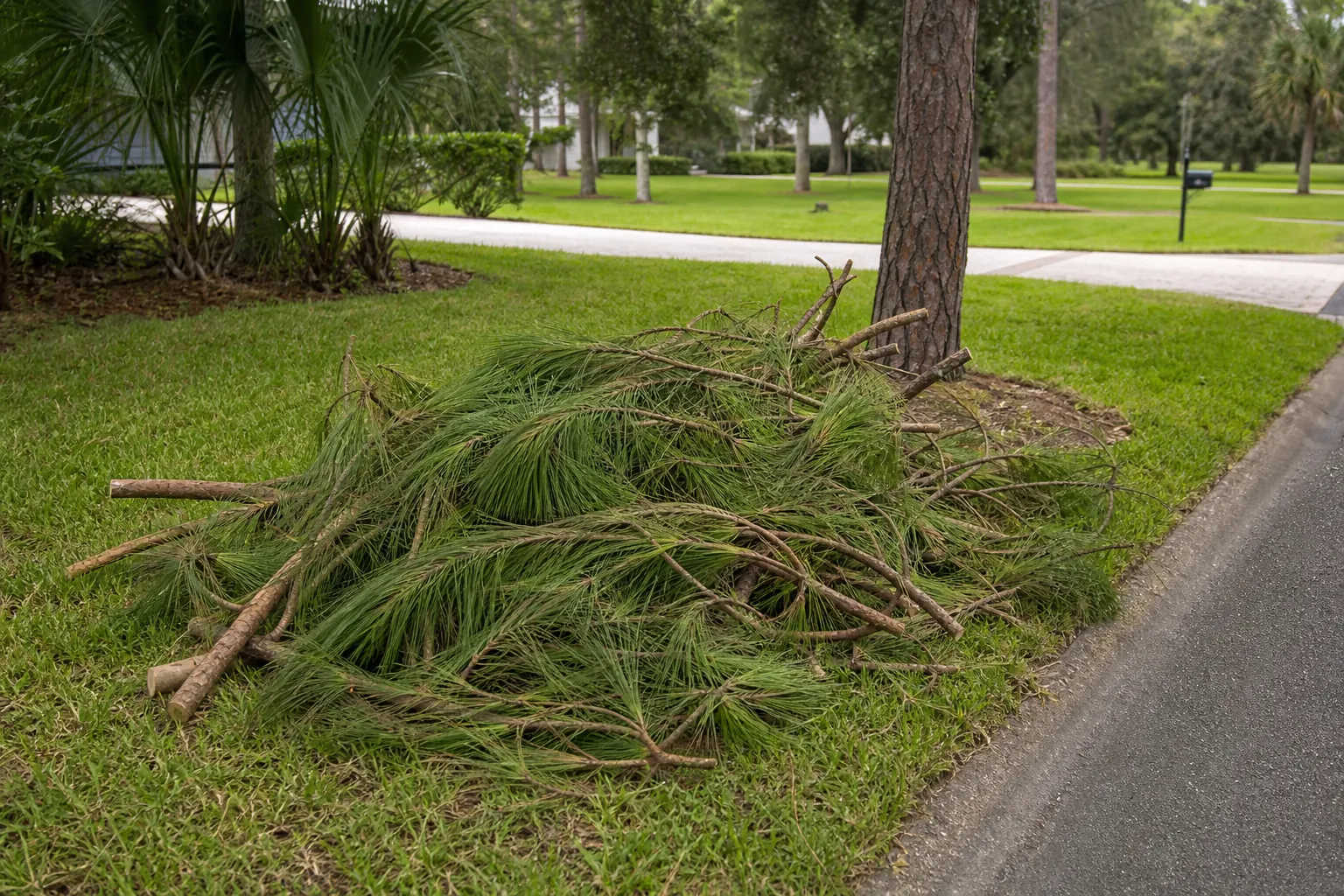
A tidy pile does not need to be perfectly bundled. The goal is to keep pine branches together, visible, and separate from materials that are not part of the pile. Position loose limbs so they do not extend into a walkway or vehicle path. Avoid creating a tall, unstable stack that can roll, shift, or collapse. Do not place branches against a gate, fence, structure, utility feature, or parked vehicle.
Use a simple preparation checklist:
- Keep pine branches and related natural debris together.
- Remove visible trash, wire, rocks, soil, and unrelated items.
- Keep the pile away from routine pedestrian and vehicle movement.
- Photograph the pile from multiple angles for scale and context.
- Measure the pile's approximate length, width, and height.
- Record any gate, slope, overhead obstruction, or narrow approach.
Do not burn the pile or use powered cutting equipment solely to make it look smaller. If a limb is too large or hazardous for you to move safely, leave it and mention that detail during the call.
Gather Details That Support an Informed Decision
Before calling, write down the property address, where the pile sits on the property, and how it can be approached. Estimate dimensions with a tape measure when practical. A familiar object in a photograph can help show scale, but actual measurements are more useful than labels such as small, medium, or large. Count separate piles and explain whether they contain similar material.
Also note when the pile was created and whether it is dry, freshly cut, compacted, or spread across a broad area. Mention muddy ground, steep grades, locked gates, pets, parked vehicles, or scheduled work that may affect access. If another person must approve access, clarify that before arranging anything.
Cost can depend on several job-specific details rather than one general description. For a broader overview of questions that may influence pricing, read grapple truck pickup cost factors in Daytona Beach. Then use your measurements, photos, and access notes to describe your Ormond Beach pile precisely.
Confirm Expectations Before Pickup Is Arranged
A final conversation should cover the pile itself and the conditions around it. Ask whether the described contents are appropriate, whether materials need further separation, and whether the current location provides suitable access. Confirm what photos or measurements are helpful. If the pile changes after that conversation, provide an update rather than assuming the original discussion still applies.
Review the area again before the planned pickup. Remove movable obstacles only when doing so is safe and authorized. Keep vehicles, toys, hoses, and other personal items away from the approach. Make sure gates can be opened and that access has been approved by the property owner or responsible party. If weather changes the ground conditions, communicate that information.
Do not rely on assumptions about timing, equipment clearance, or accepted materials. Direct questions are the best way to avoid confusion. A short, accurate description of the pile, supported by current photos and measurements, gives Daytona Grapple Trucks useful information for discussing the situation with you.
Call to Discuss Your Pine Branch Pile
For a calm, direct conversation about a pine branch pile in Ormond Beach, call Daytona Grapple Trucks at (386) 481-7913. Have your photos, approximate measurements, material details, and access notes ready.
Call (386) 481-7913 to talk through next steps.