
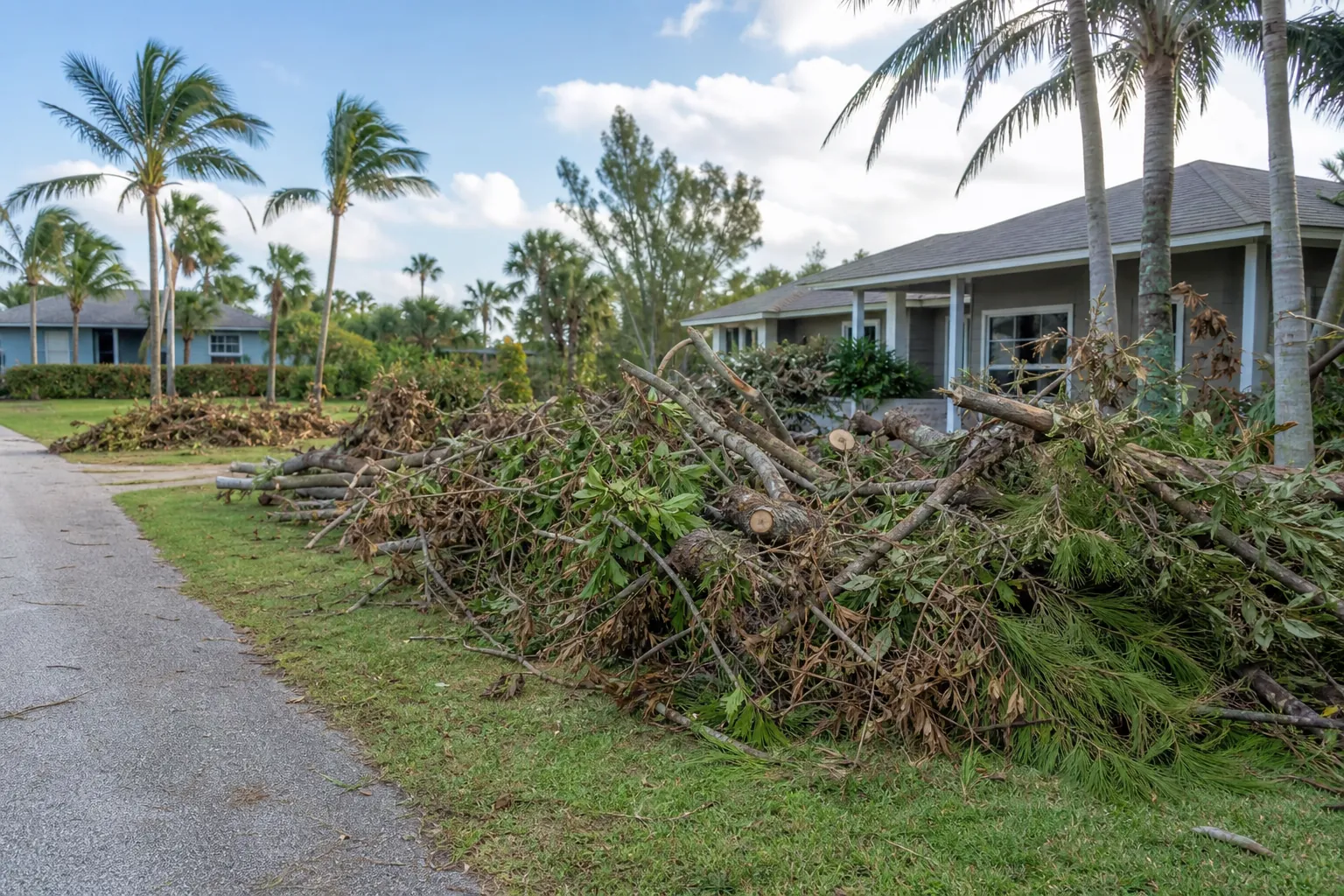
After a hurricane, clearing a yard can feel urgent, but where and how you place debris matters. A well-planned pile is easier to assess, keeps important access points open, and reduces the chance that cleanup creates another problem. Before moving anything, check the property for immediate hazards and follow current local instructions for storm debris. Then use the steps below to create an orderly staging area while you decide how the material will be handled.
Check the Area Before Moving Yard Debris
Start with a slow inspection rather than immediately dragging branches into one pile. Look for downed or low utility lines, unstable trees, hanging limbs, standing water, damaged structures, sharp objects, and blocked exits. Do not touch debris that is on or near a utility line. Keep people and pets away from uncertain areas, and report utility hazards through the appropriate local channel.
Next, identify the routes people need to use. Preserve a clear path from the home to the street, along with access to doors, gates, vehicles, utility equipment, and any area that may need inspection or repair. If moving a limb would require cutting, lifting beyond your ability, climbing, or working beneath unstable material, leave it in place until an appropriate professional can evaluate it.
Take photographs before moving major debris, especially when it is connected to property damage. Documentation may be useful when speaking with an insurer, property manager, contractor, or cleanup provider.
Choose a Practical Debris Staging Location
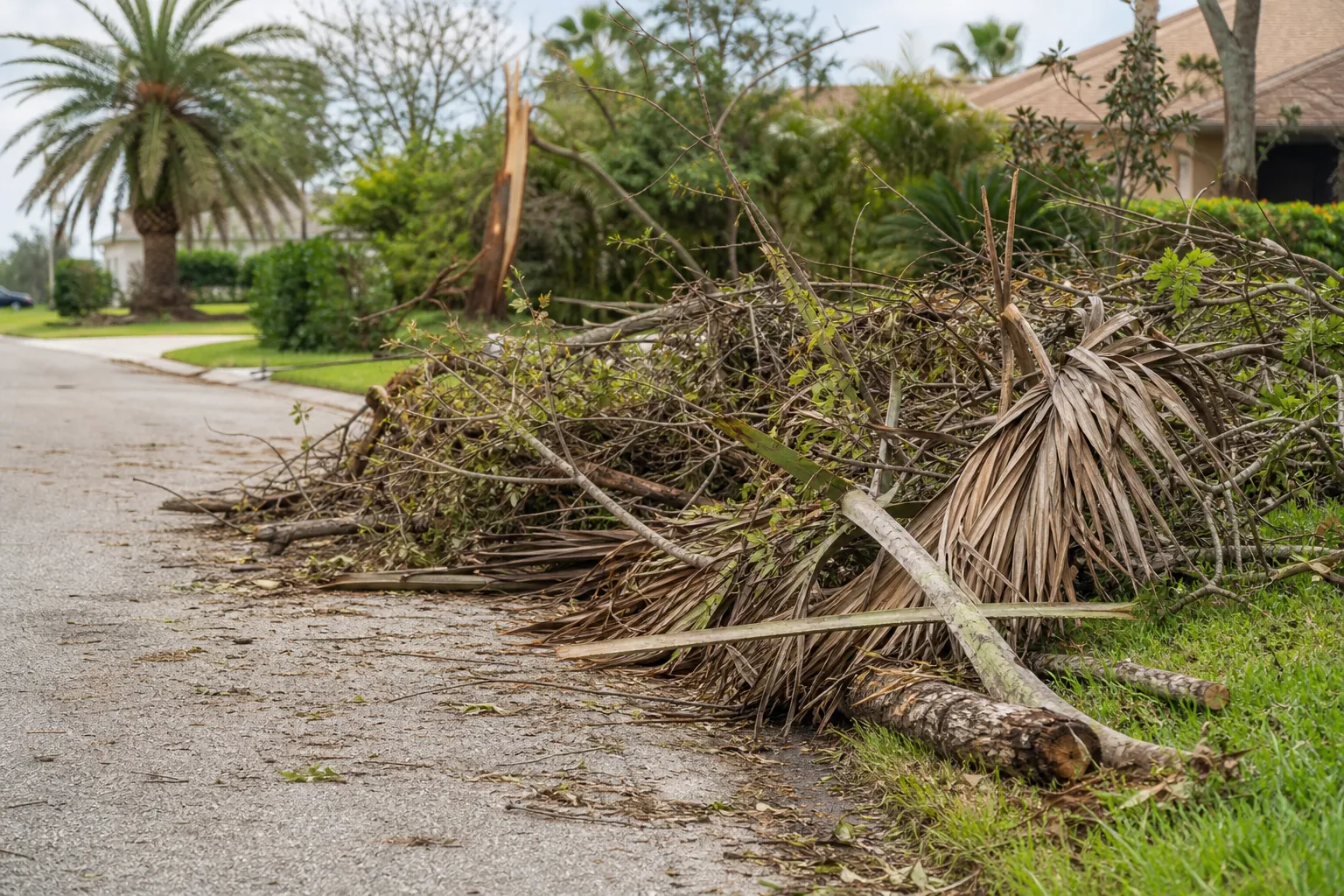
Select a staging point on your property that can hold the expected volume without blocking daily access. The location should be visible and reachable, but it should not obstruct the road, sidewalk, driveway, drainage route, mailbox, fire hydrant, or neighboring property. Avoid placing material where it could limit a driver's view at an intersection or driveway entrance.
Account for overhead clearance as well as ground access. Tree canopies, wires, signs, fences, parked vehicles, and narrow gates can all affect whether a pile is practical to reach. Soft, saturated ground may not be suitable for vehicles or heavy material. Do not assume that an open-looking lawn can support equipment after prolonged rain.
Local storm instructions may specify where eligible debris should be placed and when collection will occur. Review the latest official guidance before using a roadside area. If you are considering a private pickup, call first and describe the proposed location rather than moving everything twice.
Separate Yard Waste From Other Storm Materials
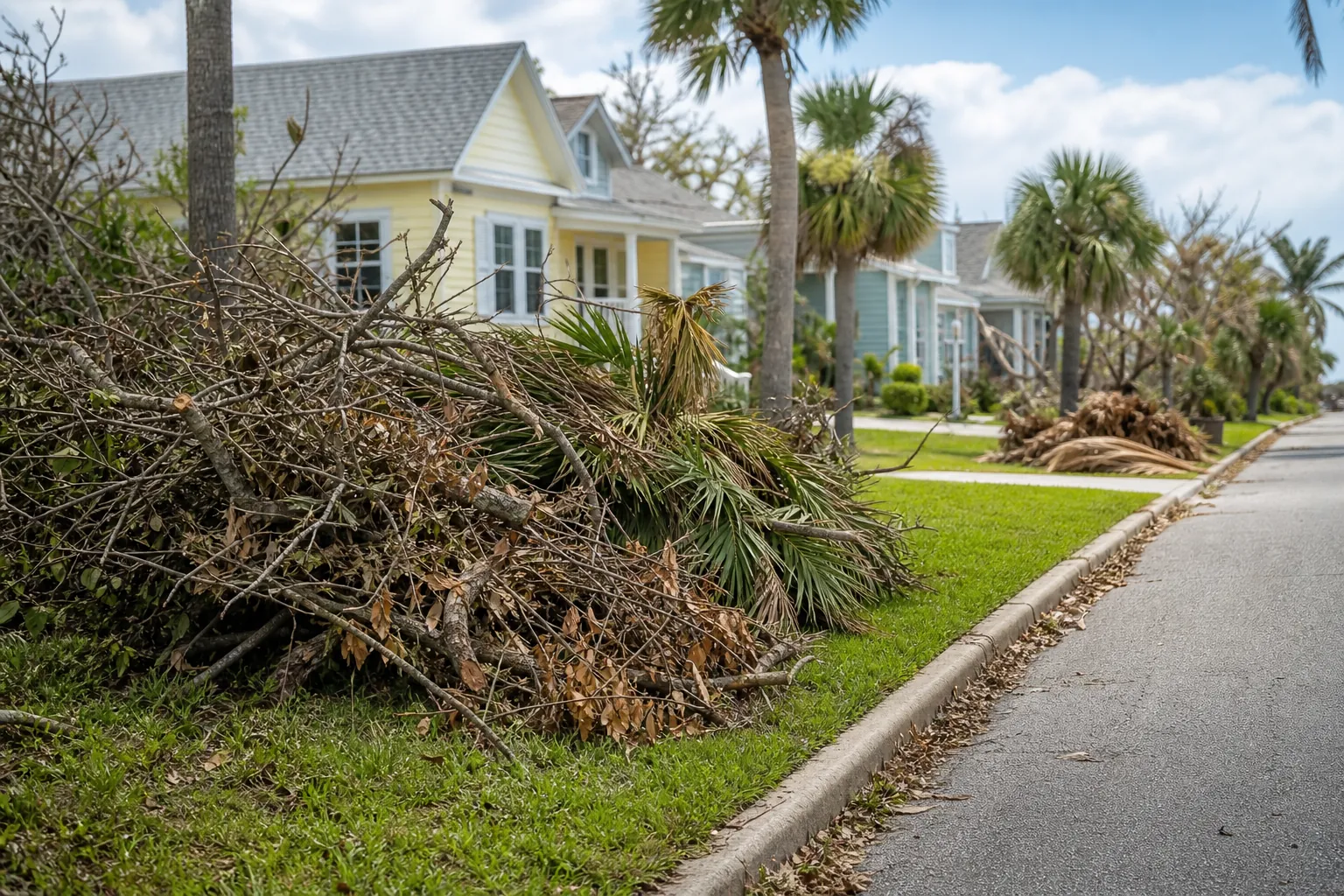
Keep vegetative yard debris separate from unrelated materials. Mixing categories can make the pile harder to evaluate and may conflict with local collection rules. Leaves, branches, limbs, and similar vegetation should not be combined automatically with damaged household goods, construction material, appliances, electronics, chemicals, fuel containers, or other potentially hazardous items.
- Create distinct piles for vegetation and other material categories.
- Keep bags, loose trash, metal, glass, and household items out of the yard debris pile.
- Set aside sharp or hazardous objects where people cannot encounter them accidentally.
- Do not burn storm debris unless current rules expressly allow it and all requirements are met.
- Keep pile contents visible enough to identify what is included.
If you are unsure how a particular item should be classified, pause before adding it. Check local instructions or ask the party expected to handle the material. Clear separation from the beginning is usually easier than sorting a large mixed pile later.
Build a Stable Pile Without Creating Hazards
Place larger branches down first when you can do so safely, then add smaller pieces. Keep the pile compact and low enough that it is not likely to shift, roll, or hide hazards. Point cut or broken ends inward when practical. Avoid leaning debris against a house, fence, vehicle, utility box, tree, or other structure that could be damaged if the pile settles.
Do not pack material into drainage swales, ditches, storm drains, or places where runoff needs to move. Hurricane debris can redirect water and worsen localized flooding. Leave enough room around the pile to inspect it, and keep children and pets away.
Consider how the pile will change in wind or rain. Light material can scatter, while wet vegetation can become heavier and less stable. If more cleanup is expected, reserve room to add debris without extending the pile into a travel lane. Stop work when conditions become unsafe, particularly during high winds, lightning, darkness, or heavy rain.
Prepare Useful Details Before Arranging Pickup
Once the debris is staged, gather information that can help you evaluate the next step. Note the main types of vegetation, the approximate footprint and height of the pile, its distance from the road or driveway, and any access constraints. Photos taken from several angles can make an initial conversation more productive. Mention gates, overhead wires, low branches, soft ground, tight turns, parked vehicles, or anything else that may affect access.
Cost can depend on multiple details rather than a single visible dimension. For a broader planning discussion, read grapple truck pickup cost factors in Daytona Beach. Do not rearrange a safe pile solely based on an assumption about equipment or pricing. First confirm what information is needed and whether the location is workable.
Also ask what materials should remain separate before pickup. A short conversation in advance can help you avoid mixing the pile or placing it where access is limited.
Discuss Your Staged Yard Debris
If you have post-hurricane yard debris in Daytona and want to discuss the pile, call Daytona Grapple Trucks calmly at (386) 481-7913. Be ready to describe the material, pile size, location, and access conditions.
Call (386) 481-7913 to talk through next steps.