
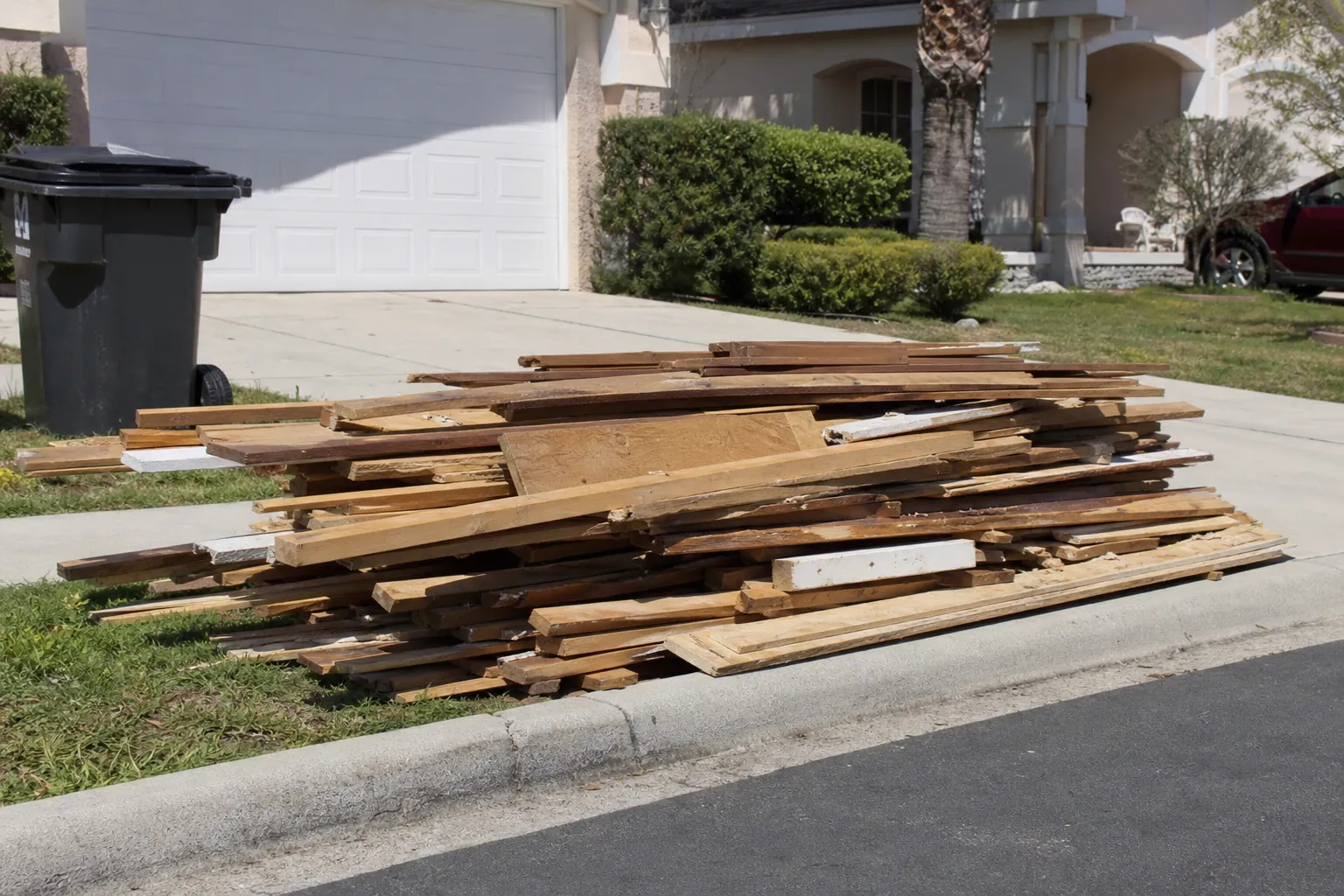
Remodeling can leave a difficult mix of lumber, trim, panels, cabinets, and packaging. Before arranging wood debris pickup in Daytona Beach, separate the material, choose an accessible staging area, and describe the pile accurately. Good preparation helps you determine whether the debris is ready for collection and what questions to ask. Because no specific pickup services are confirmed here, call Daytona Grapple Trucks at (386) 481-7913 to discuss the material and confirm whether pickup is available for your project.
Identify What Is Actually in the Remodeling Pile
Begin by inspecting the entire pile rather than treating every item as wood. Remodeling debris may contain dimensional lumber, plywood, molding, cabinetry, flooring, pallets, cardboard, plastic wrap, insulation, fasteners, hardware, glass, tile, drywall, or other materials. Make a simple written inventory and note anything that is not clearly wood.
Pay particular attention to items that can create handling concerns, including protruding nails, screws, broken glass, sharp metal edges, and long boards. Do not assume that mixed material will be accepted merely because most of the pile is lumber. Acceptance requirements can vary, so describe the contents when you call.
Photographs can make that description more precise. Take one image showing the full pile and several closer images of mixed sections, long pieces, cabinets, or unusual material. Include a familiar object for scale if the pile's dimensions are difficult to judge. Clear information helps both parties decide what must be separated before any pickup arrangement is made.
Separate Wood From Other Renovation Materials
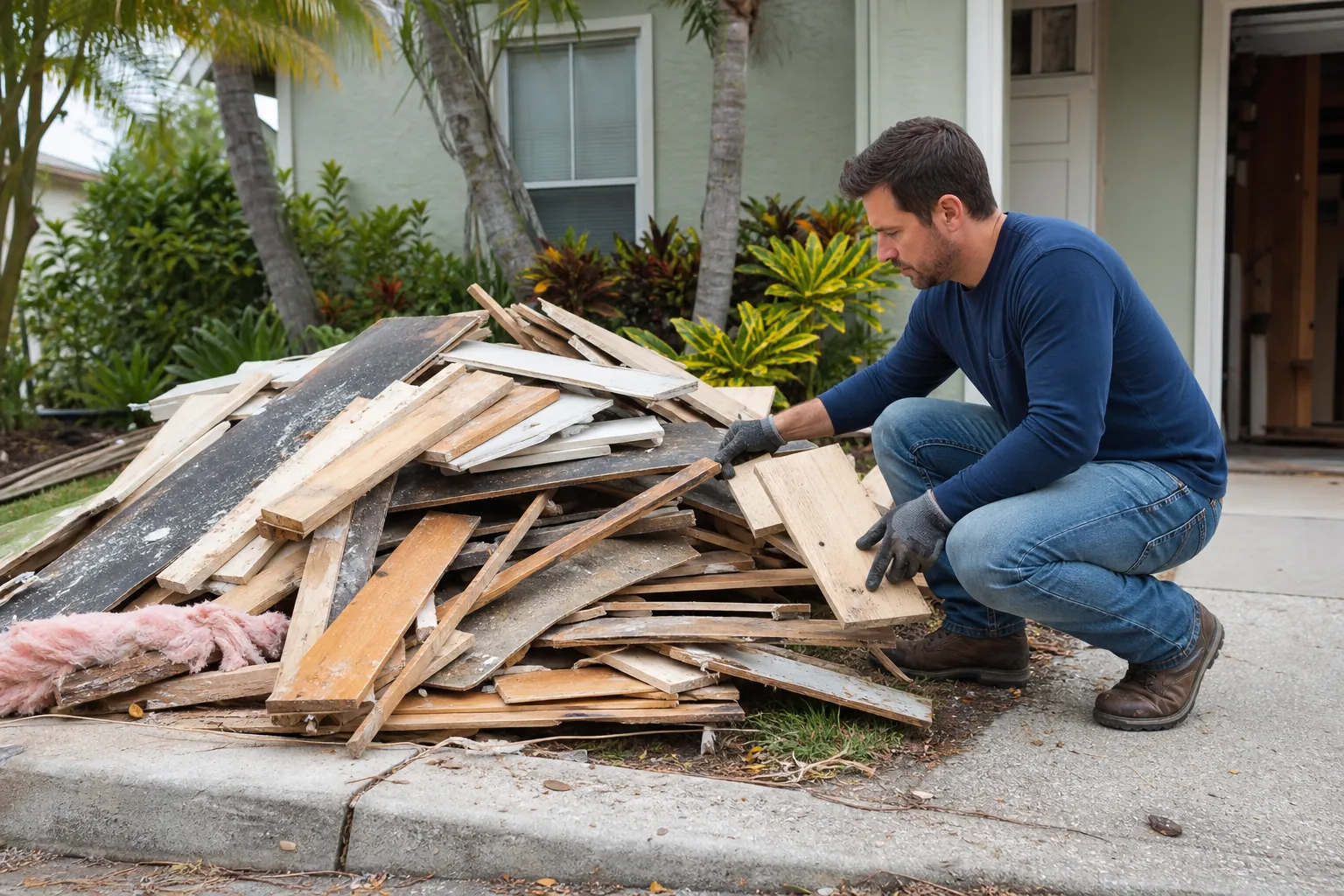
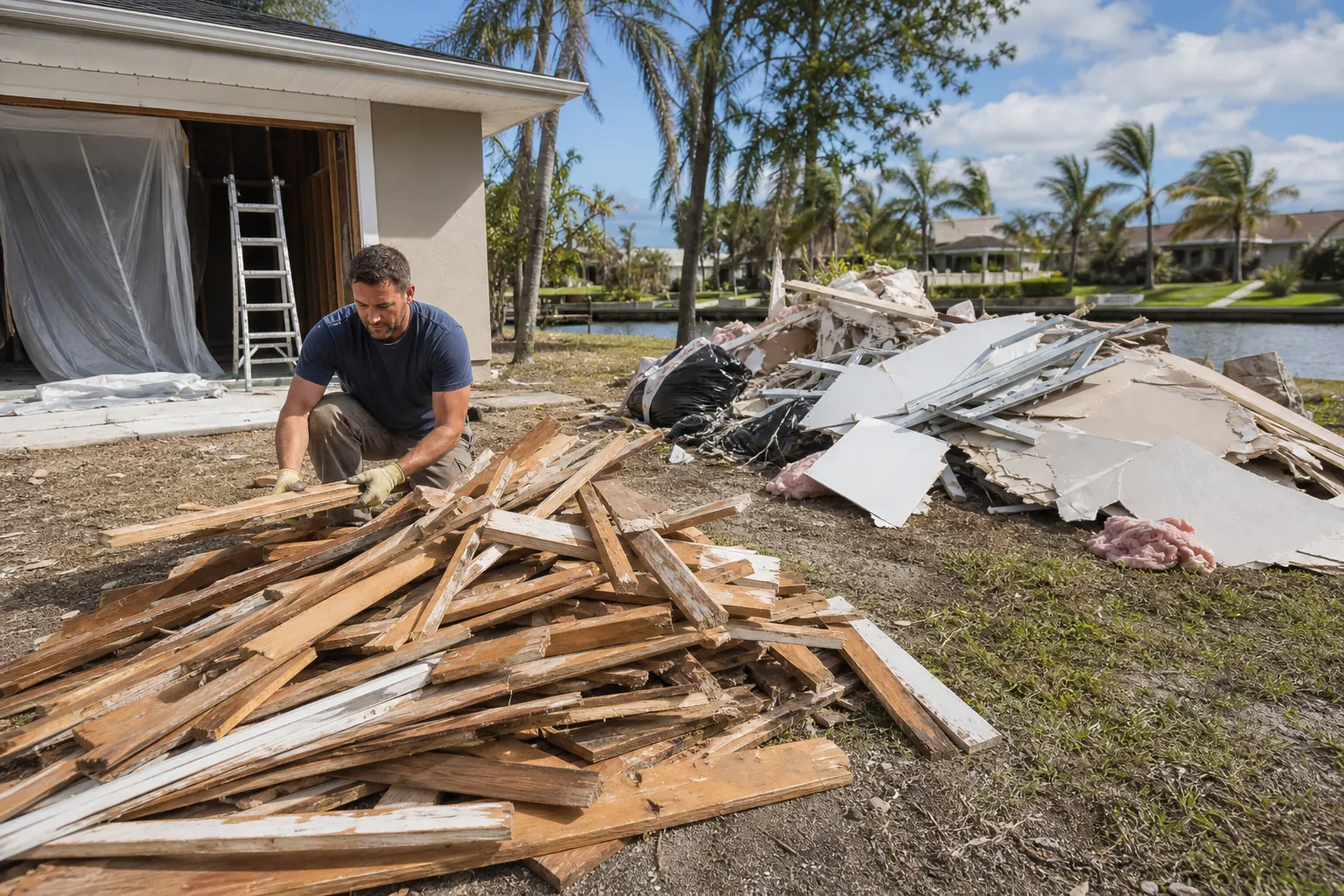
Sorting is easier before the pile becomes compacted or covered. Establish separate areas for wood and for materials such as drywall, tile, glass, metal, insulation, household trash, and packaging. If you are uncertain about an item, keep it aside until you can ask about it. This avoids hiding questionable material in the center of a wood pile.
Use a practical preparation sequence:
- Remove loose household trash, food containers, and unrelated waste.
- Group lumber, plywood, trim, and other wood pieces together.
- Place glass, tile, drywall, metal, and insulation in separate areas.
- Collect loose nails, screws, hinges, and small hardware when practical.
- Keep long boards visible instead of burying them beneath shorter pieces.
- Cover or isolate sharp ends so people can move near the pile safely.
Do not burn, bury, or conceal unwanted material. If you encounter paint, liquids, chemicals, sealed containers, or unidentified products, stop and determine the appropriate handling method before adding them to any pickup pile. When calling, list these items specifically instead of describing everything as general remodeling debris.
Choose a Clear and Reachable Staging Area
Pile location is as important as sorting. Select a stable area that can be clearly seen and approached without passing beneath low branches, wires, roof overhangs, or other overhead obstacles. Keep the pile away from vehicles, fences, mailboxes, landscaping, building corners, and materials you intend to keep. Do not place it where it blocks a sidewalk, road, shared drive, doorway, drainage route, or emergency access.
Consider the path to the pile. Gates, tight turns, soft ground, steep grades, parked vehicles, and narrow driveways may affect whether the location can be approached. Measure restrictive openings and mention them during your call. If access crosses property you do not control, obtain permission before making plans.
Local placement rules or property restrictions may also apply. Confirm what is permitted before staging debris near a street, curb, easement, association-managed area, or neighboring parcel. If you are unsure where to build the pile, call before moving heavy materials. It is easier to choose an appropriate location first than to relocate a completed pile later.
Build a Stable Pile and Document Its Size
Create one consolidated, visible pile when practical, but do not make it unstable. Lay long boards in the same general direction and keep loose scraps from spreading into travel areas. Avoid leaning lumber against buildings, fences, utility equipment, trees, or vehicles. Do not place materials on top of meters, drains, utility covers, irrigation components, or items that must remain accessible.
Measure the pile's approximate length, width, and height. Also count unusually long boards or large components such as cabinet sections and wood panels. Measurements do not replace an assessment, but they provide more useful information than phrases such as “a small pile” or “one room's worth.” Take updated photographs after sorting and consolidating the debris.
Cost discussions may consider more than the amount of material. Access, pile composition, preparation, and other project details can matter. For additional planning context, read grapple truck pickup cost factors in Daytona Beach. Then prepare your dimensions, photos, material list, access notes, and preferred timing before calling.
Confirm Details Before Treating the Pile as Ready
Before making a pickup decision, verify that the company has an accurate description of the debris and the property. Explain that the material comes from remodeling, then identify the wood types and every known non-wood component. Mention nails, screws, glass, metal hardware, painted pieces, long boards, cabinets, or unidentified items. Ask whether further sorting or different placement is needed.
Provide the pile dimensions and explain where it sits in relation to the driveway, street, structure, fence, gate, and overhead obstacles. Share access limitations, including soft ground, narrow entrances, low branches, wires, tight turns, or parked vehicles. Ask what must remain clear before arrival and whether you should avoid changing the pile after it has been discussed.
Finally, keep children, pets, workers, and vehicles away from the staging area. Do not add last-minute materials without disclosing them. If weather shifts or covers the pile, check that its contents and boundaries remain visible. These steps support a clear conversation, but specific acceptance and scheduling details must be confirmed directly.
Discuss Your Remodeling Debris
Have your photos, measurements, material list, and access notes ready. For a calm review of the next step, call Daytona Grapple Trucks at (386) 481-7913. Describe the pile fully and confirm availability, material acceptance, preparation requirements, and placement before relying on a pickup plan.
Call (386) 481-7913 to talk through next steps.