
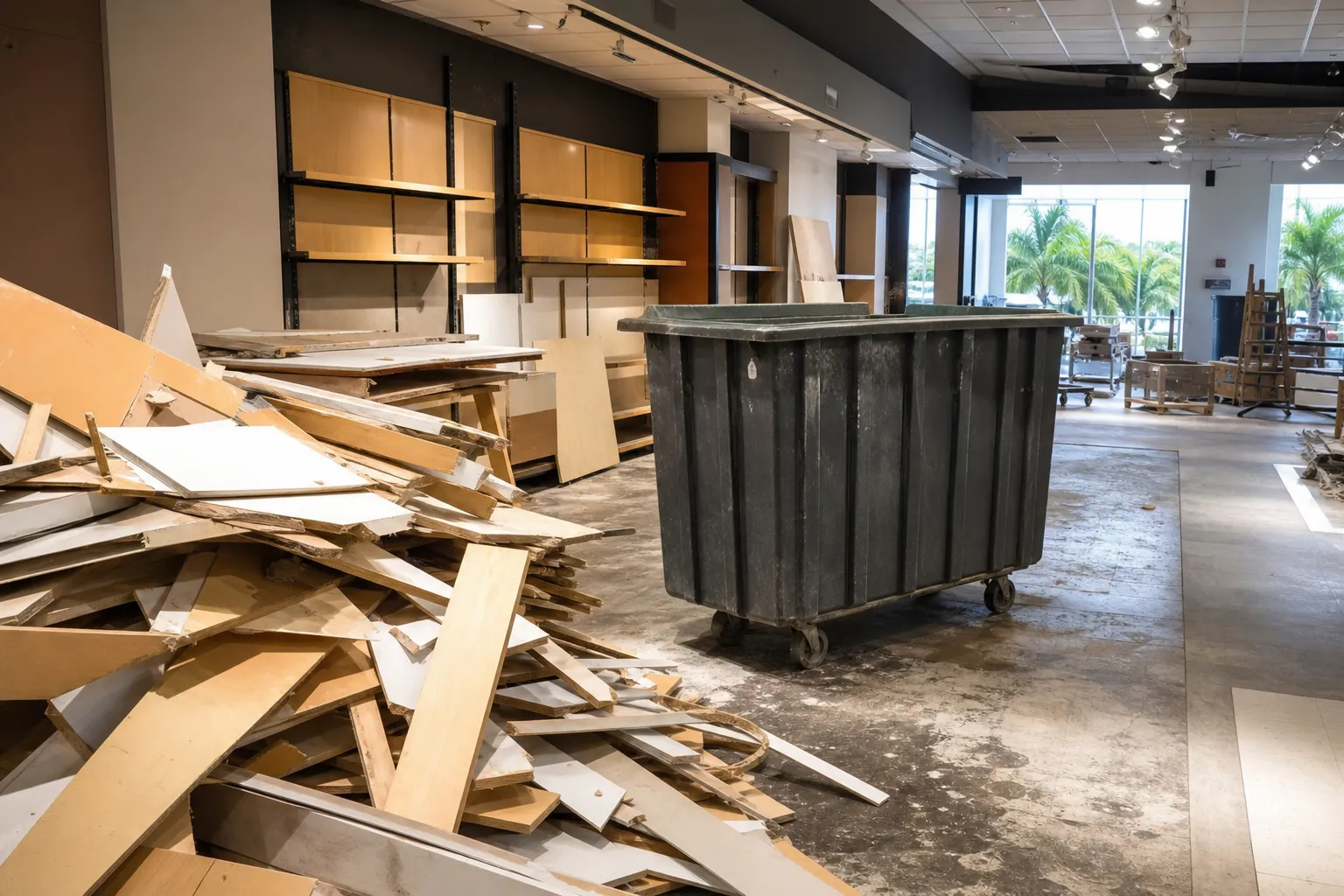
Closing, renovating, or turning over a retail space can produce more debris than expected. Shelving, counters, display units, damaged inventory, packaging, and construction scraps quickly fill stockrooms and loading areas. Professional retail store cleanout debris removal helps Florida property owners, managers, contractors, and tenants clear bulky material without letting the project disrupt neighboring businesses or delay the next phase of work.
Daytona Grapple Trucks provides debris hauling for retail properties that need an efficient way to remove large, loose, or awkward materials. A grapple truck can collect many types of debris directly from an accessible pile, reducing the amount of manual loading required and helping the site move toward a cleaner, more usable condition.
When retail properties need debris hauling
Retail cleanouts happen for many reasons. A tenant may be vacating at the end of a lease, a property owner may be preparing a unit for a new occupant, or a contractor may be remodeling an active store. In each situation, debris must be managed carefully so it does not block entrances, fire lanes, parking spaces, sidewalks, or loading zones.
Common projects include department renovations, store closures, shopping plaza turnovers, storm cleanup, fixture replacement, and removal of materials left behind by previous tenants. Grapple truck hauling is especially useful when the debris can be consolidated outdoors in a safe, reachable area. This allows the operator to collect the pile mechanically and transport it away for appropriate handling.
Materials commonly removed from store cleanouts
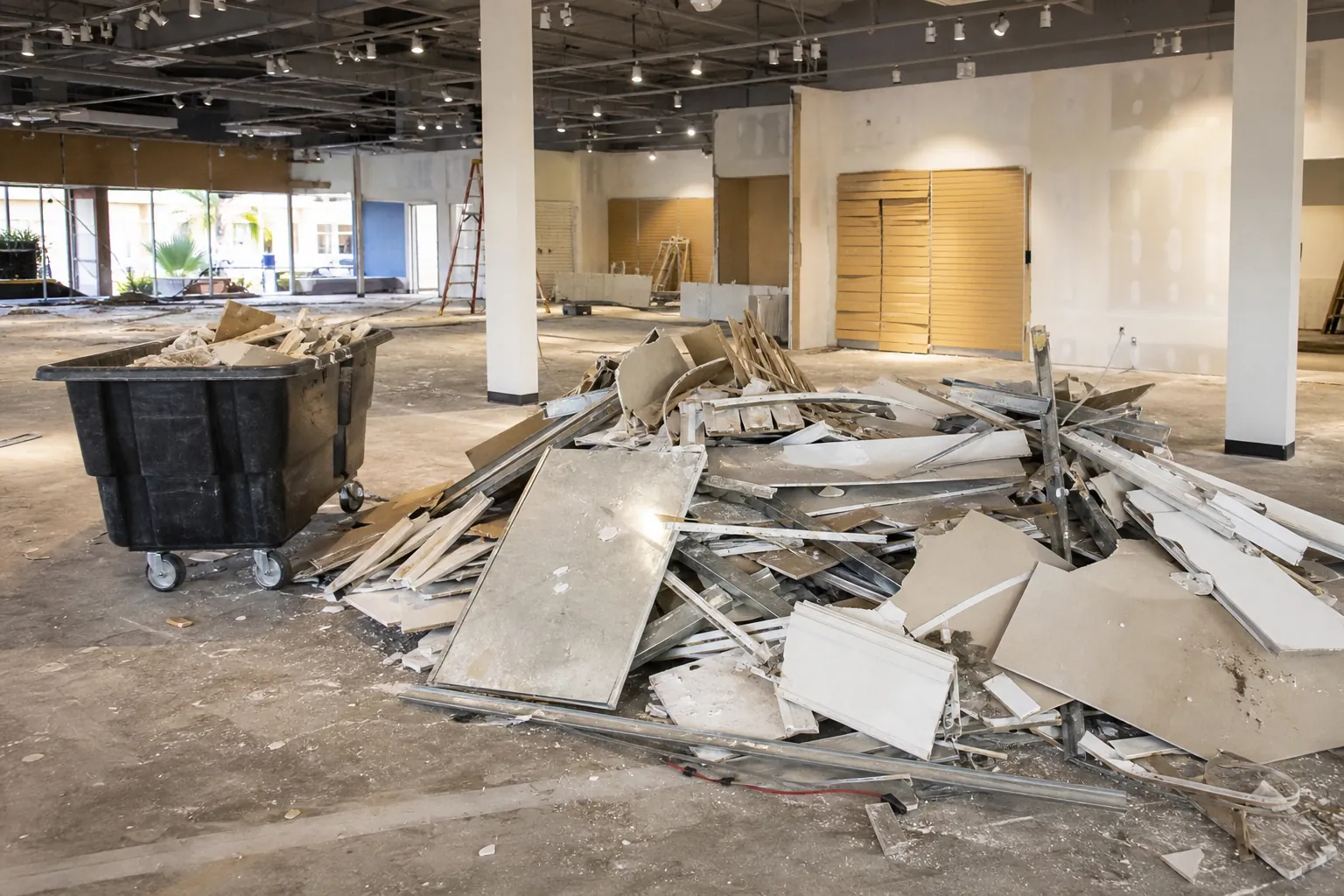
Retail debris varies based on the type of business and the scope of the project. A small boutique may have racks and display tables, while a grocery store or big-box unit can generate substantial quantities of shelving, pallets, wood, and renovation material. Identifying the waste in advance makes scheduling and equipment planning easier.
Typical retail cleanout loads may include:
- Wooden shelving, counters, cabinets, and display platforms
- Metal racks, pegboard supports, and non-hazardous store fixtures
- Cardboard, empty packaging, and discarded promotional displays
- Pallets, crates, lumber, and broken shipping materials
- Drywall, trim, ceiling materials, and renovation scraps
- Damaged outdoor signs and non-electrical display components
- Storm-damaged branches and vegetative debris around the property
- General bulky debris approved before the scheduled pickup
Some materials require specialized handling and should not be mixed into a general debris pile. Paint, chemicals, batteries, fuels, refrigerants, medical waste, and other hazardous items may be restricted. Refrigerated cases, electronics, tires, appliances, and materials containing asbestos may also require separate arrangements. Sharing clear details about the load before service helps prevent delays and supports responsible disposal.
How grapple truck service supports a faster cleanout
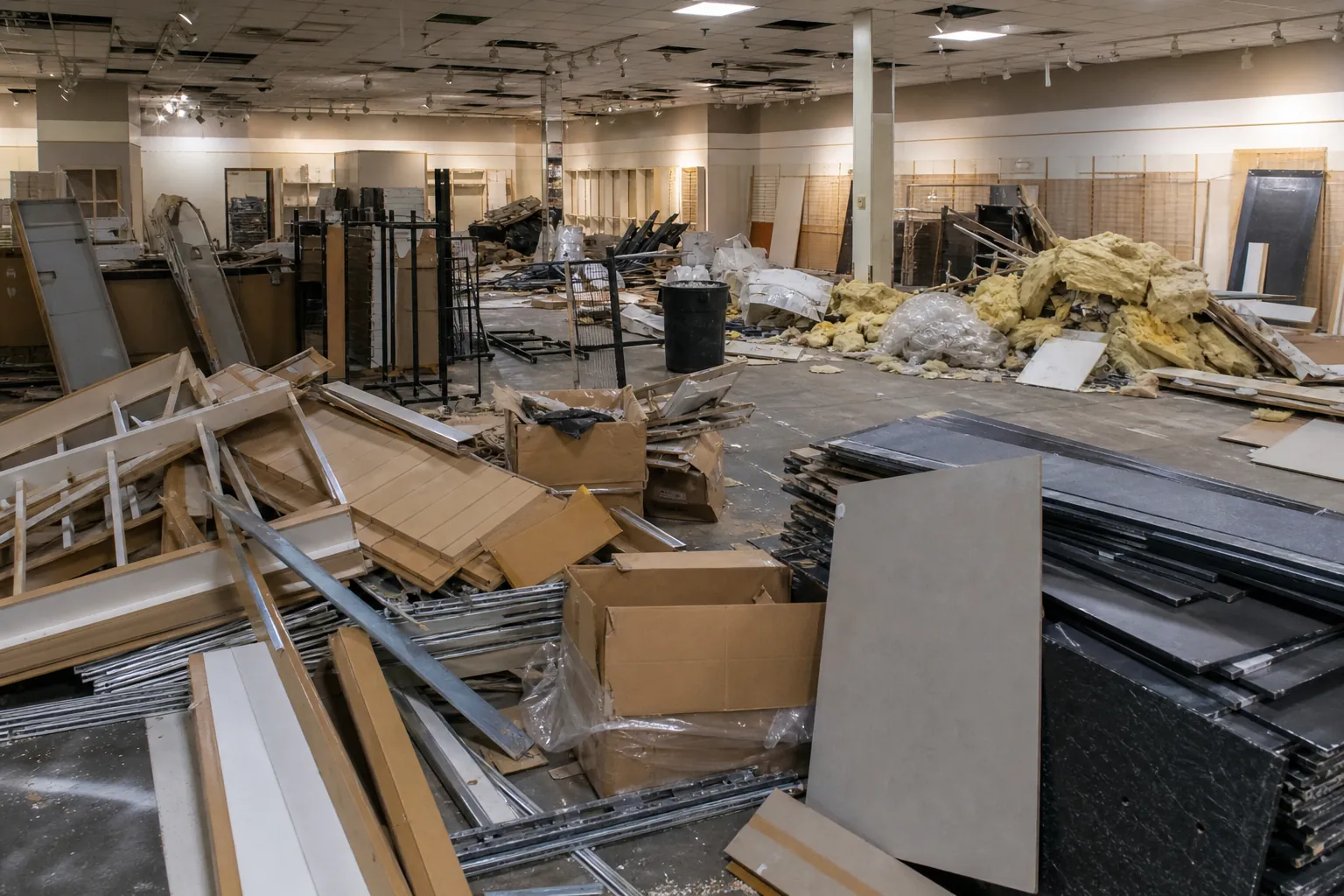
A grapple truck combines a hauling container with a hydraulic arm designed to lift debris. Instead of placing every item into a small container by hand, crews can stage approved materials where the truck can safely reach them. The grapple then lifts material into the truck body for transport.
This approach can be practical for bulky fixture pieces, loose construction debris, wood, and other materials that are difficult to load manually. It can also reduce repeated handling, which helps contractors and store teams stay focused on demolition, repairs, inventory transfer, or reopening preparations.
Site access is an important part of the process. The truck needs firm, legal access and enough overhead clearance to operate the grapple arm. Low power lines, covered loading docks, trees, signs, narrow alleys, soft ground, and tightly parked vehicles can affect where a pile should be placed. The service team can discuss access conditions before arrival so the pickup area is positioned effectively.
Preparing your Florida retail site for pickup
Good preparation makes retail store cleanout debris removal more predictable. Begin by separating approved debris from merchandise, donations, confidential records, hazardous materials, and anything that must remain on the property. Break down large fixtures when practical, but avoid creating sharp or unstable piles that could create a safety issue.
Choose a staging location that does not interfere with customers, neighboring tenants, emergency access, or normal traffic. If the store is in a managed shopping center, obtain permission before placing debris in a shared parking or loading area. Property managers may have rules about service hours, pavement protection, gate access, and vendor insurance.
Keep the pile away from buildings, utility meters, sprinkler equipment, vehicles, fences, and overhead obstructions. Materials should be reasonably consolidated rather than scattered around the site. Photos can help the hauling provider understand the approximate volume, material type, access route, and any obstacles before scheduling.
Planning service around an active shopping property
Many retail cleanouts take place while other stores remain open. Coordinating the hauling window can help limit noise, congestion, and conflicts with deliveries. Early communication with the property manager, contractor, and store representative keeps everyone aware of where the truck will enter, operate, and exit.
Consider delivery schedules, peak customer hours, school traffic, local events, and parking demand. A clear route should be maintained from the property entrance to the debris pile. If gates or loading areas are locked, arrange access before the truck arrives. Someone familiar with the project should also be available by phone in case the operator needs clarification about the approved materials.
Florida weather deserves attention as well. Heavy rain can soften unpaved areas, spread loose debris, and complicate access. Secure lightweight cardboard and display materials so wind cannot carry them across the property. After major storms, confirm that the approach is clear of downed lines, unstable limbs, standing water, and other hazards.
Choosing a debris hauling partner
A suitable hauling provider should ask about the debris type, estimated volume, pile location, and site conditions. Clear communication matters because retail properties often have tight operating schedules and specific access requirements. It is also helpful to discuss whether the project will require one pickup or staged service as demolition and cleanout work progresses.
Daytona Grapple Trucks understands that commercial debris removal should support the larger project rather than create another obstacle. By planning the pickup area, confirming acceptable materials, and coordinating access, property teams can reduce clutter and prepare the site for repairs, inspections, leasing activity, or the next tenant buildout.
Schedule a retail debris pickup
If your Florida retail property has fixtures, wood, packaging, renovation waste, or other approved bulky debris ready for removal, gather a few photos and basic details about the site. Note the property address, material types, approximate pile size, access restrictions, and preferred timing.
Call Daytona Grapple Trucks at (386) 481-7913 to discuss your retail cleanout and determine whether grapple truck service fits the project. A straightforward plan can help clear valuable space and keep your turnover, renovation, or closure moving forward.
Call (386) 481-7913 to talk through next steps.