
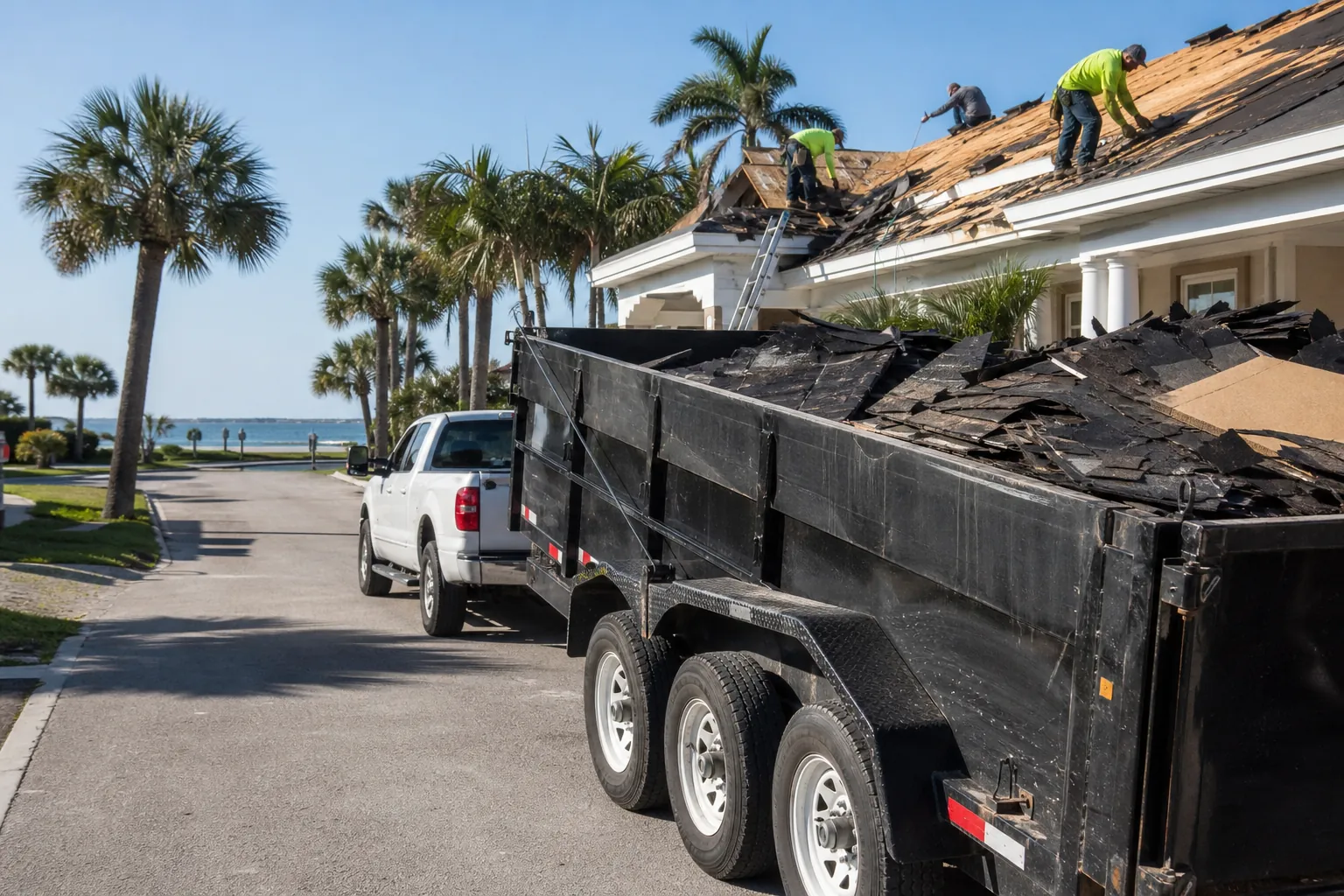
A roof replacement creates a disposal problem almost as soon as the first shingles come off. Old roofing, underlayment, nails, flashing, and damaged decking need somewhere to go without blocking the work area or leaving loose material around the property.
For homeowners and roofing contractors in Ponce Inlet, the best cleanup plan starts before demolition. Knowing what will be removed, where it can be staged, and how a hauling truck will reach it helps prevent avoidable delays.
Daytona Grapple Trucks is a local contact for discussing grapple truck debris hauling. This guide explains how to prepare a roof tear-off load, evaluate pickup access, and coordinate removal around a roofing project. Anyone searching for roof tear off debris removal daytona can use these same planning steps for a property in Ponce Inlet.
Understand What A Roof Tear-Off Leaves Behind
Roof debris is not one uniform material. Asphalt shingles behave differently from long metal panels, and rotten plywood creates different loading concerns than small pieces of flashing. A useful hauling estimate starts with an accurate description of the waste.
The number of existing roof layers also matters. Removing two layers of shingles can generate substantially more weight than removing one, even when the roof area is identical. Repairs uncovered during demolition may add decking or other materials that were not included in the original cleanup plan.
Ask the roofer to describe the expected waste before arranging pickup. Roof size alone is not enough to determine truck capacity or price. Material type, weight, pile shape, and site access all affect the hauling approach.
- Identify whether the project involves asphalt shingles, tile, metal roofing, or a combination of materials.
- Tell the hauling provider how many existing roofing layers the contractor expects to remove.
- Include underlayment, flashing, vents, and anticipated damaged decking in the debris description.
- Flag any separate waste streams, such as packaging or leftover new materials, rather than assuming everything belongs in one load.
Never assume every roofing material is accepted under the same disposal arrangement. Confirm acceptance before mixing the pile, especially if the job involves unusual coatings, liquids, suspected hazardous materials, or waste unrelated to the roof.
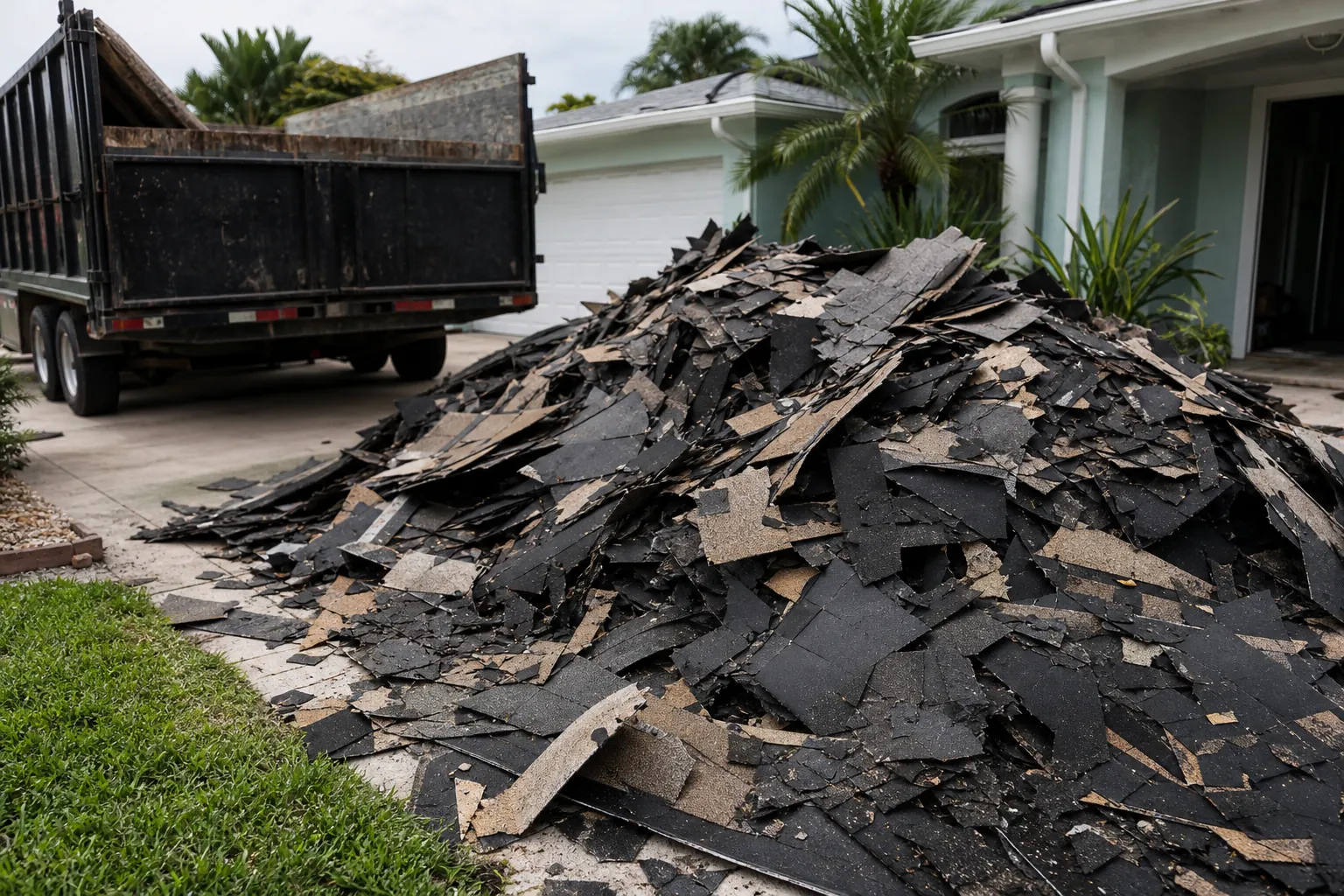
Decide Whether Grapple Pickup Fits Your Site
A grapple truck uses a mechanical loading attachment to lift suitable debris from an accessible staging area. This can be useful when a roofing crew has space to accumulate material and wants to coordinate hauling without keeping a container on the property throughout the project.
However, a grapple truck does not make every location suitable for loose debris pickup. The truck needs a safe approach and operating position, and the loading equipment needs adequate clearance. A pile behind a fence or beneath utility lines may be impractical even if it looks close to the street.
Loose roofing debris also deserves special attention because it contains small fragments and fasteners. A grapple can load a pile, but mechanical loading should not be treated as a substitute for detailed nail collection or final hand cleanup.
A dumpster may be preferable when immediate containment is essential or when there is no approved open staging space. A trailer or another hauling method may fit a constrained site. Discuss the actual property layout rather than choosing solely by equipment name.
Before committing to a method, share photos showing the proposed pile location, driveway entrance, nearby structures, and overhead conditions. The provider can then discuss whether grapple pickup is appropriate and what preparation may be necessary.
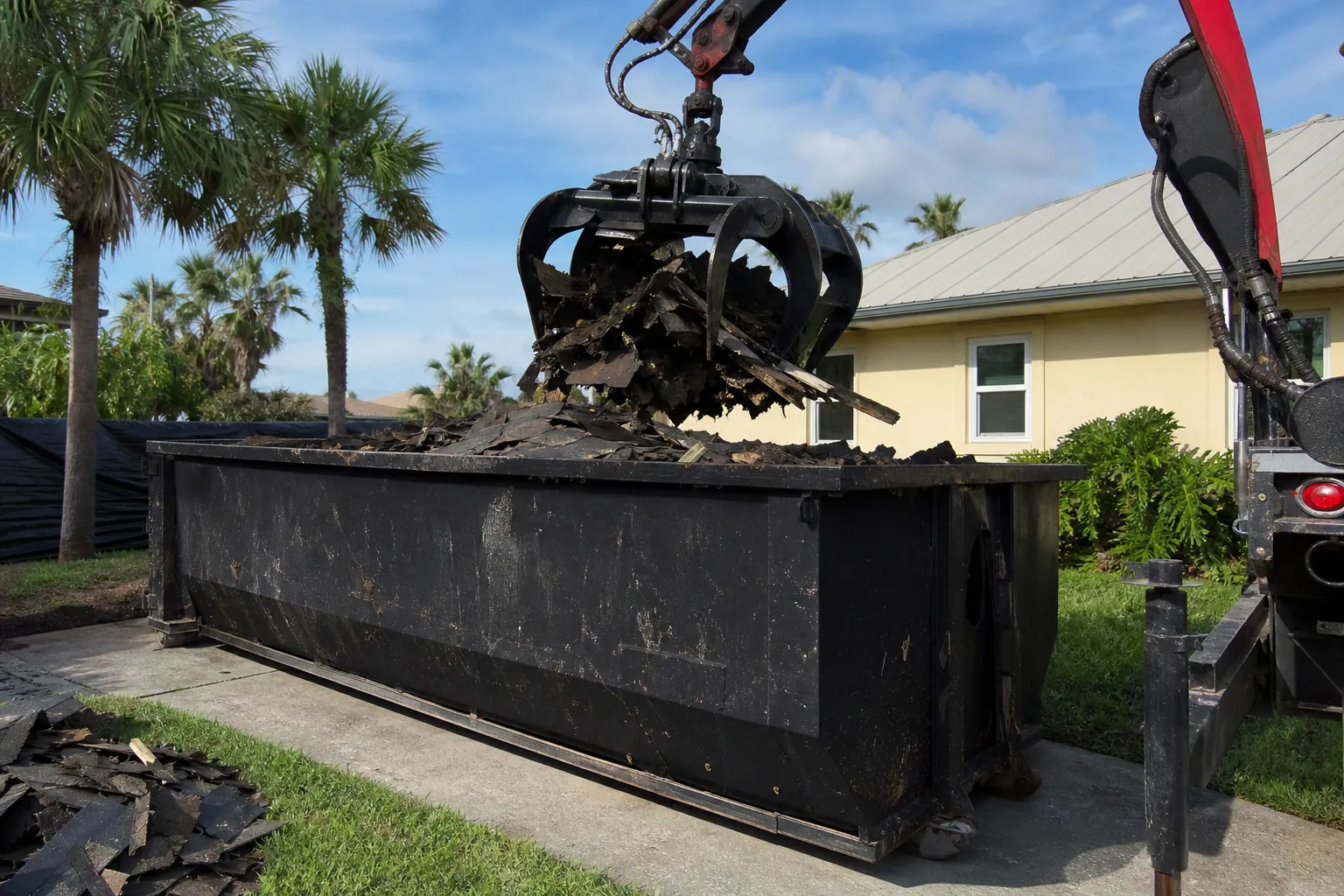
Choose A Staging Area That Protects The Property
The staging location is one of the most important decisions on a roof tear-off project. It should support safe loading while keeping sharp debris away from foot traffic, vehicles, landscaping, and drainage paths.
In Ponce Inlet, coastal weather makes containment especially important. Lightweight underlayment and wrappers can blow away, while rain can carry small debris toward low spots or storm drains. Plan for weather exposure even when the roofing schedule looks straightforward.
Do not place debris in a roadway, on a sidewalk, or within a public right-of-way without confirming the applicable requirements. An open patch near the curb is not automatically an approved loading or storage area. Check local rules and any homeowners association requirements before work begins.
- Choose a staging location that the hauling provider has reviewed for reach and access.
- Keep the pile clear of storm drains, utility equipment, septic components, and irrigation fixtures.
- Maintain a separate walking route so residents and workers do not have to cross roofing waste.
- Protect nearby windows, parked vehicles, and landscaping from falling or windblown material.
- Discuss ground protection with both the roofer and hauler before spreading tarps or other protective layers.
Tarps can help roofing crews collect debris, but they do not guarantee that a driveway or lawn will remain undamaged. Heavy material can tear fabric, and dragging a loaded tarp can scrape surfaces. Ask how any protective material will be handled during loading.
Avoid scattering several small piles around the property unless the hauler has agreed to that arrangement. Consolidation can simplify pickup, but the final pile dimensions and placement still need to match the equipment and site conditions.
Check Truck Access Before Demolition Starts
A pickup plan should account for the truck, not just the debris. A large vehicle may need more turning room and operating space than a homeowner expects. Narrow entrances, parked cars, branches, and overhead wires can affect whether the truck can approach safely.
Walk the anticipated route from the street to the operating position. Look for gates, drainage crossings, soft shoulders, tight corners, and low clearances. Tell the provider about anything that could restrict movement or make the surface unsuitable for a loaded truck.
Do not guess at safe distances from power lines. Show their location and let the hauling provider determine whether an acceptable operating setup is possible. The same caution applies to loading near roofs, balconies, fences, or other structures.
- Provide clear photos of the driveway entrance and the full approach to the staging area.
- Identify overhead wires, tree limbs, and roof overhangs before scheduling the pickup.
- Ask whether the proposed parking and loading surfaces are suitable for the equipment.
- Arrange for vehicles and movable obstacles to be cleared before the truck arrives.
- Confirm whether someone must be present to open a gate or coordinate access.
Keep access open on pickup day. A delivery vehicle, roofing trailer, or stack of new materials can block a route that was clear during the estimate. Give the roofing crew the loading plan so their setup does not unintentionally prevent debris removal.
Coordinate Pickup With The Roofing Schedule
Hauling works best when the roofer and debris provider share a realistic schedule. The important milestone is not simply when the roofing job begins. It is when the agreed load will be staged and ready for safe pickup.
Some projects can accommodate one removal after the tear-off is complete. Others may need staged pickups to preserve working space or control the amount of exposed debris. The appropriate sequence depends on roof size, site conditions, material weight, and available hauling capacity.
Weather can shift that sequence. A delayed tear-off, an unexpected decking repair, or a rain interruption may change when the load is ready. Discuss rescheduling procedures in advance rather than assuming a truck can arrive whenever the crew finishes.
Give one person responsibility for communicating updates. This might be the homeowner, roofing contractor, or project manager. A single point of contact reduces conflicting instructions about arrival time, pile placement, and material acceptance.
Before confirming pickup, verify that the debris is fully staged, access is clear, and any agreed preparation is complete. If more waste will be generated afterward, decide whether it requires a separate pickup or another disposal method.
Prepare The Load Without Creating Extra Hazards
Good load preparation is about predictable handling, not making the pile look tidy at any cost. Roofing waste can contain nails, sharp sheet metal, broken tile, and splintered wood. Avoid unnecessary handling once the material has been safely collected.
Ask the provider how shingles, long pieces, bagged scraps, and small loose debris should be prepared. Do not assume that sealed bags, tightly wrapped bundles, or a mixed pile will be suitable for grapple loading. Preparation requirements depend on the equipment and disposal destination.
Keep household trash, furniture, yard debris, chemicals, and other unrelated materials out of the roofing load unless the provider specifically approves them. Mixing waste can complicate disposal and make an otherwise straightforward estimate inaccurate.
- Keep liquids, paint containers, and chemical products separate until their disposal requirements are confirmed.
- Tell the provider about unusually long metal pieces or bulky roof components before pickup.
- Follow the agreed method for containing lightweight underlayment and packaging.
- Keep children, pets, and visitors away from the staging and loading areas.
- Leave questionable materials undisturbed until the appropriate professional identifies them.
If older roofing materials raise concerns about asbestos or another hazardous substance, stop and obtain qualified guidance. Ordinary debris hauling should not be assumed to cover testing, abatement, or hazardous waste transportation.
Know What Drives The Hauling Estimate
A useful estimate reflects the actual load and site, rather than a broad promise based only on the home's size. Roofing waste can be dense, so a pile that appears modest may still present significant weight considerations.
The provider may need roof measurements, material descriptions, layer count, photos, and an explanation of access. These details help assess the expected amount of debris and whether multiple loads or special arrangements may be needed.
Ask what is included in the quoted scope. Loading and hauling do not automatically include moving material from around the entire property, detailed driveway sweeping, nail removal, or cleanup beneath landscaping. Those responsibilities should be discussed explicitly.
- Ask whether the estimate covers one pickup or allows for additional loads.
- Confirm which roofing materials the provider has agreed to accept.
- Clarify how changes in debris quantity or material type will affect the price.
- Ask whether difficult access, extra handling, or return trips may change the scope.
- Confirm who is responsible for final small-debris and nail cleanup.
Photos are helpful, but they cannot always reveal hidden roof layers or unexpected decking damage. If the scope changes during tear-off, update the hauling provider promptly so the plan can be adjusted before loading begins.
Separate Bulk Removal From Final Nail Cleanup
Removing the main debris pile is a major step, but it is not the end of roof cleanup. Small shingle fragments, fasteners, and metal scraps can remain near the staging area, along pathways, and beneath the roof edges.
The roofing contractor should explain the final cleanup process before work starts. Magnetic sweeps can help collect ferrous fasteners, but they do not find every type of debris and may be less effective in thick grass or uneven ground.
A careful visual inspection remains important. Check driveway edges, planting beds, porch steps, and areas where tarps were folded or dragged. Have the responsible crew address remaining sharp material before normal use of those areas resumes.
Do not walk barefoot through the work zone to test whether cleanup is complete. Keep pets away until the area has been inspected, and ask the contractor how concealed nails or debris in landscaping will be handled.
Where responsibilities are divided between the roofer and hauler, make the handoff clear. Bulk removal, sweeping, magnetic collection, and restoration of protective coverings are separate tasks unless the agreed service scope combines them.
Common Questions About Roof Debris Pickup
Can the debris be placed beside the street?
Only use a location that complies with applicable local requirements and works for the hauling equipment. Street-side placement can affect traffic, drainage, pedestrian access, and public property. Confirm permission and pickup suitability before the crew creates the pile.
Should the truck arrive while the crew is still tearing off the roof?
That depends on the project plan. Loading beneath active tear-off work can create hazards, and an unfinished pile may leave substantial waste for a second trip. Coordinate a safe pickup window with both the roofing contractor and hauling provider.
Can rain change the removal plan?
Yes. Rain can affect site access, spread loose material, and delay roofing work. Notify the provider if the staging area becomes saturated or the schedule changes. Do not assume the original operating location remains suitable after heavy rain.
What information should I have ready when calling?
Have the Ponce Inlet property location, approximate roof size, material type, expected layer count, desired timing, and access photos available. Also describe whether the waste is already staged or will be produced during an upcoming replacement.
Arrange A Clear Plan For Your Ponce Inlet Project
A well-organized roof tear-off cleanup plan connects three things: the debris being generated, the space available for staging, and the equipment needed to remove it. Addressing those details early helps the roofing crew work without unnecessary clutter.
Before booking, confirm material acceptance, access, timing, estimated scope, and final cleanup responsibilities. Keep the staging area contained and update the provider if demolition reveals more material than expected.
To discuss roof tear-off debris removal for a Ponce Inlet property, call Daytona Grapple Trucks at (386) 481-7913. Explain the project and site conditions so you can discuss an appropriate hauling plan before the debris starts accumulating.
Call (386) 481-7913 to talk through next steps.