
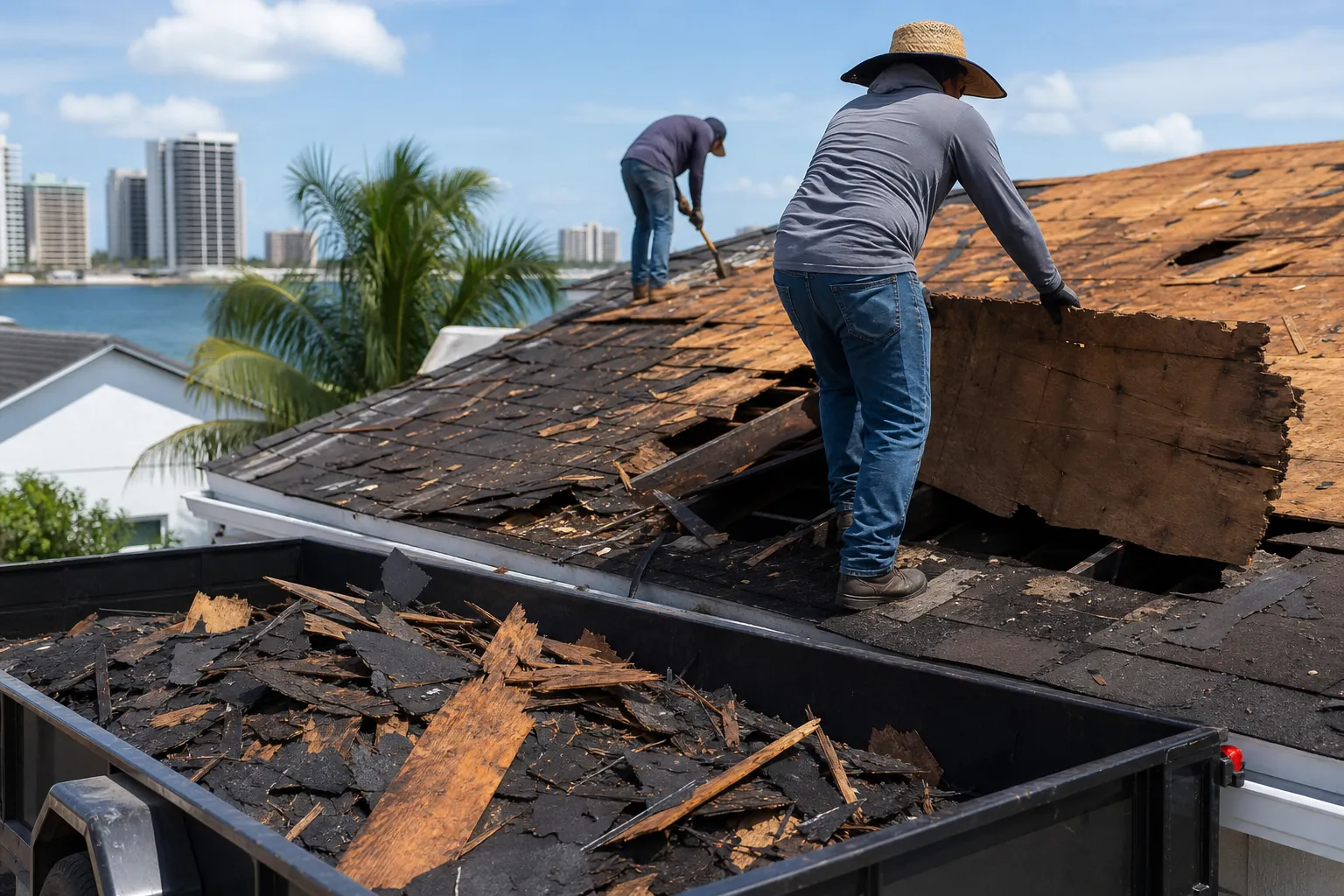
Damaged wood decking often comes off a roof alongside shingles and other tear-off material. Before arranging debris pickup in Daytona, determine what is actually in the pile, how it is staged, and whether a truck can reach it safely. Those details help you describe the job clearly and avoid assumptions about what can be collected together. Daytona Grapple Trucks can discuss the specific load by phone at (386) 481-7913.
Identify Every Material in the Tear-Off Pile
Start by identifying the materials produced during the roofing work. Damaged roof decking may include sheets, partial sheets, strips, and irregular wood fragments. The same work area may also contain shingles, underlayment, flashing, nails, packaging, and unrelated property debris. Do not describe the load simply as “roofing debris” if it contains several materials. A more detailed description gives the pickup provider useful information before arrival.
Walk around the pile without climbing onto it or handling exposed sharp material. Note whether the wood is cleanly separated, mixed throughout the shingles, or placed in a distinct stack beside the main tear-off pile. If you are coordinating for a roofing contractor or property owner, ask who created the pile and whether any materials were intentionally kept apart. Clear photos can also help communicate pile composition and scale. The central question is not only whether decking came from the same roof, but also how the entire load has been assembled for collection.
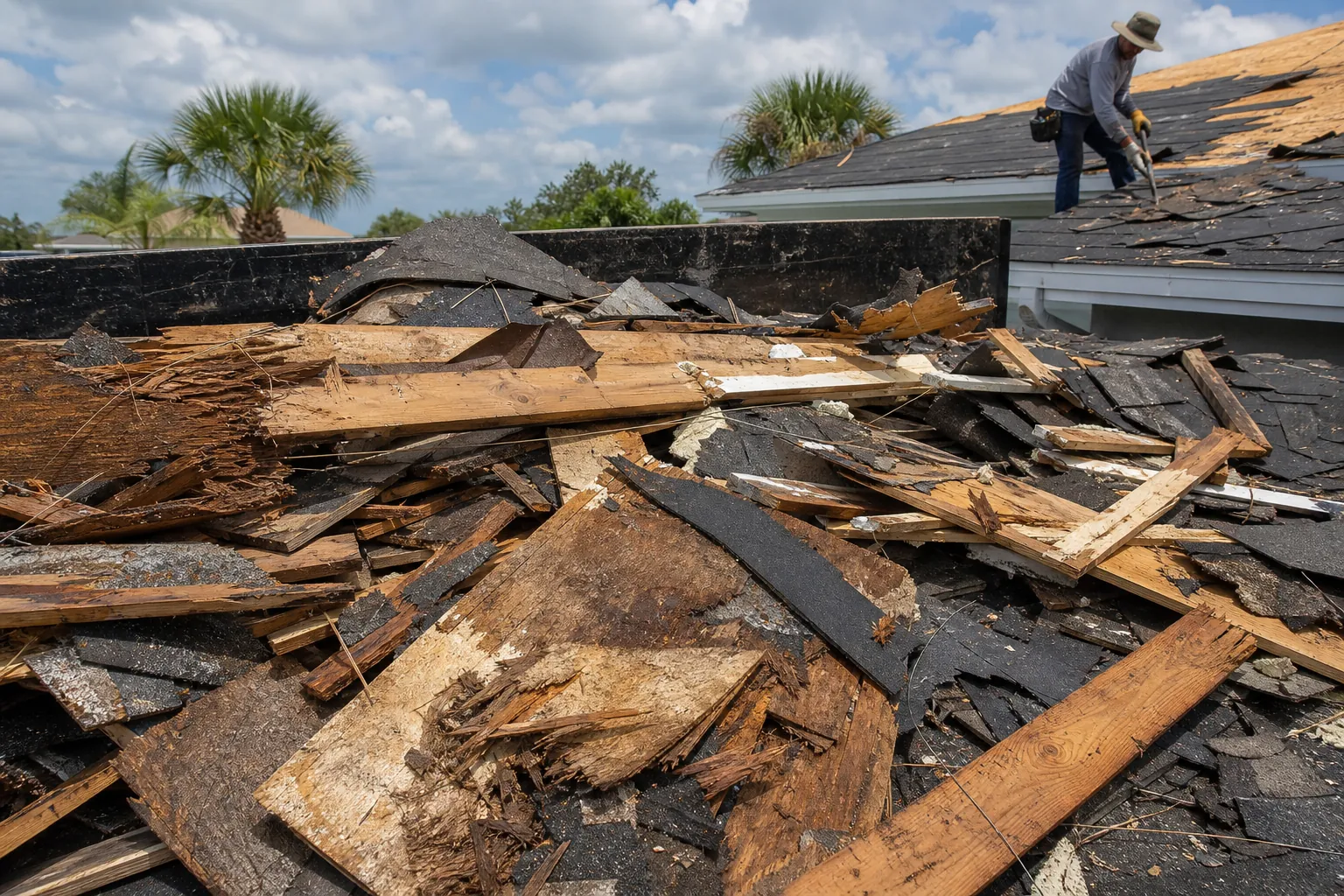
Ask Before Combining Decking and Tear-Off Material
Do not assume damaged decking can automatically be collected in the same load as every other item removed during roofing work. Collection decisions can depend on the material mix, pile arrangement, access, and other job-specific details. Confirm expectations before adding more debris or moving separate stacks together. This is especially important when the project is still active and the pile may continue growing.
When calling, explain that the load includes wood roof decking and identify the other visible materials. Mention whether nails or flashing are mixed into the pile and whether there are any objects that did not come from the roof. Ask whether separation is needed before pickup. If the answer depends on reviewing the site or photos, keep the materials in their current organized groups until you receive direction. Combining everything too early can make the pile harder to describe and reorganize. A short conversation before staging is generally more useful than making assumptions based only on the debris coming from one project.
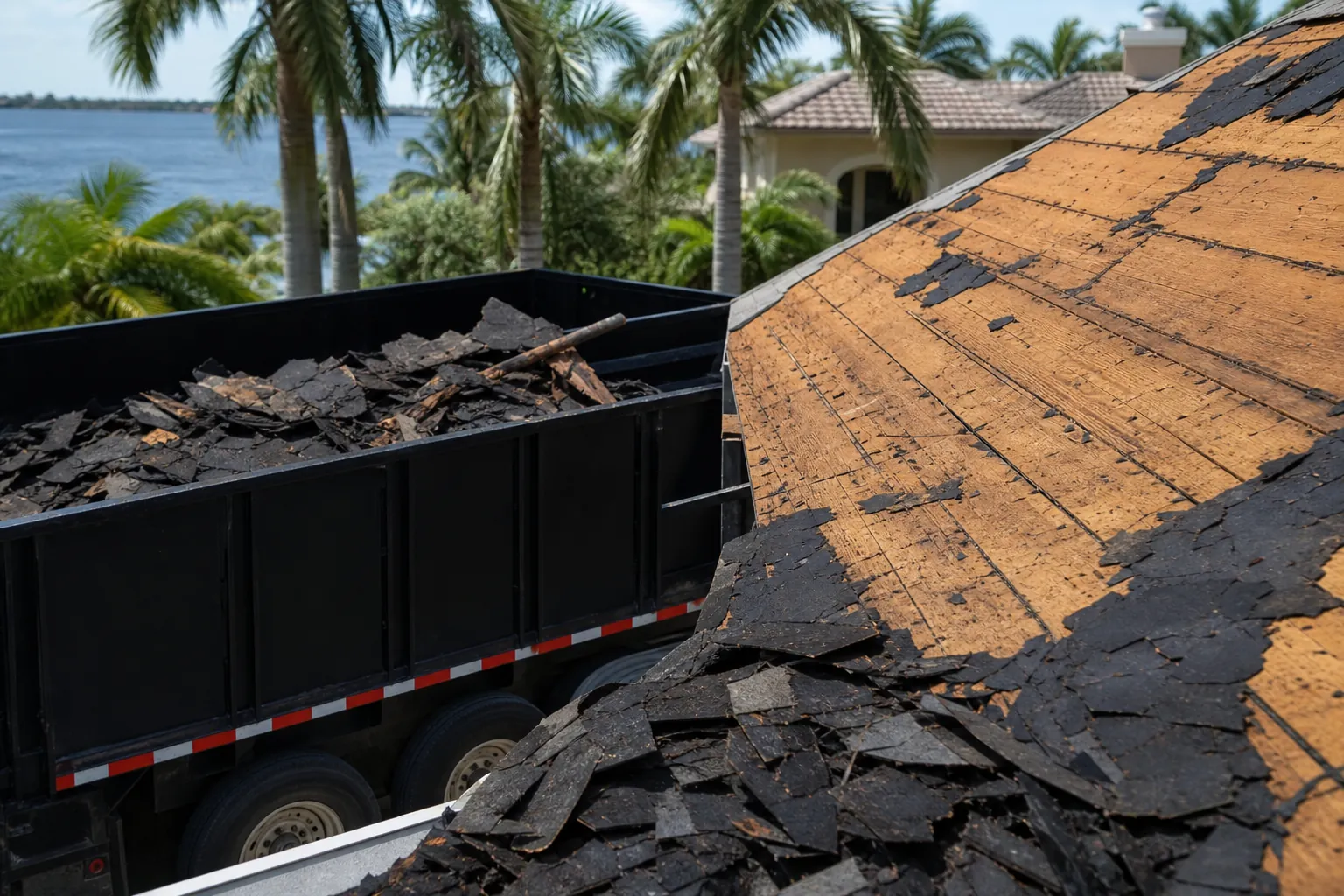
Prepare the Pickup Area With Access in Mind
The condition of the access route matters as much as the debris itself. Look at the path from the street or drive to the pile. Parked vehicles, trailers, roofing equipment, low branches, gates, overhead lines, and active work zones may affect access. Avoid placing new debris where it blocks traffic, traps a vehicle, or interferes with ongoing roof work. The pickup area should also be clearly identifiable so the intended pile is not confused with materials that need to remain on site.
- Keep vehicles and portable equipment away from the approach.
- Point out gates, narrow entries, soft ground, slopes, or overhead obstacles.
- Separate property you want to keep from material intended for pickup.
- Describe whether the pile sits on pavement, soil, gravel, or another surface.
- Update the provider if the pile grows or its location changes.
Do not relocate a heavy or sharp pile solely to make it appear more organized. Instead, call and explain the current layout before deciding what should be moved.
Provide Details That Help Define the Job
A useful pickup request includes more than the property address. State that the project involves roofing tear-off debris and damaged wood decking. Describe the approximate pile dimensions rather than guessing its weight. Length, width, and height provide a practical starting point, especially when paired with photos from more than one angle. Explain whether the pile is loose, stacked, contained, or divided into separate groups.
Also mention the project status. A completed tear-off produces a more stable description than a pile that may double in size later in the day. If work is ongoing, identify when the debris should be ready and confirm the pile location will not change. Pricing can reflect several job details, so review grapple truck pickup cost factors in Daytona Beach before calling. That supporting information can help you gather relevant facts without presuming a price. Accurate details allow the conversation to focus on the actual load rather than a broad label such as “some roofing wood.”
Use a Simple Decision Process Before Pickup
First, inspect the pile from a safe position and list its visible components. Second, determine whether the decking is separate or mixed with shingles and other tear-off material. Third, document the pile size, surface, access route, and nearby obstacles. Fourth, confirm whether roofing work is complete. Finally, call before changing the arrangement if you are uncertain about combining materials.
This process helps property owners and project coordinators make a clear pickup inquiry. It also reduces the chance that an important condition will be discovered only after arrangements are underway. If more than one person is managing the project, designate one contact who knows what belongs in the pile and when it will be ready. That person should be able to explain any recent changes, including added decking, relocated materials, or newly blocked access. Keep the description factual. Avoid estimating quantities you cannot support, and do not promise that all project debris will be in one load. The goal is a shared, accurate understanding of the material and site.
Discuss Your Daytona Roofing Debris
To discuss damaged roof decking, tear-off material, pile arrangement, and site access in Daytona, call Daytona Grapple Trucks at (386) 481-7913. Have your material list, pile dimensions, project status, and access details ready.
Call (386) 481-7913 to talk through next steps.