
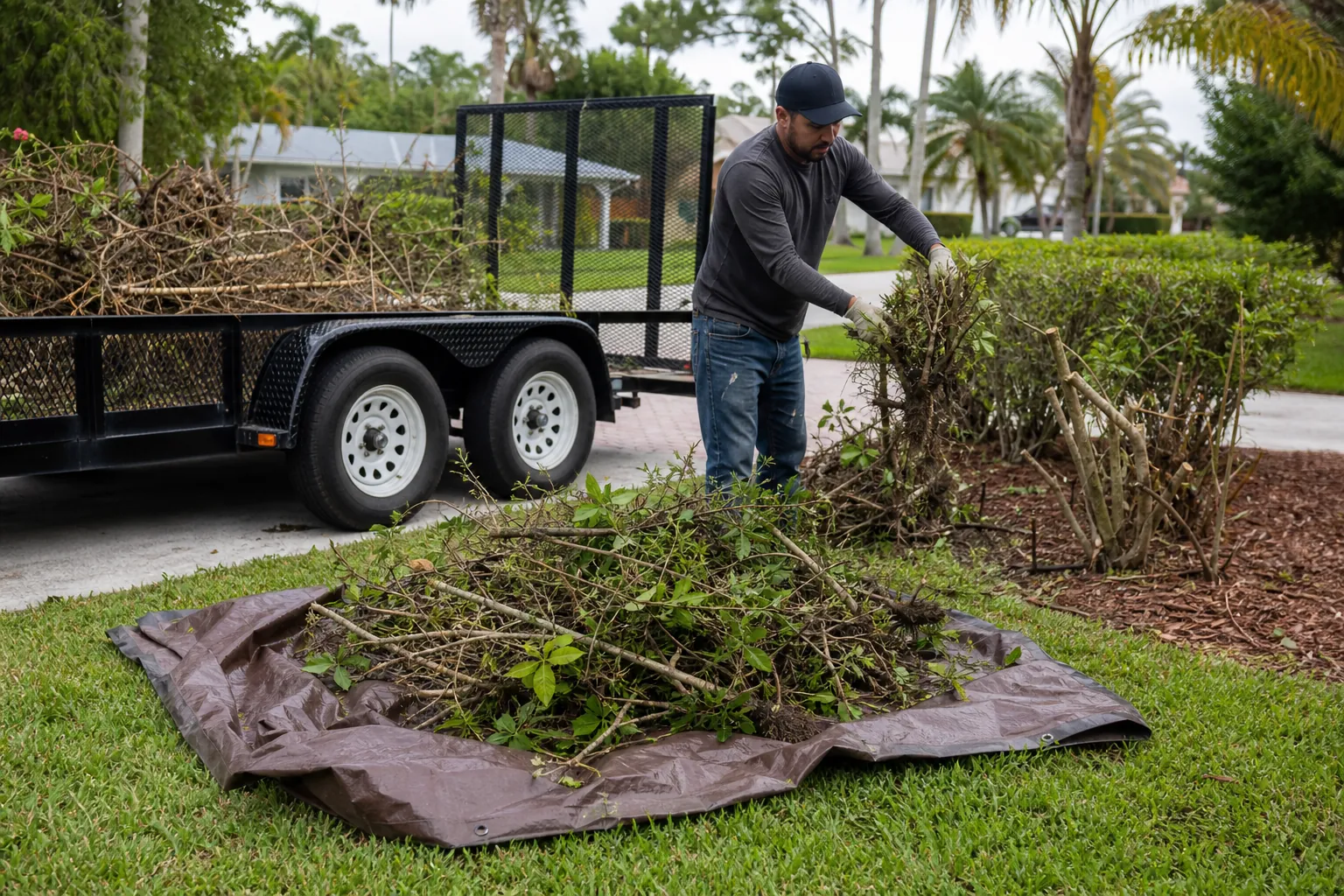
Removed shrubs can quickly become a tangled pile of branches, roots, soil, and yard debris. Before arranging debris hauling in New Smyrna Beach, take time to sort the material and make the pickup area easy to identify. A well-prepared pile helps you describe the job accurately, evaluate access, and avoid mixing in items that require separate handling. Use the following steps to assess your debris before calling Daytona Grapple Trucks.
Separate Shrub Debris From Other Materials
Begin by separating removed shrubs from unrelated material. Keep branches, trunks, leaves, and root sections together rather than combining them with household trash, construction debris, fencing, containers, or loose items from a garage. Separation makes the contents of the pile easier to explain when discussing hauling.
Pay close attention to material hidden beneath branches. Shrub piles can conceal wire, landscape edging, plastic pots, stakes, irrigation components, and decorative stone. Remove these items when it is safe to do so and set them aside for appropriate handling. Do not place unknown containers, liquids, batteries, or chemicals in the pile.
If the shrubs were removed during a broader landscaping project, establish distinct piles as work progresses. Sorting afterward is harder because branches interlock and obscure heavier items. Clear separation also lets you estimate the shrub debris without counting unrelated waste, giving you better information for the initial conversation about pickup.
Reduce Tangled Growth Into Manageable Sections
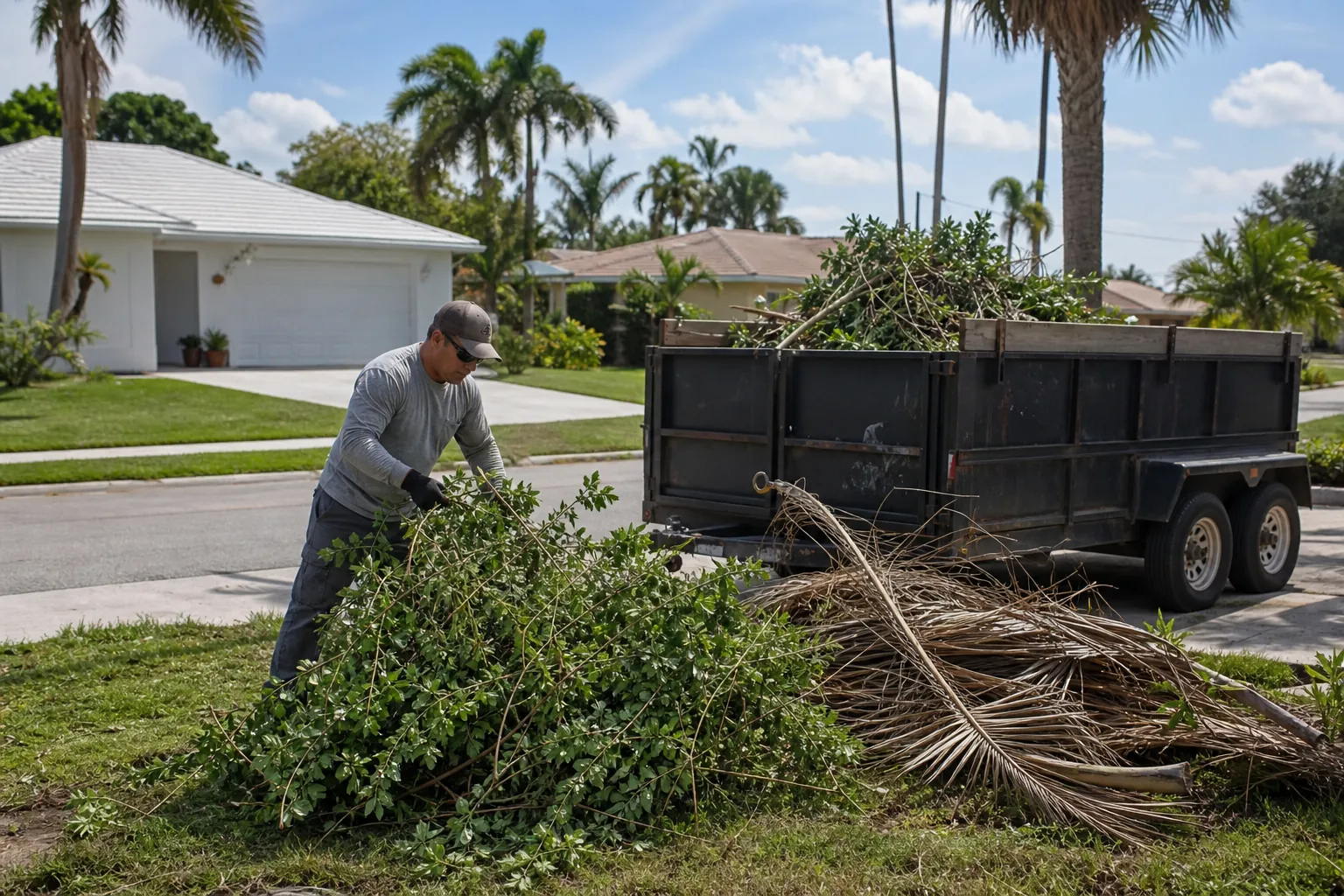
Long branches and tangled roots can make a shrub pile difficult to organize. If you can work safely, cut oversized growth into more manageable sections and place the pieces in the same direction. Remove loose vines that connect separate portions of the pile. This creates a more compact, visible stack and reduces the chance that debris spreads across the yard.
Use appropriate protective clothing and tools that are in good condition. Watch for thorns, sharp branch ends, insects, unstable root balls, and concealed objects. Do not handle sections that are beyond your physical ability or that require equipment you do not have. Never work beneath suspended limbs or near active utility lines.
Compact does not mean tightly bundled with materials that are difficult to remove. Avoid wrapping the pile in tarps, plastic, rope, or wire unless you have confirmed how those items should be handled. The objective is a stable, orderly pile whose contents can be seen and described clearly.
Manage Roots, Soil, And Loose Yard Material
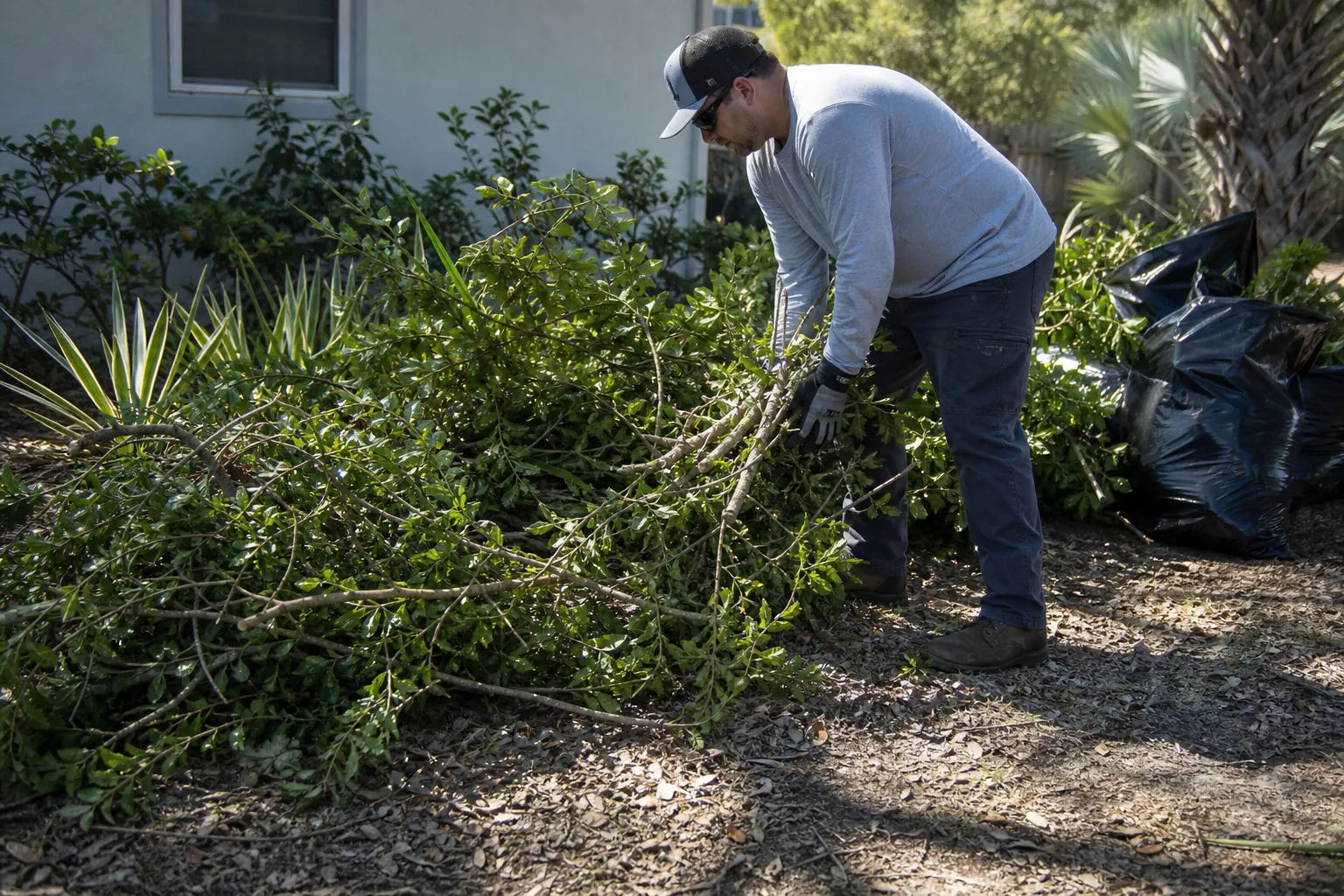
Root balls often carry substantial soil, rocks, landscape fabric, and irrigation pieces. Shake off loose soil only when doing so is practical and safe. Keep roots with the shrub material, but remove visible non-plant items that became entangled during removal. Inspect each root section before adding it to the main pile.
Rake scattered leaves and small twigs into a defined area rather than spreading them between the work site and pickup point. Before putting fine material into bags or containers, ask how it should be prepared. Preparation requirements can depend on the material and the planned pickup.
A practical final inspection should cover the following points:
- Branches and roots are separated from household or construction waste.
- Wire, pots, edging, stakes, and irrigation parts have been identified.
- Loose debris is contained in a clearly defined area.
- No unknown liquids, chemicals, batteries, or sealed containers are present.
- The pile can be viewed without moving unrelated objects.
This review helps you provide an accurate description when you call.
Choose A Clear And Accessible Pickup Area
Place the debris in a location that is easy to identify and discuss. Consider the route to the pile, nearby vehicles, gates, fences, trees, rooflines, overhead lines, soft ground, and other obstacles. Do not assume that a truck can enter a side yard or cross a lawn simply because the space appears open. Access should be reviewed before pickup arrangements are finalized.
Avoid putting shrub debris in a travel lane or where it blocks a driveway, sidewalk, drainage feature, mailbox, or emergency access. Keep the pile on property you control unless you have clear permission to use another area. Local placement rules may also affect where debris can sit, so verify any requirements that apply to your property.
Once the pickup location is selected, keep it consistent. Moving the pile after discussing the job can change access conditions. Take clear photos from several angles, including wider views that show the route and nearby obstacles. These images support a more useful conversation about the debris and its location.
Gather Details Before Requesting Debris Hauling
Before calling, make a brief inventory of the project. Note whether the pile contains whole shrubs, cut branches, root balls, vines, leaves, or soil. Record an approximate length, width, and height rather than describing it only as small or large. Mention whether the pile is compact or loosely spread across multiple areas.
Access details matter too. Explain whether the debris is beside a driveway, behind a gate, near overhead lines, or adjacent to landscaping that must remain undisturbed. Identify any item you are uncertain about instead of assuming it can be included. Accurate information helps determine what questions still need to be answered.
Cost discussions may account for several characteristics of a pickup. For a related overview, read grapple truck pickup cost factors. Use that information to prepare questions, not to assume a specific price for your project. The pile's contents, arrangement, and access should be discussed directly before making a decision.
Discuss Your Shrub Debris
When your shrub pile is sorted and the pickup area is documented, call Daytona Grapple Trucks at (386) 481-7913. Calmly describe the materials, approximate pile dimensions, location, and access conditions so the conversation can focus on your debris hauling needs in New Smyrna Beach.
Call (386) 481-7913 to talk through next steps.