
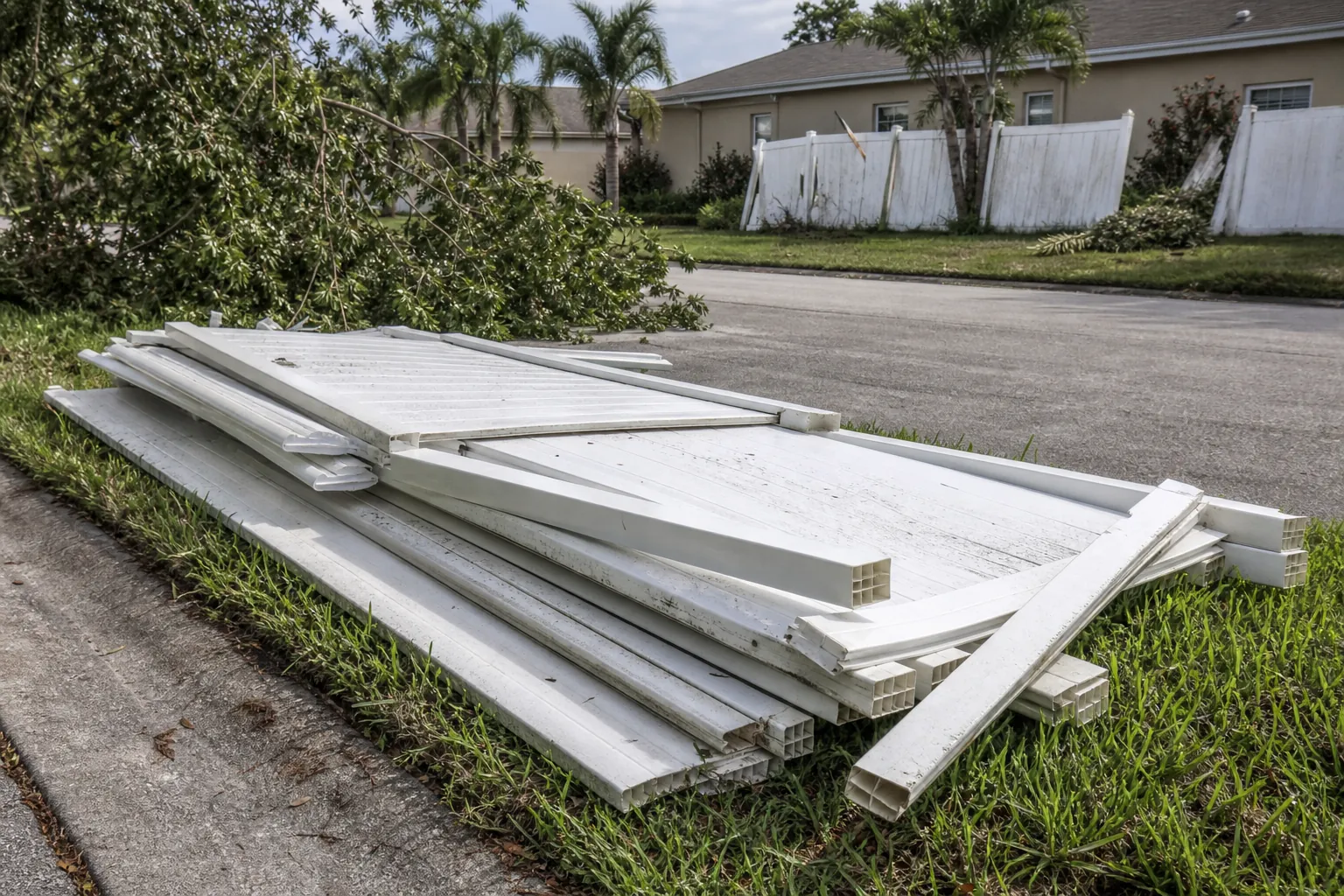
Storm-damaged fencing can leave a difficult mix of panels, posts, hardware, and attached vegetation. Before arranging pickup in Daytona, focus on making the debris visible, stable, and easy to describe. Do not assume every material can be collected together. Daytona Grapple Trucks can clarify the next step based on the debris you have. Call (386) 481-7913 before completing extensive preparation so you can avoid unnecessary handling.
Inspect the Damage Before Moving Fence Materials
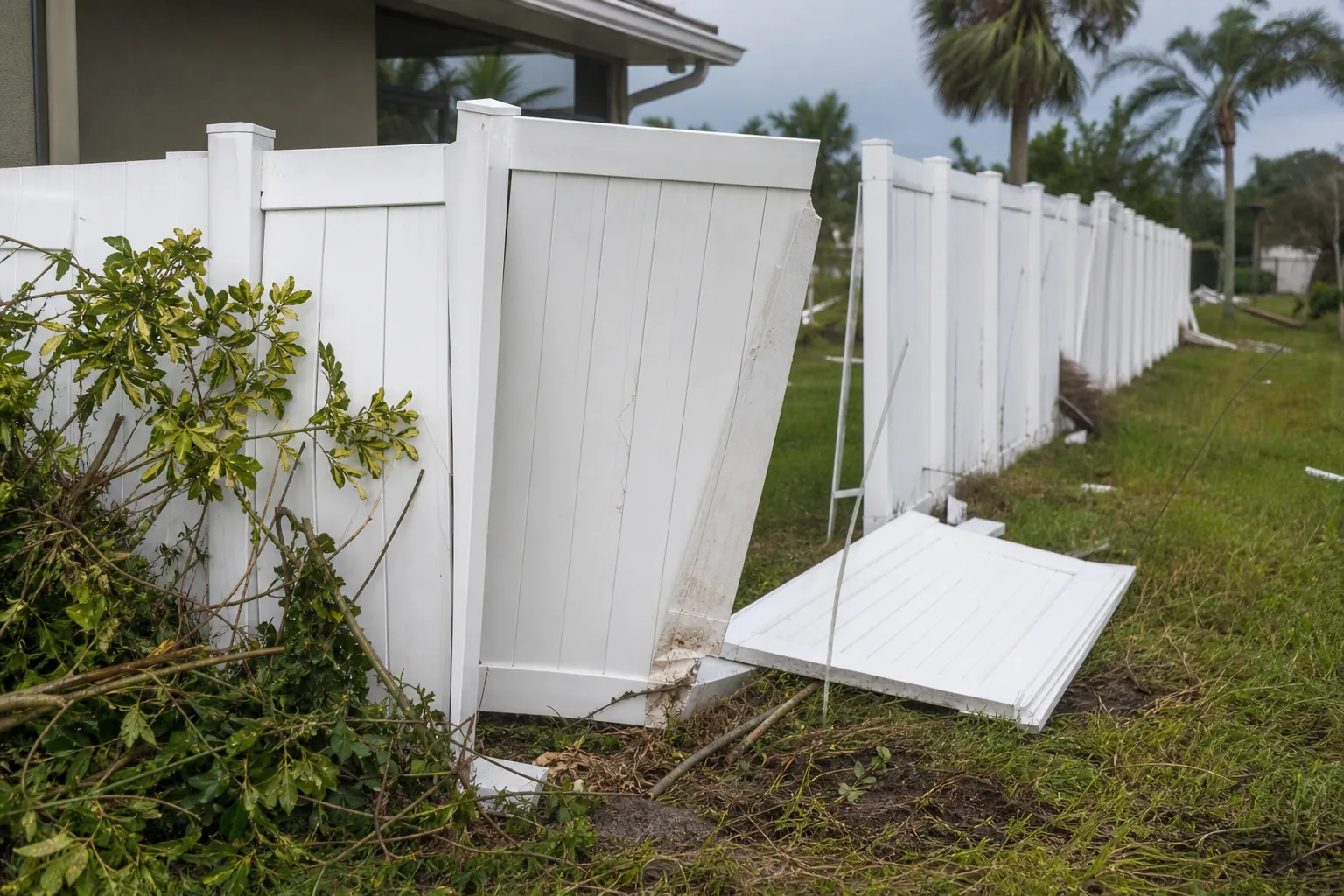
Begin by looking over the damaged area from a safe distance. Identify leaning sections, panels still connected to posts, loose boards, protruding fasteners, and material tangled with branches or plants. A fence section under tension may shift when a board, wire, or post is moved. If any part appears unstable, do not pull it free merely to create a neater pile.
Separate the decision into two tasks: making the property safe and preparing debris for pickup. These are not always the same. You may need an appropriate professional to disconnect, cut, or dismantle material before it can be moved safely. Keep children and pets away from the area while you assess it.
Take clear photographs before changing the pile. Capture the overall area and close views of posts, panels, hardware, and mixed material. Photos can help you explain the debris when calling Daytona Grapple Trucks, particularly when fence components are covered by vegetation or distributed across the property.
Identify What Is Included in the Debris
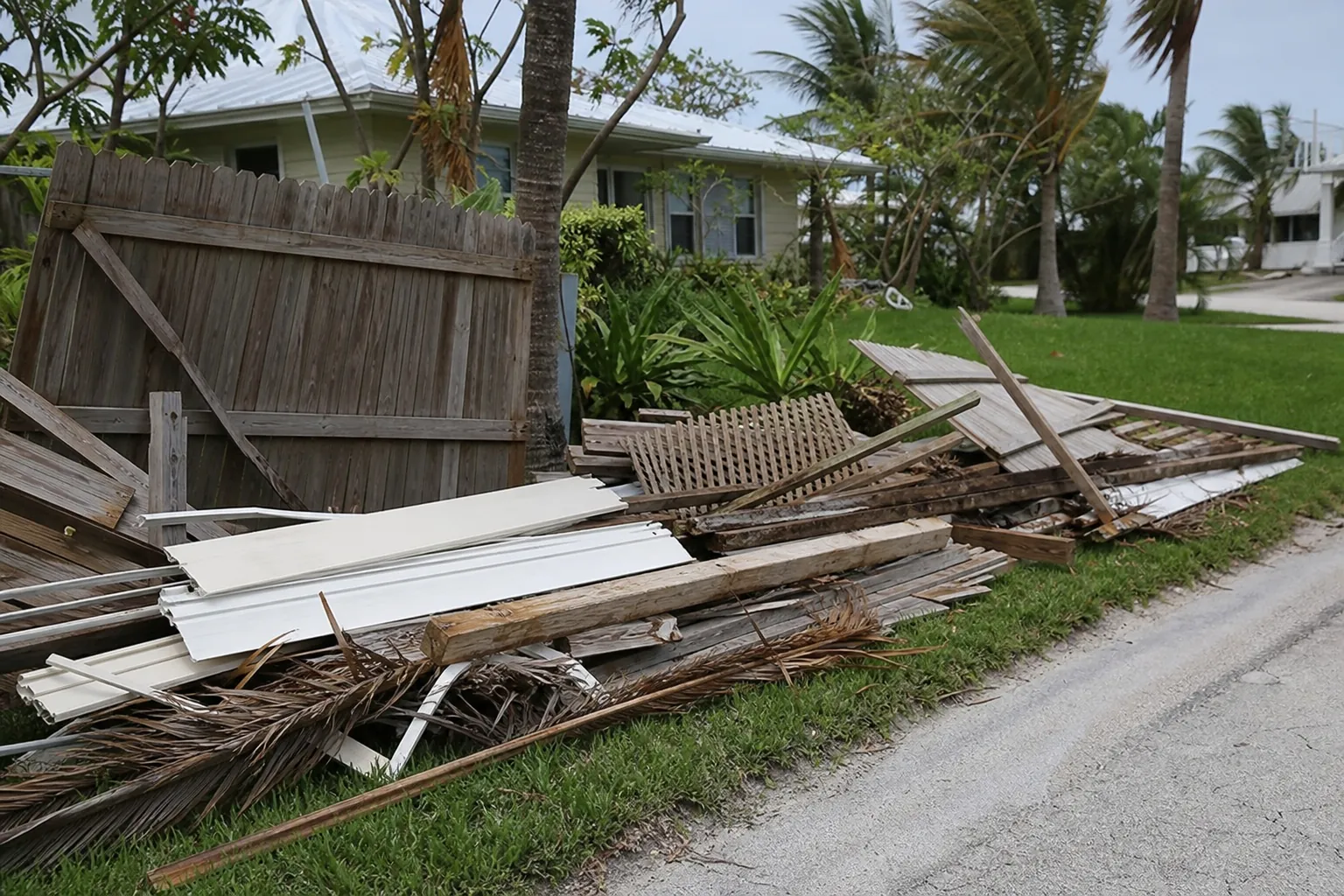
Fence debris is rarely uniform after a storm. A single damaged run may contain wood or manufactured panels, posts, rails, wire, concrete attached to post bases, gates, hinges, latches, screws, nails, and branches. Make a simple inventory before stacking anything. The goal is not to identify every fastener, but to provide an accurate description of the major materials and any attached items.
Use this preparation checklist when reviewing the site:
- Count or estimate the number of loose panels, posts, rails, and gates.
- Note whether concrete remains attached to any posts.
- Identify wire, sharp hardware, or broken panel edges.
- Record whether branches, vines, soil, or other debris are mixed in.
- Estimate the pile’s length, width, and height after safe consolidation.
- Photograph access points, nearby vehicles, overhead obstructions, and the debris pile.
Do not hide one material beneath another. Keeping different components visible makes the debris easier to discuss and may prevent confusion when pickup is being considered.
Create a Stable and Accessible Debris Pile
If the materials can be moved safely, place them together in a stable pile rather than leaving pieces scattered. Lay flat panels in the same direction. Position posts and rails parallel to one another when practical. Keep gates and bulky sections visible instead of burying them under smaller pieces. Avoid building a tall, narrow stack that could slide or tip.
Accessibility matters as much as organization. Choose a location that can be clearly described by phone and shown in photographs. Do not block traffic, sidewalks, entrances, drainage paths, or access that must remain open. Avoid placing debris against buildings, vehicles, fences that are still standing, or other objects that could be damaged if the pile shifts.
Before selecting the final pile location, call Daytona Grapple Trucks to discuss your situation. Moving heavy panels twice creates extra work and additional exposure to sharp edges. A quick conversation about the debris, its placement, and the surrounding conditions can help you decide what preparation is appropriate before pickup.
Control Sharp Hardware Without Taking Extra Risks
Broken fencing often has exposed nails, screws, wire ends, splintered boards, bent brackets, or jagged panel edges. Wear appropriate protective clothing when handling material, including sturdy footwear and gloves suitable for the debris. Work slowly, maintain a clear walking path, and avoid carrying pieces that block your view of the ground.
Do not reach blindly into a pile or place sharp hardware where someone could step on it. If small loose pieces can be handled safely, keep them contained and clearly separate from large panels. Do not burn fence debris or make assumptions about cutting, dismantling, or removing embedded hardware. Some panels may have coatings, attached components, or tensioned sections that require additional care.
Weather can also change the condition of the pile. Wet panels may become heavier, muddy ground may reduce footing, and wind can move lightweight pieces. If conditions are unsafe, stop. Preparation should make collection more orderly, not create a new hazard for the property owner or anyone nearby.
Confirm Pickup Details Before Final Preparation
Once you know what is in the pile, contact Daytona Grapple Trucks and provide a direct description. Explain the fence material, approximate quantity, largest pieces, attached concrete, sharp hardware, mixed vegetation, pile location, and nearby obstacles. Mention whether the debris is already consolidated or remains spread across the damaged area. Photos may make this conversation more useful.
Pickup considerations can vary with debris volume, material type, loading conditions, and access. For a broader explanation of items that may affect the decision, read grapple truck pickup cost factors in Daytona Beach. Do not rely on a neighbor’s project or a previous cleanup as an exact comparison because pile conditions can differ.
Before the planned pickup, check that the pile has not shifted and that vehicles or newly placed objects have not changed access. Keep the debris visible and avoid adding unmentioned materials. Clear communication before arrival is the simplest way to reduce uncertainty.
Discuss Your Fence Debris Pickup
For calm, straightforward guidance about storm-damaged fence debris pickup in Daytona, call Daytona Grapple Trucks at (386) 481-7913. Describe the materials, pile size, placement, and access so the next step can be discussed before you move more debris.
Call (386) 481-7913 to talk through next steps.