February 03, 2026
When the wind dies down, the cleanup begins. Here's how to work through storm debris safely and clear your property without burning a week on it.
Before you touch anything, look up and look down. Downed lines, hanging limbs, and hidden nails or glass cause most post-storm injuries. Wear gloves and boots, and never pull on a limb that's under tension or tangled in a line.
Keep vegetation debris separate from structural debris like fencing and damaged building material. It makes the haul-away faster and helps whoever picks it up move it in fewer trips.
Clear driveways, walkways, and gates first so you and any crew can move freely. A blocked driveway slows down every step that follows, including the truck that comes to haul the pile.
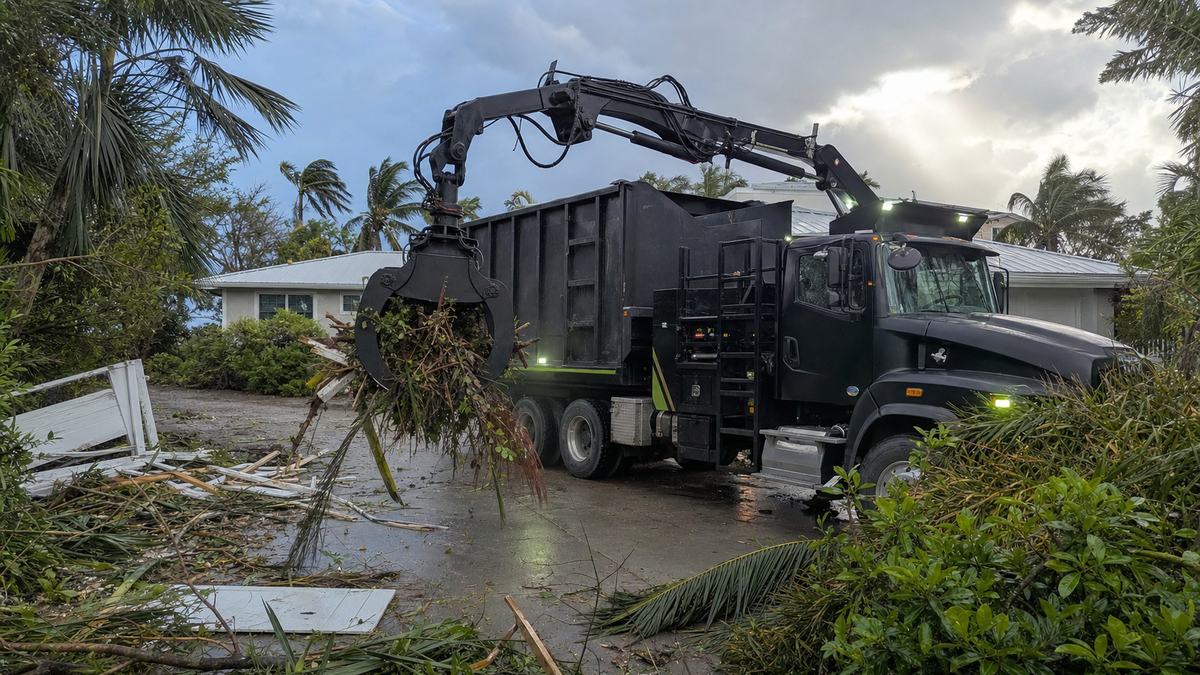
Once the pile is stacked, the heavy lifting is where a grapple truck earns its keep. We run 24/7 during storm season, so when you're ready to clear the pile, the truck can roll.
The practical takeaway is simple: the truck needs a reachable pile, a clear loading area, and enough detail to plan the haul. Before calling, note what the debris is made of, where it sits on the property, whether the truck can back near it, and whether any material needs to stay behind.
For storm debris cleanup, photos help. A quick picture of the pile and the access path can answer questions faster than a long description. It also helps avoid sending the wrong equipment or underestimating how much material is there.
Move vehicles, trailers, bins, and loose items away from the load zone. Keep the pile away from overhead utility lines and low branches where possible. If the debris sits near sprinklers, pavers, fences, or soft ground, say that upfront so the crew can avoid damage and plan the safest loading angle.
If the job is urgent because of storm access, blocked parking, or active construction, call instead of waiting on the form. The phone is answered 24/7, and a short call is usually the fastest way to confirm whether the truck can handle the pile.
Do not bury metal, trash bags, loose household junk, or questionable material inside a vegetation pile and assume it will be treated the same way. Do not stack debris under low wires or against objects you do not want touched. Do not spread one job across several small piles if one accessible staging area is available.
A cleaner pile is faster to load, easier to price, and less likely to create a problem on-site. If the material is already scattered, say that when you call. The truck may still be the right tool, but the plan changes when the debris is not staged.
Online guidance can get you close, but it cannot see your driveway, jobsite, fence line, storm damage, or pile mix. If your situation has any of those variables, use the guide as background and then call for a real answer. That is the fastest path to getting the debris handled correctly.