
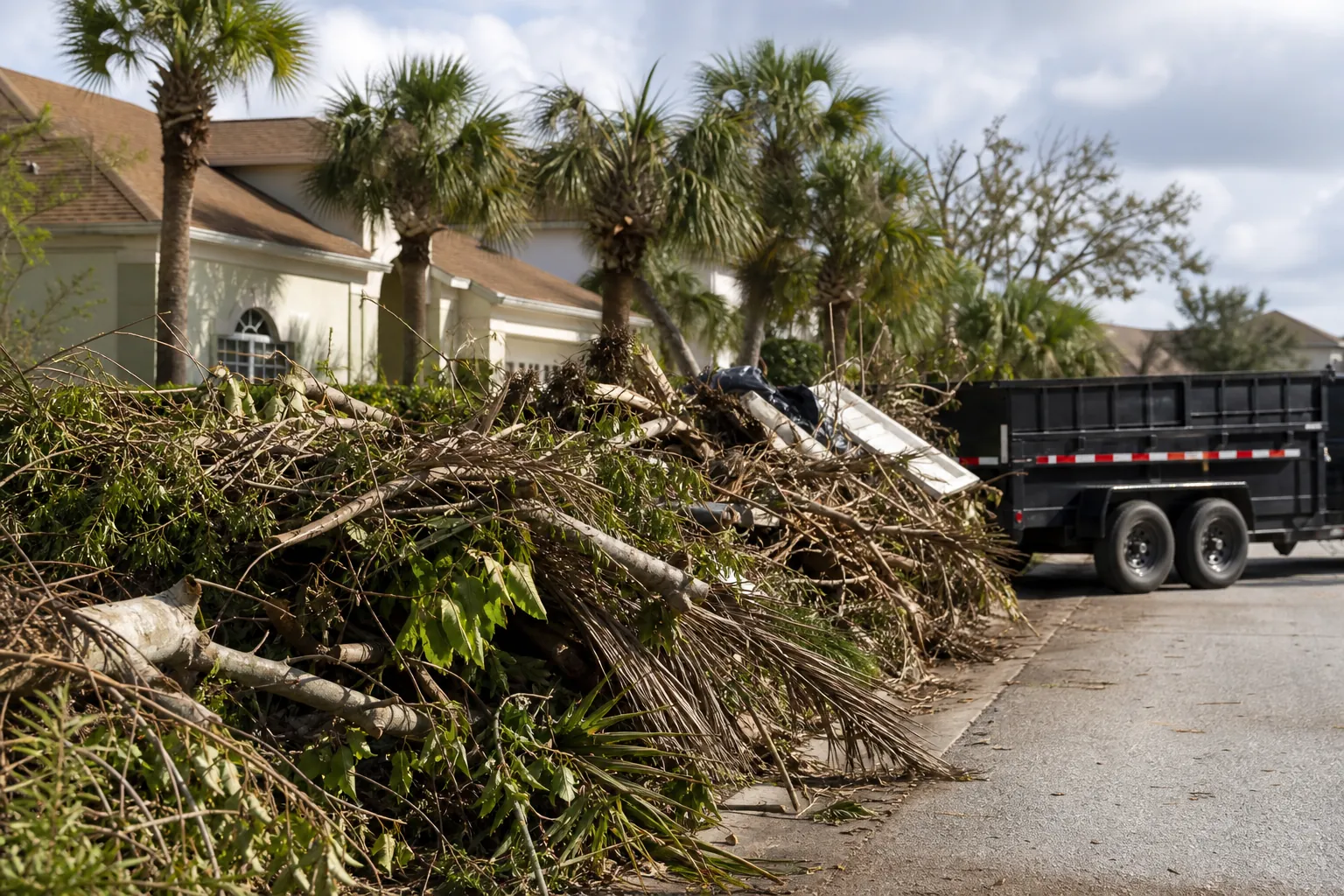
After a storm, an HOA may need to coordinate many residents, shared spaces, access points, and debris piles at once. A clear process helps board members identify what needs attention, collect accurate information, and discuss the project with a hauling provider. Use the steps below to prepare for storm debris hauling in Volusia County without making assumptions about timing, pricing, or what a provider can accept.
Start With a Community-Wide Debris Assessment
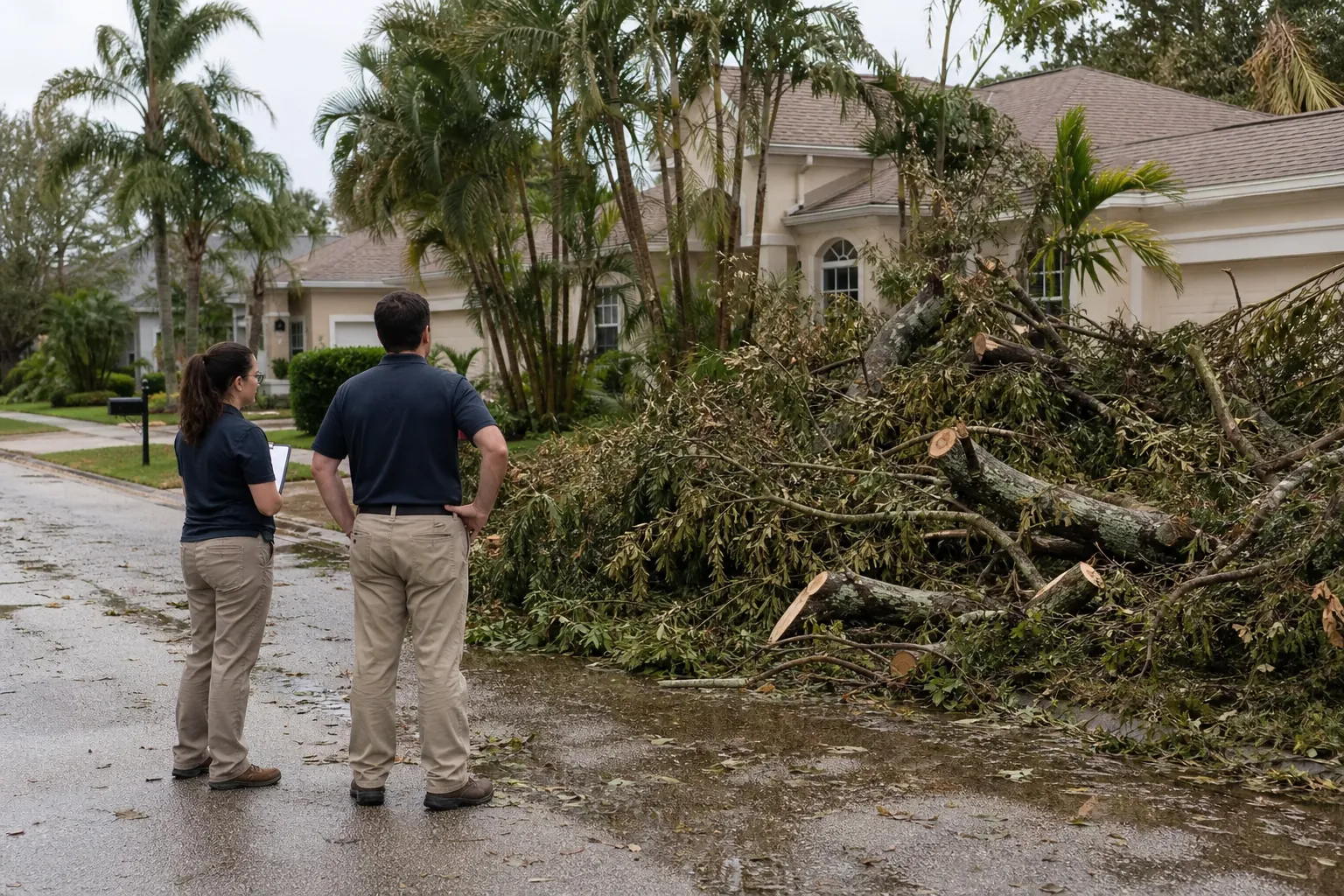
Before arranging hauling, walk or inspect the community and document visible debris in common areas and along resident-facing collection points. Record the location and approximate size of each pile. Photos can help an HOA board compare areas, explain conditions to a provider, and track changes while planning continues.
Separate urgent access concerns from routine cleanup needs. Note any debris that affects gates, internal roads, parking areas, sidewalks, drainage features, or other shared spaces. Do not move material into a roadway or another restricted area simply to consolidate it. The association should follow applicable community rules and public instructions when deciding where piles belong.
Also record access conditions. A provider may need to know whether a pile is behind a gate, near parked vehicles, under overhead lines, beside a fence, or within a narrow drive. This first assessment gives the board a practical basis for discussing scope instead of relying on a general description such as “the whole neighborhood needs cleanup.”
Create One Clear Plan for Residents
Residents need consistent instructions before they begin placing storm debris for collection. Conflicting messages can create scattered piles, blocked access, and materials mixed together without approval. Assign one board member, manager, or committee contact to distribute updates and receive questions. Use the same wording across email, resident portals, signs, or other established HOA communication channels.
Your notice should explain where residents may place debris, when placement should be complete, and which areas must remain open. Avoid promising a pickup date until arrangements have been confirmed. If the HOA has not yet verified what materials can be handled, say so clearly and ask residents to wait for additional direction rather than guessing.
- Mark approved staging or collection areas clearly.
- Keep gates, roads, sidewalks, and parking access unobstructed.
- Ask residents not to add household trash or unapproved materials.
- Set a deadline for reporting large or difficult-to-access piles.
- Provide one HOA contact for corrections and updates.
A single written plan makes conditions easier to evaluate and reduces last-minute confusion.
Prepare Collection Areas for Safe, Practical Access
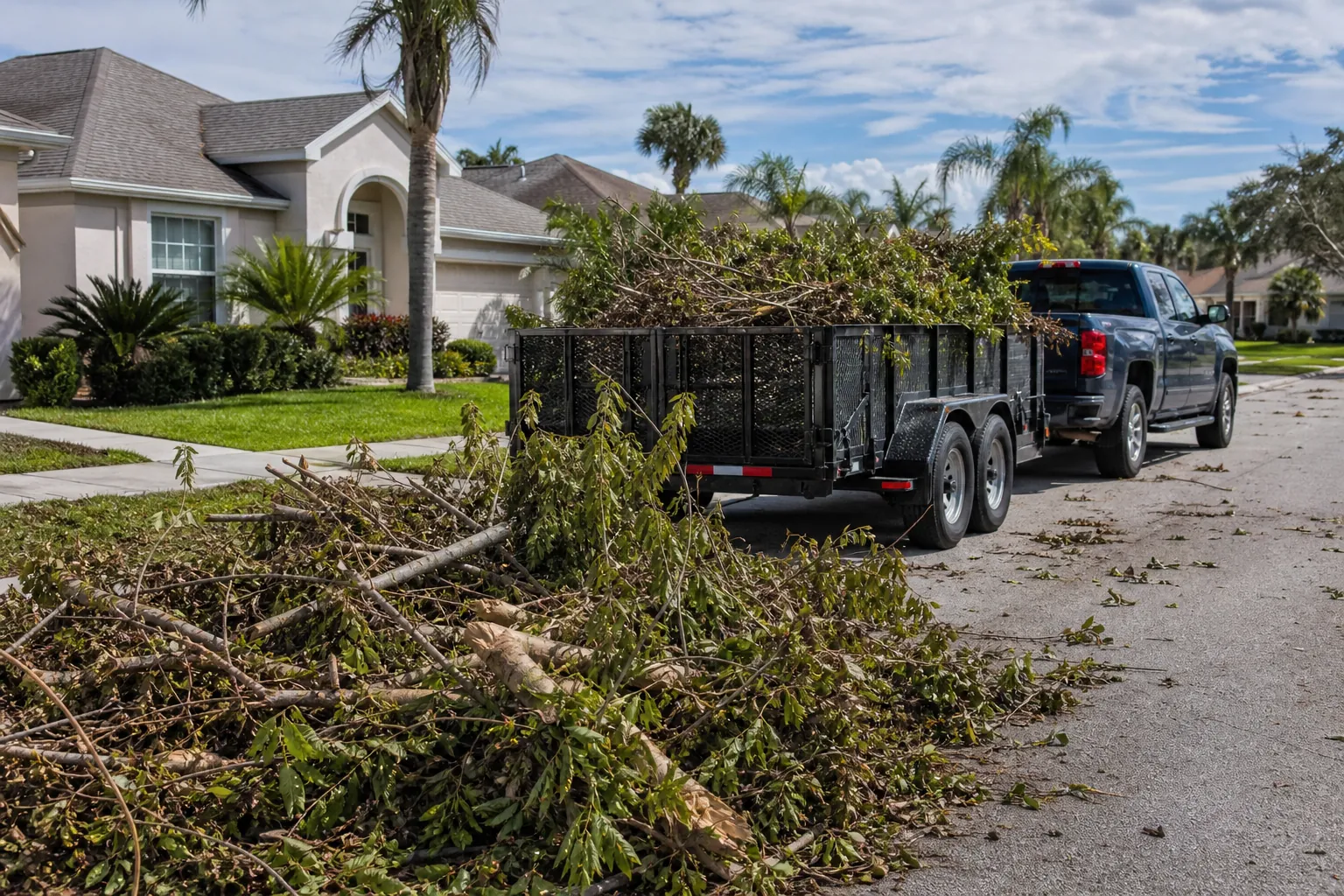
Good pile placement is not only about appearance. It affects whether a hauling vehicle can approach the material without unnecessary obstacles. Before speaking with a provider, review each proposed collection area for overhead clearance, turning space, surface conditions, parked cars, signs, mailboxes, fences, landscaping, and utility features.
Keep debris away from storm drains and avoid placing piles where they could obstruct visibility or traffic. Do not assume that every open patch of ground is suitable. Soft shoulders, saturated turf, tight corners, and low branches may change how a location can be approached. If access is uncertain, photograph the route as well as the pile.
The HOA should also decide who can authorize access through gates or restricted common areas. Provide accurate entry details when requesting service, and make sure residents know not to relocate piles after locations have been reviewed. Consistent placement allows the provider to assess the job as it actually exists. When conditions differ across the community, label photos and notes by street, building, entrance, or another clear internal reference.
Request a Scope Based on Specific Information
When contacting Daytona Grapple Trucks, be ready to describe the project in concrete terms. Share the number of collection areas, the general volume visible at each location, access limitations, and whether the piles are in HOA common areas or resident-designated locations. Mention any gate procedures or community rules that affect entry.
Ask what additional information is needed before the work can be discussed accurately. Photos and a simple site map may be useful, particularly in a large or divided community. The board should also confirm which materials are eligible before telling residents that everything placed outside will be removed. No HOA should assume that all storm-related material is handled in the same way.
Pricing can depend on the facts of a particular project. For a broader explanation of details that may influence a quote, read grapple truck pickup cost factors. Use that information to prepare questions, not to predict a final price. A direct conversation based on current site conditions is the more reliable decision-making approach.
Confirm Responsibilities and Communicate Final Details
Before the planned hauling, confirm what the HOA is responsible for and what residents must complete. The board may need to verify access, remove vehicles from designated areas, correct improperly placed piles, or provide a contact who can answer site questions. Put these responsibilities in writing so they are not dependent on informal conversations.
Send residents a concise final update. Include the approved collection locations, the placement deadline, access restrictions, and instructions not to add material after the cutoff unless the HOA provides further guidance. If weather or site conditions change, communicate that the plan is being reviewed rather than announcing an unconfirmed replacement schedule.
After the work, inspect common areas and compare them with the HOA’s original notes and photos. Document any remaining material and determine whether it was outside the agreed scope, added later, or located somewhere that was not reported. This review helps the board answer resident questions with facts and maintain useful records for future storm planning. A repeatable process can make the next community response more orderly.
Discuss Your HOA’s Storm Debris Plan
For a calm, direct conversation about storm debris hauling for a Volusia County HOA, call Daytona Grapple Trucks at (386) 481-7913. Have your photos, pile locations, access notes, and HOA contact information ready.
Call (386) 481-7913 to talk through next steps.