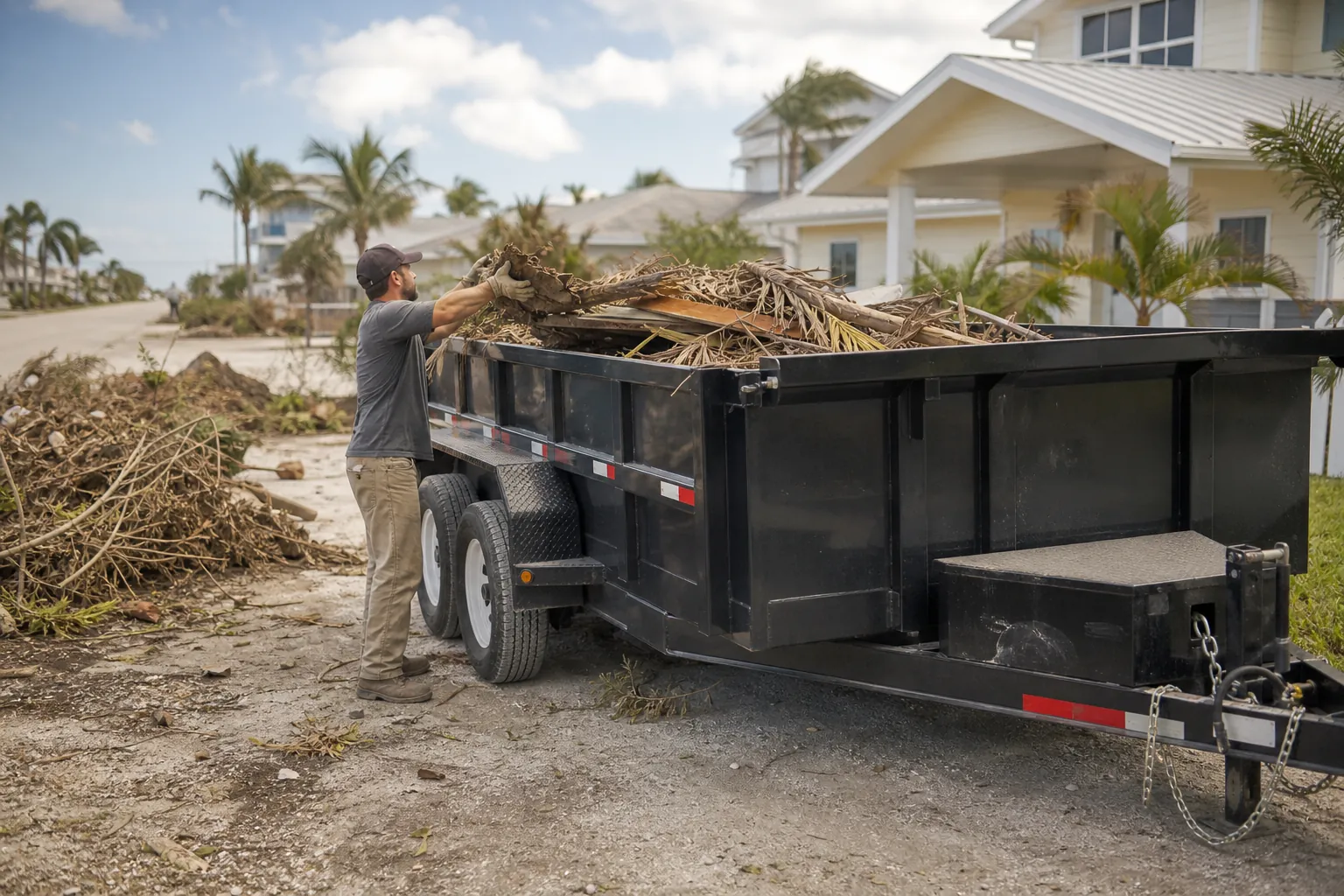
After a Florida storm, clearing a property involves more than collecting a few fallen branches. Large limbs, tangled vegetation, broken fencing, and scattered household materials can block access and create hazards. For homeowners and property managers in Ormond Beach, a thoughtful cleanup plan helps turn that disorder into manageable work without putting people or buildings at unnecessary risk.
Storm debris hauling is the removal stage of that process. Once debris is safely gathered and placed where loading equipment can reach it, a grapple truck can collect bulky material that would be difficult to handle with a small trailer or repeated pickup-truck trips. The right approach depends on what fell, where it landed, and whether the debris contains materials that require separate handling.
Daytona Grapple Trucks is a local contact for discussing storm debris removal needs in Ormond Beach. Before scheduling, it helps to understand safe preparation, material separation, truck access, and the questions that make a hauling estimate more useful.
Start With Safety Before Moving Storm Debris
A yard can look ready for cleanup while still containing serious hazards. Branches may be caught overhead, fences may lean under tension, and floodwater can hide sharp objects. Do not begin moving material until the immediate area is safe to enter and local emergency guidance allows normal activity.
Stay away from downed wires and anything touching them. A branch, puddle, fence, or vehicle near a damaged electrical line can present a danger even when the line appears inactive. Contact the utility or emergency services as appropriate rather than trying to clear access yourself.
Tree work and debris hauling are different tasks. A hauling crew should not be assumed to provide hazardous tree removal, roof work, or utility-line clearance. If a tree remains standing but damaged, or a limb is suspended above the work area, arrange an evaluation by an appropriately qualified professional before preparing a pickup pile.
- Keep children and pets away from debris piles, damaged trees, and loading areas.
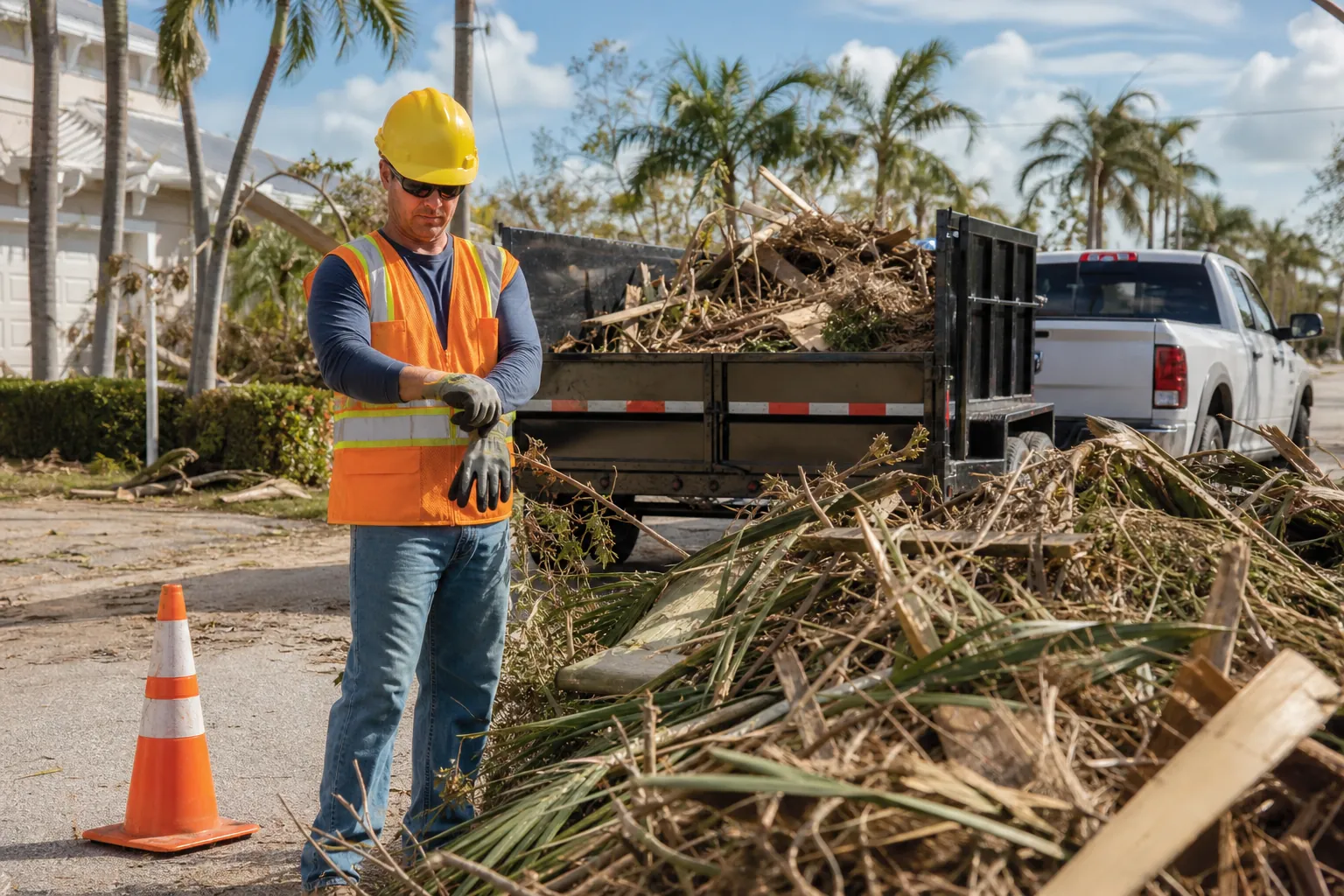
- Wear sturdy footwear, gloves, and eye protection when handling material that is safe to move.
- Avoid lifting large logs or tightly tangled branches without suitable equipment and assistance.
- Stop work if you notice unstable structures, shifting root plates, or branches moving overhead.
- Leave suspicious containers, chemical spills, and unknown liquids undisturbed until you receive proper handling guidance.
Cleanup does not need to happen all at once. Clearing a safe walking route and identifying hazards can be more valuable than rushing to build a large roadside pile.
Understand What A Grapple Truck Can Help Remove
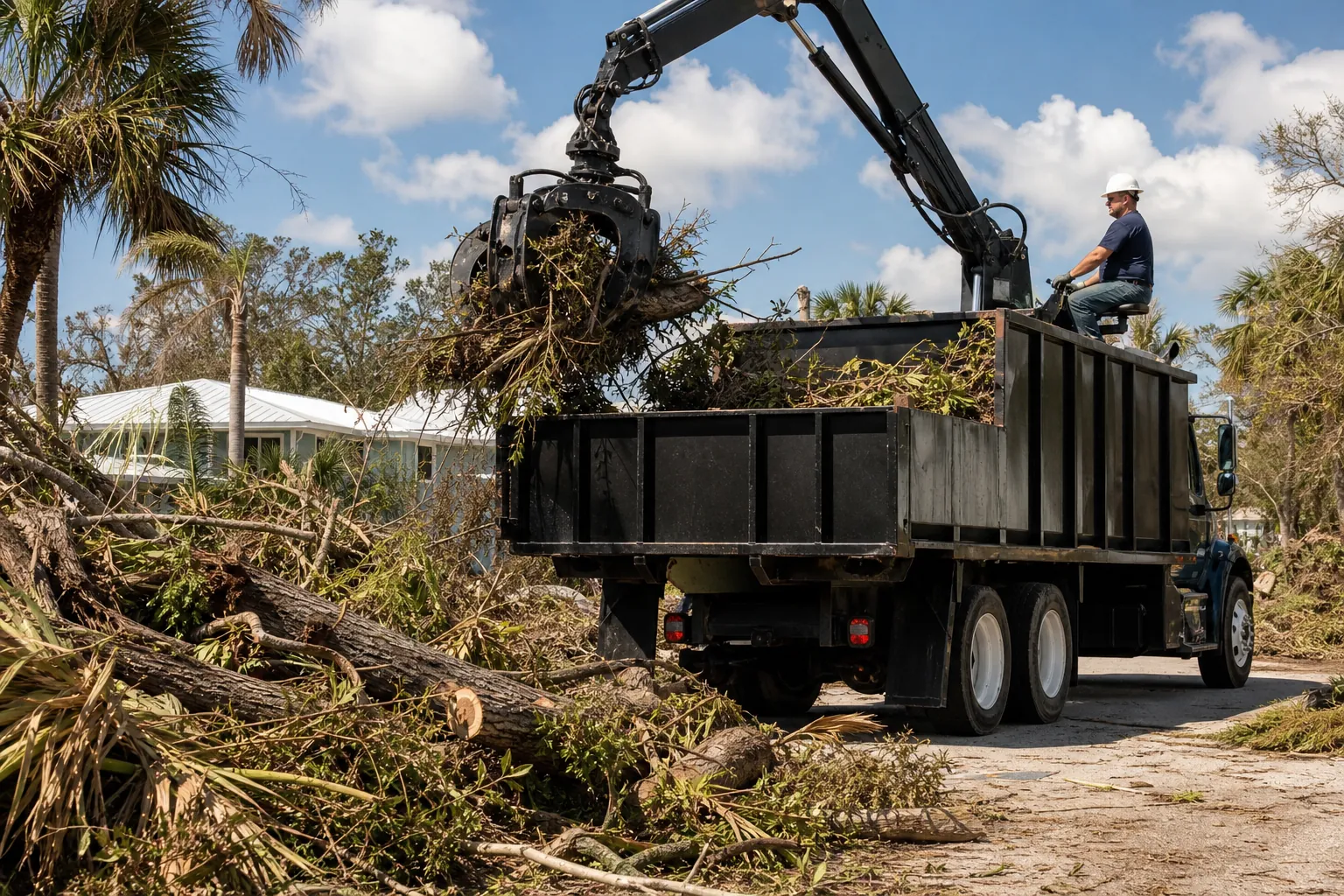
A grapple truck uses a hydraulic loading arm with a gripping attachment to lift bulky debris into its hauling body. This makes it useful for certain large cleanup piles, particularly vegetation that is awkward to load by hand. Its reach and lifting ability still have limits, and access conditions affect what can be collected safely.
Common storm-related materials include fallen limbs, cut branches, brush, and sections of downed trees. Depending on the provider's equipment and accepted materials, some other bulky debris may also be eligible for removal. Always describe the complete pile before booking rather than assuming that everything can go into one load.
Storm-damaged fencing, roofing, furniture, and household contents are not automatically treated the same as yard debris. Mixed materials can change disposal requirements, loading methods, and price. Soil-covered roots, heavy trunks, and waterlogged items also deserve specific mention because weight can matter as much as visible volume.
Materials such as paint, fuel, batteries, chemicals, and certain appliances may require separate disposal arrangements. Do not hide them beneath vegetation or place them into a pile without disclosure. A clear inventory lets the hauling provider explain what can be accepted and what needs another route.
When contacting Daytona Grapple Trucks, describe whether your request is for vegetation only, bulky items, or a combination. Ask whether cutting, gathering, or relocating material is included, since those tasks should be confirmed separately from loading and hauling.
Separate Debris Before Building Your Pickup Pile
Separating materials early can prevent a straightforward vegetation pickup from becoming a complicated mixed-debris job. Keep branches and brush together, and hold damaged building materials or household items in separate groups until the hauling requirements are confirmed.
For example, a broken fence may contain lumber, metal hardware, wire, and concrete footing pieces. A fallen tree may be tangled with roof shingles or patio furniture. Pulling those materials apart, when it is safe to do so, gives the provider a more accurate view of the job and helps identify disposal restrictions.
Do not assume storm debris is exempt from normal waste rules. Public collection programs and private hauling providers can use different categories, and requirements may change after a major event. Confirm current instructions with the appropriate local authority if you are considering public pickup.
- Group clean branches, brush, and other accepted vegetation in a dedicated pile.
- Keep construction and demolition materials separate until their acceptance is confirmed.
- Set aside electronics, batteries, and chemical products for an appropriate disposal option.
- Keep ordinary bagged household trash out of a vegetation pile.
- Tell the hauler about roots, dirt, concrete, metal, or other heavy material that may be difficult to see.
Good separation is not about making the yard look perfect. It is about reducing surprises during loading and avoiding material that could complicate the entire haul.
Choose A Pickup Location With Safe Truck Access
Where you place debris can be just as important as how much you have. A grapple truck needs a suitable place to stop and enough room to operate its loading arm. A pile that is easy to reach by wheelbarrow may still be inaccessible to a large truck.
Before moving heavy material, ask the provider where the pile should go. Share details about your driveway, roadside space, overhead wires, mature trees, and nearby structures. Photos can help reveal obstacles that are easy to overlook during a phone conversation.
Keep debris away from mailboxes, parked vehicles, fences, hydrants, utility cabinets, and drainage openings. Do not place it beneath utility lines or where lifting could bring equipment too close to them. Avoid blocking sidewalks, traffic lanes, or neighboring driveways.
Wet ground creates another concern in Florida. Saturated lawns and soft shoulders may not support a heavy truck, even after standing water disappears. Do not assume a truck can drive across grass, over a septic area, or onto decorative paving. Discuss the intended approach and any property-protection concerns in advance.
- Leave the pile visible and reachable without requiring equipment to work around parked cars.
- Keep access gates open only when doing so is safe and coordinated with the provider.
- Identify irrigation equipment, septic components, and other sensitive features near the loading area.
- Preserve drainage paths so rainfall can move away from the property.
- Ask about placement requirements before stacking debris along a public right-of-way.
If your property has limited access, explain that before scheduling. A different staging location or additional preparation may be needed, and discovering that early is better than finding out when the truck arrives.
Prepare Photos And Details For A Useful Estimate
A useful estimate starts with an accurate description, not just the statement that a yard has storm debris. The provider needs to understand material type, approximate quantity, loading access, and the work you expect to be included.
Take several photos from a safe distance. Include a full view of each pile, a closer view showing the materials, and a view of the truck approach. A recognizable object nearby can help show scale, but do not climb onto debris or enter a hazardous area for a better picture.
If possible, provide rough pile dimensions: length, width, and height. These measurements are only an estimate, since loosely stacked branches contain substantial empty space. Heavy logs, roots, or wet mixed debris can also affect the job differently from light brush of the same apparent size.
Explain whether the debris is already gathered or remains spread around the property. Note any unusually large pieces and whether other contractors will continue adding material. An estimate based on one prepared pile may need adjustment if the scope changes before pickup.
- Provide the Ormond Beach property address and a reliable contact number.
- Describe each material category and identify anything that may need separate disposal.
- Explain whether loading, hauling, cutting, or gathering is part of your requested work.
- Share access restrictions, overhead obstacles, and concerns about soft ground.
- Ask what assumptions the estimate uses and how additional material would be handled.
Clear information helps both sides establish realistic expectations. It also reduces the chance of an avoidable delay caused by an inaccessible pile or undisclosed material.
Compare Private Hauling With Public Collection
After a significant storm, residents may have access to public debris collection. Availability, eligible materials, placement instructions, and collection timing depend on current local arrangements. Check official Ormond Beach guidance rather than relying on an old announcement or a neighbor's experience from a previous storm.
Public collection can be a practical option when your material meets the program's rules and you can wait for the scheduled route. Private hauling may be worth considering when you need to restore access sooner, have a larger cleanup project, or want to coordinate removal with other property work.
Neither option should be chosen on timing alone. Compare what is included, where the debris must be placed, and whether all your materials qualify. Certain private-property work or mixed debris may fall outside a public collection program, while a private provider may also have acceptance limits.
For properties within a homeowners association, verify any relevant staging requirements without assuming those rules replace municipal requirements. Keep debris on an approved, accessible location and avoid creating a safety problem while waiting for pickup.
If you book a private haul, make sure the scope is clear and that you are not expecting a separate public crew to finish work included in that booking. A simple written description of the piles to be removed can prevent confusion.
Know What Can Affect Storm Debris Hauling Costs
There is no reliable one-price rule for every storm cleanup. A small, accessible brush pile and a large mixed load behind a narrow gate involve different work. An estimate should reflect your actual conditions rather than a generic price copied from another property.
Volume is one consideration, but it is not the only one. Dense logs, heavy root balls, and material containing soil can reach weight limits before filling a truck body. Disposal categories may also affect the total, especially when vegetation is mixed with building materials or household items.
Access and preparation matter too. Material that is gathered in an approved loading spot may require less handling than debris spread throughout a yard. Difficult access, additional equipment, or multiple trips can change the scope.
Ask whether the quoted amount includes loading, hauling, and applicable disposal charges. Confirm whether there are separate charges for preparation work or materials outside the original description. If the estimate is preliminary, ask what conditions could change it.
The lowest initial figure is not always the most useful comparison. A clear scope, realistic access plan, and transparent explanation of exclusions provide a better basis for deciding which option fits your cleanup.
Coordinate Cleanup Around Other Property Work
Storm cleanup often involves several people working on the same property. A tree professional may cut damaged wood, a repair contractor may remove broken materials, and a hauler may collect the prepared debris. Coordinating those stages keeps the removal plan from becoming inefficient.
Whenever possible, let the hauling provider review the intended pile location before other workers begin stacking material. This can prevent a large pile from being built behind a fence or beneath branches that interfere with loading.
Discuss whether all debris will be ready at one time. A single coordinated pickup may suit a finished cleanup, while a phased project may require separate arrangements. Do not assume the truck can wait while cutting or repair work continues.
Before arrival, move vehicles and secure pets. Keep people clear of the work area, and make sure the contact person is available to answer questions. After loading, inspect the area from a safe position for remaining small debris, exposed sharp objects, or damage that needs attention.
Save photos, estimates, and invoices if you are documenting storm-related expenses. Insurance coverage and reimbursement requirements vary, so check with your insurer rather than assuming a hauling charge will be covered.
Plan A Clear, Manageable Cleanup In Ormond Beach
The most effective storm debris hauling plan begins with safe conditions, separated materials, and an accessible pickup location. Those basics help turn a stressful cleanup into a defined job with fewer unknowns. They also make it easier to compare options and understand what the hauling visit will accomplish.
If you need to discuss debris removal in Ormond Beach, call Daytona Grapple Trucks at (386) 481-7913. Have photos, approximate pile dimensions, and a description of the materials ready. Ask about acceptance, access, scheduling, and the scope of the estimate before committing to service.
You do not need to solve every cleanup problem before making that call. A clear conversation about the debris and property conditions can help you determine the next practical step without moving hazardous material or building a pile in the wrong place.
Call (386) 481-7913 to talk through next steps.