
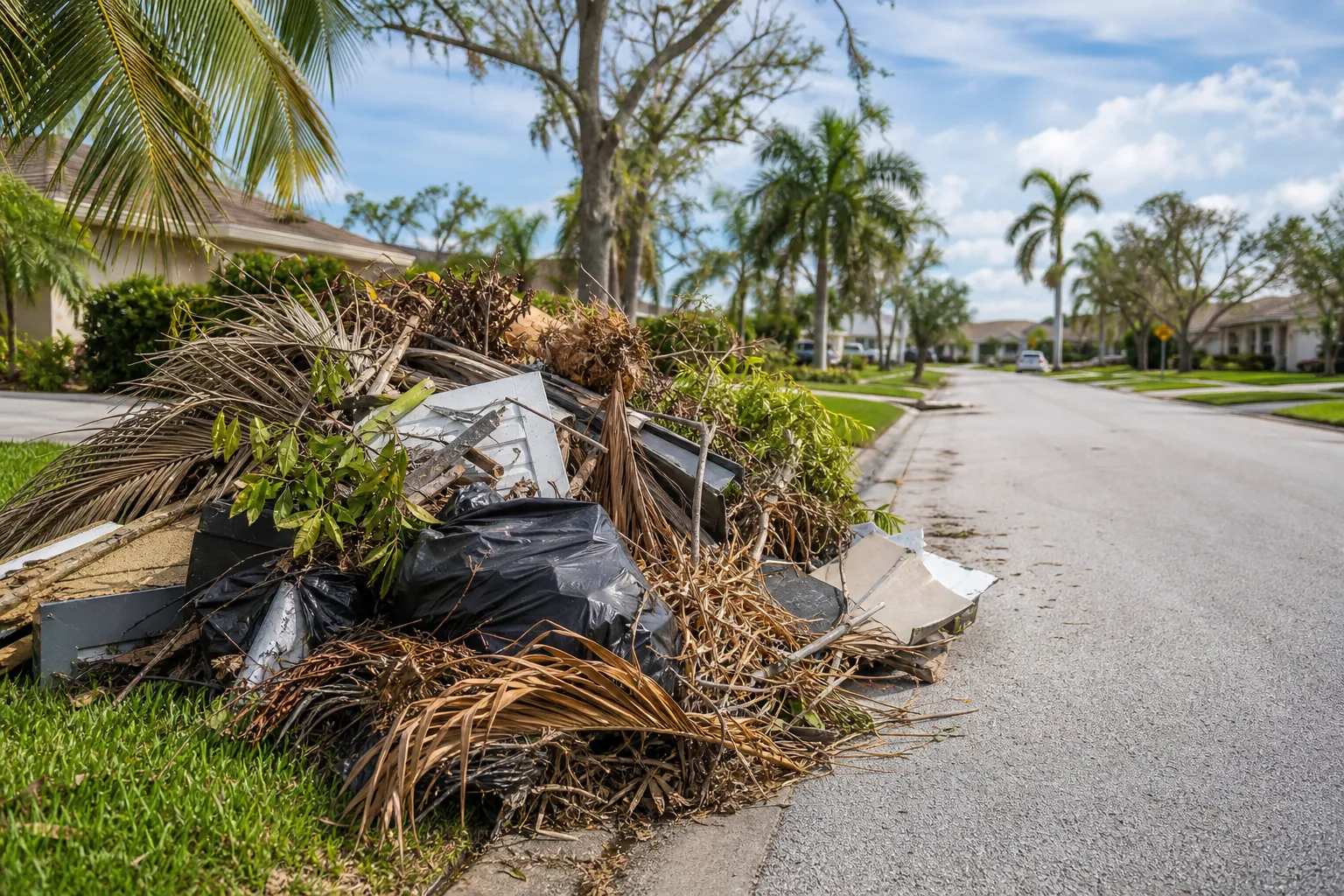
Before arranging storm debris pickup in Ormond Beach, take a careful look at the material, its location, and the route needed to reach it. A few practical checks can reduce confusion when you discuss the job and help you decide whether the site is ready. Focus first on safety, access, debris separation, nearby property, and clear communication about the scope of the work.
Start With Safety Before Inspecting the Debris
Do not enter a debris pile or move unstable material simply to estimate its size. Storm debris may conceal sharp branches, broken glass, nails, damaged fencing, displaced wildlife, or other hazards. Keep children and pets away from the area, and inspect it from stable ground. If you see a downed utility line, smell gas, notice structural damage, or find material touching electrical equipment, stay back and contact the appropriate utility or emergency authority.
Check whether trees, limbs, fencing, or building materials are still shifting. A pile that looks settled may move when one item is pulled free. Avoid standing beneath hanging limbs or leaning trees. Your immediate goal is not to reorganize every piece. It is to identify visible risks and determine whether the debris can be approached safely. Take photos from several safe angles so you can describe the conditions without repeatedly walking near the pile.
Identify What Is In Each Debris Pile
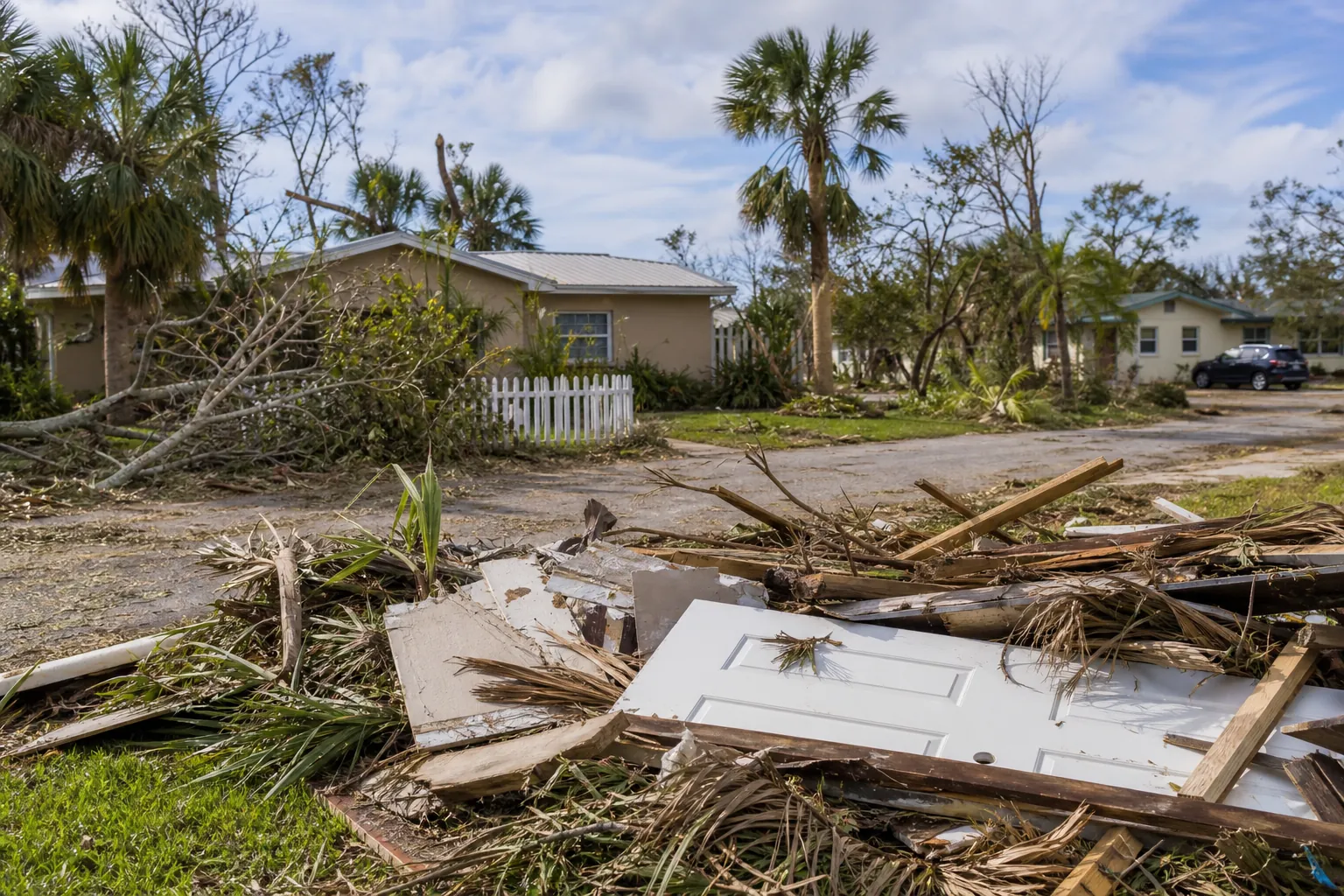
Storm cleanup can produce several kinds of material in the same yard. Before requesting pickup, note whether the pile contains branches, logs, leaves, fencing, roofing, household items, or mixed materials. Do not assume that everything can be handled together. Since no specific accepted-material list has been provided here, describe each material clearly when you call rather than relying on a general label such as “storm debris.”
If it is safe and permitted, keep unlike materials in separate groups. Avoid hiding bags, containers, wire, glass, or construction material beneath branches and leaves. Separation makes the contents easier to evaluate and prevents misunderstandings about the requested work.
- Photograph each pile from more than one side.
- Note the main materials and any concealed hazards.
- Estimate length, width, and height without climbing.
- Record whether debris is loose, bundled, tangled, or partly attached.
- Ask before adding more material after discussing the job.
Check Access From The Street To The Pile
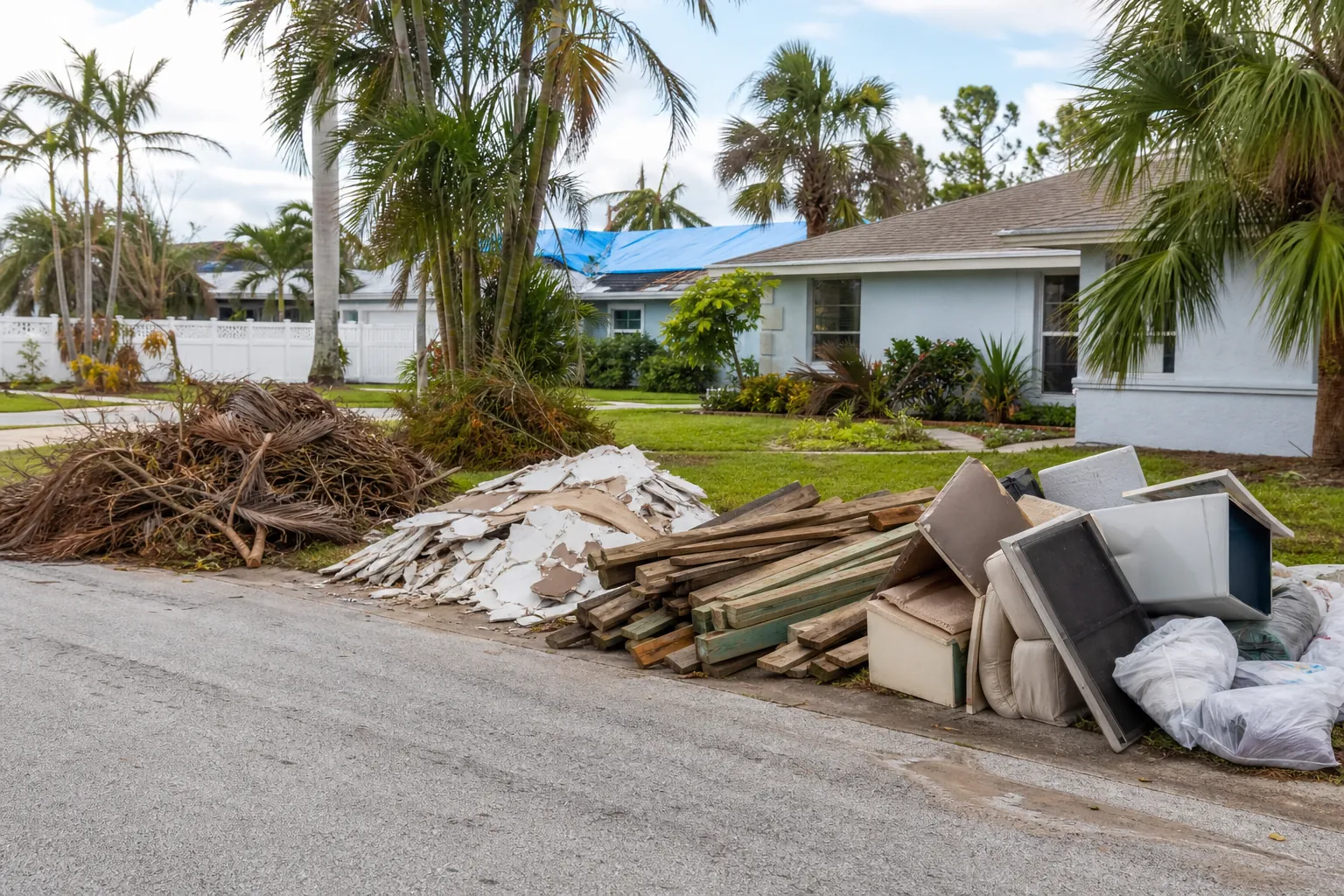
Access is more than whether the address has a driveway. Look at the full path from the street to the debris. Note gates, parked vehicles, low branches, mailboxes, fences, soft ground, narrow turns, drainage areas, and overhead lines. If access crosses a shared driveway or another person’s property, confirm permission before scheduling.
Measure uncertain gate openings and identify surfaces that may be saturated after the storm. Do not move utility markers, enter restricted areas, or guess whether heavy equipment can safely cross a lawn, septic area, culvert, or buried utility route. Instead, explain the conditions and provide photos when discussing the pickup.
Also check local parking restrictions and whether vehicles commonly block the approach. Keep the route free of toys, garden tools, hoses, portable decorations, and other removable obstacles. Clear information about the route helps define the job and allows access questions to be addressed before anyone arrives.
Protect Property And Confirm Placement Rules
Before moving debris toward the street, confirm the placement rules that apply to your property. Do not place material in a travel lane, across a sidewalk, over a storm drain, beside a fire hydrant, on top of utility equipment, or where it blocks a driver’s view. Avoid placing debris under overhead wires or against trees, fences, vehicles, signs, and mailboxes. If your neighborhood, property manager, or local authority provides instructions, follow those current directions.
Document the condition of nearby pavement, curbs, gates, landscaping, and structures before pickup. Photos create a useful record and help you discuss tight spaces or vulnerable areas. Mark irrigation heads or other features that are difficult to see, but do not mark utility locations yourself. Use the appropriate utility notification process when digging or ground disturbance may be involved.
If you cannot identify a safe staging area, explain that when calling instead of relocating the pile to a questionable spot.
Clarify Scope And Cost Before Scheduling
A useful pickup conversation should cover what is present, where it is located, how it can be reached, and whether any material remains attached to a tree, fence, or structure. Share the photos, measurements, access notes, and hazard observations you gathered. State whether the debris is in one pile or spread across the property. Also mention locked gates, pets, shared access, overhead obstructions, or soft ground.
Ask what information is needed to evaluate the request, what materials can be considered, and what site conditions may affect the work. For broader pricing context, review grapple truck pickup cost factors in Daytona Beach. Do not rely on a neighbor’s project as a direct comparison because pile contents, placement, access, and site conditions can differ.
Before confirming, make sure the discussed scope matches the current site. If the pile changes, provide an update rather than assuming the original discussion still applies.
Discuss Your Ormond Beach Pickup
Once you have photos, material notes, approximate dimensions, and access details, call Daytona Grapple Trucks at (386) 481-7913. A calm, specific description will help you discuss the request and determine the next appropriate step.
Call (386) 481-7913 to talk through next steps.