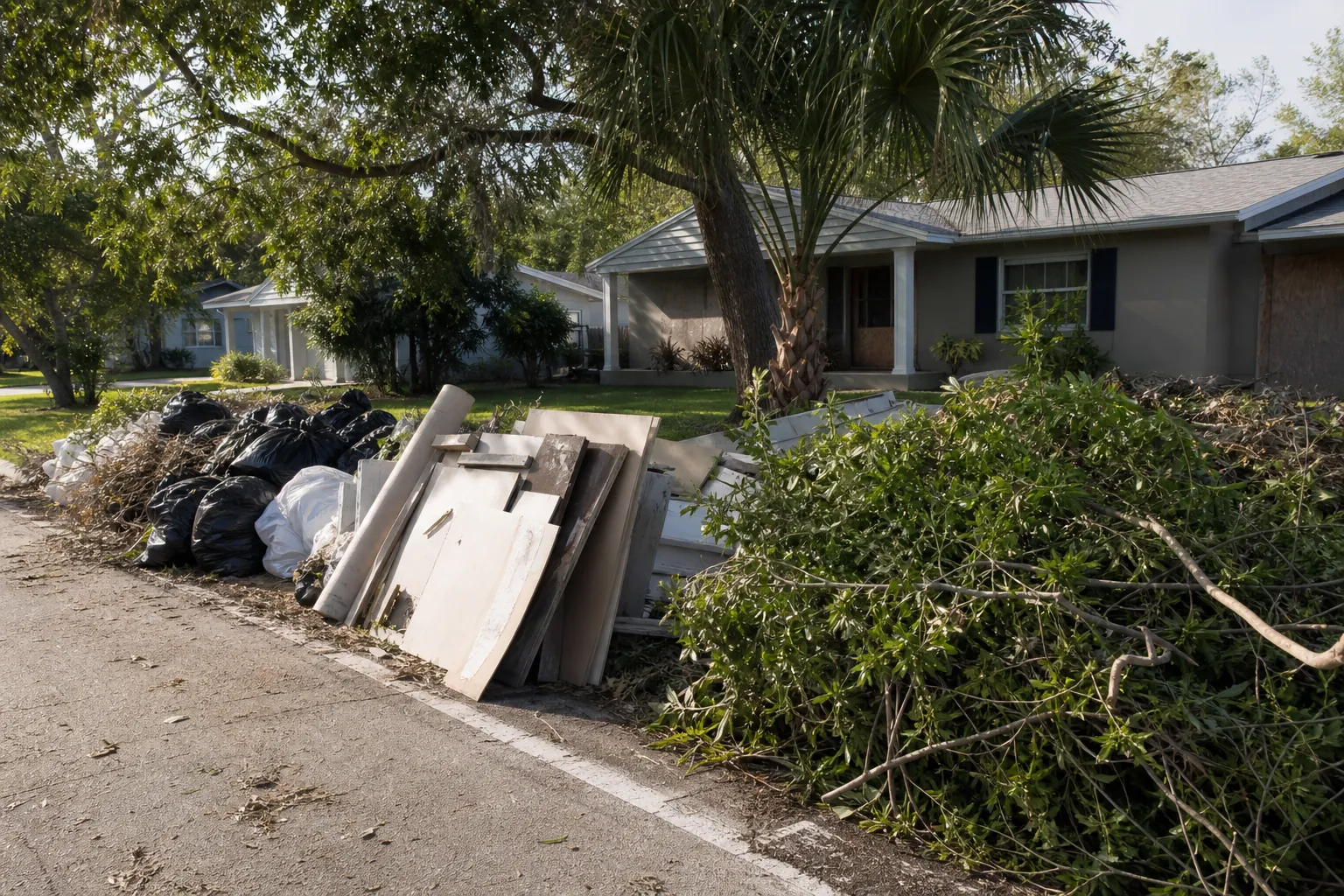
After a storm, the safest cleanup plan starts with organization, not speed. Volusia County property owners may encounter branches, damaged fencing, household materials, and other scattered items in the same area. Separating materials before arranging hauling can make the debris easier to assess and reduce confusion about what is actually in each pile. The steps below offer a practical way to evaluate the site, sort materials, and prepare useful information before calling Daytona Grapple Trucks.
Begin With Safety and a Clear Site Assessment
Before moving anything, walk the property only where conditions appear stable and visible. Do not enter damaged structures, stand beneath hanging limbs, approach downed utility lines, or move materials that may conceal electrical or structural hazards. If a dangerous condition is present, keep people away and contact the appropriate utility or public authority.
From a safe location, identify where debris has collected and what broad material types are present. Take photos before rearranging piles, especially when damage documentation may be important to you. Note blocked gates, narrow driveways, soft ground, overhead obstructions, parked vehicles, and other features that could affect access.
Next, decide whether the material can be sorted without unsafe lifting, cutting, or climbing. Property owners should not risk injury simply to create a neater pile. A useful assessment establishes three things: what the debris appears to contain, where it is located, and whether it can be reached safely. Those details will help you make a more informed hauling inquiry.
Separate Debris Into Practical Material Groups
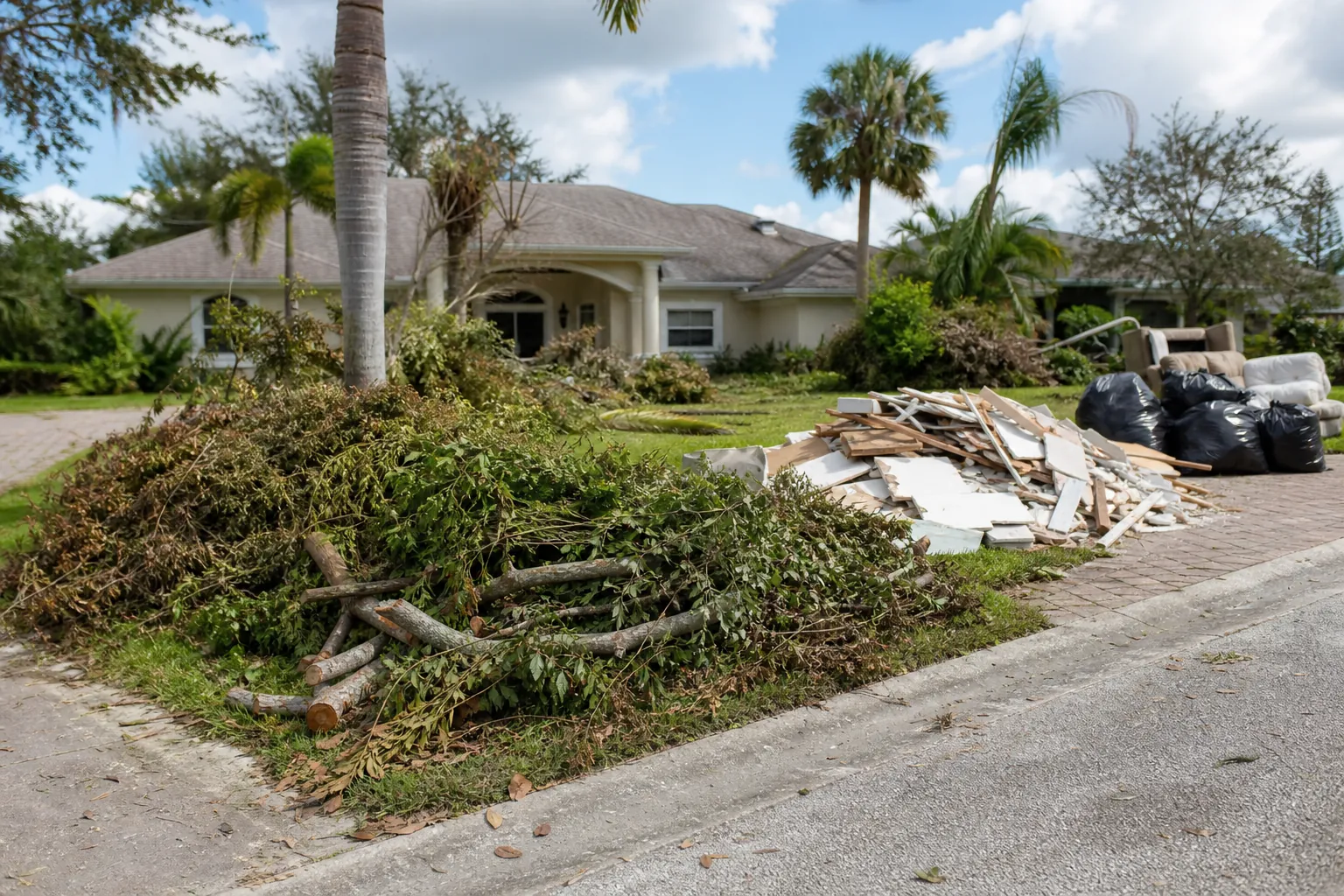
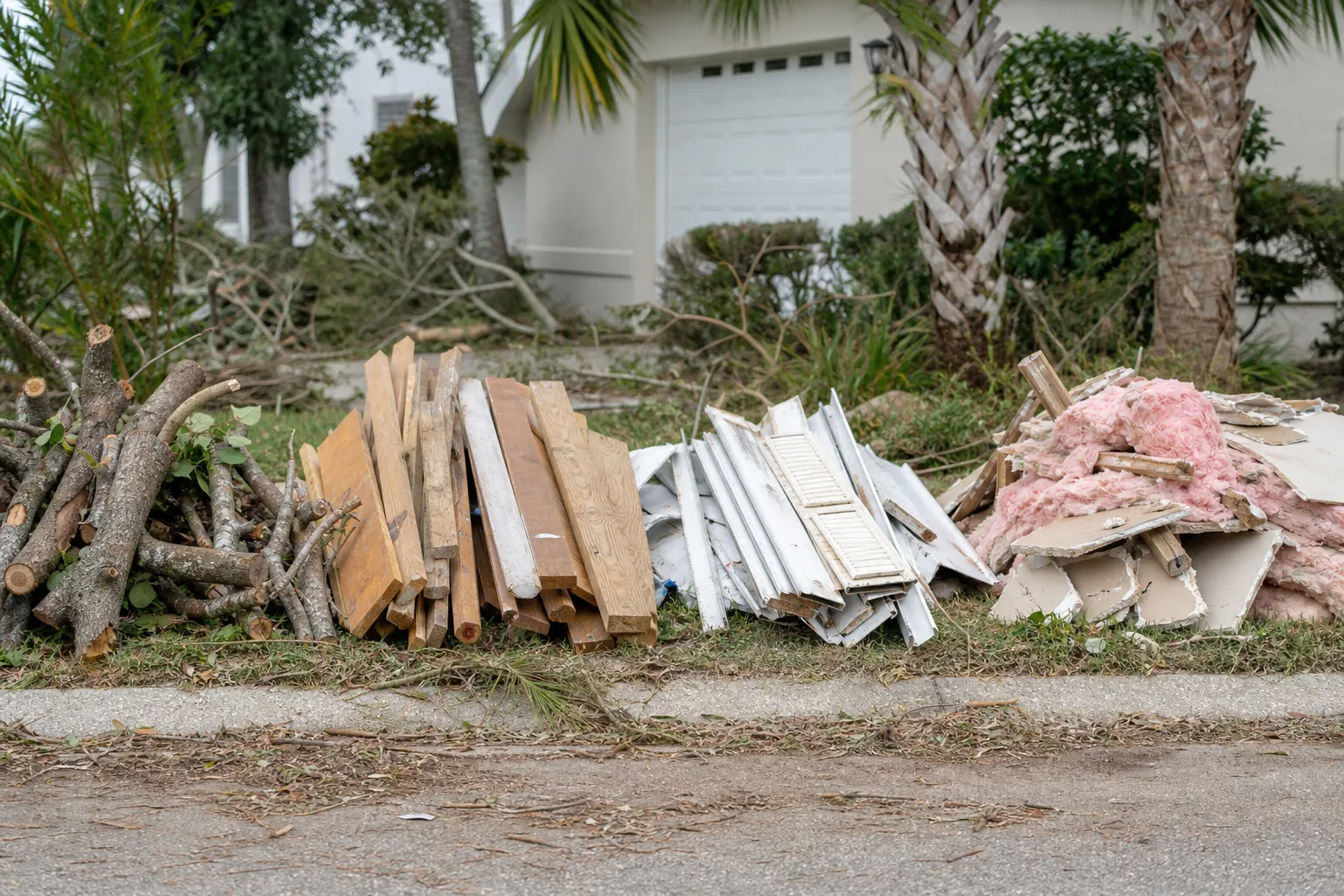
Mixed storm debris is harder to describe and evaluate than clearly separated material. Start by grouping items according to what they are, while avoiding anything that is leaking, unidentified, sharp, energized, or otherwise unsafe. Local instructions can vary after a storm, so check current guidance from the relevant public agency before placing material near a public road or relying on a government collection program.
- Place branches, leaves, and other vegetative material together when they can be handled safely.
- Keep damaged lumber, fencing, roofing pieces, and similar construction-related material separate from vegetation.
- Set household items apart from outdoor debris so their contents can be identified.
- Keep appliances and electronic items in distinct groups rather than burying them inside larger piles.
- Do not combine fuel, paint, chemicals, batteries, pressurized containers, or unidentified liquids with ordinary debris.
Sorting does not mean guessing. If you cannot identify an item or substance, leave it undisturbed and seek appropriate guidance. Clear separation helps prevent accidental mixing and gives a hauling provider a more accurate picture of the job before any arrangements are discussed.
Choose a Pile Location Without Creating New Problems
Where you place debris matters as much as how you sort it. Keep piles entirely on property you control unless current local instructions explicitly direct otherwise. Avoid blocking sidewalks, travel lanes, drainage paths, fire hydrants, mailboxes, utility equipment, and neighboring access. Do not place debris against buildings, beneath unstable trees, or where it could slide into a ditch or roadway.
When selecting a location, consider whether the material is visible and reasonably accessible. A pile behind a locked gate, under low wires, between vehicles, or beyond saturated ground may require additional planning. Leave space around separate groups so they remain identifiable instead of merging into one mixed heap.
Wind and rain can also move lightweight materials. Secure loose pieces only when doing so is safe, and avoid coverings or ties that could create another hazard. If you are unsure whether a proposed pile location is suitable, photograph the area from several angles. Those images can support a clearer conversation about access before you move heavy materials unnecessarily.
Document Volume, Contents, and Access Before Calling
A productive hauling conversation depends on specific information. Instead of saying that you have “a lot” of debris, describe the number of piles, their approximate length, width, and height, and the main materials in each one. Measurements do not need to be perfect, but a reasonable estimate is more useful than a general description.
Take wide photos that show each pile in relation to the driveway, gate, road, trees, and nearby structures. Add closer photos that make the contents visible. Mention whether piles are separated, whether anything is unusually long or bulky, and whether you noticed sharp, liquid-filled, or unidentified items.
Access details are also important. Explain the surface leading to the debris, any gate or overhead limitations, and whether vehicles or other objects can be moved. Cost discussions may depend on the material, quantity, site conditions, and other job-specific considerations. For related planning information, read this guide to grapple truck pickup cost factors in Daytona Beach.
Confirm the Plan Before Anything Is Hauled
Sorting is preparation, not confirmation that every item can be accepted or removed. Before scheduling, clearly describe all material groups and ask whether additional separation is needed. Do not assume that ordinary storm debris, household goods, appliances, electronics, chemicals, and unidentified containers can be handled together. A direct conversation helps identify questions before the planned pickup.
Also confirm the intended pile location and discuss any access concerns shown in your photos. If conditions change after more rain, additional cleanup, or movement of vehicles, provide updated information. Keep children, visitors, and pets away from debris piles while arrangements are pending, particularly where nails, splintered wood, broken materials, or unstable branches may be present.
Finally, retain your photos and a simple list of the pile contents for reference. This record can help you explain changes and avoid overlooking a separate debris area. The goal is not to make the site look perfect. It is to present materials clearly, protect access, and make the next decision with accurate information.
Discuss Your Storm Debris
For a calm conversation about storm debris hauling considerations, call Daytona Grapple Trucks at (386) 481-7913. Be ready to describe the materials, pile sizes, location, and property access.
Call (386) 481-7913 to talk through next steps.