
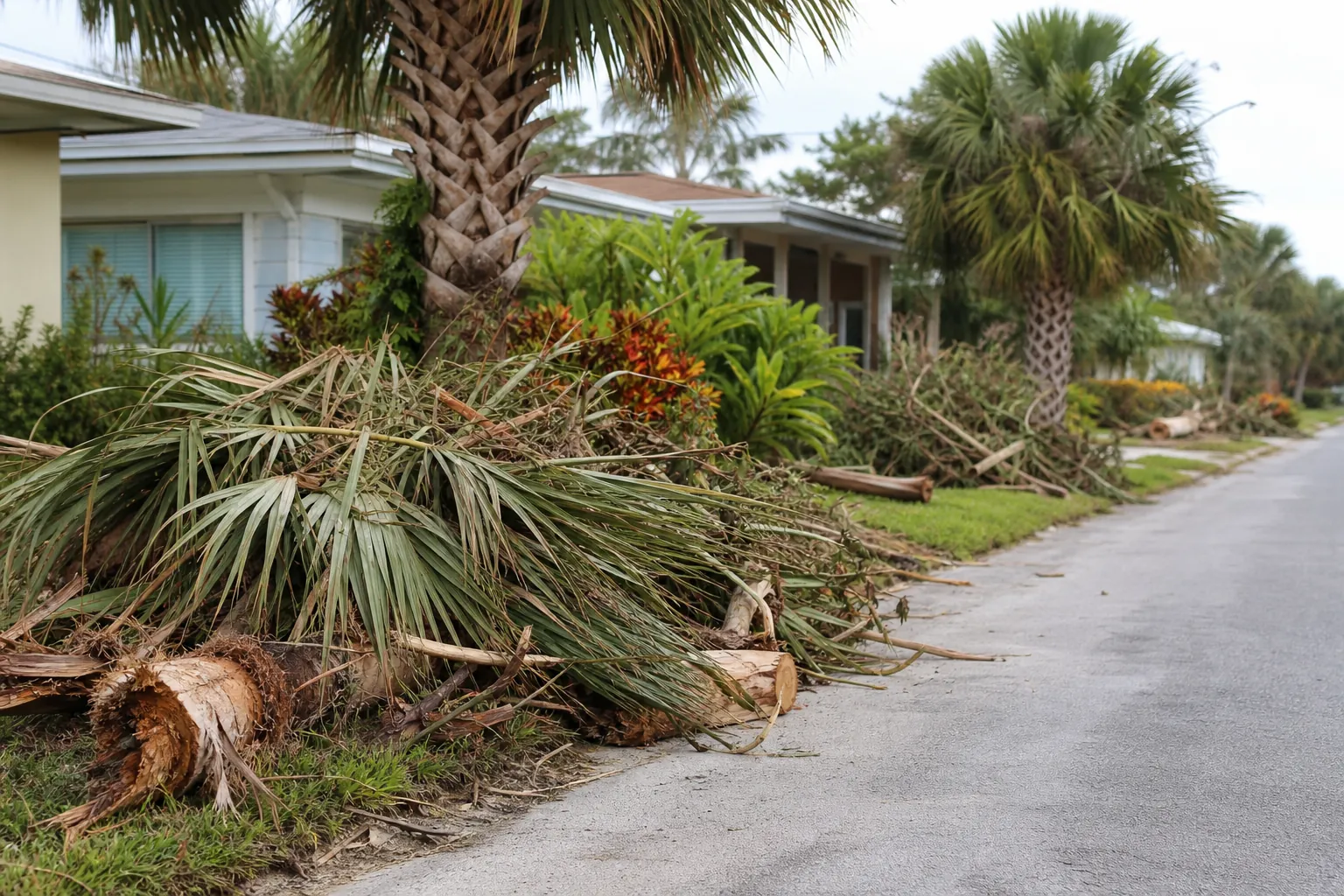
After a tropical storm, fallen palm fronds, trunks, and mixed yard debris can quickly cover a property. Before arranging removal in New Smyrna Beach, take time to make the area safe, separate materials, and identify access limitations. These steps can help you explain the job clearly when you call Daytona Grapple Trucks at (386) 481-7913.
Start With Safety Before Moving Palm Debris
Do not begin cleanup until storm conditions have passed and you can inspect the property safely. Look for downed or low power lines, unstable trees, hanging limbs, damaged structures, standing water, sharp materials, and blocked exits. Keep people and pets away from questionable areas. Never touch a power line or debris that may be in contact with one. If a tree or palm is leaning, split, or suspended, avoid working beneath it.
Wear sturdy footwear, gloves, long sleeves, and eye protection when handling loose fronds. Palm material can have sharp edges, hidden thorns, and splintered ends. Move manageable pieces only when doing so will not expose you to additional hazards. Do not climb damaged palms or attempt to pull down suspended material.
Take photos before moving anything, especially if debris is near a building, fence, vehicle, utility line, or public area. Documentation preserves a record of the original conditions and helps you describe the amount and location of debris accurately.
Separate Palm Material From Other Storm Waste
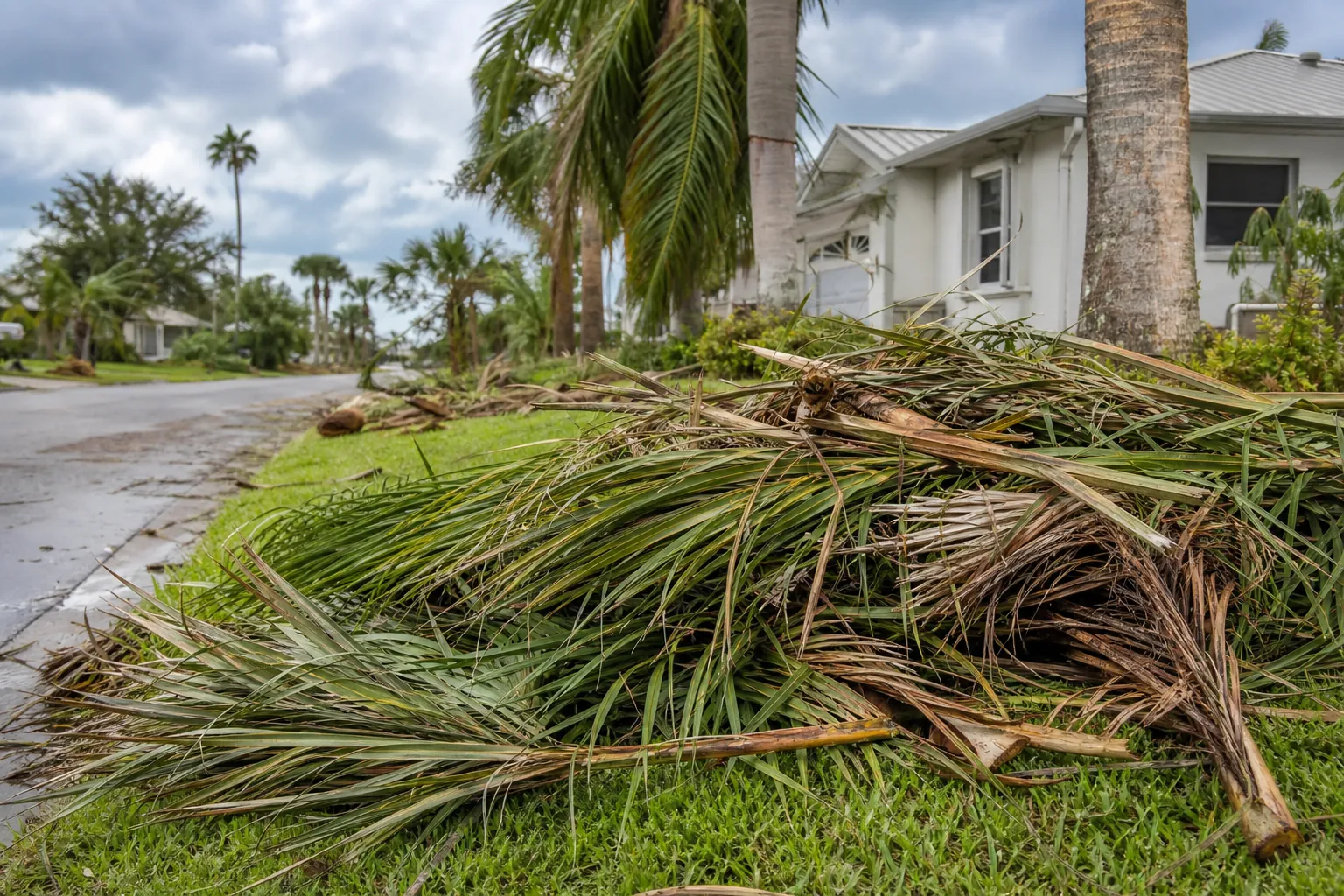
Create distinct groups before pickup rather than combining every storm-damaged item into one pile. Keep palm fronds, sections of trunk, and other vegetative material separate from household trash, construction materials, fencing, roofing, metal, glass, appliances, and hazardous items. Separation makes the contents visible and helps prevent sharp or heavy objects from becoming concealed beneath flexible fronds.
Use a straightforward sorting process:
- Place loose palm fronds together with their cut ends generally facing the same direction.
- Group manageable trunk sections separately from lighter fronds and leaves.
- Keep soil, rocks, pots, landscape edging, and fencing out of the palm pile.
- Set aside damaged household items instead of hiding them beneath vegetation.
- Mark or isolate pieces containing nails, wire, glass, or other sharp materials.
If you cannot identify an item safely, leave it undisturbed and mention it when discussing removal. Clear information is more useful than trying to force uncertain material into a category.
Choose A Placement Area With Practical Access
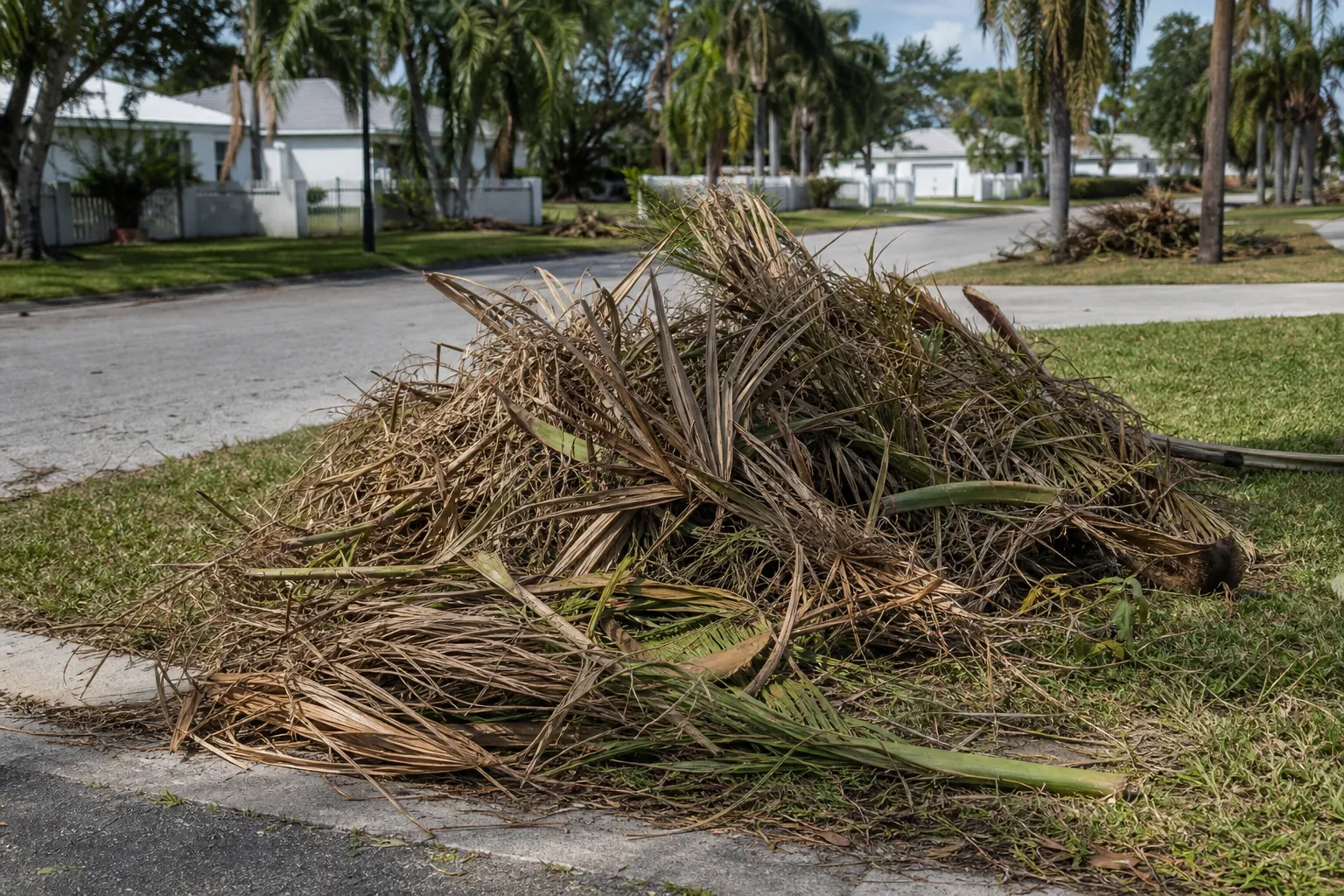
Place debris only where you have permission and where it does not block roads, sidewalks, driveways, drainage paths, mailboxes, fire hydrants, gates, or neighboring property. Avoid stacking material beneath overhead lines or close to utility equipment. Do not push debris into standing water, storm drains, canals, or traffic areas.
Think beyond where the pile fits. Consider how a truck could approach the property, whether parked vehicles restrict access, and whether branches, gates, fences, soft ground, or narrow turns create obstacles. Keep the area around the pile as open as reasonably possible. If the safest location is inside a fenced or constrained area, photograph the route and measure any gate opening before calling.
Do not assume curb placement is automatically permitted. Local requirements and post-storm instructions may affect where debris can be placed. Check current official guidance that applies to your address before moving material into a public right of way. When uncertain, keep debris on your property until you confirm an appropriate location.
Make The Pile Visible, Stable, And Easy To Describe
A compact, orderly pile is easier to assess than debris scattered across several parts of a yard. Bring loose fronds together without creating a pile so tall or unstable that material can slide into a walkway or road. Avoid tying, bagging, or covering palm debris unless the pickup arrangement specifically calls for it. A tarp can hide mixed materials and make the pile difficult to evaluate.
Cut or move pieces only if you can do so safely with tools you know how to use. There is no benefit in taking unnecessary risks simply to make the pile look uniform. Instead, record practical details: the approximate length, width, and height of the pile; the number of separate piles; whether trunk sections are included; and the distance from the pile to the nearest usable access point.
Photos from multiple angles can clarify scale and reveal nearby obstacles. Include one wider image showing access and closer images showing the material. For budgeting context, review these grapple truck pickup cost factors.
Gather The Details Needed Before You Call
Before contacting Daytona Grapple Trucks, prepare a concise description of the situation. State that the property is in New Smyrna Beach, explain that the debris resulted from a tropical storm, and identify what the pile contains. Mention whether the material is entirely vegetation or mixed with other storm waste. Describe any large trunk sections, sharp objects, unstable pieces, gates, overhead lines, narrow access, soft ground, or parked vehicles.
Also explain where the debris currently sits and whether local instructions affect placement. If there are multiple piles, identify their locations rather than combining them into one estimate. Have measurements and photos available, but do not enter an unsafe area to obtain them.
This preparation helps you make a more informed decision and reduces uncertainty during the initial conversation. It also gives you an opportunity to ask what information is still needed before any arrangement is discussed. Avoid relying on assumptions about acceptable materials, access, timing, or pricing. Confirm the details directly based on the actual condition of your property and debris.
Discuss Your Palm Debris Situation
For a calm, direct conversation about tropical storm palm debris in New Smyrna Beach, call Daytona Grapple Trucks at (386) 481-7913. Describe the materials, pile location, and access conditions so the discussion can focus on your specific situation.
Call (386) 481-7913 to talk through next steps.