
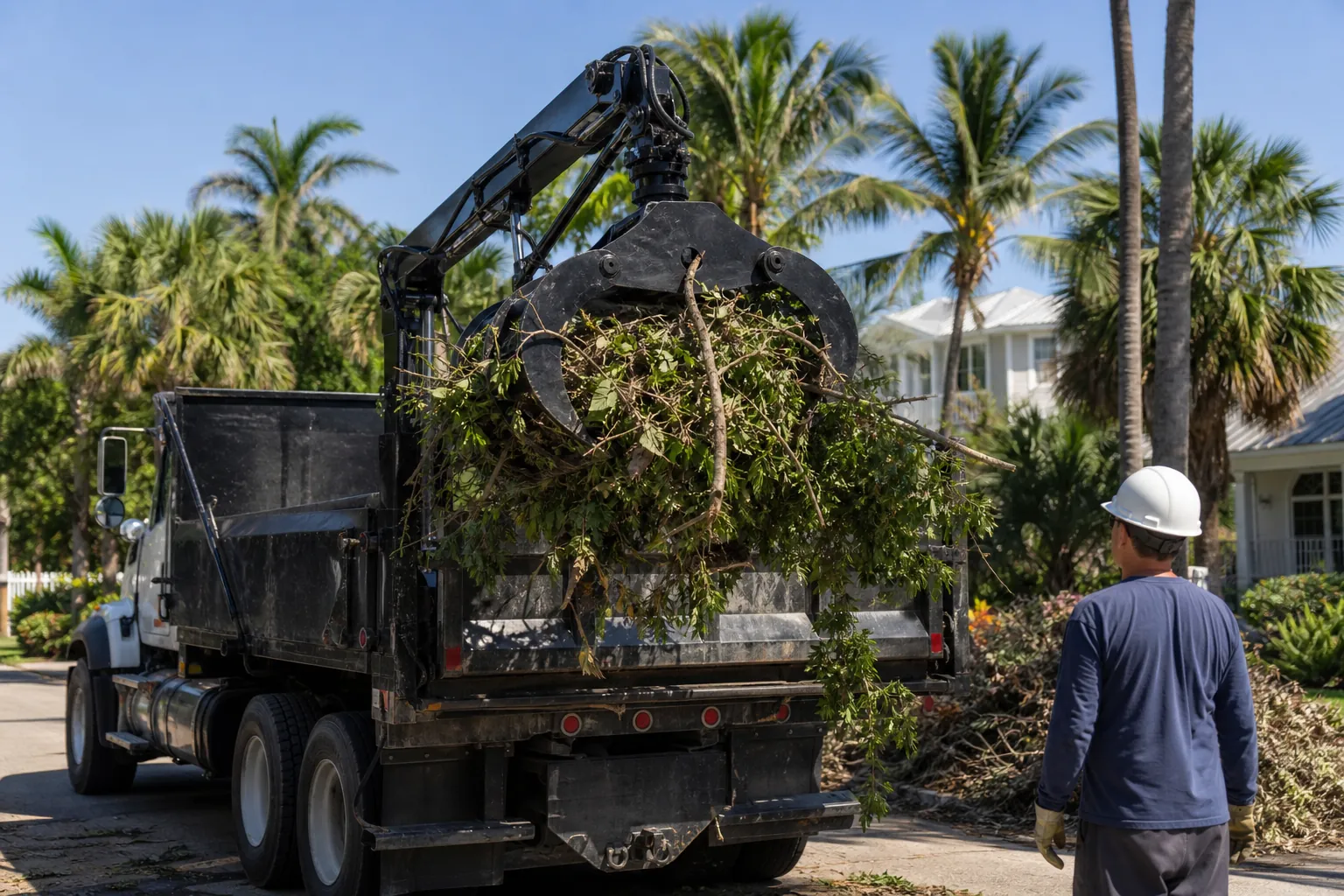
A freshly trimmed property can leave behind more material than expected. Palm fronds stretch across the driveway, branches refuse to fit in containers, and a brush pile grows with every pass through the yard. When the cleanup becomes larger than the landscaping project itself, grapple truck hauling may be a practical next step.
For property owners comparing yard waste grapple truck New Smyrna options, the important questions are straightforward: What can be collected, where should the debris go, and can the truck safely reach it? Answering those questions before scheduling helps avoid unnecessary handling and pickup-day surprises.
Daytona Grapple Trucks can discuss yard debris hauling needs in New Smyrna Beach, FL. This guide explains when mechanical loading makes sense, how to prepare your pile, and what details to share when requesting a pickup.
When A Grapple Truck Makes Sense For Yard Waste
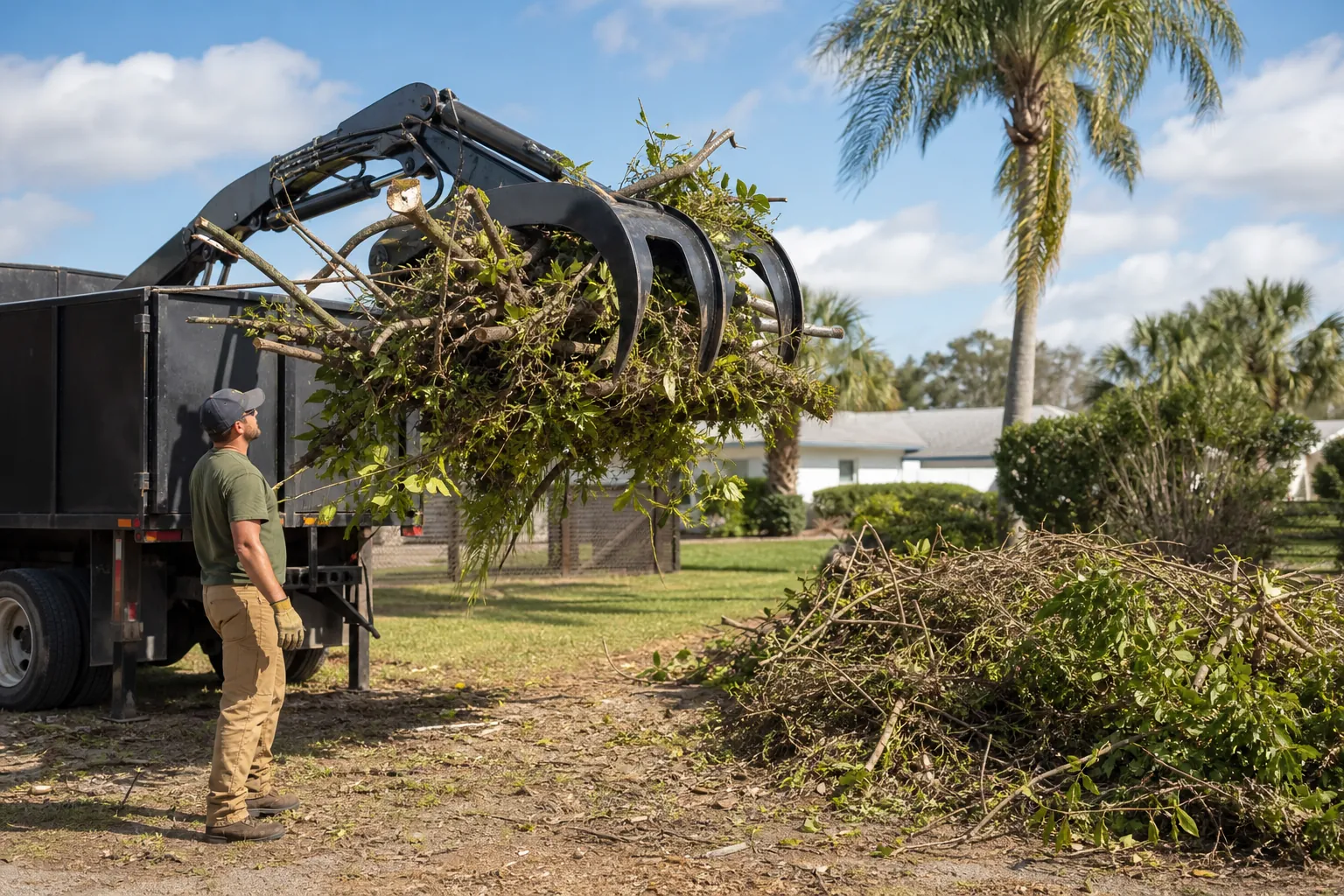
A grapple truck uses a hydraulic loading arm with a claw-style attachment to lift loose debris into its hauling body. Instead of carrying every branch by hand, the operator can collect accessible material in larger grabs. That makes the equipment particularly useful for bulky vegetation that is awkward to bag or move repeatedly.
The best fit depends on both the debris and the site. A large, reachable pile of branches may be straightforward to load, while a smaller pile behind a fence may require additional preparation. Volume alone does not determine whether a grapple truck is the right solution.
- Tree trimming projects often produce long limbs and uneven branches that are difficult to contain for routine pickup.
- Palm maintenance can leave substantial fronds and bulky vegetation that occupy more space than their weight suggests.
- Overgrown lot cleanup may create several brush piles that need consolidation before loading.
- Storm cleanup can generate scattered vegetative debris that becomes easier to haul once it is safely gathered.
- Landscape renovation may require removing old shrubs and woody growth before new planting begins.
For a few small bags of leaves, existing collection options may be sufficient. For a concentrated pile of bulky material, a hauling service may reduce the need for repeated loading and trips. Describe the actual debris rather than assuming a truck is necessary based only on the project name.
Identify What Is In The Pile Before Scheduling
Yard waste generally means vegetative material, but individual loads can contain items that change how the job is handled. Branches, leaves, brush, and palm fronds are different from fence boards, landscape fabric, plastic pots, or leftover construction materials.
Keep the description specific. A pile labeled “yard debris” might be mostly light brush, or it might include heavy root balls and large trunk sections. Those differences affect loading, truck capacity, and potential disposal requirements.
- Identify whether the pile contains branches, palm fronds, leaves, shrubs, logs, or a combination of these materials.
- Mention substantial trunk sections and give approximate lengths and diameters when possible.
- Disclose root balls, attached soil, rocks, and unusually heavy pieces before requesting a price.
- Separate lumber, metal, plastic, household trash, and other nonvegetative materials unless their collection has been confirmed.
- Ask about bagged material rather than assuming it will be handled the same way as loose vegetation.
Do not hide questionable material beneath branches. Mixed debris can affect disposal options and may require a different plan. Clear information allows the hauling provider to explain what can be accepted and how any separate materials should be managed.
If you are uncertain about an item, take a close photograph and ask. That is especially useful for old landscape timbers, treated wood, oversized stumps, and soil-heavy debris. Acceptance should be confirmed before these items are added to the pickup pile.
Choose A Loading Location With Safe Access
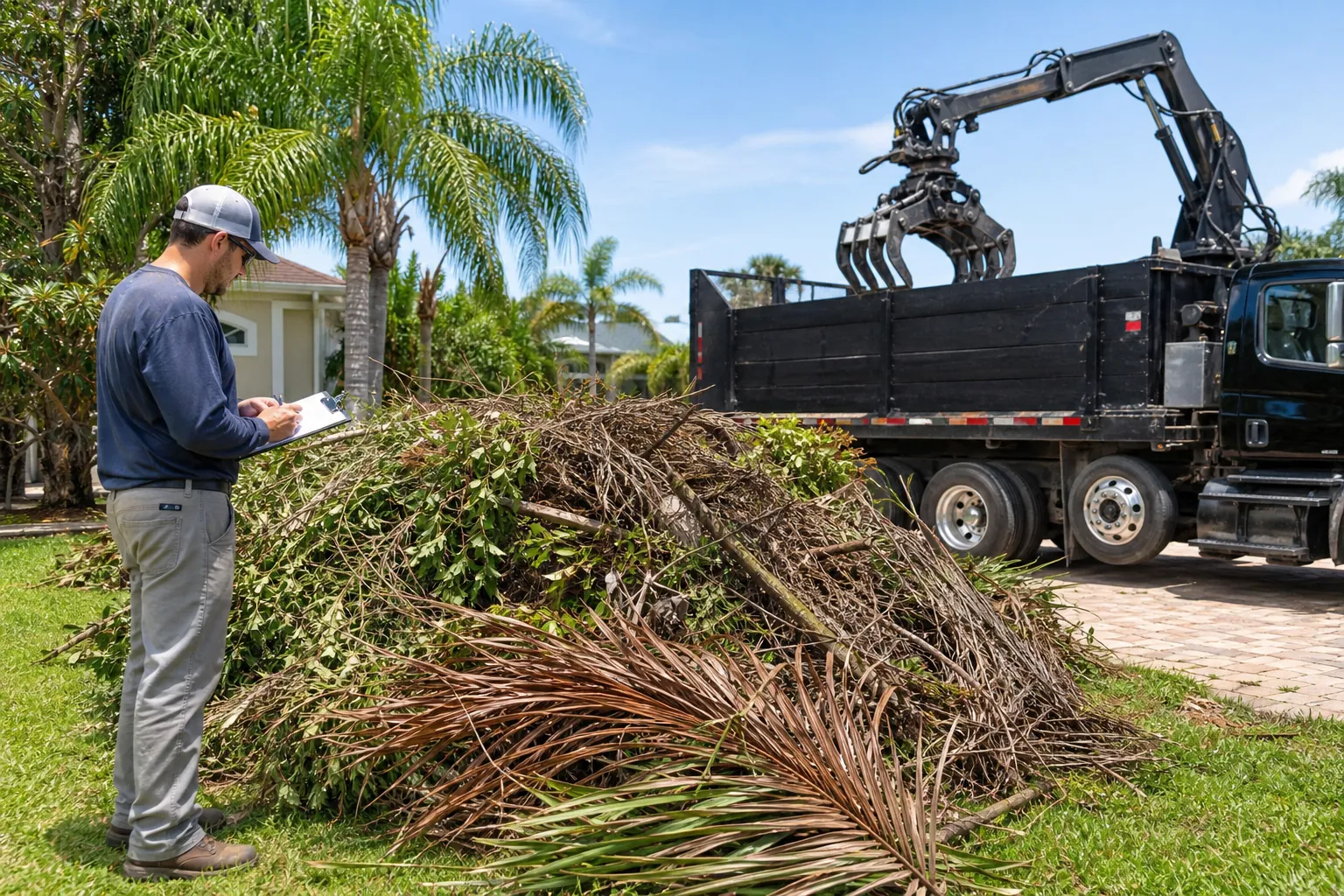
A grapple truck needs more than a route to your address. It needs a suitable place to position the vehicle and operate the loading arm. Street layout, overhead clearance, nearby objects, and the distance from the truck to the pile all matter.
In New Smyrna Beach, properties can vary from compact residential lots to sites with longer driveways or restricted access. A pile that is convenient for the person trimming the yard may not be convenient for mechanical loading. Discuss placement before moving a large amount of material.
Avoid placing debris under overhead utility lines or tightly against trees, fences, walls, and parked vehicles. The loading arm needs room to move, and the operator must be able to distinguish the debris from surrounding objects.
- Keep the pile away from utility equipment, drainage structures, mailboxes, and other fixed obstacles.
- Leave sidewalks and pedestrian routes clear rather than using them as temporary storage areas.
- Keep fire hydrants visible and accessible throughout the cleanup.
- Tell the provider about narrow gates, sharp driveway turns, low branches, and limited parking.
- Ask whether the proposed surface is suitable for the truck before directing it onto grass or a driveway.
Heavy vehicles can affect vulnerable surfaces, especially where the ground is soft or the underlying support is uncertain. Do not assume a truck can drive across a lawn, over a septic area, or near concealed irrigation components. Identify those concerns during the initial conversation.
Likewise, do not assume the loading arm can reach over a fence or retrieve material from a backyard. Reach depends on the equipment, obstacles, and safe operating position. Sending photos of the access route as well as the debris helps make that discussion more useful.
Build A Pile That Is Easier To Collect
Good preparation is about accessibility, not making the pile look perfectly tidy. The goal is a clearly defined collection area containing the agreed materials, with enough space around it for safe loading. A workable pile can save you from moving the same debris twice.
Start by choosing a location approved for the pickup. Then gather vegetation into one accessible area when practical. Several small piles spread around the property can create more handling than one consolidated pile, particularly if some are beyond the truck’s reach.
- Keep loose branches and brush together rather than scattering them along the entire property frontage.
- Arrange long limbs so they do not extend into travel lanes, sidewalks, or neighboring property.
- Remove visible litter and unrelated materials while building the pile.
- Keep debris away from vehicles and movable equipment that will still be present on pickup day.
- Stop adding material once the quoted scope is established unless you notify the hauling provider.
Do not cut heavy wood solely to meet an assumed length requirement. Ask whether any size limits apply to your particular pickup. Unnecessary cutting adds work and can create safety risks, especially when branches are unstable or under tension.
Leaves and small trimmings require some thought because they can spread in wind or wash toward drainage areas. Ask how fine material should be contained or staged. Avoid covering the entire pile with materials that could interfere with loading unless the provider recommends it.
Understand The Difference Between Routine Collection And Private Hauling
Municipal collection and privately arranged grapple hauling serve different needs. Routine service may be appropriate for modest amounts of properly prepared yard waste. A private pickup may be worth discussing when a landscaping project produces more debris, requires different timing, or involves material outside routine collection guidelines.
Before putting debris near the street, check current local guidance for your address. Collection schedules, preparation rules, placement requirements, and contractor-generated debris policies can change. A neighbor’s past experience is not a substitute for current information.
If a tree service or landscape contractor is doing the work, clarify who is responsible for hauling before the project begins. Some proposals include debris removal, while others leave it to the property owner. Confirming that detail prevents a finished trimming job from becoming an unexpected cleanup bill.
Private hauling also does not automatically authorize placement in a public right-of-way. Keep access and drainage clear, and verify any applicable requirements. If your property is subject to community rules, check whether there are restrictions on staging debris or bringing in large vehicles.
The practical choice comes down to the pile, the available collection options, and your timeline. You may not need a separate truck for a small cleanup. A substantial accumulation of branches or brush deserves a more detailed discussion.
What To Share When Requesting A Hauling Quote
A useful quote starts with a useful description. You do not need an exact weight, but the provider needs enough information to understand the amount of debris and the work required to reach it. Photos are especially helpful for irregular piles.
Take a wide photo showing the complete pile and its surroundings. Then photograph the heaviest pieces and any access constraints. A close-up of branches alone does not show whether the truck can position nearby or whether the pile extends far beyond the frame.
- Provide the pickup address in New Smyrna Beach and explain where the debris is located on the property.
- Estimate the pile’s length, width, and height without climbing onto it.
- Describe the main materials and identify any heavy logs, stumps, or soil-covered roots.
- Explain whether the debris is already consolidated or still scattered across the site.
- Share your preferred timing and disclose gates, parking limitations, or community access requirements.
Ask what the quoted service includes. Relevant questions may cover loading, hauling, disposal, the expected number of loads, and any work needed before the truck arrives. Also ask how changes in volume or material would affect the price.
There is no dependable universal price for every yard waste pile. A light mound of palm fronds and a similarly sized pile of dense logs can represent different hauling demands. Access difficulties and mixed materials can also change the scope, so avoid comparing quotes based only on the appearance of a pile.
Plan Carefully For Storm Debris And Wet Conditions
Florida weather can turn a manageable cleanup into a larger one quickly. Wind may scatter branches across a property, while rain can make access surfaces softer and add moisture to the material. Conditions at the time of pickup matter as much as conditions when the pile was first assembled.
After a storm, address safety before debris removal. Stay away from downed lines, hanging limbs, damaged trees, and other unstable objects. Grapple hauling is a collection service, not a reason to approach hazards or attempt tree work that requires qualified help.
Once the area is safe, separate ordinary vegetation from other storm-related debris where practical. Roofing, siding, fencing, and household contents should not be assumed to belong in the same load as branches. Explain any mixed pile when you call.
If the planned loading area becomes waterlogged, tell the provider before arrival. A previously suitable location may no longer support safe access. It may be better to adjust the staging plan than to risk rutting, surface damage, or an unsuccessful pickup attempt.
Scheduling can also change when demand increases after severe weather. Ask about current availability rather than relying on an assumed turnaround. If additional cleanup is still underway, coordinate the timing so the agreed pile is ready when the truck comes.
Pickup-Day Preparation And Final Cleanup
Before the scheduled visit, walk around the staging area and look for changes. Parked cars, new debris, fallen branches, or locked gates can affect a plan that was workable when you first requested service. Let the provider know about significant changes promptly.
Move vehicles and portable items away from the loading area when instructed. Keep children, pets, and bystanders away from the truck and pile during operation. Mechanical loading requires a clear work zone, even when the collection takes place close to your home.
Point out anything concealed near the debris, including irrigation heads, landscape lighting, edging, and drainage features. Do not expect the operator to identify objects hidden underneath vegetation. Better visibility helps protect both the equipment and the property.
After collection, inspect the area for small twigs, leaves, and fragments. A grapple is designed to lift bulk material, so discuss whether detailed raking or sweeping is part of the agreed service. Understanding that distinction helps you plan any finishing work.
If you expect another round of trimming soon, consider coordinating it before the pickup rather than creating a second pile immediately afterward. Just confirm any additional volume with the provider first. Efficient timing should not come at the expense of an accurate description of the load.
Discuss Your New Smyrna Beach Yard Waste Pickup
A successful pickup begins with the right match between debris, access, and equipment. Identify what you have, keep unrelated materials separate, and confirm the staging location before committing to heavy lifting. Those simple steps make the hauling conversation more productive.
Daytona Grapple Trucks can help you discuss the practical details of a yard waste hauling request in New Smyrna Beach. Have your photos, approximate pile dimensions, and access information ready so the conversation can focus on your actual property and cleanup needs.
Call (386) 481-7913 to ask about your debris, pickup preparation, pricing, and current availability. Whether you are finishing seasonal trimming or clearing a larger brush pile, a clear plan is the best place to start.
Call (386) 481-7913 to talk through next steps.