
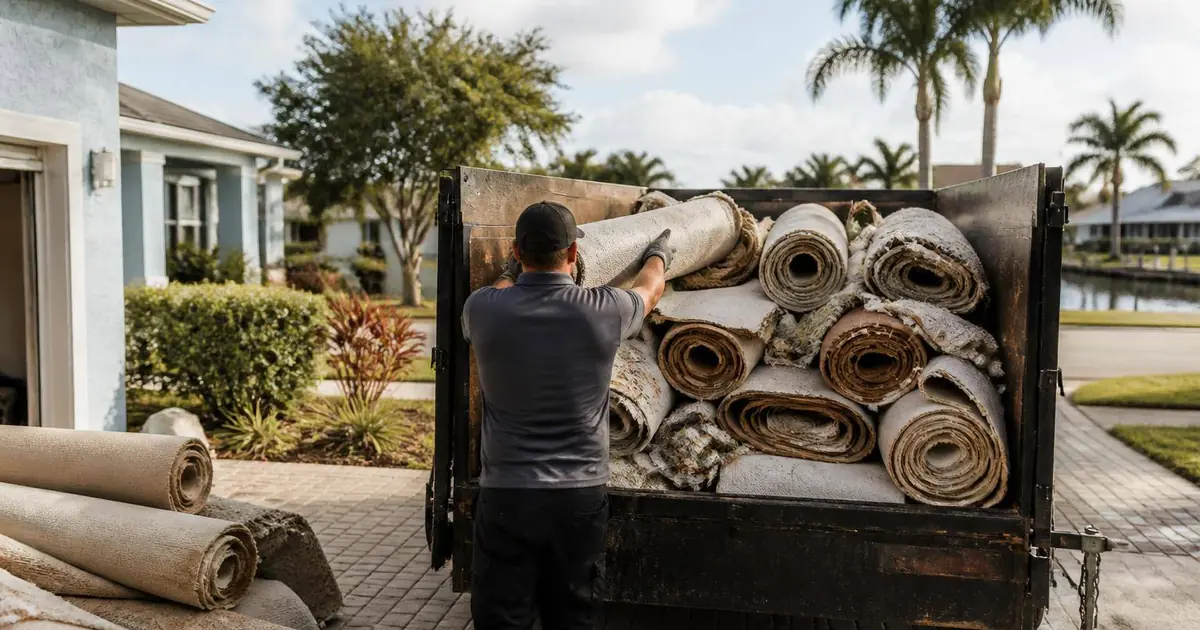
Carpet removal debris hauling starts with a clear plan for the carpet, padding, and other materials removed during the job. In South Daytona, confirm what your chosen hauler accepts, how pickup will work, and which local disposal rules apply before setting materials out.
What Does Carpet Debris Hauling Involve?
Carpet removal debris hauling means planning how removed carpet and related materials will leave the work area. The exact pickup scope depends on the provider and the material. See the post-renovation hauling plan and flooring debris guidance(flooring debris hauling guidance) as you set your questions.
Start by listing what the job will produce. Carpet may be one item, while padding, strips, or other flooring pieces may also need a plan. Do not assume that one pickup covers every item.
Ask the provider to name the materials it can accept. Share the kind of flooring being removed and describe any other debris. If you are unsure what a material is, take a clear photo and ask before the work begins.
The word hauling does not settle where each item goes. A provider may have limits on accepted loads, and local disposal rules can vary by material and date. Confirm both points instead of relying on a broad service label.
Keep the work area and the pickup area in mind. A plan should say who moves the material, where it will wait, and how the crew will reach it. These details can prevent confusion on removal day.
Which Carpet Removal Claims Should You Check?
Some common claims about carpet debris can hide important details. A pickup may depend on material type, load limits, access, or local rules. Compare the renovation hauling plan with flooring pickup questions(flooring debris hauling guidance) and ask for clear terms before you book.
A useful myth-versus-fact check begins with the job scope. The myth is that all debris from one room counts as one accepted load. The fact is that providers may treat different materials in different ways. Ask about carpet, padding, and attached pieces separately.
Another myth is that a familiar disposal method applies everywhere. County guidance says waste and recycling rules can vary by material, location, and date. That means an old answer from another job may not fit this one.
A third myth is that placing everything outside solves access and pickup questions. The fact is that the provider must confirm where materials should wait and what access is needed. Do not place debris at a curb or shared area without checking first.
Write down the answer to each key question. A short note can help the installer, property owner, and hauler follow the same plan. It also gives you a chance to spot missing details before removal starts.
- Ask whether carpet and padding count as separate accepted materials.
- Confirm where the load should wait before pickup begins.
- Check local rules before moving debris to a public area.
How Can You Prepare Carpet Debris for Pickup?
Good preparation starts with a short inventory and a confirmed staging plan. Ask what needs to stay separate, where items should wait, and who will move them. The renovation debris planning guide and flooring debris pickup overview(flooring debris hauling guidance) can help shape that conversation.
Before removal, walk through the space and note each material. Include carpet, padding, loose strips, and any other items the work may create. Do not label unknown materials by guesswork; ask the installer or another qualified person to identify them.
Then agree on a staging area with the people doing the work and the pickup provider. The area should match the provider's instructions and the property's rules. If access is narrow or shared, raise that issue early rather than waiting until the load is ready.
Keep paths clear for people who need to enter or leave the building. Do not block doors, stairs, or shared walkways with rolled carpet. Follow site safety rules, and ask the responsible property contact about any access limits.
Use a simple checklist to keep the handoff clear. A written plan can show who handles each task and when the next step can happen. It does not replace the provider's acceptance rules or the local authority's waste guidance.
- List each material that the carpet removal work may create.
- Ask the provider which items need separate handling.
- Agree on a staging spot that follows property rules.
- Keep doors and shared paths open for people using the space.
Should Carpet, Padding, and Other Pieces Be Separated?
Ask before combining carpet with padding or other removed pieces. The provider's acceptance rules and local waste guidance may differ by material. Use the post-renovation debris plan and flooring debris questions(flooring debris hauling guidance) to make a material list and confirm each item.
Separation can make the load easier to describe, but it does not prove that every item has the same destination. Carpet, padding, and small attached pieces may have different handling rules. Ask the provider what to keep apart and how to describe each group.
If the material is damp, dirty, or mixed with other debris, mention that before pickup is arranged. Do not assume those conditions are accepted. The provider can explain its limits, while local authorities can answer questions about disposal rules.
Keep labels plain and accurate. A note such as “carpet” or “padding” is more useful than a broad label like “construction waste” when asking about acceptance. Do not use labels to claim a material is safe or approved for a disposal route.
If a contractor removes the flooring, ask who is responsible for sorting and moving each material. The answer may affect the work plan and the pickup area. Put the agreed task in writing so no one expects another person to handle it.
Which Carpet Debris Removal Option Fits the Job?
The right removal path depends on who is doing the work, what the provider accepts, and the property's rules. Compare the renovation debris planning page with flooring pickup details(flooring debris hauling guidance) before choosing a path for your project.
There is no single choice that fits every carpet job. A contractor may arrange removal as part of the work, a hauling provider may handle an agreed load, or the property owner may explore an approved self-haul route. Confirm the scope and rules for the option you consider.
Use the table to frame questions, not to assume that any path is available. Each option has details to verify before work starts. Local waste guidance can help explain public rules, but it does not confirm a particular provider's services.
Ask who will move the material, what items are included, and what happens if the load differs from the description. Also clarify who will check local disposal rules. If a choice depends on a building rule or a special material, contact the responsible authority.
| Possible path | Who to ask | What to confirm |
|---|---|---|
| Contractor-arranged removal | The contractor | Included materials and task scope |
| Separate hauling arrangement | The hauling provider | Accepted items, access, and staging |
| Owner-managed disposal | Local waste authority | Current rules and approved drop-off choices |
What Local Rules Matter in South Daytona?
For a South Daytona project, check the rules that apply to the material and its location before setting debris out. County guidance notes that waste rules can vary by material, place, and date. See the renovation hauling plan and flooring debris pickup guide(flooring debris hauling guidance) while confirming local details.
Do not treat a rule from another town or an older project as current guidance. Collection and disposal details can change. Check the relevant local authority for the material and the place where it will be handled.
Ask whether the property has its own rules for shared areas, access, or temporary storage. A landlord, association, or site manager may set limits that differ from public waste rules. Confirm those limits with the person responsible for the property.
If the job includes materials beyond ordinary carpet and padding, identify them before removal. General debris guidance cannot tell you whether a specific provider accepts an item. Ask the provider and the local authority rather than relying on a broad category.
Keep the answers together with the work plan. Note the date you checked local guidance and the source you contacted. That record helps the people involved use the same instructions if the plan changes.
What Should You Confirm Before Removal Day?
Before removal day, confirm the material list, pickup scope, staging area, and responsible person. Ask about changes if the load differs from the original description. The post-renovation hauling checklist and flooring debris planning guide(flooring debris hauling guidance) offer useful points to review.
A short call or written message can settle open questions. Describe the job in plain terms and name each material you expect. Ask the provider to restate what is included so both sides share the same understanding.
Confirm who will move the carpet from the work area and who will place it for pickup. Ask where it should wait and what access the provider needs. Do not assume that removal from inside the building is part of a hauling arrangement.
Review timing with the people doing the work and the person handling pickup. The available schedule is something to confirm directly. Avoid setting out material before the agreed plan and property rules allow it.
If the load changes, pause and ask before adding new items. An updated description can help the provider decide whether its terms still apply. Keep any revised instructions with the original plan.
- Share a clear list of carpet and related materials before booking.
- Confirm who moves the material from the room to the staging area.
- Ask what access and placement details the provider needs.
- Check current local rules before setting debris outside.
Questions about next steps? Call Daytona Grapple Trucks at (386) 481-7913 or review debris.
Frequently Asked Questions
Can wet or heavily soiled carpet be included?
Ask the provider before adding wet or heavily soiled carpet to a planned load. Acceptance can depend on the provider's rules and the material's condition. Describe the issue clearly, and share a photo if that helps explain it. Confirm local disposal guidance if the provider cannot accept the material.
Who should move carpet from the room to the pickup area?
The work plan should name the person responsible for moving the carpet. Do not assume a hauling arrangement includes indoor removal or movement through a building. Ask the contractor, property contact, and provider to confirm their roles, then keep the agreed task in writing.
Should I roll carpet before asking about pickup?
Ask the provider how it wants carpet prepared before rolling or bundling it. Preparation rules may depend on the provider and the load. A clear description of the carpet and related materials is enough to start the conversation. Follow the instructions you receive for the agreed arrangement.
What if removal creates more debris than expected?
Contact the provider before adding unplanned material to the load. The original terms may apply only to the items described when the pickup was arranged. Name the new material and ask whether the plan needs to change. Also check any local rules that apply to the added items.
Where can I check current waste and recycling rules?
Start with the relevant local authority's current waste guidance. Volusia County's solid waste information explains that rules can vary by material, location, and date. For disaster debris, federal guidance offers general planning and sorting information, but local rules still control.
Sources
- Solid Waste and Recycling, Volusia County
- Planning for Natural Disaster Debris, U.S. EPA
- Debris Removal Guidelines Help You and Your Community, FEMA
Call (386) 481-7913 to talk through next steps.