
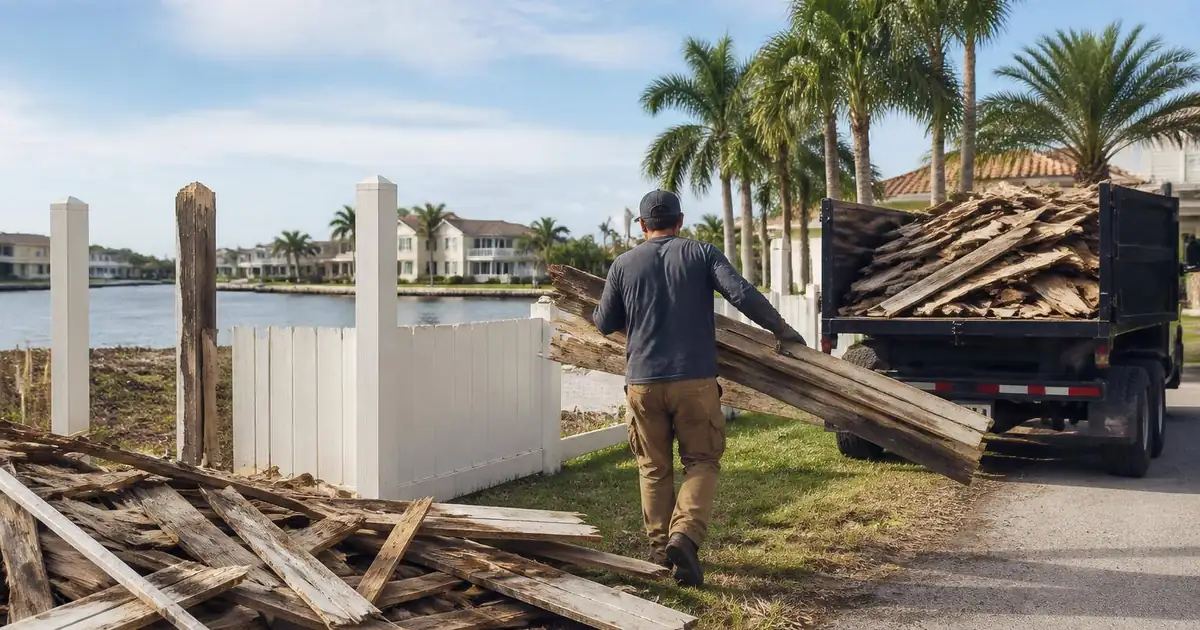
Fence demolition debris hauling is the planning and removal of materials left after a fence comes down. Before you arrange it in Ormond Beach, sort the debris, estimate its amount, and check which local rules apply. Then confirm what the hauler can accept, how the pickup area should be prepared, and who handles each step.
What Does Fence Demolition Debris Hauling Involve?
Fence demolition debris hauling concerns the removal of materials after fence sections have been taken down. The exact work can vary by provider and job. Ask what materials are accepted, who will prepare them, and where they need to be placed before you set a date.
The phrase can describe different parts of a cleanup. One plan may cover only hauling materials that are already down. Another may include sorting or other steps. Do not assume demolition, site cleanup, or disposal is included unless the provider confirms it.
Start with a clear description of the fence and the work already done. Share the fence type, approximate length, and what remains on site. Note if posts, rails, panels, or gates are still attached. A simple inventory helps both sides discuss the same job.
The debris may include more than the main fence sections. Fasteners, broken pieces, and attached material can affect how the load is handled. Ask how the provider wants those items grouped. The answer should match the actual materials you have, not a guess.
Use the fence removal planning guide as a broader starting point. It can help organize questions before you contact a hauler. For a location-specific planning example, review the Ormond-by-the-Sea fence checklist and adapt only the points that fit your site.
Keep the scope in writing when possible. A short note can state what is already removed, what still needs attention, and what you expect the hauling visit to cover. Ask the provider to flag any part that falls outside the agreed scope before work begins.
How Should I Sort Fence Debris Before Removal?
Sort debris by material only after checking what the hauler can accept. Wood, metal, concrete, and mixed pieces may have different handling rules. Keep unknown or attached materials aside until you receive clear instructions. Local disposal guidance can change by material, place, and date.
A useful first step is to make a rough material list. You do not need an exact count to begin the conversation. Note the main fence material, any separate posts, and items that are mixed or hard to identify. Share that list before the pickup plan is set.
The Volusia County solid waste guidance says collection rules vary by material, location, and date. Treat that as a reason to check current instructions, not as proof that a certain item will be collected. Ask the relevant local authority or disposal site about rules that apply to your material.
Separate materials only when you can do so safely and within the work you have agreed to handle. Do not cut, lift, or move items if you are unsure how to do it. Ask a qualified person about hazards or handling concerns that need more than general planning.
A clear sort can make the scope easier to discuss. It also helps avoid mixing items that may need different destinations. Still, do not assume that sorting alone makes every item acceptable. Confirm the provider's limits and any local disposal steps before moving the pile.
A practical checklist can keep the call focused. Write down what you know and mark unknowns plainly. Do not label a material as recyclable or accepted unless a current source or provider confirms it.
- List the main fence materials and note any pieces that combine more than one material.
- Set aside items you cannot identify until the provider gives clear handling instructions.
- Ask which materials are accepted and how each group should be kept apart.
- Check current local guidance before deciding where any separated material should go.
What Information Should I Gather Before I Arrange Hauling?
Gather enough detail to describe the debris and the pickup area. Estimate the amount, identify the materials, and explain what work is complete. Then ask about accepted items, placement, access, and any limits. A clear description helps you compare plans without assuming every provider handles the same work.
You can begin with a few simple details. Estimate the fence length and the number of sections or piles. Mention whether the debris is loose or still connected. If you are not sure about a measurement, say that it is an estimate rather than presenting it as exact.
The pickup setting matters too. Describe where the pile sits and what route a vehicle would need to reach it. Mention gates, narrow paths, soft ground, parked cars, or other limits you know about. Do not assume the provider can enter or use a space without checking first.
Share photos only if the provider requests them or says they are useful. Photos should show the full pile and any details that affect handling. They cannot replace a clear description or an on-site review when one is needed.
Use these planning points to keep your request specific:
Write down what is already removed and what still needs to come down. Ask whether the hauling plan assumes the fence is fully dismantled. This keeps demolition work and debris removal from being confused during the discussion.
The Edgewater hauling plan offers another planning angle. Use it to think through information to gather, not to assume a local service detail applies to your property. You can compare questions with the fence debris planning guide before speaking with a provider.
- Describe the fence material, approximate size, and parts that remain on the property.
- Explain whether the debris is loose, bundled, piled, or still attached to posts.
- Point out access limits and ask what placement the provider requires.
- Ask which tasks and materials the proposed hauling arrangement includes.
How Can I Plan the Removal Date and Timing?
Plan timing only after the debris scope, access needs, and local rules are clear. Ask the provider what information is needed before it can discuss a date. Do not assume same-day or next-day availability. Keep the pile and work area in a condition that follows current local instructions.
The time needed can depend on details that are not known from a short description. The amount of debris, its material, and the pickup route may all affect planning. Ask the provider what could change the plan and how it will tell you if more information is needed.
Coordinate the hauling discussion with whoever is removing the fence. If a separate person or crew handles demolition, agree on when the debris will be ready and who will keep it in the stated pickup area. A handoff plan can reduce confusion about incomplete work.
Avoid choosing a date based on an assumed service window. Ask what dates are available and what could affect them. If your plans are time-sensitive, say so early and ask what options can be confirmed. Do not treat an estimate as a confirmed appointment.
The Holly Hill arrangement comparison can help you think through questions about different plans. Its place name does not establish service availability for your address. Confirm the actual service area, schedule, and scope directly with the provider you contact.
Local disposal rules can also affect timing. Volusia County notes that waste and recycling guidance may vary by material, location, and date. Check the current guidance that applies to your debris. If the right rule is unclear, ask the county or the relevant disposal site before setting a final plan.
How Should I Prepare the Pickup Area?
Prepare the pickup area according to the provider's instructions and the rules that apply at your property. Confirm where debris should sit and what access is needed. Keep other people and items clear of the planned work area. Ask a qualified person about site or safety concerns before changing the area.
Do not choose a placement spot based only on convenience. Ask the provider where the materials should be placed and whether the vehicle must reach the pile. Explain any narrow entrance, slope, soft ground, overhead feature, or other concern you can see.
Keep the description factual. You can say that a gate is narrow or that a path is blocked. Avoid deciding that a truck can pass or that the ground can hold its weight. Those judgments should come from the person responsible for the equipment and the work.
If you share the property, check who can approve the placement and access plan. A tenant, owner, property manager, or neighbor may need to coordinate. Do not move debris onto another area or public space unless the proper authority allows it.
The U.S. EPA's disaster debris planning resource offers general guidance for planning debris work. It does not confirm that a local pickup is available or that a particular fence material is accepted. Treat it as background and check the instructions that apply to your own removal.
Before the scheduled work, confirm the agreed scope and any preparation steps. Ask what should remain untouched and what should be moved. If conditions change, such as a blocked route or a larger pile, tell the provider before the visit rather than relying on the earlier description.
- Confirm the approved placement area and access route before moving the debris pile.
- Tell the provider about visible access limits that could affect the planned visit.
- Keep unrelated items and people away from the area as directed by the provider.
- Ask the proper property contact before using shared or public space for debris.
What Should I Confirm Before Choosing a Hauling Plan?
Confirm the job scope, accepted materials, preparation steps, and any terms that affect your decision. Ask who handles each part and what happens if the debris differs from your description. Compare clear answers, not assumptions. Check local requirements with the proper authority when a disposal rule is uncertain.
Ask the provider to describe what its plan covers. Does it include hauling only, or does it include other tasks? Which materials can it take? Where must the debris be placed? What information could change the plan? Clear answers help you decide if the arrangement fits your needs.
A written summary can help both sides stay aligned. It can name the agreed materials, the expected pickup area, and the work that remains outside the scope. Review any terms before accepting. Ask about points you do not understand instead of filling gaps with your own assumptions.
Compare arrangements by checking the same details for each one. A low or high quote alone does not explain what work is included. Ask what factors may change the amount charged, how extra material is handled, and what happens if access differs from what you described.
Ask about disposal in plain terms. Find out whether the provider decides the destination, whether you need to check local rules, and what records or instructions you should keep. Do not treat a general debris guide as approval for a specific disposal method.
The Deltona planning guide(Deltona planning guide) can help you build a list of questions. The same questions may be useful in Ormond Beach, but local rules and provider terms still need direct confirmation. Keep notes from your conversation so you can compare answers without relying on memory.
Questions about next steps? Call Daytona Grapple Trucks at (386) 481-7913 or review debris.
Frequently Asked Questions
Does fence debris hauling include taking down the fence?
The phrase does not establish that demolition is included. Some arrangements may cover hauling material that is already removed, while other work may be outside the scope. Ask the provider to state which tasks it handles. If a separate person will remove the fence, agree on when the debris must be ready and where it should be placed.
Can I mix wood and metal fence pieces in one pile?
Ask the provider before combining materials. Acceptance and handling can vary by material, location, and date, so one mixed pile may not fit the plan. Describe what you have and follow the current instructions. If you cannot identify an item, keep it separate until you receive clear guidance.
Should I remove concrete fence post bases before arranging pickup?
Do not assume that post bases need to be removed or that they can be hauled with other fence debris. Their size, material, and condition can change the plan. Describe them to the provider and ask what is accepted. Check with a qualified person before doing work that raises a safety or site concern.
What if the debris pile is larger than I first described?
Tell the provider as soon as you notice the difference. More material can affect what the arrangement covers, how the pickup area is prepared, or the timing. Ask whether the plan needs to change before the visit. Do not assume extra material will be accepted under the first agreement.
Which local rules apply to fence demolition debris in Ormond Beach?
Rules can depend on the material, location, and date. Check current guidance from the relevant local authority or disposal site for your specific debris. Volusia County provides solid waste and recycling guidance, but the right instructions may depend on your situation. Ask the authority directly if an item or disposal step is unclear.
Sources
- Solid Waste and Recycling, Volusia County
- Planning for Natural Disaster Debris, U.S. EPA
- Debris Removal Guidelines Help You and Your Community, FEMA
Call (386) 481-7913 to talk through next steps.