
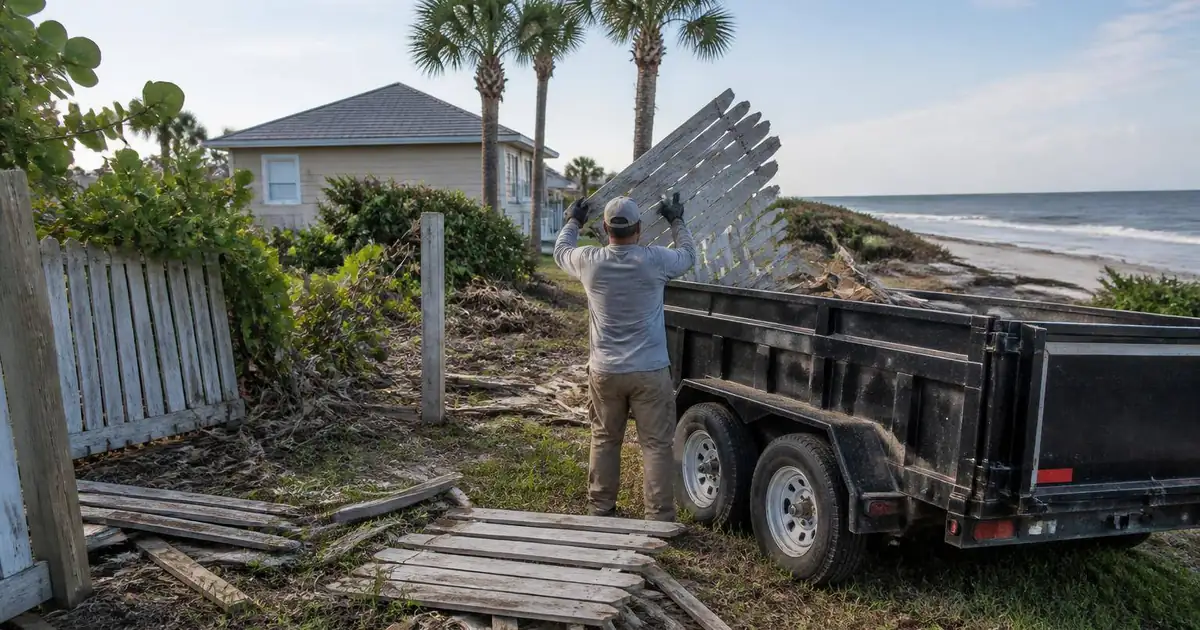
Fence demolition debris hauling takes planning before a fence comes down. Start by defining what will be removed, where debris can be staged, and who will take it away. In Ormond-by-the-Sea, confirm the address is within a provider’s service area, then check material rules and pickup details before setting a work date.
How do you plan fence demolition debris hauling?
Begin with a clear list of the fence parts and waste that may need hauling. Then confirm the address, removal scope, staging plan, and pickup terms with the people doing the work. The fence hauling planning guide and Edgewater fence hauling plan can help you compare planning details.
Walk the fence line before requesting a hauling arrangement. Note its length, height, and any gates or posts. Describe visible materials, such as wood, metal, or vinyl, without assuming each piece will be handled the same way. If you are unsure what a part is, say so and ask how the provider wants it described.
Keep demolition and hauling as separate tasks in your plan. One person or company may remove the fence, while another may handle the debris. Do not assume either task is included in the other. Ask who will cut or take apart the fence, who will gather the pieces, and who will load them.
Set the date only after you know how the debris will move from the fence line to the pickup point. The right plan depends on the property layout and the terms both parties accept. Confirm that the address is within the provider’s service area. A city name in a service list does not prove a staffed local office.
What should you include in the removal scope?
A useful scope names the fence sections, posts, gates, and related waste that are part of the job. It also states what stays in place. Clear details help reduce confusion about the work and the load. See the Edgewater fence hauling plan and Ormond Beach fence hauling Q&A for related planning points.
Describe the work in plain terms. Identify which sides of the property are involved and where the fence begins and ends. Mark any section that should remain. If the fence joins a gate, wall, or another structure, point that out before anyone starts. Do not expect a short phrase like “old fence” to explain the full scope.
Discuss posts and footings separately from fence panels. Their size, condition, and connection to the ground can change how they are removed and handled. Avoid promising that every part can be taken in one load. Ask the removal crew and hauling provider how they want those parts described.
Name items that are not part of the fence but may be near it. This could include yard waste, old hardware, or other discarded material. Keep the list factual and ask if each item is accepted. A clear scope helps both sides catch questions before work begins, rather than during loading.
- Mark the fence sections that will come down and the sections that must stay.
- Describe gates, posts, and footings as separate parts of the removal scope.
- List nearby waste only when you want it considered for the same pickup.
- Ask who will take apart, gather, and load each type of material.
How should you sort and describe fence debris?
Describe materials as clearly as you can, and ask before mixing different kinds of debris. Collection and disposal rules can vary by material, location, and date. Volusia County’s solid waste guidance and the Edgewater fence hauling plan offer useful starting points, while the Ormond Beach fence hauling Q&A covers related planning choices.
A fence may contain more than one material. Panels, rails, posts, fasteners, and attached items may need different handling. Tell the provider what you know and ask what should stay separate. Do not assume a load can be mixed or that a general waste rule applies to every item.
The county’s solid waste and recycling information notes that rules can vary by material, location, and date. Check current guidance for the specific waste and address. If a rule is unclear, contact the responsible local authority or ask the hauling provider what information it needs. Do not treat a general guide as confirmation of pickup.
Keep descriptions honest and direct. Mention damaged or unusually large pieces when you know about them. If paint, treatment, or another feature is uncertain, say that it is uncertain. The person arranging the pickup can then ask for more details before agreeing to a plan.
Where can debris wait before pickup?
Choose a staging spot only after checking the property layout and the pickup plan. The area needs to work for the removal crew, the hauling provider, and anyone using the property. The Edgewater fence hauling plan and Ormond Beach fence hauling Q&A can help you prepare questions about access and staging.
Think through the path from the fence line to the proposed pickup point. Note gates, narrow paths, changes in ground level, and nearby features that could affect movement. Share those details before setting the pickup. Do not assume a truck or crew can reach every part of a property.
Agree on where materials may be placed and who will move them there. If removal and hauling are handled by different parties, make sure each understands the handoff. A pile in the wrong place can slow work or create a new task. Ask the people involved to confirm the location they will use.
Keep the plan flexible if the property has limited space. Ask whether the debris must be gathered in one area or can be brought out in stages. The answer depends on the provider’s process and site conditions. Do not block access or place material where the property owner has not approved it.
- Walk the proposed route and note gates, tight turns, and other access limits.
- Ask the property owner to approve the staging spot before debris is placed there.
- Tell the hauling provider about access limits before confirming the pickup plan.
- Confirm who will move debris from the fence line to the agreed pickup point.
What should you confirm before setting a pickup date?
Confirm the service address, accepted materials, removal and loading duties, and expected timing before you set a date. Ask what could change the plan, such as an unclear scope or access issue. The Edgewater fence hauling plan and Ormond Beach fence hauling Q&A provide related checklists.
A pickup date is useful only when the work before it is clear. Ask whether the fence must be fully taken apart first, who will gather the pieces, and whether loading is part of the arrangement. Get clear answers for the specific job. Do not rely on assumptions based on another property or past work.
Confirm the service address in full and ask whether it is within the provider’s service area. Then check the date, arrival window if one is offered, and any steps needed before pickup. Do not assume a date or time is set until the provider confirms it. If timing matters, state the reason and ask what is possible.
Ask how changes are handled. A scope may shift if hidden or unlisted material appears, or if the debris differs from the description. Agree on how to pause and get direction before adding work. This helps avoid surprise decisions at the property and gives everyone a chance to check the revised plan.
How can you prepare the property and the people involved?
Share the same scope and pickup details with the property owner, removal crew, and hauling provider. Make sure each person knows what stays, what goes, and where debris should wait. The Edgewater fence hauling plan and Ormond Beach fence hauling Q&A can support your planning conversation.
One written summary can prevent mixed instructions. Include the address, fence sections, material notes, staging location, and who handles each task. Send it to the people involved before work starts. Ask them to flag details that do not match their understanding. Make changes in the shared plan, rather than relying on a quick conversation.
Ask the property owner to identify any limits on access or placement. Keep those instructions clear for the removal crew and hauling provider. If another qualified trade must review a concern, wait for that input before proceeding. Do not make decisions about hidden lines, structural issues, or site hazards based on guesswork.
Set a simple check-in point before demolition begins. Confirm that the scope is still right, the staging area is available, and the pickup plan has not changed. If a new issue comes up, pause and ask who can approve a change. A short check can help keep the job within the agreed plan.
What if the debris plan changes during the job?
Pause and get agreement when the material, scope, or access differs from the original plan. Describe the change and ask who can approve it before adding work or changing the pickup. The Edgewater fence hauling plan and Ormond Beach fence hauling Q&A offer useful prompts for that conversation.
A fence may reveal parts that were not visible during the first visit. The debris may also be larger, heavier, or different from what the parties expected. Describe what changed without guessing about its cause. Ask whether the new material can be handled under the current arrangement or needs a different plan.
Keep the original scope available so you can compare it with the new situation. Write down the change, the person who approved it, and any revised steps. If the people responsible for removal and hauling disagree, do not ask one to act on the other’s behalf. Get a clear answer from each party.
Rules for waste handling can change by material, place, and date. The U.S. EPA’s disaster debris planning resource and FEMA’s debris guidance discuss general planning and sorting, but they do not confirm local pickup options for a fence job. Check with the relevant local authority for current rules, and ask the provider to confirm its own terms.
Questions about next steps? Call Daytona Grapple Trucks at (386) 481-7913 or review debris.
Frequently Asked Questions
Should fence removal and debris hauling be booked together?
That depends on the providers and the scope they agree to handle. Ask whether one party removes the fence, gathers the pieces, loads them, and hauls them away. If different parties handle the work, confirm who is responsible for each handoff. Do not treat demolition as part of a hauling arrangement unless the provider clearly confirms it.
What details help when asking about a fence debris pickup?
Share the address, the fence sections involved, the materials you can identify, and the likely amount of debris. Include details about posts, gates, and access to the pickup area. Say when you are unsure about a material. Ask what else the provider needs before it can confirm service, accepted items, and timing.
Can different fence materials go into one load?
Do not assume that different materials can be mixed. Acceptance and disposal rules can vary by material, location, and date. Describe each material you know about, then ask the provider and the relevant local authority what rules apply. Keep items separate if the provider or local guidance instructs you to do so.
Who should I contact about local disposal rules?
Check current information from the local authority responsible for solid waste in the service area. Volusia County provides solid waste and recycling guidance, but you should confirm that it applies to the specific address and material. A hauling provider can explain its own terms, but it does not replace local rules or official guidance.
Sources
- Solid Waste and Recycling, Volusia County
- Planning for Natural Disaster Debris, U.S. EPA
- Debris Removal Guidelines Help You and Your Community, FEMA
Call (386) 481-7913 to talk through next steps.