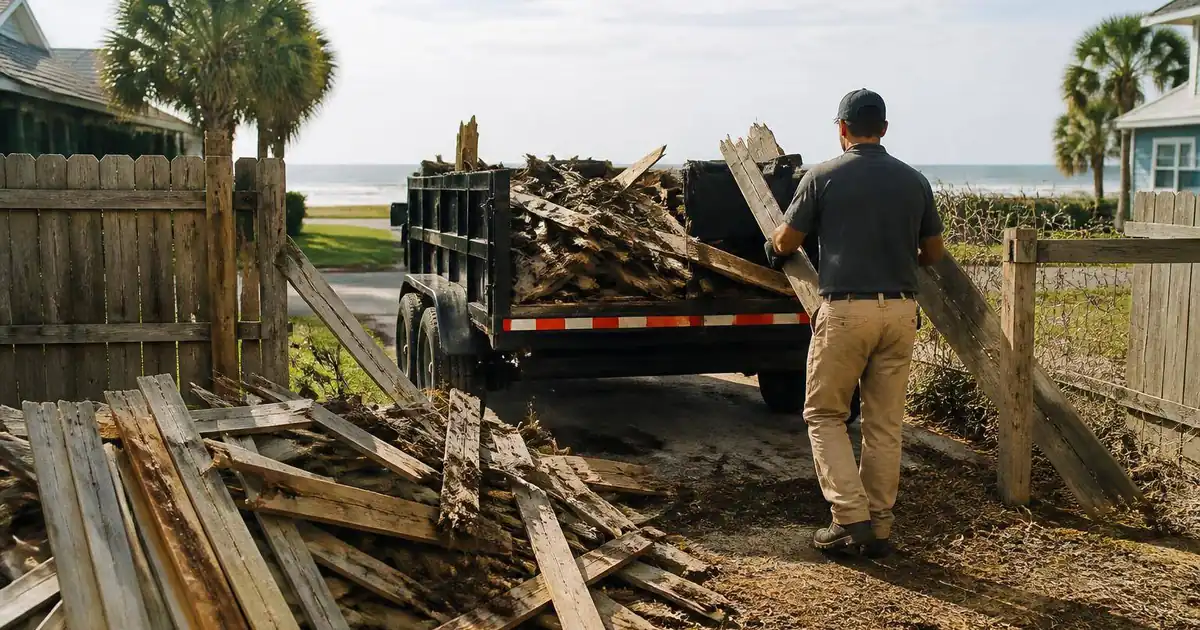
Fence demolition debris hauling takes planning before removal begins. In Daytona Beach, set the work scope, identify likely materials, and confirm who will handle each task. Check local waste rules and access needs before you schedule a pickup. The right plan depends on the fence, the site, and the provider's confirmed services.
What does fence demolition debris hauling involve?
Fence demolition debris hauling means planning how removed fence parts will leave the site. Start by defining what will be taken down and what debris needs removal. Then confirm the materials, access, and pickup scope with the person or company you may hire.
A fence project can create several kinds of debris. It may include boards, rails, posts, panels, or attached hardware. The exact mix depends on the fence and the work planned. Do not assume every piece will be handled in the same way.
Write down what is staying and what is leaving. Include gates, posts, and any parts that will remain in place. This helps prevent confusion when you discuss the work. A clear list also makes it easier to compare replies from providers.
The work may involve separate demolition and hauling tasks. Ask who will take down the fence, who will move debris, and who will load it. Confirm these roles before agreeing to a schedule. The business description alone does not confirm which tasks a provider offers.
For a broader overview, read this fence debris planning guide. You can also review fence hauling plans in Edgewater for another planning angle. Treat each page as general guidance, then confirm details for your own site.
How should you sort fence demolition waste?
Sort fence debris by material when you can identify it, and keep uncertain items separate. Different materials may follow different local rules. Check current instructions for the address before setting items out or asking for removal. The U.S. EPA offers general debris planning guidance, while local rules still apply.
Begin with the materials you can name with confidence. Wood, metal, and mixed or coated pieces may need different handling. Keep attached hardware with the related piece when practical. Ask a qualified provider how it wants materials grouped.
Do not guess about unfamiliar coatings or treated materials. A photo and a brief description can help you ask a clear question. If the answer is uncertain, seek guidance from the proper local authority. Avoid mixing questionable items with ordinary debris until you know what applies.
The U.S. EPA's disaster debris guidance discusses planning and sorting in a general context. It does not set pickup rules for a specific address. Local collection rules can change by material, location, and date. Check the current official instructions that apply to your project.
A simple sorting plan can reduce last-minute changes. Keep piles apart only where the site allows safe access. Avoid blocking paths, doors, or shared spaces. If the area is tight, ask the provider how it wants debris presented before moving anything.
- You can list each material type before asking how it should be grouped.
- You should separate uncertain items until a qualified source explains the rules.
- You can check current local guidance before placing debris out for collection.
What should you confirm before choosing a hauler?
Confirm the exact work, accepted materials, access plan, and any limits before choosing a debris hauler. Ask what the quoted scope includes, and request clear answers about removal, loading, and disposal. Do not treat a broad service label as proof that every task is included.
Describe the fence and the debris in plain terms. Share the approximate amount only if you can estimate it responsibly. Point out gates, posts, and pieces that may be hard to reach. Ask what more the provider needs to assess the job.
Check whether demolition is part of the offer or only debris hauling. Ask who will detach or move fence sections. Confirm who loads the material and whether the provider accepts the types you have. These questions help reveal gaps between your plan and the proposed work.
Clarify how the provider will reach the debris. Mention narrow access, slopes, parked vehicles, or shared areas if they affect the route. Do not assume a truck can reach every pile. Ask what staging area, if any, would work for the site.
For a useful comparison, see fence hauling arrangement options. Ask each provider the same core questions so the answers are easier to compare. A careful comparison should focus on confirmed scope, material limits, and site fit, not broad claims.
How can you prepare the site for debris removal?
Prepare the site by clearing a known route and marking what belongs in the removal pile. Share access limits before the planned work. Keep people and pets away from active work areas, and ask the qualified crew how it wants the site set up. Follow any local instructions that apply.
Walk the planned route before work begins. Note gates, turns, soft ground, and items that could block movement. Tell the provider about the route rather than assuming it will be obvious. Ask where debris should wait if direct access is not available.
Mark the fence sections that are part of the project. Make clear which posts, panels, or gates should stay. This step matters when a fence connects to another structure or property feature. Ask for help from a qualified person if ownership or boundaries are unclear.
Keep the removal area easy to identify. A written note or clear marker may help distinguish debris from items you plan to keep. Do not place debris where it blocks exits, public paths, or other needed access. Follow local direction about where material may be staged.
If the site has wires, unstable parts, or other possible hazards, do not try to assess them yourself. Pause and contact the relevant qualified professional or authority. Share the concern with any provider before work starts. The work plan should account for issues that affect safe access.
- You should mark the fence sections that the project includes for removal.
- You can point out access limits before anyone moves or stages the debris.
- You should keep exits and shared paths clear throughout the planned work.
How do you set a workable pickup plan?
Set a pickup plan by agreeing on the scope, site access, and a date only after the key details are clear. Ask what could change the plan, such as added debris or blocked access. Confirm how updates will be shared, since timing and availability depend on the provider.
Start with the amount and type of debris you expect. Tell the provider if the scope may change during demolition. Ask how added material affects the plan before work begins. A small change in volume or material can require a new discussion.
Discuss when the site will be ready and how pickup will be coordinated. Do not assume a set arrival time unless the provider confirms one. Ask what happens if weather, access, or project work changes the agreed date. Record the answer for everyone involved.
Agree on where the debris will be placed, if staging is part of the plan. Confirm whether the route and staging area need to remain open. If several people control the property, make sure the right person approves the arrangement. Clear roles can prevent delays and mixed instructions.
Some projects may involve more than one removal step. If demolition and hauling are handled separately, coordinate the handoff between them. Make sure the debris is ready in the form the hauler accepts. Ask who should be contacted if the scope changes.
Which local rules and project details matter?
The rules for fence debris depend on the material, address, and current local instructions. Check with the authority responsible for waste guidance at the project location. If the address falls under Volusia County guidance, review its current solid waste information, then confirm any separate city requirements.
Do not rely on an old notice or a rule meant for another address. Waste collection guidance can vary by material and location. Volusia County's solid waste page is one reference for county guidance, but it does not establish what applies to every Daytona Beach project.
Ask the local authority whether the debris type has special handling or placement rules. If the answer is not clear, describe the material and the planned removal. Keep the response with your project notes. Do not treat a general online article as approval for a specific disposal method.
The FEMA debris guide offers general public guidance on sorting and removal after disasters. A routine fence project may have different rules and needs. Use the guide for broad planning context only, then follow the current local instructions for your address.
For another local planning perspective, see fence debris questions in Ormond Beach. Its location differs from Daytona Beach, so verify local details rather than copying them. When a rule is unclear, ask the proper authority before placing debris out.
What should you review when the work is complete?
After removal, check the agreed scope and note any debris that remains. Ask the provider to explain any difference between the plan and the completed work. Keep relevant messages and records together. If disposal rules or property questions remain, contact the proper local authority or qualified professional.
Compare the finished work with your written scope. Check whether the fence sections you identified were handled as agreed. Note any material left behind, added to the project, or moved to another area. Ask for clarification while the details are still fresh.
If the provider and the demolition crew were separate, confirm that each task is complete. Make sure there is no unclear handoff about remaining debris. Do not assume the removal of one pile means every project item was included. Refer back to the agreed list.
Keep notes about material questions and local guidance. Save any written scope or change approval. These records can help you explain the project if questions arise later. They also make future fence work easier to plan.
A final check should include paths and staging areas. Confirm that the route is clear and that items meant to stay remain in place. If you see a concern that needs technical judgment, ask a qualified professional. Avoid making safety or property decisions from a general article.
- You can compare the finished work with the written scope you approved.
- You should record any debris or project task that remains unresolved.
- You can keep local guidance and provider messages with your project notes.
Questions about next steps? Call Daytona Grapple Trucks at (386) 481-7913 or review debris.
Frequently Asked Questions
Should demolition and debris hauling be booked as one task?
That depends on what each provider offers and how your project is arranged. Ask if the same party will remove the fence, load the debris, and haul it away. If different people handle those steps, agree on who prepares the pile and when the handoff happens.
What details should you share when requesting a hauling estimate?
Describe the fence, the materials you can identify, and the parts that will be removed. Share photos if the provider asks for them. Mention the address, access limits, and any uncertain materials. Ask what else is needed to define the scope before you compare estimates.
Can all fence debris go into one pile?
Do not assume that every material can be mixed. Local rules and provider limits may differ by material. Ask how to group wood, metal, or items you cannot identify. Keep uncertain pieces apart until the responsible authority or provider gives clear instructions.
What if the amount of debris changes during the project?
Tell the provider before adding material to the planned pickup. Ask how a change in amount or type affects the agreed scope. Confirm any revised plan in writing. This helps both sides understand what will be handled and avoids relying on an earlier estimate for changed work.
Where can you check disposal rules for a Daytona Beach project?
Start with the official waste guidance for the project address. Volusia County provides solid waste information, but confirm that its rules apply to your location and material. Check with the responsible city or county authority when instructions differ or remain unclear.
Sources
- Planning for Natural Disaster Debris, U.S. EPA
- Debris Removal Guidelines Help You and Your Community, FEMA
- Solid Waste and Recycling, Volusia County
Call (386) 481-7913 to talk through next steps.