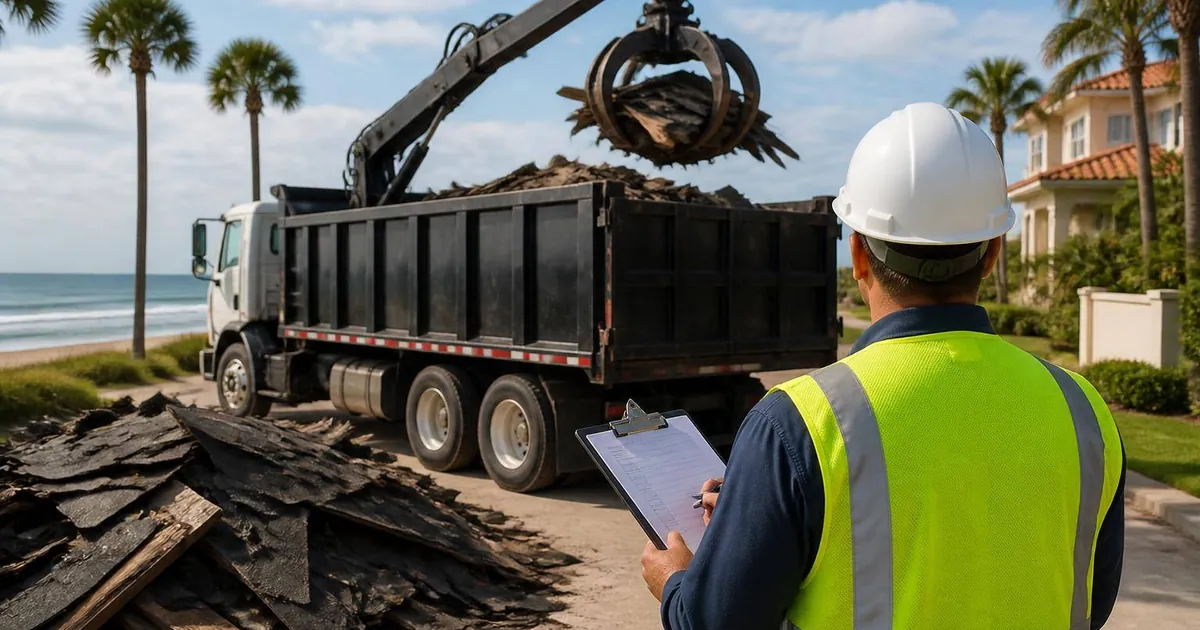
A roofing debris grapple truck pickup takes planning before a crew arrives. Start by listing the debris, checking the pile location, and noting access limits. Then ask the hauler what materials it can take and what details it needs. Local rules may vary, so confirm them before moving or sorting debris.
What should a roofing debris grapple truck checklist include?
A useful roofing debris pickup checklist covers the material, pile size, location, and truck access. It also records any items that need special review. Gather these details before you contact a hauler, then ask what information it needs to assess the job and discuss possible pickup arrangements.
Begin with a clear description of the roof work. Note if the debris comes from a repair, a full replacement, or another project. Avoid guessing at weight or volume. A few photos from safe spots may help explain the pile, but ask first if the hauler wants them.
Keep the description factual. List visible items such as shingles, wood, flashing, or packaging only when they are present. Do not assume every item can go in one load. Ask the hauler about acceptance, sorting, and any items that need another plan.
Make one record for the project, so details stay consistent when you call or send a message. Include the site address for service review, a contact name, and the best way to reach that person. This is planning information, not a sign that pickup is available.
- Write down the roof work type and the visible debris materials.
- Describe where the debris pile sits and how it can be reached.
- Note nearby gates, parked cars, trees, and other access limits.
- Ask which items need separate handling or prior approval.
- Record the contact details and questions for the hauler.
How can I describe the roofing debris pile clearly?
Describe the pile with simple facts instead of a rough guess. Name the materials you can identify, explain how they are grouped, and give a visual sense of the pile’s length and height. Clear notes help a hauler ask useful follow-up questions before discussing pickup.
Start with the material types you can see. A roofing project may leave shingles, felt or underlayment, metal pieces, wood, or wrapping. These are examples to help you describe the pile, not a statement that a hauler accepts them. Confirm each material before setting it out.
Next, explain whether the debris is in one pile or spread across the property. Say if it is loose, boxed, or placed in a container. If you do not know the amount, say so. A photo can add context, but it cannot replace a clear description.
Avoid mixing unknown items into a roofing pile. If you see a product or container you cannot identify, ask the proper waste authority or a qualified professional how to handle it. Do not open, break, or move an unknown item just to make the pile easier to collect.
For more project-planning context, see the roofing debris planning guide. It can help you think through the details to gather before making arrangements. For a related local planning example, read roofing pickup planning in Daytona Beach.
Where should the pile go before pickup?
Choose a pile location only after checking the site, access, and local rules. Keep the debris on property unless you have confirmed that another placement is allowed. Tell the hauler where the pile is and ask what access space or ground conditions it needs to review.
A pile that looks easy to reach from one view may have a blocked path from the street. Note gates, low branches, parked vehicles, walls, soft ground, and tight turns. Describe these conditions before anyone plans a truck approach. Do not promise that a truck can reach the pile.
Ask who is responsible for moving vehicles or clearing items from the route. Confirm how much space must stay open and whether the pile should remain in its current location. The hauler needs to assess these details for the specific site and equipment.
Avoid placing debris in a road, on a sidewalk, or on another person’s land without checking the rules and getting permission where needed. Local rules can depend on the place and material. The county’s solid waste guidance notes that collection rules vary by material, location, and date.
Ponce Inlet is the project location named in this brief, but that does not establish local service or a staffed office. Confirm whether the address is within the hauler’s service area before you plan around a pickup. Also ask which local office or authority can answer placement questions.
What should I confirm about truck access?
Before pickup planning goes further, share the route from the street to the debris and point out anything that could limit access. Ask the hauler to review the site details and say what it needs clarified. Truck size, route, and safe placement depend on the specific job.
A short access note can prevent missed details. Describe the entrance, gate width if known, overhead obstacles, slope, and turning room. If you do not know a measurement, say that instead of estimating. The hauler can tell you if it needs a closer look or more information.
Ask whether the truck would need to enter a driveway, cross a lawn, or work near other structures. Do not assume that the route is suitable because another vehicle has used it. Different vehicles have different needs, and the site must be reviewed for the planned equipment.
Keep people and parked vehicles out of any area the hauler identifies as part of its work zone. Follow the instructions given by the crew on site. If the property has special access limits, share them before the pickup is set, not after the truck arrives.
A planning example from another nearby city may help you frame questions without assuming the same site conditions apply. See Ormond Beach pickup planning for a separate look at the steps involved. Confirm all access needs for your own address.
- Describe the route from the street to the debris pile.
- Point out gates, overhead obstacles, slopes, and tight turns.
- Tell the hauler if vehicles or site work may block access.
- Ask what access details the hauler still needs to review.
Which materials need a separate question?
Ask about every material that is unclear, mixed, or outside the main roofing debris pile. A hauler’s acceptance rules depend on its service and the load. Local waste guidance may also vary, so confirm both the hauler’s rules and the right local source before sorting or disposal.
Do not treat the word “roofing” as a complete material list. A project may create more than one kind of debris. Identify what you can, then ask about each item. The hauler can explain what it accepts, what needs separation, and what it cannot take.
Keep containers, liquids, batteries, and unfamiliar products out of a general pile until you have checked how they should be handled. This is a cautious planning step, not a full safety or disposal guide. Ask a qualified waste professional or local authority when an item’s status is unclear.
Volusia County’s solid waste page is a useful place to check county guidance. Its rules may vary by material, location, and date. Do not assume county guidance answers every question about a private hauler’s load. Confirm the hauler’s own terms as well.
The U.S. EPA’s disaster debris planning guidance also offers general points about planning for debris. It does not establish local pickup availability or confirm that a particular hauler accepts roofing materials. Use it for broad planning context, then rely on the right local authority for current rules.
How should I prepare before confirming a pickup?
Prepare by collecting site facts, confirming the material list, and asking about the steps needed to arrange service. Get clear answers on access, timing, and any limits before relying on a pickup plan. Do not move debris or change the site based on an unconfirmed assumption.
A short call or message works best when you have the same facts in front of you. Keep your notes, photos, address, and questions together. Ask the hauler to explain any term or condition you do not understand. Write down the answer and who gave it.
Use a simple order so you do not skip key checks. First, confirm that the address is in the service area. Then describe the debris and site access. Ask about materials, placement, and any steps you must take before pickup. End by confirming what remains undecided.
A question-and-answer format can help when you speak with a hauler. For more ideas, see roofing debris planning questions. Treat that page as another planning example, not proof of available service or identical local rules. Ask about your own address and job details.
- Confirm that the hauler can review your address for service.
- Describe the debris materials, pile location, and site access.
- Ask about acceptance, sorting, placement, and any required preparation.
- Repeat the agreed next steps and note anything still unconfirmed.
What if the debris includes storm damage?
Storm damage can change the debris mix and the local process. Separate what you know from what you still need to confirm. Check current guidance from the appropriate local authority, and ask the hauler whether its rules differ for storm debris or mixed loads.
Storm cleanup can involve materials from more than one part of a property. Keep the roof debris description separate from branches, household items, or other waste. Ask before combining piles. Different materials can have different collection or disposal rules.
FEMA’s debris removal guidance provides general public information about debris planning and sorting. It does not confirm that local pickup is available, or that a hauler will take a specific load. Local rules still control, so check current direction from the relevant authority.
If the work involves a safety concern, structural question, or a material that may need special handling, ask a qualified professional or the proper authority. This post cannot assess a roof, site, or debris hazard. Do not put yourself or others at risk to take photos or move material.
Keep records of any instructions that affect the pile or pickup plan. If the guidance changes, contact the hauler and local authority again before acting. A short update can prevent old assumptions from carrying into a changed site or new debris load.
Questions about next steps? Call Daytona Grapple Trucks at (386) 481-7913 or review debris.
Frequently Asked Questions
Can I set roofing debris at the curb before calling?
Do not assume curb placement is allowed. Rules can vary by material, location, and date, and the hauler may have its own placement terms. Check with the local authority and the hauler before moving debris. Keep it on the property until you have confirmed an allowed location and the next steps.
Should I estimate the pile’s weight or volume?
Give a rough visual description only if you can do so with care, and say when it is an estimate. You can describe the pile’s location, length, height, and materials without claiming an exact weight. Ask the hauler what details it uses to review the load and whether it needs more information.
Can I mix roof debris with yard waste?
Ask before mixing them. A combined pile may contain materials with different collection or disposal rules. Describe each group separately and check the hauler’s acceptance terms and current local guidance. Keeping piles apart until you receive clear instructions can make the material easier to identify.
Does this checklist confirm pickup in Ponce Inlet?
No. The checklist helps you gather information, but it does not confirm service in Ponce Inlet or at a particular address. Contact the hauler to check its current service area, accepted materials, access needs, and scheduling steps. Verify local placement and disposal rules with the proper authority.
What should I do if I cannot identify a material?
Do not guess or mix it into the main pile. Keep a safe distance and ask the appropriate local waste authority or a qualified professional how to identify and handle it. Do not open or break an unknown item to inspect it. Share the response with the hauler before making a pickup plan.
Sources
- Solid Waste and Recycling, Volusia County
- Planning for Natural Disaster Debris, U.S. EPA
- Debris Removal Guidelines Help You and Your Community, FEMA
Call (386) 481-7913 to talk through next steps.