
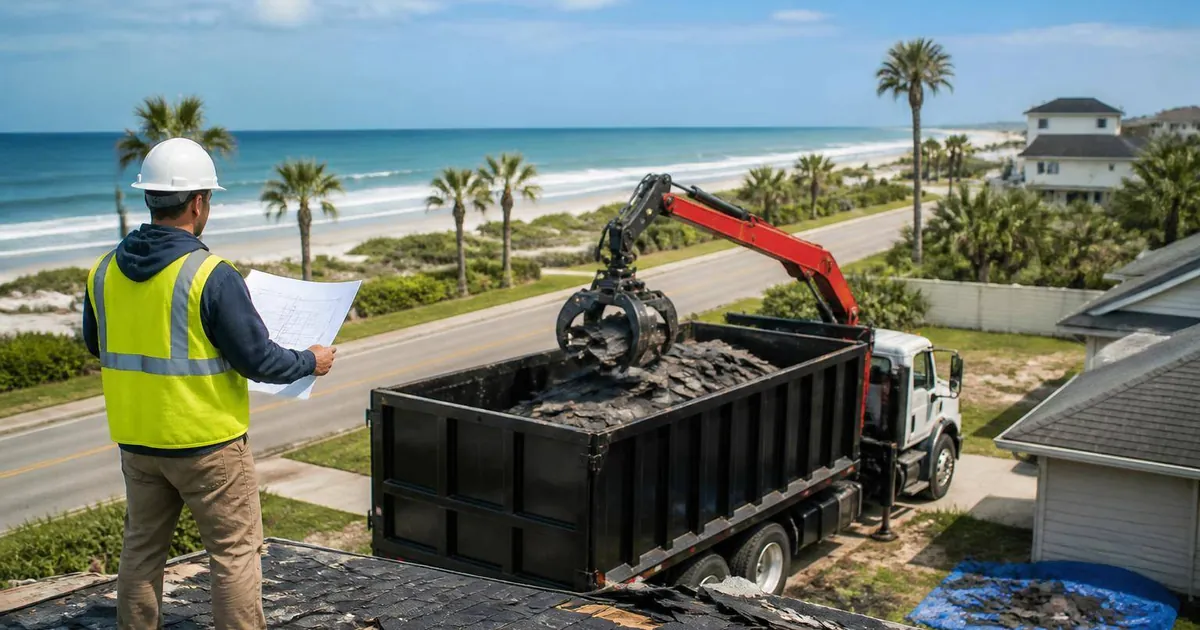
Planning a roofing debris grapple truck pickup starts with clear details about the debris, its location, and truck access. In Ormond Beach, gather those facts before asking about service, accepted materials, timing, and disposal. Then confirm each point with the provider and check local rules for the debris you have.
How should you plan roof debris grapple truck pickup?
Start by listing the debris, its location, and the space around it. A roof debris grapple truck pickup plan should also name who can answer questions on site. Those details help you ask clear questions, compare possible arrangements, and find out what needs confirmation before a truck is scheduled.
First, describe the work in plain terms. Say if debris is already on the ground or still needs to be brought down. Do not assume a hauling provider handles roof work or removal from a building. Confirm the exact task and what you will prepare yourself.
Next, note the pile's size in a way you can explain. You might use a rough count of bags, a marked area, or a photo for discussion. Treat that as an estimate, not a final load measurement. Ask what details the provider needs to assess the request.
Then ask what material types the provider can accept. A mixed pile may need review before pickup. Volusia County explains that waste and recycling rules can vary by material, location, and date. Check the current county guidance and confirm disposal questions with the right local authority.
You can use the roofing debris planning guide to review the larger planning picture. It can help you prepare questions, but it does not establish that a specific service is offered in Ormond Beach. Confirm service area and availability directly before making plans.
What details should you share before asking for pickup?
Share enough detail for someone to understand the debris and the pickup setting. Give the street or site location directly to the provider, describe the material, and explain where the pile sits. Ask which photos or measurements would help. Do not treat a rough description as acceptance or a confirmed service plan.
A short, factual description saves time during an inquiry. Mention if the debris is loose, bagged, or mixed, if you know. State whether it is near a building, fence, or other feature that could limit access. If you are unsure about a material, say so instead of guessing.
A photo may help show the shape and position of a pile. Take it from a safe place, and avoid climbing onto a roof or entering an unsafe area to get a better view. Ask first if the provider wants photos and how they prefer to receive them.
Keep the location details practical. Explain the route to the pile, any narrow entry, and any surface or overhead concern you can see. Do not promise that a truck can reach the pile based only on a photo. The provider must confirm its own access needs.
Use the Daytona Beach planning guide for another view of the basic planning steps. Its city reference does not mean service is available at your address. Ask directly about your site, the material, and the specific work you want arranged.
- Describe the debris type and say when you are uncertain about any material.
- Explain where the pile sits and how a truck might reach it.
- Share a rough size estimate and ask what measurement would be useful.
- Name a contact who can answer questions about the site and debris.
How can you check access and prepare the pickup area?
Look at the route from the entrance to the debris, then describe what you see. Note gates, parked vehicles, overhead features, soft ground, and nearby activity. Ask the provider what clearance and setup space it needs. Do not move heavy debris or change the site until you understand the plan and any safety limits.
Access is a question to confirm, not a guess to settle. A clear driveway does not prove a truck can reach a pile. The approach, turning space, surface, and work area may all matter. Ask the provider to explain what it needs to review before accepting the job.
Before the planned date, ask who should keep the route clear and when. Move only items you can safely move. Keep people away from active work areas, and follow directions from the site lead or qualified workers. If a change could affect safety, pause and ask the right person.
Do not assume that a grapple truck can collect debris from every position. Ask whether the pile must be placed in a particular area or kept separate by material. Confirm who is responsible for preparing the pile. The answer can depend on the provider's equipment and service scope.
If you are planning work after storm damage, the U.S. EPA's disaster debris guidance can help frame general planning questions. It does not confirm local pickup availability or replace local instructions. Check current directions that apply to your material and location.
Which questions should you ask about materials and disposal?
Ask what materials the provider accepts, how mixed debris should be handled, and where disposal questions should go. Local rules can differ by material, place, and date, so do not rely on an old note or a broad assumption. Confirm current requirements with the appropriate local authority before sorting or moving uncertain debris.
Roof work can leave several kinds of material in one area. Do not assume every piece belongs in the same load or follows the same disposal path. Describe what you can identify, point out anything uncertain, and ask whether the provider needs separate piles or more information.
Volusia County's solid waste and recycling information is a useful starting point for county guidance. It notes that rules vary by material, location, and date. That means a general web page may not answer every site-specific question. Confirm current instructions for your address and debris.
Ask the provider what it will do and what remains your responsibility. Clarify whether it will collect only a prepared pile, whether you must sort materials, and who can answer disposal questions. Do not treat a provider's collection policy as a ruling on local waste requirements.
The debris planning myth and fact guide can help you separate assumptions from questions that still need an answer. Use it as a planning aid, not as proof that any material is accepted or that a local rule has been met.
- List the materials you recognize and flag anything you cannot identify.
- Ask whether mixed debris needs sorting before a pickup can be considered.
- Check current county or local guidance for the material and address.
- Confirm who will answer disposal questions before debris is moved.
How do you compare pickup plans without assuming service?
Compare the details each provider confirms, rather than relying on a service name alone. Ask about accepted material, pile preparation, access, timing, and what the quoted work includes. A clear comparison helps reveal missing information. It does not establish that a provider serves Ormond Beach or can handle your particular site.
Start with the same questions for each provider you contact. That makes answers easier to compare. Record what each person confirms and what remains open. If an answer depends on a photo, a site review, or another detail, mark it as pending instead of treating it as settled.
Ask how the work is defined. A provider may describe a specific pickup task, while you may expect broader cleanup. Do not assume the same words mean the same scope. Write down the debris, location, preparation, and any work you expect, then ask the provider to confirm the match.
Timing also needs a direct answer. Ask what date or time window, if any, the provider can discuss, and what could change it. Do not make plans around an unconfirmed estimate. If other work depends on pickup, explain that and ask what can be confirmed in writing.
The Holly Hill options comparison offers another set of questions for comparing plans. It does not establish local service, rates, or availability. Get current details from each provider before choosing an arrangement.
What should you confirm before setting a pickup date?
Before setting a date, confirm the task, accepted debris, site access, pile preparation, and the person responsible for questions. Ask what could delay or change the plan, and how updates will be shared. Keep the answers together so everyone involved can work from the same current information.
A useful confirmation is specific. It should match the debris you described, the location, and the work you requested. Ask whether anything is still under review. If a change in pile size or material could affect the plan, ask how to report that change before pickup.
Confirm who will be present or reachable at the site. That person should know the agreed work and be able to answer practical questions. Do not assume a crew will know which pile to collect or which materials to leave. Mark the intended area only if the provider says that approach works.
Ask how to handle a change in weather, access, or work timing. The answer should come from the provider, since this post cannot establish its scheduling process. Keep your own project lead informed, especially if roof work and hauling are arranged by different people.
The pickup preparation checklist can help you review the points before confirming. Its checklist is a planning aid, not a service offer or a promise about a date. Confirm the details that apply to your address directly.
- Confirm the agreed task and name the debris included in the request.
- Ask which access details or site changes could affect the plan.
- Write down the contact and method for sharing schedule updates.
- Tell the provider if the material or pile changes before pickup.
What if debris includes damaged or uncertain materials?
Pause before sorting or moving debris if you cannot identify it or have a safety concern. Do not rely on a hauling provider to identify every material or decide how it should be handled. Ask the appropriate qualified professional or local authority for guidance, then confirm whether the material fits any pickup plan.
Storm damage and roof work can leave debris that is hard to identify from a distance. A photo or quick description may not answer questions about safe handling. Avoid touching or disturbing material when its condition raises concern, and keep others away until you get suitable guidance.
The U.S. EPA and FEMA offer general disaster debris planning information. Their guidance can support broad planning, but it does not replace current local instructions or a qualified assessment of a specific material. Check the right authority for the decision at hand.
Tell the provider about any known concern before discussing collection. Ask whether it can accept the material and what information it needs. If the answer is unclear, do not treat silence as approval. Keep the material separate only when that can be done safely and local guidance supports it.
For broad sorting questions after a disaster, FEMA's debris removal guidance is another reference point. Local rules still control. Use the information to identify questions, then seek current direction for the site and material rather than making a safety decision from a general article.
Questions about next steps? Call Daytona Grapple Trucks at (386) 481-7913 or review debris.
Frequently Asked Questions
Does this information confirm grapple truck service in Ormond Beach?
No. The available site facts identify the business as a grapple truck debris hauling publisher, but they do not list services, service-area cities, or local availability. Contact the business directly to ask whether it serves your address and handles the task and materials you have. Confirm the scope before making plans.
Should I move roofing debris into one pile before asking about pickup?
Ask first. The right pile location and sorting approach can depend on the material, access, provider needs, and local instructions. Do not move heavy or uncertain debris just to make a request easier. Share what you know, then follow directions from the appropriate provider or qualified authority.
Can a photo replace a site or access check?
A photo may help explain the pile, but it cannot prove that a truck can reach it or that the material is accepted. Ask what views or measurements are useful. Describe access concerns directly, and let the provider say what it needs to confirm the request.
Where should I check current debris disposal rules?
Start with current county or local waste guidance for the address and material. Volusia County notes that rules can vary by material, location, and date. If the debris raises a safety or identification concern, ask an appropriate qualified professional or authority rather than guessing from a general guide.
What should I do if the debris pile changes after I ask for pickup?
Tell the provider before the planned pickup and describe what changed. New materials, a larger pile, or a different location could affect the plan. Ask whether the earlier details still apply and what needs to be confirmed again. Keep the site contact informed so everyone uses the same information.
Sources
- Solid Waste and Recycling, Volusia County
- Planning for Natural Disaster Debris, U.S. EPA
- Debris Removal Guidelines Help You and Your Community, FEMA
Call (386) 481-7913 to talk through next steps.